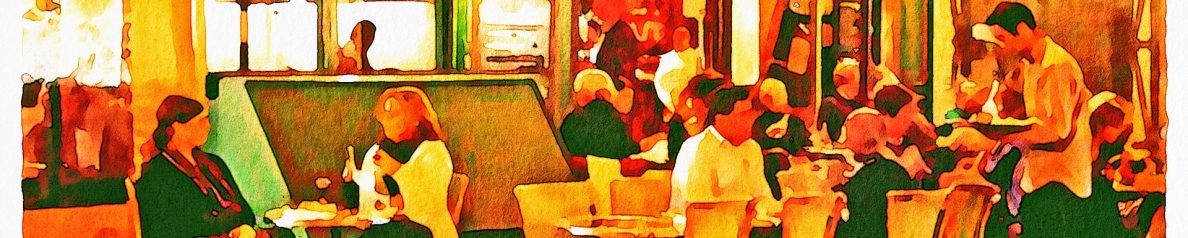
“Scars” is a short story originally published in QWF Magazine a few years ago. I’ve decided to cut it into bite-sized pieces and post it here to start a new series called Fiction Fridays. It will run in five parts. Enjoy!
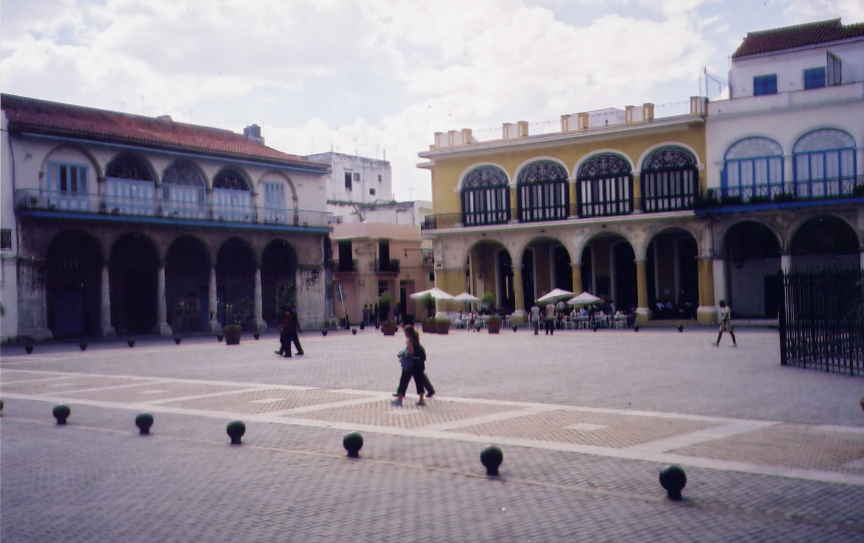 The three scars were long and deep, cut into the floor in another century and now smooth and round with age. Idly she pushed her sandal off and followed the lines with her toes. They ran parallel and started close, spread slightly for an inch or two and then shallowed and died. Her toes splayed as they moved through the lines, and, near the end, had to spread to follow the form. The grooves were wide enough to hold her comfortably and she lingered there in their ruts.
The drinks were tall and sweaty. Their sides dripped and ran, their white water puddles made high top pearls on the dark wooden table. It was only the other two customers that kept her from licking the sides of her glass.
They had walked all morning through the lower town. It had been cool and touristy, with people from the market laughing and performing for them. They had bought fruit, the huge fresh kind that only comes in the tropics, and tried stupidly to get the woman to wash it for them. Then they had started up the long steep streets that led to the old town. The morning faded, and the fierce heat afternoon found them wandering over the stones of the last century. It made them stop to argue about washing the fruit which she ate anyway. It was rich and pulpy and the sticky juice ran down her face and her arms, leaving dirty streaks. And his tone was, “You’ll be sorry!” But she didn’t care because the juice was cool and she was thirsty, more thirsty than she had ever been. And there was more, the deep purple colors hanging in the string bag he carried. But she didn’t ask; he was angry anyway. And they continued up away from the sea and into the hot afternoon.
And now she was cradled in the scars underneath the table, feeling them with her large middle toe, stroking the rounded sides and pausing in their length. It was cooler here, not much, but the thick dark walls and the deep shadows helped. And the afternoon which had covered them and collected in streaks where their clothing fit was waning, moving across the white sky, too late now to stalk them. But they were still quiet from the climb, their hair lank at the back of their necks, their clothes dry stained and their muscles languored and tired. So they sat, idling their drinks; he, reading the thumb-worn brochure from the counter and she, smoothing caresses out of three ancient scars.
She turned her drink in her hand, feeling the cool wet of it on the ends of her fingers and leaned forward and sucked at the straw, filling her mouth with the frothy liquid. He looked up.
“Don’t drink so fast on an empty stomach. In this heat you’ll get sick.” he said.
She swallowed. She remembered hearing that from her father once but she thought he had been talking about horses.
“This was a slave market,” he said matter-of-factly.
Her toes stopped in the middle scar and she pulled her foot back under her chair.
“See?” he said, pointing the brochure at her, “A slave market.”
She looked away across the thick sill, out into the gravel afternoon. The pebbles crunched under the tall heels of a woman walking just out of sight. She felt her through the soft of her footfalls that moved with a practiced space in sound and speed.
“High heels, on the gravel, in this weather?” she thought.
Part 2
“Just right here was for viewing and over there where the bar is was the prom…in…prom”
“Promenade,” she corrected.
“Promenade,” he repeated. “And they were kept out in the yard. Trooped from the ships just the way we came.” He was obviously delighted with his discovery and was warming to it.
The woman came in through the tall open doors. Her dress was crisp orange, stiff and sharp, even in the heat. Her hat was full, with a trail of white ribbon that fell from the side. The shadow of it partially hid her face and forced her to hold her head a little too high. She stopped full on her feet then walked past them. She walked with the same measured step and sat down at a table across from them, so that she was in the shallow shadows. Her profile and her right shoulder were in their direct view. She took off her sunglasses and laid them on top of her gloves, white like her hat ribbon and her shoes.
“The owners lived upstairs, and this was the first building in the Americas to have running water.”
The waitress walked by them, carrying a tray with a bright metal coffee service, a small decanter of amber liquid and two wide crystal glasses. She poured the coffee, added one spoon of sugar and stirred it. The woman nodded her head to thank her and the waitress turned to go back to the bar.
“Could we have another, please?”
“Remember you haven’t eaten anything today except that fruit and that’ll probably make you sick. It said in the brochure that you should wash everything thoroughly and avoid the local produce.”
“Just one more won’t kill us. Besides, it’s too hot and I’m tired”
“Don’t whine, Jen. Just remember what I told you. You’d hate to spoil everything by getting sick. Yes, miss. One more for each of us.”
The woman sat turned slightly away from them. She reached back from her handbag with a cigarette and snapped a large, old-fashioned lighter. The flame briefly illuminated her face fully, and Jen saw that she was older than she had originally thought. Her body and carriage had been firm, her legs and arms round with female muscles. Her legs were crossed and her dress rode up on her thighs. She was toying with her shoe, half on her foot, pushing the heel back and forth with her toes. Yet her face was full and held the extra worry lines that made Jen think of her mother. The woman turned and caught Jen staring. Jen looked away but still saw the woman pull a thick lungful of smoke from the cigarette and exhale it as she now stared at Jen. She did this twice, while Jen, avoiding her eyes, finally became so embarrassed she reached for her purse.
“I have to go to the toilet,” she said and stood up and turned and left the table.
She passed the waitress bringing their drinks and acknowledged her with a slight smile. They met between tables and had to turn their bodies to get by. They passed close enough for Jen to hear the rustle of fabric her thighs made when she walked and smell her perfume that touched her tongue for a second. It was exotic and old and tasted musty. Then she was gone and it was gone and the toilet was cool. The tiles were nearly cold on her feet. Her feet? She had forgotten her sandals under the table and had walked barefoot through the restaurant, bar, slave market. Her first inclination was to go back and she eyed the floor suspiciously from the inside of the door. Everything was white and bright and clean.
“No puddles,” she thought. “And doors!”
She went to the first cubicle and shut the door. Her baggy walking shorts slid easily to the backs of her knees, but her panties were damp and rolled down the outside of her thighs. The middle clung to her hair and formed a bright shield half way down. The walls were clean and white with no trace of leftover graffiti, what a Ladies room is supposed to be. She reached and unrolled the paper, wadding it up and remembering to wipe down as the doctor had told her, not up as her mother had taught her. She checked for color and stood up, unrolling her panties and pulling up her baggy shorts. She twisted and picked her clothes into place and was about to flush when the outside door opened and someone came in. She stood nervously still, trying to control even the sound of her breathing, waiting for a cubicle door to close, so she could leave. But none did, and even though she didn’t want to meet the woman in orange in the female privacy of a toilet, she flushed and opened the door.





 WD Fyfe