
 Last week, everyone was focused in on America’s Black Friday retail shenanigans – as well they should be. There’s no doubt the world economy desperately needs some conspicuous consumption right now, and those half-crazed American shoppers didn’t disappoint us – although the pepper spray was a bit much. However, on the other side of the world, getting largely ignored outside of India, there was some even better economic news. This news was largely ignored outside of India because, beyond the outsourcing debate, India itself is largely ignored by the Western World. While all economic eyes are hypnotized by the Great Chinese Dragon, the Indian Juggernaut (a Hindi word, by the way) is steadily gaining momentum. Nobody is ever going to say that the Indian economy will save the world from international recession. (Dare I use the d-word?) However, it’s certainly going to be a game changer.
 Here’s what happened last week. It’s all very complicated and you can read a slightly slanted version here, but in essence the Indian government opened up the country to foreign, hypermarket chain, investment. What does this really mean? In a word — Walmart. The international retail bogeyman is coming to the sub-continent! Just as an aside: in North America, we are blinded by Walmart. However, around the world there are several other hypermarkets — including France’s Carrefour and the UK’s Tesco plc, ranked two and three by revenue — and they are major retail players internationally. For example, Walmart has 189 outlets in China, but Carrefour has 184. Walmart might be the biggest kid on the block, but — to mix a metaphor — it’s not the only game in town. I’m not going to debate the various merits and demerits of Walmart here — that’s for another time – but Walmartophobia aside, this is excellent economic news. Let me explain.
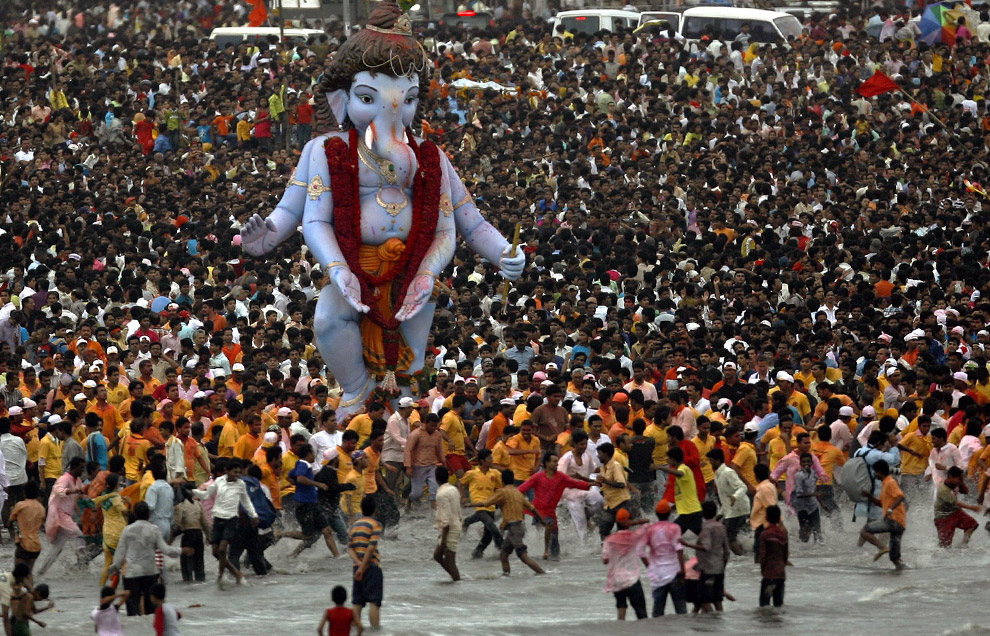 To most North Americans, India is a combination of Russell Peters, Slumdog Millionaire and Apu from The Simpsons. In general, most of us don’t ever get past Bollywood or the local tandoori restaurant. We are walking encyclopaedias of ignorance when it comes to what’s south of the Himalayas. This isn’t because we’re stupid; it’s because, for the last decade, we’ve been looking at the Yangtze, not the Ganges. However, times are changing.
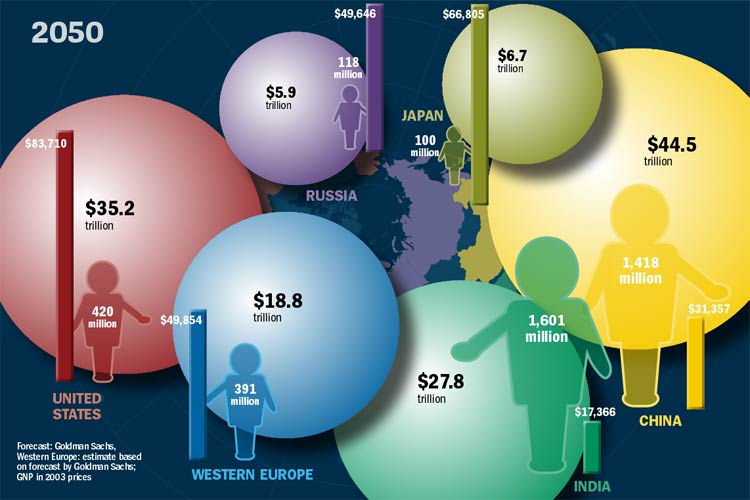
I’m not going to bore you with statistics, but here are just a few incredible numbers. There are over one billion people in India. Although nearly half of them live below the poverty line, the Indian middle class is huge, and it’s expanding faster than any other place on the planet. In real numbers that translates into 350 million people with disposable income. In 199,1 the average per capita GDP in India was (U.S. dollars) $329.00. This year, it’s $1,265.00, and by 2016 it will almost double to $2,110.00. Do the math! The standard of living in India is growing at a phenomenal rate. Those are all pretty spectacular numbers, but the one that tops them all is the median age in India is 25. That means half a billion people between the Indian Ocean and the Bay of Bengal are under 25 years old. This is primo, prime time purchasing power. The market for Levis alone is breathtaking.
 This brings us full circle back to India’s new government policy to allow what they call “multi-brand retail” outlets — superstores. Last Thursday, the Indian government opened up a vast retail market. It doesn’t take a genius to figure out that we’re not just talking about a couple of big box stores out in the suburbs. The ripple effect of adding 350 million potential customers to the world economy is going to be huge – and it’s not only because of end-user retail goods, either. For example, there are going to have to be warehouses, fleets of trucks, forklifts. How many shopping carts do they need? How many computers and cash registers? How much cash register tape? Coat hangers? Staplers? The little tags that show the price? The list goes on and on, and this is just the beginning. All this stuff has to be manufactured and purchased before the first family in Mumbai lays down a single rupee in retail sales.
The folks in Cincinnati are still part of the largest retail market in the world, but while they’re fighting over a big screen TV at Target, there’s been a seismic shift in Asia. The potential is huge, and we’d better pay attention to it.





 WD Fyfe