Time Flies October 3

Arrivals:

1925 – Gore Vidal, one of the bunch of authors and commentators who rolled out of the 50s to dominate the 60s.  They wrote with a flair for the dramatic, analyzing rather that simply reporting, sometimes reflecting the turbulent times, sometimes dictating them.  With Capote and Mailer, Vidal became the “old guard” of the New Journalism after about 1968 when they were generally replaced by newer, younger voices like Tom Wolfe, Joan Didion and Hunter S. Thompson.

1962 – Tommy Lee, a pretty good drummer when he was with Motley Crue.  He has made a name for himself by being mad, bad, and dangerous to know.  His celebrity skyrocketed when he and Pamela Anderson released their “Made for the Internet” movie, What We Did on our Summer Vacation.

1990 – die Wende, which is commonly known as the Reunification of Germany.  Starting with the fall of the Berlin Wall, die Wende (the Turning Point), marked the end of the End of the Cold War.  Strangely, at the time, both France and  Great Britain opposed the treaty.  They weren’t particularly keen on seeing a new giant economic power in the middle of their continent, especially not this one.  Popular sentiments prevailed, however, and both countries finally supported the treaty.

1995 – O. J. Simpson was found NOT guilty of murder.  WTF?

Departures:

1999 – Akio Morita, the guy who co-founded Sony with Masaru Ibuka in 1946.  It is still one of the most successful corporations is history.  In the 50s, Sony was the first company to realize the consumer value of Bell Lab’s transistors.  Sony’s transistor radios dominated the world for years.  In 1979, they introduced the Walkman, a portable cassette player.  In 1994, it was Playstation, followed by Playstation 2, 3 and Portable.  In 2006, Sony launched the Blu-ray disc, which, after a 2 year struggle with HD-DVD, has finally become the industry standard.  In their 50 plus year history, Sony has only made one horrendous mistake – Betamax.  All this from two little guys fixing radios!

2004 – Janet Leigh, the actress who played Marion Crane in the movies.  If you don’t know who Marion Crane is, that’s okay.  Marion Crane is an ordinary woman from Phoenix who, in 1960, steals $40,000, and, on her way to share the loot with her boyfriend, stops at the Bates Motel.  Are we getting warmer?   She decided to take a shower after a long day.  Still don’t know?  Google it!  By the way, Janet Leigh did a few other things besides take a shower, but none of them was ever quite as good.

Time Flies October 2

Arrivals:

1869 – Superhero and moral darling, Mohandas Gandhi.  Gandhi has been deified by his numerous and dedicated followers for his use of civil disobedience to effect social and political change.  Although Gandhi was a great teacher and spiritual leader, to be fair, his opponent in his various campaigns was The British Empire, the most benevolent oppressor in history.  Had he tried hunger strikes and civil disobedience in any other jurisdiction of the time — notably the Russian, German or even American empires — today he would be referred to as Gandhi Who?

1951 – Sting, a musician and songwriter who is one of a growing number of celebrities we’re entrusting the future of our planet to.  For some strange reason, as world problems get bigger and deeper, we have developed a burning need to replace our economists, scientists, planners and engineers with rock stars, actors and talk show hosts.  This is not Sting’s fault; he’s doing the best he can.  But even he must realize that playing an awesome bass guitar doesn’t pre-qualify you to tackle urban planning, agrarian reform or regional infrastructure renewal – even if you get some help from Bono and Sean Penn. 

1872 — Phileas Fogg left London at 8:45 p.m. to begin his journey Around the World in Eighty DaysJules Verne’s novel, published in 1873, was inspired by an advertisement for the first Trip around the World, promoted by Thomas Cook Travel.  Fictional Fogg did make it around the world in 80 days and win his bet at the Reform Club, but it was New York World reporter Nellie Bly who undertook the same journey for real in 1889 and made it in 72.  But, of course, she was a woman.

1950 – Peanuts began syndication in 8 newspapers across the United States and it would continue every day for 50 years — until January 2000.  In its heyday, Charlie Brown and his gang dominated the comic strip world, producing books, TV specials, hit songs and a Broadway musical.  Peanuts was merchandised everywhere and the characters were used in a number of commercial campaigns.  However, the world changed and “Happiness is a Warm Puppy” was replaced by more strident comics with more social and political satire.  Still, there aren’t very many people around who can’t whistle the theme from “A Charlie Brown Christmas.”  Try it.

Departures:

1985 – Roy Scherer Jr., one of the first notable deaths in the AIDS epidemic.  Scherer was a Hollywood actor who appeared in over 60 movies, including Giant, A Farewell to Arms and Tobruk.  Although he apparently made no secret of his homosexuality within the movie community, his loyal fans and the general public were kept in the dark throughout his career.  He is best remembered for the romantic comedies he made with Doris Day under his stage name: Rock Hudson.

1988 – Generoso Pope Jr., media giant and undisputed king of “slime from the checkout line”.  In 1952, Pope bought The New York Enquirer.  Two years later, he changed the name to The National Enquirer and journalism has never recovered.  The Enquirer, as it has come to be known, is considered an unholy joke by most members of the serious media; however, its influence in today’s journalism is unmistakeable.  Just look around you!  The weird thing is in recent history, The Enquirer has actually broken some pretty big stories, including Rush Limbaugh’s drug habit and John Edwards’ extramarital affair.

Time Flies October 1

Arrivals:

1910 – Bonnie Parker, folk heroine and psycho.  She and her buddy Clyde Barrow spent a couple of years in the 30s running around the country, robbing grocery stores and gas stations.  Along the way, they managed to kill at least 9 policemen and various other citizens.  Oddly enough, some people think this is cute.

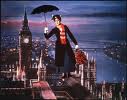
1935 – In the late 50s and early 60s, the hills were alive with the sound of Julie Andrews.  She played the female lead in My Fair Lady (1956) and Camelot (1960) on Broadway.  She starred in Mary Poppins (1964) and The Sound of Music (1965) in Hollywood.  She won tons of awards and was given a DBE by Queen Elizabeth II.  Unfortunately, when squeaky clean went out of fashion, so did she, but she’s still around in animation.  She is Queen Lillian, Princess Fiona’s mom, in the Shrek movies.

1890 – Yosemite National Park was created by an Act of Congress — and not a moment too soon.  The problem then was the same as it is now: the place is so beautiful everybody and his friend wants to go there.  Because it was rampled by enthusiastic tourists looking for nature, visionary 19th century conservationists wanted to preserve the area for 21st century tourists looking for nature.  They succeeded, and as an extra inadvertent bonus, gave Ansel Adams a job.

1961 – New York Yankee Roger Maris hit his 61st home run off Tracy Stallard of the Boston Red Sox and broke Babe Ruth’s 34 year old record of 60 home runs in a season.  The media, especially in New York, had never liked Maris and created mountains of controversy over the accomplishment.  Regardless, Maris’ record would stand for 37 years — until a new crowd of hopped-up, hotshot hitters started consistently hitting way above their abilities.  I will say no more about these lying, cheating, bags of….you get the idea.  A neat trivia question is:  Whose record did Babe Ruth beat when he hit 60 homeruns in 1927? 

Departures:

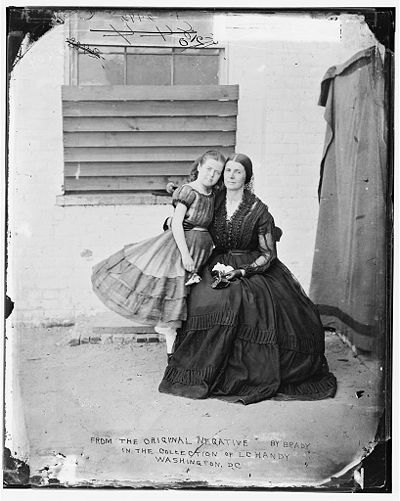
1864 – Rose O’Neal Greenhow, a remarkable Confederate spy who used her social connections in Washington to pass military secrets to the Confederate Army.  In 1861, she was arrested by Allan Pinkerton and sent to Old Capital Prison with her 8 year old daughter.  She continued to send out messages while in prison and was repatriated south in 1862.  She was returning from a diplomatic mission in Europe in 1864 when the ship she was on ran aground.  Legend has it that she drowned because she was carrying a bag of gold intended for the Confederacy.

 1990 – General Curtis LeMay, whose strategic bombing of Japan during World War II has come under some criticism in recent years.  Significantly, most of the criticism has come from people who weren’t even born in 1945.  Of course, his cachet was not enhanced when he became George Wallace’s American Independent Party running mate in the 1968 presidential election.  He is largely forgotten today, occasional resurrected by documentary film makers who have an axe to grind.