Emily And Dreyfus – Fiction – 9

Candlestick

It took Emily nearly three hours to take a deep breath and finally do something.  She spent most of the morning wandering in the sun-sparkled Jardin du Luxembourg.  It wasn’t that she was worried about the plan.  She knew there was nothing wrong with it.  Planning was what she did.  After all, she’d been keeping Pyaridge Hall and the Weldon estate one step ahead of the banks and bankruptcy since she was twenty.  However, it’s one thing to organize a robbery in your head, fix a timetable and figure out the details — but it’s quite another to set the wheels in motion.  So she hesitated.  Sat on a park bench.  Walked.  Sat down again.  Waited.  Watched children with their mothers and young girls with their lovers and thought about a time when she played and teased and flirted and life was a simple thing.

But she knew life wasn’t a simple thing, and Sinclair was trapped by the past and a love-struck old man.  And no beautiful spring morning was going to change that.  She liked Simon LaMonta, but she had no confidence in him.  And she loved Sinclair beyond her ability to trust his judgement.  He was going to rescue his people no matter what the risk, and that frightened her.  She didn’t want to contemplate a time without Sinclair close at hand, and that made her finally leave the garden and walk to the art shop on Rue Soufflot without looking back.

She had shopped at La Plume Ancienne many times when she was a student and she knew exactly what she was looking for.  She found all four items quickly, paid cash and left.  At the stand outside, she got a taxi to Tati, the mecca of shabby/chic in Paris.  The store was huge, so it took her some time to find what she wanted — black sweater and slacks, a too-short, too-tight party dress, two pairs of shoes, gloves, a black backpack and an oversized purse.  She paid cash, stuffed everything into a one-on-every-corner Tati bag and found another taxi that took her back across town.  This was the hard part.  She wasn’t exactly sure what she needed and couldn’t really explain what she needed them for — so she flipped her hair a lot at the DIY store.  She told the clerk she was recently divorced — with a crumbling apartment that seriously needed a man’s hand — and explained her immediate problem.  She followed his eyes as he answered and asked if he could possibly just show her how to actually use the tools.  He did, and she leaned very close as he guided her hand, then laughed at her own success.  She thanked him very much and asked if there was anything else that might help her.  He volunteered a spray can of strong solvent.  She paid cash, thanked everyone again, said she’d probably be back, and left.  From there, she went to BNP Paribas bank, paid cash for a prepaid credit card and immediately used it to buy a glass of wine.  The card worked, and she wandered off to find a public telephone.

Unaware that Emily was organizing a robbery, Dreyfus was putting the finishing touches on his own.  After leaving the Picasso gallery, he walked several streets before casually setting the cap and sunglasses on an empty café table.  Then, a few streets further, he found a taxi and gave the driver an address in the very south of Paris near the Montrouge cemetery.  From there, he walked to another café where the driver from the airport was sitting waiting for him.  Around the corner, in a locked up garage, they met with the first team who would handle the street work.  Dreyfus inspected the truck, the uniforms and the equipment, explained what each man was responsible for and set a time and place for them to pick him up in the morning.  None of this was necessary: Dreyfus trusted Sydney’s people, and he knew they’d already been given detailed instructions from the original plan.  But now that he was on the ground, he wanted everyone to be clear that he was in charge.

A couple of hours later and much closer to the gallery, Dreyfus and the driver met the second team – the ones who were actually going into the gallery.  Once again, he inspected the truck, the uniforms and the equipment, but this time he unfolded a paper layout of the gallery and marked the location of each painting – numbered one through four.

“Walk in casually.  When four gets to his painting, here,” Dreyfus pointed and made a small circle with his finger, “You can all see each other.  Lift the painting up and out.  The power’s been cut, but they might have backup alarms.  Don’t worry.  Just get the painting and walk out like you own the place.  I’ll be here at the door.  Ninety seconds after you lift the paintings, I’m going for the van.  All of you should be ahead of me.  At the van, get in and I’ll close the door.  Any questions?  Okay, study the layout and make sure you know where you’re supposed to be.  We’ll go over this again in real time the night before.”

Outside the garage, the driver, who hadn’t spoken, turned to Dreyfus. “I’ll give you the destination when we have the paintings,” he said.

Dreyfus looked back and shrugged. “No need.  I’m done once we have them.”

“Those are my instructions.  The destination and the access code.”

“Okay,” Dreyfus said and walked away.

At a public telephone on Rue Saint-Jacques, Emily ordered a very expensive box lunch for three, complete with dessert and a bottle of wine, to be delivered tomorrow night at 2:00 AM.  She gave the delivery address and specified which entrance.  She made the woman repeat the instructions and then she paid for it with her prepaid credit card.  Twenty minutes later, she was back at the hotel, taking a nap.

Emily And Dreyfus – 1

Emily And Dreyfus – Fiction – 7

Candlestick

That evening spread out for them like sand slowly leaking out of an hourglass – time out of time.  As usual, they were alone in the crowded restaurant, content to let the world swirl around them.  It was long after Vespers, so there weren’t any bells from Notre Dame, but even across the river, the floodlights on the cathedral shone through the trees and cast shivering shadows on their faces and over their table.  It was a dinner made for lovers – several lazy courses, small bites, wine and conversation.

They had arrived nearly together from separate directions.  Dreyfus by taxi directly from their hotel and Emily a two train transfer and a walk from St. Michel Metro station.  Without reservations, it took a few minutes and some well-placed Euros to get an outside table.  But with generosity established, the service was excellent. (All Parisian waiters instinctively know exactly when to be at your elbow and when to stay away.)

Dreyfus had spent the day shaping, reshaping and finally perfecting each detail of DeMonta’s plan until both men were satisfied.  Now, DeMonta was probably asleep, and everything else was etched in stone.  Dreyfus had made all the necessary telephone calls and the on-the-ground timetable was set to start the day after tomorrow.  He was confident but still wary of the variables.  Meanwhile, after her inadvertent discovery, Emily had spent the entire day in and around the Musee d’Art Moderne.  After walking through the rooms again, she left and had lunch at Antoine, watching the traffic on Avenue de New York.  After lunch, she bought a guide book and strolled around the museum several times; then, when the tourists thinned, bought a ticket and went back inside.  She spent the last hour or so wandering and sitting, making certain she hadn’t made a mistake, until a friendly security guard told her the museum was closing and she had to leave.

“Of course.  I’m sorry,” Emily said in more than acceptable French. “I’m keeping you from your dinner.”

“No, Madame,” the guard shrugged, “I’m here until eleven.”

Emily gave him a sad smile and tilted her head in sympathy.  She gathered her purse and book, and they chatted as they walked to the entrance together.  The guard more than pleased that a beautiful woman was interested in the hard work he did.  As she walked to the Metro, she wondered how or even if she’d tell Sinclair what she’d found.

At the restaurant, after the fish they decided on gateau au chocolate facon grand-mere with two forks for dessert and, breaking tradition, red wine with their coffee.

While they waited: “Are you really going to go through with this?” Emily asked. “Do you really think you and that old man can rob a gallery?”

Dreyfus lifted his glass.  He wasn’t sure he wanted this conversation, but he knew Emily well enough to know he was going to have it anyway.

“I told you I owe him — a lot.  And Marta too.  Especially Marta.  We go way back.  They were very good to me.  When I was a kid, I got into a bunch of trouble…”

“I don’t want to hear it!” Emily interrupted.

“And they straightened it out.  They vouched for me when they didn’t have to, and they treated me right.  Without them … I don’t know.  Now, they’re old and sick and what am I going to do — walk away?  She could be in prison for the rest of her life.  And Simon?  He’s lost without her.  You heard him last night.”

“He’s a sweet old guy, but …” Emily shook her head, “I swear to God if you go to jail, Sinclair …”

“I’m not going to jail.  I’m not even going to be anywhere near.”

Emily thought about it. “Are you lying to me again?”

“I’m not.” There was a pause. “Well, maybe a little bit, but I’m not going to go to jail.”

Emily turned her eyes to the shining cathedral.  Then she leaned over to the next table. “Excusez-moi, monsieur.  Une cigarette, s’il vous plait?”

Emily opened her purse.  The man waved his hand and handed her the package.  She opened it, took a cigarette and lit it with his lighter. “Merci.”

Pas de quoi,” the man said, without looking.

Emily turned back to Dreyfus with a serious look-what-you-made-me-do glance.

Dreyfus exhaled, hoping the cake would show up soon.

“C’mon, Sinclair.  You don’t know anything about this.  You’re an insurance adjuster, not an art thief.”

Dreyfus raised his eyebrows, pulled his head back slightly in disbelief and gave her a thin-lipped smile.

“Okay,” she said pointing, “But you know what I mean.”

“Look, Simon is one of the best planners in the business.  And Sydney …

“Sydney!”

Dreyfus put both hands up. “Not Sydney himself.  His crew.  Or something.  His people.  You know Sydney.  Don’t ask too many questions.  They’re doing the heavy lifting.  And those boys don’t make mistakes.”

Emily had to agree with that, but all she said was, “God!  Sydney?  And where are you going to be while all this is going on?”

“I’m just there to make sure nothing goes wrong.  That’s all.”

Before Emily could answer, the cake arrived and the coffee and the wine.  The waiter showed Dreyfus the bottle.  With two fingers, Dreyfus directed him to Emily.  He turned, uncorked it and poured.  Emily drank.

C’est bon.”

The waiter poured both glasses, put the bottle on the table and left.  Emily dropped the cigarette on the sidewalk.

“Alright.  Let’s have some cake.”

Emily knew the tone.

“You’re crazy,” she said, suddenly making up her mind.  It was a way out if she could make it work, but either way, Sinclair didn’t really need to know right now.  It would only complicate things.

Dreyfus lifted his wine glass: “To crazy!”

Emily smiled.  She lifted her glass: “To crazy,” she said, thinking just how crazy it had all become.

They drank.  And in the beautiful half-light night, they ate cake.

Emily And Dreyfus – 1

Emily And Dreyfus – Fiction – 6

Candlestick

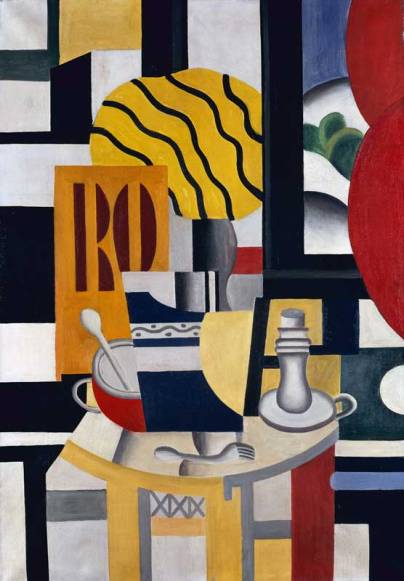
Mid-morning in Paris is cluttered with tourists – early tour buses unloading at their first attraction (“Follow the red umbrella, and remember the number of your bus.”) and “smart” two-a-day sightseers, crowding in to beat the crowds.  Emily sidestepped the ticket line at the Museum of Modern Art and used her association card to get in through the staff entrance.  As a student, she had spent hundreds of hours here, mapping the displays, calculating traffic patterns, studying the effects of light and shadow.  Although she’d done her first internship at Le Petit Palais, it was here she learned the nuts and bolts of display and design.  She knew this gallery as well as any of the people who worked here.  She walked through the familiar rooms, pausing to sit in front of a few old favourites, avoiding the famous works obscured by herds of cellphone cameras.  Some things had changed, but it was mostly the same — a small stroll down memory lane.  Except – and this was odd — she had a feeling that something wasn’t right.  Something didn’t fit.  She’d set up enough gallery exhibitions to trust her instincts, but she couldn’t put her finger on it – and it bothered her.  She walked through a few more rooms.  She stopped, sat down and watched the people – and the paintings – and the people again.  And then she saw it.  She waited, but nothing changed.  She got up and walked through several more rooms.  They were all the same.  She considered the options and decided she needed to think about it.  She went down to the café and bought coffee and a pastry.  Her mind immediately went to Sinclair.

In the conference room, back at the hotel, Sinclair and DeMonta were done with the details.  Like all good plans, it was simple, with very few moving parts and no unnecessary transitions.  On day one, Team One arrives at the gallery with equipment, uniforms, credentials and official papers.  They find the middle managers and explain they will be working in the street near the entrance, upgrading data and telephone lines.  This shouldn’t cause any problems, but there might be an occasional disruption — probably just to the Internet or maybe telephone services.  They won’t last more than a few seconds, certainly less than a minute.  They get a couple of signatures on formal-looking work orders, apologize for the inconvenience and thank everybody very much.  Then they go back to the street, set up a construction site and open the vertical shaft to the junction box in the sewer system.  For the next few days, they make themselves conspicuous – part of the landscape — laughing, saying good morning, eating lunch and, every once in a while, pulling a plug and replacing it.  More apologies, a few complaints but mostly workmen regularly seen inside the gallery to “fix” the problem.  On day five, twenty minutes before closing time, a well-recognized brown delivery van drives up to the entrance.  Team One goes down the excavation shaft, cuts all the trunk lines at the junction box (telephone, Internet, alarm system, power) then disappears into the sewers.  Team Two gets out of the van and goes into the gallery.  They each go directly to their designated painting, lift it off the wall and take it back to the van.  The van drives away – one of many in a busy city.

“It’s as close to perfect as possible,” Simon said, hobbling away from the big conference table to the sideboard.

Dreyfus knew that tone. “But?” he said.

Simon poured water into a glass.

“But. . . ” Simon leaned on his cane and drank. “Look, I trust your guys.  If you say they’re 100%, okay, good enough for me.  They do the thing, no problem, but …” Simon slowly shook his head, “They gotta sell it.  They don’t sell it …?  Puhh!  Team Two needs that extra minute.  It’s gotta feel normal when they go into the gallery.  If it doesn’t, somebody’s going to get excited.  Too much time and our boys are flatfooted.  Those paintings might get off the wall, but they’re never gettin’ out the door — and we’re dead as disco.  They gotta sell it right from the get-go, and that’s a lotta trust with guys we don’t know.”

Simon put the glass down.

“And … we haven’t taken care of the concerned citizen.  Some taxpayer decides he’s going to be a hero?  Even on the street?  That screws everything.  We need muscle.  Something loud and scary to make sure everybody thinks twice about goin’ ‘Vive La France’ on our ass.”

Dreyfus picked a long plastic line of ID badges out of the suitcase.  He’d seen the holes too and had already decided to fix them.

“We’ve already got all the material.” Dreyfus lifted the badges in the air, “That’s done.  We can’t add anybody now without throwing the timetable off.  Besides, you and I both know muscle’s a whole different ballgame.  My people don’t do that.  We’d have to farm it out.”

Dreyfus shook his head. “Too much risk.  I’ll do it.  I’ll go in with the first team, sell the hell out of it, stay for the transition and I’m the muscle.  Nothing else changes.  I’ll do it.”

“You don’t speak French,” Simon said, reaching across the sideboard for a wine bottle.

“I got enough to get by.  Besides, city workers?  We’re Romanians or something.” Dreyfus shrugged, “The people at the gallery aren’t going to know the difference.”

“What about your girl?”

Dreyfus looked across at Simon. “Corkscrew’s by the glasses,” he said.

Emily And Dreyfus – 1