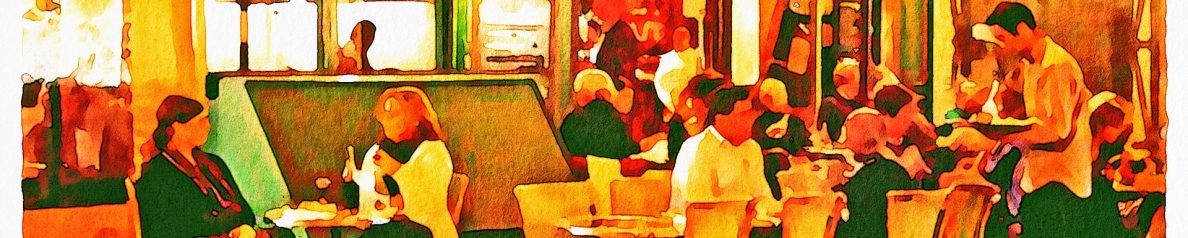
The Villa in Tuscany

Two men were dead, lying in spreading crimson pools, and the third was wheezing scarlet bubbles out of a couple of large calibre chest wounds.  Dreyfus smoothly took the empty clip out of the Beretta, put it in his pocket, and replaced it with a new one.  He slid the chamber back to load it and, trying to keep the fierce out of his voice, said, “Breathe, Emily.  Slowly.  It’s over.  Breathe.”

Emily, who was cowered half-hidden by a lounge chair with her arms covering her head was shaking so badly she thought she’d never breathe again.

Dreyfus waited.  There shouldn’t be anyone else in the house, but he wasn’t ready to take that on faith.  Just in case, he held the gun loosely on his arm for that nanosecond reaction time advantage.  The truth was Dreyfus Sinclair was not a very good shot.  On a static range, he could hit what he was aiming at – most times – but he was never going to win any prizes.  The reason he always walked away (so far) from deadly altercations is he didn’t hesitate.  And when you empty a 14 shot clip into anything that moves in a confined space, you’re not only going to hit something, you’re going to hit everything.  The three men on the floor were testament to that.

He kept his eyes on the far entryway, avoiding the big afternoon sunlight that slanted through the terrace windows.  The place was nice — wine and bread nostalgic Italian, probably built for a Mussolini grandee and, 80 years later, rented by the week or the month to rich tourists, minor film stars and, apparently, Albanian gangsters.  They were never going to get the blood stains off that lamp shade or out of the rugs.  It was an idle thought.  The man on the floor gurgled and died.  Dreyfus didn’t look down.

On the edge of his peripheral vision, he caught Emily unfolding and putting herself against the wall.  She pulled her knees up in front of her.  Her eyes were closed, and she was heave breathing against the rush of adrenaline sickness.  “Slowly,” he reminded her calmly.  “Deep breaths.”  Dreyfus glanced back to the terrace, but it really was over.  They needed to go.  It was always best to leave the scene of the crime quickly before the unexpected happened.  But they needed to wait — at least until Emily put some strength back into her trembling knees.  It wouldn’t take long.  Lady Perry-Turner was stiff upper lip resilient.  Dreyfus had seen this before and he knew enough to let her handle it.  They had time – not much – but time enough.  Dreyfus vaguely wondered why all Tuscan landscapes looked the same.  He had a vision of an army of paint-by-number artists turning them out in a warehouse west of Rome.  Was this one paint or a print?

“Did you kill them all?”

Emily wasn’t particularly bloodthirsty, but these men had been scaring the life out of her for the last three days.  No, they hadn’t touched her.  In fact, they’d been utter professionals and had barely even looked at her really, but Emily had been attacked by a group of men once before and she was under no illusion that she could effectively defend herself if they decided to be nasty.  And now that that unrelenting fear and tension had been released, it felt good to get a kick in.

“No, the two at the gate ran.  They’re halfway back to Florence by now.”

“Are we in trouble?”  Emily stretched her legs out.

With three men dead on the floor, it was a strange question.

“Not really.”  Dreyfus had already warned the Albanians, and he knew from experience that–as long as you didn’t start murdering family members — they were businessmen.  They would tally up their losses and get on with it.  Eight dead, two running and a burning truckload of transplantable organs and unfertilized eggs was a considerable loss.  They’d played their hand with Emily, but now that she was off the table, they were likely to want a truce.  Dreyfus wasn’t actually willing to let them off that easily, but he also knew his boss, Jonathan McCormick, was not going to let him beat on a potential client indefinitely.  So he’d already decided to give his information to the Italians and let them do the dirty work.

“But we need to go,” he said.

“Home?”

“Soon.  Grab whatever you don’t want to lose, and let’s go.”

“All I want is my jewelry.”

Dreyfus shrugged and put the Beretta back in its holster.  Emily slid up the wall.  She was still a little shaky but managed to navigate down the hall to the bedroom.  She opened her luggage, pulled out a couple of leather cases and put them in a shoulder bag.  She turned away, thought about it, turned back and found some underwear.  She balled them up and stuffed them into her bag. “With Sinclair, soon could mean anything,” she thought, and hurried back down the hallway.  

Politics — Humbug!

I gave up on politics a couple of presidents ago when it became maddeningly obvious that everybody was talking and no one was listening.  What was once an honourable profession — where real people had a genuine desire to serve the public — has deteriorated into an IRL video game.  Choose your character and maneuver through the various levels until you’re not skilled enough to go any further; then quit and go play UN, EU, IMF, FIFA or some other useless sport of the rich and nobody-remembers-your-name.  I’m sure there are still decent politicians around, but the 99% asshole rate gives the other 1% a bad name.  However, as much as I like to ignore the boys and girls who run our world, they won’t go away and — like Instagram teenagers — are constantly polishing their egos.  So just a few thoughts.

The French are having an election.  Nobody outside France understands French politics.  If you think you do, google Francois Hollande and Segolene Royal – and good luck with that labyrinth.  Anyway, the socialists aren’t socialist, the extreme right is left of the other guys, the left isn’t right enough, De Gaulle is dead, Sarkozy’s under house arrest and, in 2017, Emmanuel Macron decided to have his own party and beat the pants off everyone in sight.  But here’s how things actually work between the Rhine and the Pyrenees.  Every five years, the French vote to elect somebody to beat Marine Le Pen.  Two weeks later, they vote again to beat her.  She goes back to her apartment to pout and throw darts at a picture of her dad — the Republic is saved — and everybody sings “La Marseillaise!”

The Australians are also going to the polls.  The Australians have this curious notion that, in a democracy, citizens should vote — and so they’ve made it illegal not to.  Thus, if you’re an adult living Down Under, you have no choice about making a choice: you have to do it — or else!  Apparently, you can get around the law by providing “a valid and sufficient reason” not to cast a ballot, but for the life of me, I can’t figure out what that would be.  Somehow, I don’t think “they’re all a bunch of wankers” would cut it.  Mandatory democracy might be a cure-all for optional apathy, but I’m on the other side of the fence.  I know more than a few people who have made the world a better place by not voting.

And finally:

There are still quite a few Putin supporters in the kleptocracy formerly known as Russia.  Here’s a guy who’s been winning elections by wide margins ever since he snuck under the wire with 53% in 2000.  Two decades later, he’s claiming a 75% approval rate, and anybody who disagrees better hire a food taster.  Poison and prison are the go-to political strategies of Putin and his pals, and so far, they seem to be working – Alexei Navalny notwithstanding.  But Putinmania is not a monolith, and ever since his tanks rolled into Ukraine, there have been some serious cracks showing.

Here’s a joke that’s been circulating east of the Vistula recently.

Every morning in Moscow, a man goes to a newsstand.  He buys a newspaper, looks at the front page and throws it away.  After a couple of weeks of this, the newsagent asks “What are you doing?  Every morning you come here, buy a newspaper, look at the front page and throw it away.  What’s the deal?”  The man replies, “I’m looking for an obituary.”  The newsagent doesn’t understand and says, “Obituaries aren’t on the front page.”  The man smiles and says, “This one will be.”

Cheers!

Janet Miller

Janet Miller woke up with the sun in her face.  The window was open and there were singing summer birds.  She stretched her legs straight, then moved the duvet and carefully sat up.  She didn’t want to disturb the woman sleeping on the other side of the bed.  Janet liked mornings, preferred to have them alone and knew, from nasty experience, that Barina Andramoni was not a morning person.

Barina was an EU Agricultural Advisor from Northern Italy who spoke questionable English and knew more about anatomy than she did agronomy.  She had confessed to Janet, without much coaxing, that she had indeed lied (maybe una poca) on the EU application to get a free vacation in the UK, improve her English and maybe marry an aristocrat.  Two out of three missions accomplished, when her colleagues threatened to send her home for incompetence, Barina decided to trade down from Lord of the Manor.  Janet saw an opportunity and moved her out the orchard, into the office and into her bed.  The arrangement suited both women.   Janet, however, was not a lesbian; she wasn’t even curious (she’d played field hockey at boarding school, for God’s sake.)  No, Janet was enthusiastically heterosexual and that was the problem: her enthusiasm got in the way of her better judgement.  She’d married early, divorced early, and that seemed to be going on forever.  From there, she’d bounced into the arms of another Prince Charming who wasn’t, cried on Emily’s shoulder when he told her “It’s not you. It’s me.” and woke up the next morning, realizing he was right.  Men came with baggage.  And at that moment, Janet had a job she loved, a life she loved and was too delightfully busy every day to want to spent time carrying somebody else’s suitcases.  However, as we all know, it’s one thing to recognise that, intellectually, and quite another to remember it clearly on a warm summer night when the moon is full, the wineglass is half empty and moist lips and Mother Nature are whispering carnal delights in your ear.  Janet Miller was not made for a cloister.  So, when Barina became available, Janet decided she could bat from the other side of the wicket for a while, just to keep Mother Nature at bay.  And the extra added attraction was when the skies of October turned gloomy, Barina Andramoni would return to her side of the Alps and never give Inghilterra another thought.  (Which is exactly what happened.  A few years later, Barina moved to Milano and married a banker.)

Actually, Janet’s choice of summer lover tells you everything you need to know about her.  She was a pragmatist.  She got things done.  She solved problems.  And that morning, like every other morning for the past year, Janet Miller’s problem was keeping the Duchess of Weldon out of debtors prison.  So she stretched her shoulders, stood up and went off to enjoy her morning and get ready for work.

At first, the management arrangement at Pyraridge Hall had been ad hoc (hit and miss sounds just too unprofessional) but after a few trials and a lot of errors, Janet and Emily had settled on a routine that suited them both.  Estate business was conducted every morning, right after breakfast – Morning Prayers.  Emily told Janet what she wanted done, Janet told Emily what she had to do, and they usually sorted out a middle ground.  Actually, teaching Lady Perry-Turner how to be rich on a budget hadn’t been that difficult except for two serious sticking points – staff reductions and those stupid horses.  Everything else had been a slow and steady struggle to reduce expenses until the Estate could finally produce a decent income.  And that depended entirely on a massive EU Agricultural Grant and a dozen (minus Barina) advisors who were turning a neglected pear orchard into a thriving value-added brandy making business.  Janet wasn’t overjoyed that they’d put all the Estate eggs in one basket, but she had faith in Emily’s vision and was determined to make theirs the most profitable basket south of Hadrian’s Wall.  So every morning, (including Sunday) right after breakfast, Janet Miller walked into the breakfast room, fully prepared to move heaven and hell and bail high water to make certain her friend kept her home.  (She always paused slightly at the door in the one private formality between the two women.)

“Good morning, Miller.  It’s a fine morning this morning.”  Emily raised her coffee cup, “How’s the biscotti?”

“Don’t be cheeky, milady.  I shudder to think of the things you get up to when you’re down in that London.”

Emily gave Janet a knowing leer and set her cup down.  “What do we have this morning?”

Janet sat down and took her pen out of her coil notebook.

“Nothing but good news, I’m afraid.  The installation is ahead of schedule, and the vats are coming in next week.  You have to get on to the council for access through the village before they decide it’ll frighten the chickens and double our transportation costs.  Personal telephone calls, I should think.  Umm.  Samples of the barrels are on their way.” Janet looked up from her book, “God, you’d think they were made of gold — two local, one Danish.  We’ll let the Francoises [there were two of them] decide, but I think we should throw a bone to our European friends.”

“Foreign won’t look good.”

“It will if we have to go back to the EU well, but you’re right: locally, we should just keep quiet about it.”

“Alright, schedule me in, and I’ll let them convince me.”

“I’ll find somewhere else to be that day.”  Janet drew in a breath, “Nothing else immediate from that quarter, but the big news is the second EU payment is in the bank — which means we’re solvent again. The quarterly rents are due on Friday, so we’ll be practically rolling in it for an hour or two at the weekend.”

“The Witherspoons are struggling.”

“An extension?”  It wasn’t exactly a question. And Emily didn’t answer.

“We can’t keep doing this,” Janet said, knowing they would.

“Ninety days?”

“Thirty,” Janet said, automatically.

“Sixty.”

Janet thought about it.

“Sixty … plus interest … and we get first refusal on their eggs and potatoes this year.”

It was Emily’s turn to think about it.  “Potatoes only?”

“Done, but you have to come in from the left on this one.  I’m tired of being the evil queen.”

Emily exhaled, “Have you ever thought of playing poker – professionally?

“I wish.” Janet closed her book, “And that’s it, then?”

“Not quite.  I want to open a studio in London.”

Janet put her pen down.  “And this is in aid of?”

“We both know the biggest drain on the Estate is me.”

Janet interrupted, “We discussed this.  You’re the Duchess, and if you don’t come with all pomp and circumstance, we look like beggars.  And beggars do not get million pound loans from stuffy bankers.  You’re a necessary liability.” 

“I know, I know — but hear me out.  With a studio, I could set myself up as an event planner.  The smart set are always doing charities and galleries and whatnots and what-have-yous.  I know everybody, and they know everybody else.  And all that new money would love to have a Duchess pour the champagne when they’re showing off their collections or raising awareness or God only knows what else.  I could make a fortune just doing opening night parties for bad plays in Soho.”

Janet noticed the change in Emily’s accent and looked wary.  Soho!

“No, not like that.” Emily said, reading her friend’s mind and suddenly speaking through her teeth, “So-o-o-o bored with the Midlands, don’t you know, looking for something fun, just fun.  Top tier.  Our people.” Emily pushed her chin in the air, “Bar and Sandra and Tea-na, you remember Tea-na from school.”

Janet laughed at the mocking imitation.

“Tina’s still around, you know.” Emily said, changing her voice back to normal.

“God, I hope that cow has nightmares.”

The two women looked at each other, recalling a midnight prank that featured cayenne pepper and laughed.  A long, remembered, schoolgirl giggle.

“She probably does.  But seriously, Jans!  These people have money, and we could use some of it.

Janet had already seen the potential.  She didn’t like the idea, but it made sense.  “We can’t afford Knightsbridge.”

“No, but there has to be a storefront property available in Notting Hill somewhere.  I’ll turn it into shabby chic, and have them queuing for blocks.  Two or three a year, and that’ll pay my way, and everything else is found.  I have to be in London, anyway.  We could …”

“Stop.  Alright, actually this sounds good, but I need a real plan with real numbers — today, tomorrow, as soon as.  I’m going to have to skim the EU money to get you started, and that money better be back in the coffers by October one, or you and I are going to go down for fraud.”  It was Janet’s serious voice.

“I’ll dot the I’s and cross the T’s by the weekend.  This will work.  I’ve already got a couple of potentials, and I’m certain Dickie Morton’s got property going begging.  Besides, if it all goes wrong, you and I can always get a barrow and peddle potatoes.”

“Until they catch us,” Janet said, standing up.

“Until they catch us,” Emily replied, widening her eyes.  And both women laughed.