Fake News … Not New!

fake news1

These days, everybody and his friend is yipping about fake news as if millennials invented it last Tuesday, and … OMG! Ain’t it awful?  Well, here’s a real news flash!  There’s always been fake news, and this current crop of journalists and their Internet Overlords (If it isn’t trending on Twitter, it didn’t happen.) are just the latest incarnation.  I’m pretty certain some of the hieroglyphic accomplishments of the Pharaohs are embellishments, and we know for a fact that more than a few of the stories Herodotus (the Father of History) told were not necessarily factual.  The thing is Herodotus knew what every journalist since, discovers: the truth is a moveable feast.   Let me demonstrate.  Here are two sentences that say the same thing – except they don’t.

After extensive public dialogue, Mayor Quimby and his supporters have stepped up to tackle the homeless crisis in our city.

Bowing to extensive public pressure, Mayor Quimby and his cronies have finally stepped up to do something about the homeless problem that plagues our city.

See what I mean?

Two of the greatest purveyors of less-than-the-truth journalism were the 19th century dynamic duo of William Randolph Hearst and Joseph Pulitzer.  They fought it out in 1890s New York to see who could grab the most readers (read “followers”) with clickbait headlines and salacious stories that would make BuzzFeed blush.  These two crazy kids were so good at manipulating public perception that Joe is now considered the Father of Modern Journalism (Yeah, he’s the guy the award is named after.) and Willie started a war.

But the Big Kahuna of fake news is Malleus Maleficarum (The Hammer of Witches.)  This little ditty was published in 1487, just about the time Gutenberg’s printing press was radically changing European society (think: early Renaissance Internet.)  It was written to raise public awareness about the presence of witches in the world and offered some proactive advice on how to deal with them – notably, burning them alive.  However, it was just one clergyman’s (read: “influencer’s”) personal opinion, and it had no basis in fact or even the religious doctrines of the time.  It was disavowed by every authority on the planet from Martin Luther to the Pope (Even the Inquisition said it was hogwash!) but, unfortunately, the public fell in love with it.  Then, as the Reformation gathered steam and European society broke into two conflicting camps, Malleus Maleficarum became the go-to text to beat the other side with.  In those days, labelling someone a witch immediately discredited them and anything they had to say.  (Ring any contemporary bells?)  It was a bestseller for over 200 years, second only to the Bible, and was considered unassailable truth until the Enlightenment came along and said, “WTF were we thinking?”  Even today, many people believe in demonic possession and tons more believe that witchcraft is some ancient pagan religion.  (BTW, Wicca is no more an ancient religion than I am.  It was made up by a retired British civil servant, Gerald Gardner, in the 1950s.)

Yes, in the 21st century, fake news is serious, not because it’s there (It’s always been there) but because gullible people have immediate Internet access to other gullible people all over the world.  The problem is, back in the time of Herodotus, or even Joe Pulitzer, stupidity was a retail commodity, confined by geography.  These days, geography doesn’t matter, and stupidity is being traded wholesale in every corner of this big, round world.

The only solution is don’t believe everything you think.
Right And Wrong (2019)

right and wrong

There’s been a lot of talk lately about right and wrong.  This is totally odd, because contemporary people are uncomfortable with the concept.   It makes them uneasy, as if something rude just happened.   They would prefer to look the other way or wander off.  When the topic is unavoidable, they tend to dance around it or cleverly disguise it, calling it ethics or morals or some other such euphemism.  It’s as if they’re desperately hoping parlour-game philosophy will make it go away.

There is no place in our society for right and wrong anymore.  It’s like those old, heavy TVs nobody wants.  They work perfectly well, but most people wouldn’t be caught dead with one in their living room.  It’s not our fault, though; the essence of right and wrong demands a judgement call.   Someone has to be wr-wr-wr … not right.  Unfortunately, we’re told, on a daily basis, not to be judgemental.  It’s something to be avoided at all costs.   But right and wrong still exist, regardless of whether we like to talk about it or not.  For example, walk down any street in North America and you will eventually see a Starbuck’s cup.  The person who put it there is wrong – full stop.  There is no reason to litter.  Unless that Starbuck’s cup was on fire and you’re being chased by wolves (both highly unlikely) there is no situation that would force you to throw it on the ground.  The person who did it, did it deliberately.  He or she made a personal choice to despoil the common environment.  That’s wrong.  There’s no way around it.

Of course, most people would like the local litterer to be evil – it makes things a lot easier.  The battle between good and evil is honourable; it has a long history, and it’s always been a two-sided coin with plenty of heroes and villains.  Evil people do sinister things, like littering; good people do not.  Hitler was evil.  Mother Teresa was not.  It’s cut and dried and ready for polite conversation.

The choice between right and wrong is quite different.  First of all, it has no history; each choice we make is brand new.  Every Starbuck’s cup has the same potential for ending up in the gutter as the recycle box.  It all depends on a personal decision.  Secondly, there are no heroes — only villains.  We don’t get extra points for doing the right thing. That’s what we’re supposed to do.  We only lose points if we do the wrong thing — – like throwing our crap into the street.  Third, regardless of how we act, or what we think, we’re not morally superior to the litterer.  Chances are good the person who so casually dropped that cup does not have fangs or green saliva.  They’re probably quite likable, nice to children and puppies, and have never committed genocide.

When we talk about right and wrong, we don’t have any high moral ground to stand on.  Good and evil are simple.  We have all kinds of reference points — Hitler and Mother Teresa are two obvious ones.  But ya got to work at right and wrong — every time — without fail.  That’s why we’ve created this sliding scale of mitigating circumstances.  It alleviates the personal burden we all feel — which brings us back to that philosophical parlour game.

We all know stealing is wrong.  But if your children are starving, it’s not quite as wrong.  Except if you steal from a child who can’t defend herself.  Then it’s wrong, again.  However, if she’s from a rich family … and the nuances go on and on into the night and the third bottle of wine.  We need this sliding scale, but, unfortunately, we’ve come to think that it’s real.  It’s not.  It’s just a device: an artificial “Get Out of Jail Free” meant to ease the burden of guilt we feel when we do something reprehensible, like throwing our trash on the ground.  In the cold, dark soul of four o’clock in the morning, we all knew that stealing is wrong.  That’s what separates good people from evil ones.  Yet we also know that in certain situations, we will steal.  That’s what separates smart people from stupid ones.  That’s why we find it so difficult to talk about right and wrong — because many times the morality just doesn’t match the reality.

Right and wrong are absolutes.  We can fool ourselves with excuses, justify our actions to others or proclaim our “good person-ness” from the rooftops.  So what?  If you cross a moral boundary, you are wrong.  There’s no second opinion.  Judgement has already been passed because– regardless of how our society tries to slip/slide around it– integrity is what you do when the cell phones are turned off and no one’s watching.


Reprinted (after some gentle editing) from June, 2011

Diets Don’t Work

diets

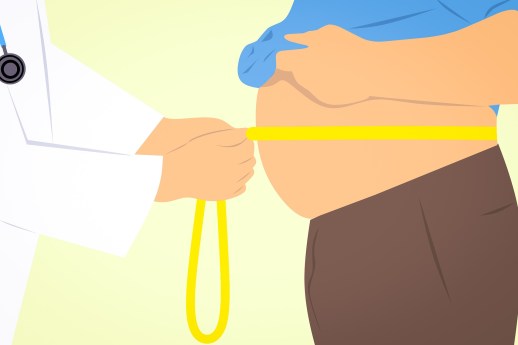
Diets don’t work.  Yeah, I said it.  Okay, I’ll admit that in some parts of the world, diets do work, but they’re mostly involuntary.  (Yeah, I said that, too.)  Here’s the deal.  Western society is awash in food, and for the last 50 years, we’ve been fighting a tremendous battle to keep it out of our mouths – and — we’re losing.  The problem is, like most contemporary situations, we want a quick fix, and we’re willing to lie to ourselves (and others) to get it.  So, when we say, “I’m going to change my life, burn my fat clothes, join a gym and start eating healthy from now on,” what we actually mean is, “God, I hope if I stop eating all the stuff I really like for a while and take the stairs at work, I’m going to be able to fit into my underwear again.”  Folks, that’s not the way to do it – because:

Food is everywhere. – Walk down any High Street in Europe or drive down any highway in North America, and you’re going to find food.  Fast food, slow food, food you can eat right now, food you can save for later, food from a farmer, food from a factory, food from a chemistry set, and even food that started life as something completely different.  My point is it’s easier to avoid heroin if you’re an addict than it is to avoid food if you’re on a diet.  Spend a day out in the big, wide world and you’ll come home so pissed off about all the stuff you CAN’T have, you’ll eat the sofa.

Our culture is built on food. – You have to look far and wide to find any social interaction that doesn’t involve food — breakfast meetings, dinner parties, potluck, barbeque, cake and coffee, tea and biscuits and it goes on and on and on.  Even our mating rituals revolve around food.  Want to get to know somebody?  Go out to lunch.  Want to really get to know somebody?  Go out to dinner.  Want to get laid, married or engaged?  Go out to an expensive dinner.  Nobody ever says, “Hey, I think you’re an interesting person.  Let’s get together and drink some water.”

Snacks – The harsh reality is snacks are the food we eat in between the time we’ve finished eating (breakfast, lunch and dinner) and the time we start eating again.  Nobody west of the Vistula is actually hungry.  It’s just a contemporary twitch — and good luck trying to break that habit.

Most people are like me.  — I have a car, a microwave, a dishwasher, a Roomba, a thing that cuts up my vegetables and two guys who show up every once in a while to work in the garden.  I also have a television, a computer and a flat screen thingy that reads to me.  On ordinary days, I don’t get enough exercise to fill a mouse’s ear: on lazy days, I could be in a coma.  In the 21st century, we simply don’t move enough.  So it really doesn’t matter how many calories you’re not eating; if you work at a desk all day and spend your evenings cultivating your ass groove in front of a TV or computer – you’re pretty much screwed.

So, what’s the solution?

The Mediterranean was the first Eden, and by all accounts, Adam and Eve were pretty hot property owners, so it makes sense to eat the way the Mediterraneans do.  What’s not to like?  Fish, chicken, and the occasional cow, 50 kinds of pasta, 100 different sauces, who knows how many cheeses, olives, avocados, enough garlic to scare your friends, bread that doesn’t taste like sawdust, all the salad, fruit and veg you can get your mitts on, red wine, white wine and — at the end of it all — coffee and tiramisu.

No fuss!  No muss!  And it beats the hell out of kale and quinoa on a cracker!