
Arrivals:
1894 – poet e e cummings who is probably the most widely read and influential poet of the 20th century
he is enjoyed by freshmen and sophomores alike and his style is copied endlessly endlessly
his unconventional uses of English were a fresh of breath air in the 20s and 30s
and absolutely mind blowing when rediscovered in the 60s 70s 80s my sweet et cetera
despite being embraced by hordes of bad wannabe poets
he is good really really good
perhaps the last good poet of his age
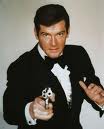 1927 – Actor Roger Moore who has played Ivanhoe, The Saint and James Bond — all in one lifetime. And if that isn’t enough, he was part of the Maverick crowd after James Garner left the series. While it is widely accepted that, as an actor, Moore has 3 full expressions, it is my considered opinion that he only has two. They are right eyebrow raised, and left eyebrow raised. Moore’s fame and his considerable fortune come from looking good in a tuxedo and knowing when to quit. He still does both extremely well.
—
 1926 – A.A. Milne published Winnie-the-Pooh, the most popular of all the children’s bear characters. Milne actually only wrote two Pooh books, Winnie-the-Pooh and The House on Pooh Corner but he featured Pooh poems in another book, Now We are Six. Everybody likes Pooh. Pooh has been translated into just about every language in the world — including Latin. There is The Tao of Pooh and The Te of Piglet. Canada has issued Pooh postage stamps and Warsaw named a street after him. Even the old Soviet Union had a Pooh – Vinni Pukh. He has been on TV, in movies, in comics and on stage. There is only one person on earth who didn’t like Pooh – Dorothy Parker. She panned him in her Constant Reader column in The New Yorker – the witty witch.
1947 – For the first time in history, a man-made sonic boom blasted across the sky over Edwards Air Force Base in California. Chuck Yeager became the first man to fly faster than the speed of sound. In simple layman’s terms, he was already gone before you ever heard him go there. Yeager is responsible for the “Aw shucks” easy confidence and nonchalant attitude displayed by early test pilots and soon taken up by all determined men in difficult circumstances. More than just The Right Stuff, this attitude separated the serious from the wannabes and came to dominate the second half of the 20th Century. It is now being replaced by swagger, brag and “trash talk.” Tom Wolfe’s portrayal of Yeager in his book The Right Stuff is considered accurate — except there is no evidence that he ever called the Mercury astronauts “spam in a can.”
—
Departures:
 1944 – Erwin Rommel, a World War II German general affectionately known as “The Desert Fox.” Rommel was a brilliant military tactician and was only ever beaten by overwhelming force and firepower. Oh, well! He still lost. Rommel and his career have always been soft-soaped, glossed over and thoroughly romanticized — even way back to the days when we were still fighting the guy. He has been praised for such things as not shooting Jewish POWs and not enslaving French workers. That’s what you’re supposed to do! It doesn’t deserve extra praise. The truth is Rommel was an ardent Nazi right up until the time Eisenhower and Montgomery showed up off the French coast with several thousand of their heavily-armed friends. He only changed his mind after our guys proceeded to beat the snot out of his guys. It always amazes me that we idolize our enemies so much faster than we applaud our friends.
 1959 – Errol Flynn, an actor who would have made a great Indiana Jones. The problem was Indiana hadn’t been invented yet. So Flynn had to make do with Captain Blood, Don Juan and Robin Hood. For 20 years in Hollywood, Flynn had the fastest horse, the sharpest sword, the quickest gun and Olivia de Havilland. In the movies, he battled the Spanish, the Germans, Surat Khan, John Brown and evil Prince John – and he always won. He charged the guns at Balaclava, fought a thinly-disguised Red Baron and died with his boots on at the Little Big Horn. He didn’t always get the girl, but he always loved her. On screen, he was everything a hero had to be: brave, noble, pure, fair of heart and strong of limb. Off screen – not so much. In real life, Errol Flynn did pretty much what he pleased. He was married 3 times and had numerous girlfriends. He drank, to excess. He brawled, when the mood took him. He was addicted to at least one drug and he liked young women – really young women. In 1942, he was charged with statuary rape — not once, but twice. He was acquitted when he argued that he wasn’t necessarily innocent but he was Errol Flynn. His last girlfriend, Beverly Aadland, was 15 when he met her and had just turned 17 when Flynn died of a big life in Vancouver, Canada, at age 50.




 WD Fyfe