Diets Don’t Work

diets

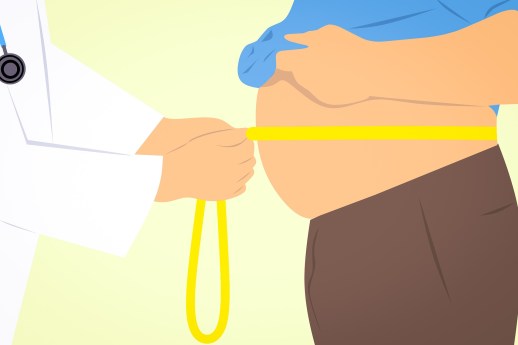
Diets don’t work.  Yeah, I said it.  Okay, I’ll admit that in some parts of the world, diets do work, but they’re mostly involuntary.  (Yeah, I said that, too.)  Here’s the deal.  Western society is awash in food, and for the last 50 years, we’ve been fighting a tremendous battle to keep it out of our mouths – and — we’re losing.  The problem is, like most contemporary situations, we want a quick fix, and we’re willing to lie to ourselves (and others) to get it.  So, when we say, “I’m going to change my life, burn my fat clothes, join a gym and start eating healthy from now on,” what we actually mean is, “God, I hope if I stop eating all the stuff I really like for a while and take the stairs at work, I’m going to be able to fit into my underwear again.”  Folks, that’s not the way to do it – because:

Food is everywhere. – Walk down any High Street in Europe or drive down any highway in North America, and you’re going to find food.  Fast food, slow food, food you can eat right now, food you can save for later, food from a farmer, food from a factory, food from a chemistry set, and even food that started life as something completely different.  My point is it’s easier to avoid heroin if you’re an addict than it is to avoid food if you’re on a diet.  Spend a day out in the big, wide world and you’ll come home so pissed off about all the stuff you CAN’T have, you’ll eat the sofa.

Our culture is built on food. – You have to look far and wide to find any social interaction that doesn’t involve food — breakfast meetings, dinner parties, potluck, barbeque, cake and coffee, tea and biscuits and it goes on and on and on.  Even our mating rituals revolve around food.  Want to get to know somebody?  Go out to lunch.  Want to really get to know somebody?  Go out to dinner.  Want to get laid, married or engaged?  Go out to an expensive dinner.  Nobody ever says, “Hey, I think you’re an interesting person.  Let’s get together and drink some water.”

Snacks – The harsh reality is snacks are the food we eat in between the time we’ve finished eating (breakfast, lunch and dinner) and the time we start eating again.  Nobody west of the Vistula is actually hungry.  It’s just a contemporary twitch — and good luck trying to break that habit.

Most people are like me.  — I have a car, a microwave, a dishwasher, a Roomba, a thing that cuts up my vegetables and two guys who show up every once in a while to work in the garden.  I also have a television, a computer and a flat screen thingy that reads to me.  On ordinary days, I don’t get enough exercise to fill a mouse’s ear: on lazy days, I could be in a coma.  In the 21st century, we simply don’t move enough.  So it really doesn’t matter how many calories you’re not eating; if you work at a desk all day and spend your evenings cultivating your ass groove in front of a TV or computer – you’re pretty much screwed.

So, what’s the solution?

The Mediterranean was the first Eden, and by all accounts, Adam and Eve were pretty hot property owners, so it makes sense to eat the way the Mediterraneans do.  What’s not to like?  Fish, chicken, and the occasional cow, 50 kinds of pasta, 100 different sauces, who knows how many cheeses, olives, avocados, enough garlic to scare your friends, bread that doesn’t taste like sawdust, all the salad, fruit and veg you can get your mitts on, red wine, white wine and — at the end of it all — coffee and tiramisu.

No fuss!  No muss!  And it beats the hell out of kale and quinoa on a cracker!

Time Is On Our Side

sand of time

There’s a guy in Norway who wants to do away with time.  We all know, strictly speaking, that’s impossible, so my guess is he actually wants to get rid of clocks.  (The article was poorly written.)  While this is an admirable sunshine-and-lollipops endeavour, it has its roots in a far stupider idea.

Ever since Lucy (Australopithecus) and her sisters decided to go for a walk in Ethiopia, 3 million years ago, there have always been people who want to abandon the march of civilization.  Their contention is that humans are inherently pastoral, and we’re not meant to be regulated by the time-counting machines we’ve created.  In other words, we’d be a lot happier if we just ate when we’re hungry, slept when we’re tired, had sex when we’re horny and enjoyed a few more sunsets.  This idea gets a lot pf play on college campuses and during after-dinner conversations (with the second bottle of wine) but it ignores one essential fact – 3 million years of history.  Oops!

There is actually no evidence to suggest humans were ever a come-day/go-day, God’ll bring Sunday type of species.  The only reason some sophomores jump to this conclusion is our closest biological cousins, chimpanzees, behave that way– and the assumption is, back in the evolutionary day, we did too.  Wrong!  The truth is, all – ALL – the archaeological evidence points to the undeniable fact that humans have always been workaholics.  We didn’t become the dominant species on this planet by hunting, eating and then lying around digesting for the rest of the afternoon.  (I’m looking at you, bonobos!)  No, we used the bonus time between full and famished to work our asses off.  Why?  Because, unlike all the other animals Noah put on the boat, from aardvarks to zebras, we realized that the sun was going to come up again tomorrow.  And our long evolutionary crawl from the savannahs of Africa to the Mars Rover is a litany of labouring for that future.

Everything human beings do, from building the Pyramids to buying more than one potato, is based on our unflappable faith in time.  It’s one of the amazing imaginary concepts (like religion, ownership and fair play) that’s hardwired into our DNA.  But more than that, time is also one of our essential tools, like language and mathematics.  That’s why we’ve always tried to measure it so accurately.  We use time to regulate, manipulate and evaluate our existence; without it, nothing we see around us would exist.

Personally, I believe the quaint notion that humans could live quite happily without clocks comes from the benevolent society we’ve created that allows us massive amounts of leisure time.  We have time to think, and sometimes the things we think are wrong-headed.  Seriously, suggesting that we should turn our backs on hours and minutes because our primeval ancestors didn’t have alarm clocks is as preposterous as saying we shouldn’t have elevators because humans are not supposed to live and work in the skies above Mother Earth.

Anyway, that’s just my opinion — but stay tuned cuz I’m already planning another one in 4 days, 96 hours or 3,960 minutes, depending on how you want to measure it.

1984 or Brave New World?

1984

It’s been 70 years since George Orwell published his dystopian novel 1984.  It’s considered one of the pivotal books of the 20th century, and if you haven’t actually read it (in the 21st century, most people haven’t) you certainly know what it’s about.  It’s a complicated tale, but the Twitter version is we better watch out or Big Government is going to go power mad and control (read “enslave”) us all.  Orwell lined up the usual suspects – censorship, disinformation, propaganda, surveillance, informants and fear – to create a pretty scary Stalinist view of the future (read “the present.”)  In fact, it’s so convincing that many of the terms Orwell invented — like Newspeak, Doublethink, Room 101 and Big Brother — are now part of our language.  The problem is George may have got it wrong.  Yeah, yeah, yeah!  Some computer in California is probably reading your text messages and can pinpoint your location, anywhere on planet, but – uh — so what?  Quite frankly, if the CIA, MI5, FSB or the Chinese MSS want to know anything about you, all they have to do is log into Facebook, Instagram, Snapchat, etc., and they’ve got all the information they need.  And that’s the crux of the situation.  Who do we have to fear – our government or ourselves?

For my money, if you want a scarier version of the future (read “the present”) take a look at Aldous Huxley’s Brave New World, published in 1932.  Huxley’s view is deeper and darker and a lot more prophetic.  Huxley’s says the future won’t be bleak and hungry but actually rather happy – too happy.  Huxley’s society is just as closed and lock-step conformist as Orwell’s, but the difference is nobody cares.

In 1985, Neil Postman published a book, Amusing Ourselves to Death, and part of it is a comparison of 1984 and Brave New World.  Here are a few of his observations.

Orwell said that, in the future, many books would be banned.
Huxley said there would be no need to ban books because nobody would read them.

Orwell said that information would be strictly controlled and distributed by the government.
Huxley said that there would be so much information no one would pay attention to it.

Orwell said the truth would be concealed from the people.
Huxley said the truth would be irrelevant.

Orwell warned us about the dangers of the Cult of Personality.
Huxley warned us about the Cult of Celebrity.

Orwell saw a joyless, sexually repressed, poverty-stricken society that had lost its soul.
Huxley saw a drug-soaked, sexually promiscuous, consumer society that didn’t have one.

Orwell feared a manipulated culture.
Huxley feared a trivial culture.

Here, in the 21st century, the future is now, and Big Brother might very well be watching you — but personally, I think the bigger problem is … he doesn’t need to.