Marilyn: August 5th, 1962 and Forever After

In our time, fame seldom makes it past the eulogy, and as more and more of us have our Andy Warhol moments of adoration, fewer and fewer of us will ever survive the grave.  Celebrity has become commonplace, a devaluated currency, practically worthless beyond the initial public craze.  Our society pays little homage to that which has past from its immediate sight.  Yet, in a couple of days — Sunday, August 5th, 2012 — the entertainment world is going to be filled with stories, truths and out-and-out lies about a 36-year-old who has been dead for exactly fifty years: Marilyn.

There is no final word on Marilyn.  She is the story that we have been footnoting for half a century – with an ever increasing litany of clichés.  She took centre stage in the 50s with only a handful of movies and has never relinquished it.   Her image is as recognizable now as it was when she was alive.  She is as iconic to our world as Coke™ or Apple™.  To be compared to Marilyn is still the definitive compliment — and the direst warning.

Marilyn’s legacy is her legend although to call her legendary only diminishes her.  No other entertainer has so completely outlasted her time, not even James Dean (whom she is continually paired with) and only Elvis has made a bigger post mortem impact.
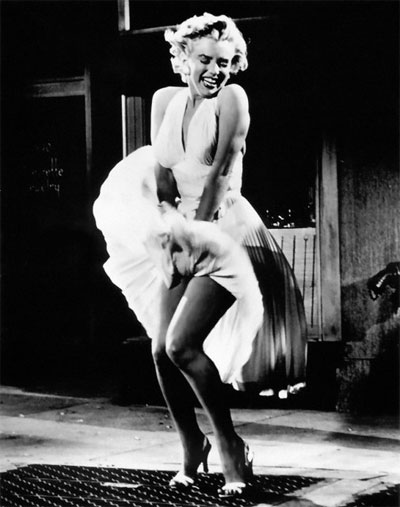
We value Marilyn not for her body of work but for the woman herself — an enigma within a riddle.  The ultimate “dumb blonde,” she was an astute business woman.   A consummate professional, she disrupted every movie set she was ever on.  She was frivolous and silly but refused to distance herself from Arthur Miller when he was hauled before the communist witch hunt of the House UnAmerican Activities Committee.  She drank and abused drugs but had the social conscience to use her celebrity status to guarantee Ella Fitzgerald a job at an LA nightclub called Mocambo which was “white only” at the time.
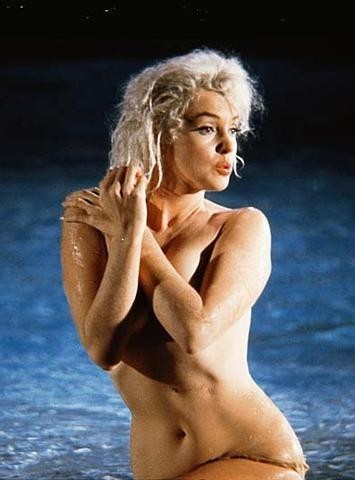
For the last fifty years, everybody and his friend has tried to explain Marilyn – to define her.  She was the exploited female coerced into becoming the personification of 1950s sexuality.  She was a light weight who used her obvious assets to make her way in the world.  She was a misunderstood artist who never had a chance to spread her wings, a no talent phony who happened to die at the right time, or a strong, independent woman of her time.  Was she any of those things or all of them?  Of the millions of words written about Marilyn, none of them answers these questions.  Even her death is inexplicable.  Was Marilyn murdered as the pawn in a massive political power play conspiracy?  Did she commit suicide, unable to cope with the constant strain of just being Marilyn?  Or was it all big a mistake, made in a half-stoned stupor?
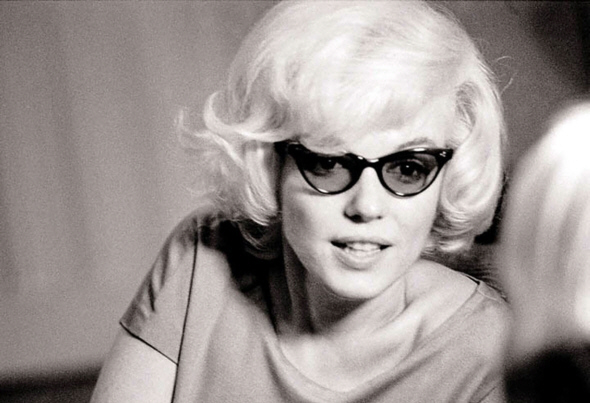
Fifty years later, Marilyn is still Marilyn, but none of us is quite sure just who that is.
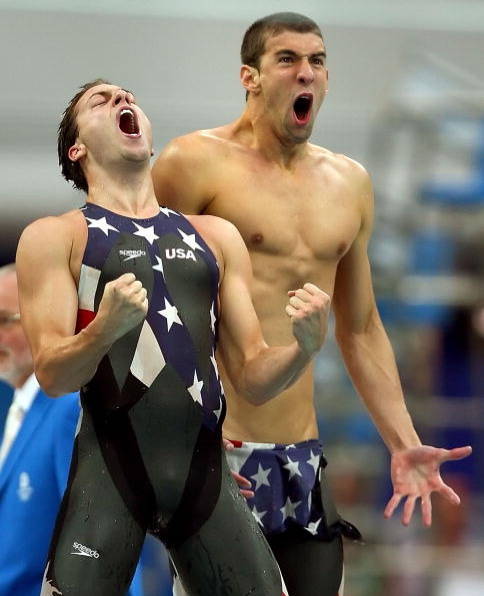
The Olympics: Plus Ca Change…

I’m walking on dangerous ground here, but I’m going to write about the Olympics anyway.  The multi-nationals get a little tetchy when minnows like me try swimming where the big fish feed, and, frankly, I don’t blame them.  If I were paying north of 50 million bucks for the five-ring logo, I’d damn well get my money’s worth, even if it meant passing out “cease and desist” orders as if they were “Two Can Dine for $8.99” coupons.  So, I’m going to insist my use of the various names of organizations is fair comment and hope for the best.  This may seem an excessive disclaimer, but I’ve seen what the IOC does to transgressors (the Olympics came to my town a couple of years ago) and it’s not pretty.

The law dogs are off the leash because the Olympics are the Big Kahuna of organized sports.  They are the perfect ménage a trois of sport, sponsorship and the media.  The revenues they generate are beyond the imagination of Croesus.  Of course, this kind of cash flow means power and the Olympics enjoy the kind of power that the ancient Greeks only dreamed their gods had.  Even the mighty FIFA, Lord High Mafia Caesar of the World Cup, kowtows to the IOC.  Governments tremble and start coughing up cash when the likes of Mario Pescante, Thomas Bach and Jacques Rogge come to town.  It’s a far cry from what Baron Pierre and his Olympic committee envisioned back in 1894 — but this is 2012, and times change.

The tale of Baron Pierre de Couberin and the history of the modern Olympic Games has been over-told by every media outlet that ever existed since 1956.  However, during those televised sidebars that fill in the blank spaces between Olympic Events, there is a large part of the story, as it is retold every four years that kinda gets glossed over.

The fact is De Couberin and his compadres never envisioned the Olympics as an egalitarian gathering of the world’s athletes.  They were men of their class and time, and they saw athletics as strictly a gentleman’s game (de Couberin was an admirer of Thomas Arnold.)  To that end, the Olympic Games have always featured sports that have been historically associated with the upper classes.  The first Games included (among other events) fencing, shooting and tennis.  It’s widely documented that very few 19th century coal miners, factory workers or stevedores played tennis, and although fencing and shooting were not unheard of during the many labour disputes of the period, they were never considered leisure activities.  Polo was introduced to the Games in 1900 and remained part of the Olympics until 1936 when the German team’s aggressive use of the mallet was considered unsportsmanlike in finer circles.
Cricket was also introduced that year, but when the rest of the world found out how insanely complicated, long and boring it was, it was immediately dropped.  Unfortunately, it may return to London 2012.  Sailing, a hobby synonymous with the wealthiest among us, has always been a popular Olympic event.  The oddest activity of the upper classes to become part of the Olympics, however, was Dueling Pistols in 1906.  It was dropped after only one year possibly because, even though there was an undisputed champion, no Silver or Bronze medals were awarded.

Likewise, the original Olympic committee went to great lengths to preserve the Games as the province of the gentleman athlete by insisting that all Olympic participants be virginal pure amateurs.  This kept the professional bully boys away from the podium because, in the early days, this rule was usually enforced.  The most famous case, of course, was Jim Thorpe, who was stripped of the medals he won in 1912 when it was discovered he had once been paid ten dollars to play football.  In the 1930s, Adolf Hitler’s famous competitive spirit led to some pretty serious bending of the Olympic amateur rule.  Luckily, however, Jesse Owens preserved the integrity of the Games when he singlehandedly took on the Nazis and beat their brains out.  In the late 1950s, the IOC adopted the “nudge-nudge/wink-wink” classification for its wealthier athletes when it became patently obvious that the Soviet and East German “amateurs” were anything but.  This system was finally abandoned in the 1980s, when everybody realized that the athletes were wearing more gold during the competition than they were actually competing for.  These days, aside from a few African marathon runners, most athletes in the medal rounds are millionaires.

Thus, more than a century later, the Olympics have remained true to Baron de Couberin’s original vision.  Despite the corruption, bribery, doping and out-and-out cheating, the Games remain the province of the rich and famous.

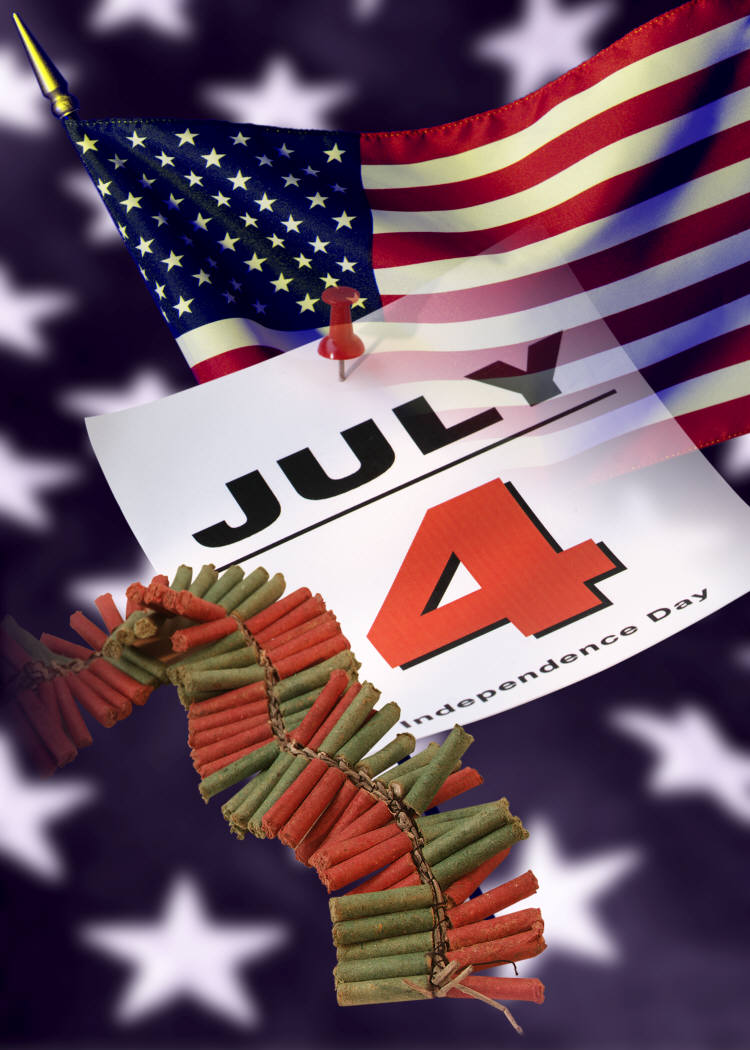
The 4th of July: Independence Day

Today is Independence Day in the US — the 4th of July.  It’s the perfect day to enhance our trivia knowledge of America.  Here are some odds and sods of information that will make you totally superior to other Canadians (or Americans, for that matter) who do not possess this specialized knowledge.  Enjoy!

Nearly 25% of all Americans have been on TV.

In Washington, DC, there are over 75 lobbyists for every United States senator.

At any given time, approximately 60,000 Americans are flying.

From space, the brightest thing on Earth is Las Vegas.  That’s why the aliens always show up there.

There are more cows in Montana than people.

There are more cars than people in Los Angeles.

If California was a separate country, it would have the 7th largest economy in the world.

The deepest gorge in the United States is not the Grand Canyon.  It’s Hells Canyon on the Snake River in Idaho and Oregon.

The Sears Tower in Chicago is so big it has its own ZIP Code: 60606.

Only 12 people have ever stood on the moon – all Americans.
The last time anybody checked, which was 2006, the United States gave – gave! – other countries $22.828 billion dollars in foreign aid.  That’s in a single year, directly from the US government, and not the Red Cross, Unicef, Save the Children or any other charity — including Bill Gates.

The United States is weirdly shaped.
Buffalo, New York, which is on Lake Erie directly south of Toronto, Canada, is further east than Jacksonville, Miami and Fort Lauderdale, Florida, which are all on the Atlantic Ocean.

El Paso, Texas, is closer to San Diego, California than it is to Houston, Texas.
Reno, Nevada is further west than Los Angeles, California.
Louisville, Kentucky is closer to Windsor, Ontario than it is to Memphis, Tennessee.
And Windsor, Ontario is actually south of Detroit, Michigan.

There are more hazelnuts grown in the Willamette Valley, Oregon than everywhere else in the world — combined.  In fact, Oregon produces 98% of the world’s commercial hazelnut crop.

The most popular tourist destination in the world is San Francisco.  Paris, France is #2.

Pocahontas was the first woman to appear on US currency.  Martha Washington was second.  Minnie Mouse (featured on the Disney five dollar bill) was third — but that doesn’t count.
As of today, the most widely recognized symbol in the world is the Coke — followed by Facebook, Pepsi and Google.

Finally, here are a couple of facts that could win you untold numbers of drinks in a bar.  Just remember to phrase them properly.

1 – How many states are there in the United States of America?  Most people (who aren’t dolts) and every reference book will say 50.  This is not true.  There are only 46 states in the U.S.A.   However, there are also four Commonwealths: Virginia, Kentucky, Pennsylvania and Massachusetts — which round the number up to an even 50.

2 – How many presidents were born in Kentucky?  Even the mighty Google tells us only one, Abraham Lincoln.  Nope, wrong again.  There were two: Abraham Lincoln and Jefferson Davis his Confederate counterpart during the Civil War.

To all my American friends: Happy 4th of July!