 As we all know, Labour Day has fallen on hard times as of late. Canadian commerce keeps chugging along; therefore, many workers (labourers, if you will) have to work on the first Monday of September. For the rest of us, it’s the last long weekend of the summer — time to heat up the barbeque, cool off the drinks and relax one last time – ‘cause pretty soon the great Canadian winter is going to bring us six months of Don Cherry and Hockey Night in Canada. However, as you’re sitting with a cold one — fat, dumb and happy the kids are going back to school tomorrow – here are a few historical tidbits to chew on before the steaks are ready.
Legend has it that Labour Day is actually a Canadian invention. It’s the result of two canny Conservative Prime Ministers and a hard-case Liberal newspaper editor. I don’t know if the story’s exactly true or not, but I’ve heard it told this way a couple of times, so it’s mostly true. Besides, it makes a good story.
In 1872, the Typographical Union of Toronto was on strike against The Toronto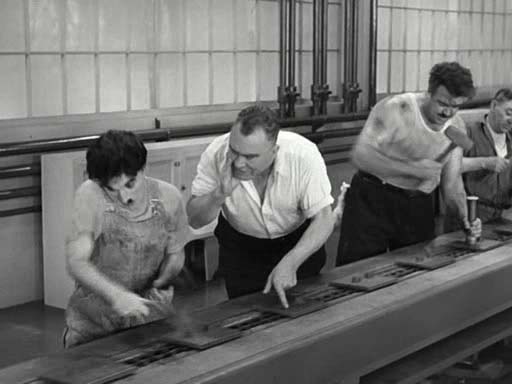 Globe newspaper – which, by the way, is the great-grandfather of today’s Globe and Mail. The noted Liberal politician, George Brown, was none too happy about this, since he had founded the Globe in 1844, and it was his paper they were striking against. He rooted around in his law books for a while until he found some antiquated anti-labour laws and had the strike leaders arrested for conspiracy – 24 of them! Other labour leaders decided not to take this sitting down and organized a mass rally in Ottawa for the first Monday of September, 1873. Remember, Canada was less than a decade old at this point, and there was great concern that the shiny new Dominion would not survive. Socialists roaming the streets, making outrageous demands (a 54 hour work-week, for one) were seen as a serious threat to the orderly conduct of business and to the country.
Enter one, Prime Minister Sir John A. Macdonald, the wiliest politician this country has ever produced. In 1873, Macdonald’s government was up against the wall. (Long story short: they’d been taking bribes from railroad companies — really, really big bribes.) So, where other people saw lawless socialists attacking the foundations of our nation, Sir John saw potential votes and a chance to slap the crap out of the Liberals. He promised the marchers, as God was his witness, to repeal the anti-union laws. Unfortunately, the railroad bribes were so big that Macdonald’s government didn’t survive. Fortunately, his promise did. The Trade Union Act of Canada was passed in 1874. Pretty soon, everybody and his brother (pun intended) were legally demanding things like a 54 hour work-week and time to eat their lunch — and those September marches continued.
 Meanwhile, in the USA and over in Europe, trade unionists were working away, trying their best to get a few decent working conditions themselves. Internationally, labour leaders all had the same agenda. They wanted something a little better than legalized slavery for their people. Then, if there was any good will left over, they figured a little dignity for the working man would be nice, too. Most union demonstrations revolved around May 1st. The thinking was that people would come out and join spring dempnstrations after a long winter. Plus, the trade union/radical/socialist message could tag team with May Day celebrations already in progress. After all, May Day stuff — like music and street fairs and dancing around a pole — had always been the practice of common folk. Obviously, the thinking was sound because the idea caught on. Today, May 1st is universally recognized as International Worker’s Day — and it’s a legal holiday in over 80 countries!
Back in Canada, the trade union movement was growing apace and in the industrial heartland of the north eastern United States, it was exploding – almost literally. On May 1st, 1894, labour disputes erupted in violent and deadly clashes in Cleveland, Ohio. Then, at the end of June, the first large interstate labour action took place: railroad workers in several states staged a boycott in what came to be known as The Pullman Strike. Just as an aside, American President Cleveland ordered federal troops to put down the strike. Hundreds of people were injured and 13 union workers were killed. However, this isn’t important to our main story.
Our Prime Minister at the time, John Sparrow Thompson (never heard of him have you?) saw what was happening in America and around the world and decided to defuse the situation before it got started. As the Pullman Strike in the US was entering its fourth week, on July 23, 1894, his government declared that the first Monday in September would be a national holiday. It would be in the tradition of those original Ottawa trade union marches — dedicated to the labour movement and appropriately called Labour Day.* The more cynical historians say this was simply a move to draw attention away from May 1st. Whatever Thompson’s motivation, even though Canada had its share of labour pains, it avoided most of the bloody clashes that characterized the international labour movement — situations like the Haymarket Massacre in Chicago in 1896, which started as a peaceful May Day union march and ended up scattered with corpses — over twenty dead.
Labour Day was a small concession to the early trade union movement, but it demonstrated that Canada and Canadians do recognize the importance of ordinary working people. So, if you get a minute between long weekend activities, lift your glass to the men and women who gave us this holiday: there were a lot more of them than George Brown, John A. Macdonald and John Thompson.
*President Grover Cleveland also created an American Labor Day less than a month later.



 WD Fyfe