
Friday the 13th (2019)

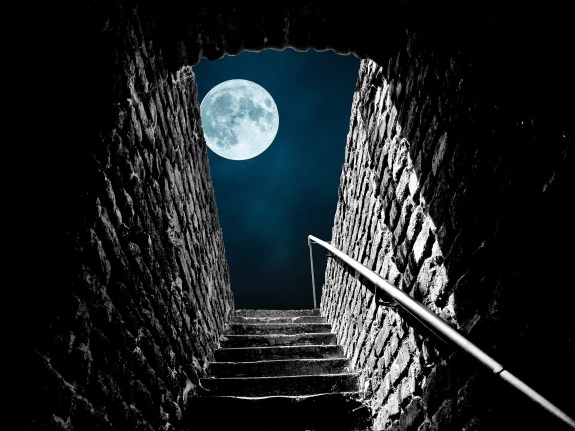
full moon

Okay, folks!  We’re totally screwed! Today is Friday the 13th and tomorrow is the full moon.  And this means– to those who believe the vast, ineffable universe is directed directly at them — that bad stuff is coming down the road.  Personally, I don’t believe the vast, ineffable universe is directed directly at me.  However, I have a healthy respect for folk wisdom– even when it’s wrong.  My assumption is folk wisdom had to come from somewhere.  For example, my mother used to say, “Eat your fish.  It’s brain food!”  I have no idea how she arrived at that conclusion, but come to find out, recent medical science has proven she was absolutely right: eating fish diminishes the risk of dementia.  Obviously, Mom wasn’t privy to research that hadn’t even happened yet; she was just tapping into the folk tales of the time.  And even though I didn’t understand what was going on, this cowboy took it on faith and ate his fish.

Even the most hardcore existentialists among us have to admit our world is full of coincidence, events that are connected for no apparent reason — except they are.  Stop to look in a shop window and some idiot runs a red light through the crosswalk where you would have been standing if you hadn’t stopped to look in a shop window.  Sound familiar?  This stuff happens all the time.  The big question – that nobody’s ever been able to answer — is Why?  So, we make it up.  We assign arbitrary reasons for our actions and events, to satisfy our burning need to make sense of our existence.

Ever since Lucy (Australopithecus) and her girlfriends decided to go for a stroll in Ethiopia 3 million years ago, humans have been trying to get the inside edge on fate, destiny or whatever you want to call it.  We’ve observed the stars, consulted oracles, rolled old bones and cut open chickens.  We’ve danced, prayed, chanted and offered sacrifices to our gods.  We’ve looked for omens and carried lucky charms.  And although it sounds silly in the glaring light of 21st century science, one has to wonder where this stuff came from.  The laws of probability alone say it can’t all be the work of shysters and charlatans.  Some of it must be, (Dare I say it?) based on some long-lost “Eat your fish” facts.

Shakespeare’s Hamlet tells Horatio,

“There are more things in heaven and earth, Horatio
Than are dreamt of in your philosophy.”

And I believe him.  We have not reached the pinnacle of human knowledge.  In fact, we’re not even close.  There’s tons of stuff we haven’t figured out yet.  Five hundred years ago, if you had suggested that diseases were caused by itty-bitty bugs that no one could see, you’d have been burned for a witch.  It’s not outrageous to imagine that, five hundred years from now, people might think we’re barbarians for not understanding the power of the #13 or the effect the moon has on human behaviour.

Here’s a thought.  It’s a scientific fact that the gravity of the moon controls the ebb and flow of the Earth’s oceans, and it’s a scientific fact that the human brain is 73% water.  Think about it!

I’m not saying yea or nay on this whole full moon/Friday the 13th thing, but sometimes it’s a good idea to just take a little bit on faith and metaphorically eat our fish.


Everybody Works

work

Everybody works.  Some work harder than others, some work smarter than others, but as each of us wanders along life’s incredible journey, we all have a relentless series of jobs to do.  Just to clarify – I’m not talking about gainful employment; I’m talking about all those nasty little tasks that haunt our otherwise leisured existence — everything from filling out income tax forms to assembling a Fridekgloben bookcase from Ikea.  This is the work that torments our souls.

Having survived on this planet for – uh – a number of years, I’ve done my share of personal chores and, without bragging, I’ve gained some valuable experience.  Here are just a few bits and bobs from what I’ve learned along the way.

1 – Every job takes longer than you think.  No matter how simple it looks or how comprehensively you’ve prepared, the task at hand is going to eat up more minutes than you bargained for.  (See items 4, 5, 6, 7 and sometimes 8 for a detailed explanation.)

2 – The rule of quarters.  No matter what you do, the first 75% of the job takes 25% of the time and the last 25% takes 75% — or more.

3 – Do as much as possible before lunch — cuz after lunch, you’re going to be useless.

4 – Something you need isn’t going to be there.  Whether it’s a particular medical receipt, a pinch of coriander, an account number or an oddly shaped one-use-only tool, there will be one item, that’s absolutely necessary to the task, which you either don’t have or can’t find.  This means you have to stop, search or go buy it – no other choice.  And, BTW, this never happens at the beginning of the adventure but always more than halfway through — when you’ve got everything torn up, half assembled, disassembled and/or spread out all over hell.

5 – There will be an essential piece of information missing.  Assembly instructions are notorious for this – the placement of Lock Washer #3 is a mystery known only to God.  Meanwhile, the Federal Government will not accept your tax return without an entry in Box 906a even though its purpose is a bigger secret than the contents of Area 51.  But the very worst are online forms that demand an encyclopedia of personal information and, after you’ve entered it all, flash the big red “Error” warning at you — while slyly refusing to tell you where the error occurred.

6 – The thing that’s supposed to fit … won’t.  Carpenters and plumbers know this and are skilled in Improvise, Adapt and Overcome, but the rest of us are utterly stunned when the last bolt’s too big, the connecting rod’s too short or the brand new muffin pans don’t fit in the oven.  The result is an extended period of swearing and weeping.

7 – The experience you gain from one task does not translate to anything else.  What you learned trimming the hedge doesn’t help you buy car insurance online.  Painting the porch and making a soufflé are straight chalk and cheese.  Every task demands a particular expertise, so whatever you attempt to do (unless you’re a poly-skilled professional, or spend your life watching YouTube) you’re going to waste a lot of time reinventing the wheel.

And finally:

8 – You can’t get there from here. – This doesn’t happen all the time, but it happens regularly enough to be included here.  Basically, there’s always a danger that the first touch on any project will set off a chain of disasters, each more expensive and time-consuming than the last.  The leaking faucet that eventually becomes a $5,000 plumbing job.  The birthday cake that ends up with a new stove.  The computer upgrade that resets your Netflix account to Serbia and your banking information to Good Shepherd Savings and Loan in Azerbaijan.  Seriously, I have a friend who tried to buy a paper shredder and is locked out of Amazon forever.  (Even they don’t know why.)

Yeah, we all have jobs to do, but I’ve discovered that only paid professionals and enthusiastic hobbyists get anything out of these mundane tasks.  The rest of us just have to grit and bear it.


Right And Wrong (2019)

right and wrong

There’s been a lot of talk lately about right and wrong.  This is totally odd, because contemporary people are uncomfortable with the concept.   It makes them uneasy, as if something rude just happened.   They would prefer to look the other way or wander off.  When the topic is unavoidable, they tend to dance around it or cleverly disguise it, calling it ethics or morals or some other such euphemism.  It’s as if they’re desperately hoping parlour-game philosophy will make it go away.

There is no place in our society for right and wrong anymore.  It’s like those old, heavy TVs nobody wants.  They work perfectly well, but most people wouldn’t be caught dead with one in their living room.  It’s not our fault, though; the essence of right and wrong demands a judgement call.   Someone has to be wr-wr-wr … not right.  Unfortunately, we’re told, on a daily basis, not to be judgemental.  It’s something to be avoided at all costs.   But right and wrong still exist, regardless of whether we like to talk about it or not.  For example, walk down any street in North America and you will eventually see a Starbuck’s cup.  The person who put it there is wrong – full stop.  There is no reason to litter.  Unless that Starbuck’s cup was on fire and you’re being chased by wolves (both highly unlikely) there is no situation that would force you to throw it on the ground.  The person who did it, did it deliberately.  He or she made a personal choice to despoil the common environment.  That’s wrong.  There’s no way around it.

Of course, most people would like the local litterer to be evil – it makes things a lot easier.  The battle between good and evil is honourable; it has a long history, and it’s always been a two-sided coin with plenty of heroes and villains.  Evil people do sinister things, like littering; good people do not.  Hitler was evil.  Mother Teresa was not.  It’s cut and dried and ready for polite conversation.

The choice between right and wrong is quite different.  First of all, it has no history; each choice we make is brand new.  Every Starbuck’s cup has the same potential for ending up in the gutter as the recycle box.  It all depends on a personal decision.  Secondly, there are no heroes — only villains.  We don’t get extra points for doing the right thing. That’s what we’re supposed to do.  We only lose points if we do the wrong thing — – like throwing our crap into the street.  Third, regardless of how we act, or what we think, we’re not morally superior to the litterer.  Chances are good the person who so casually dropped that cup does not have fangs or green saliva.  They’re probably quite likable, nice to children and puppies, and have never committed genocide.

When we talk about right and wrong, we don’t have any high moral ground to stand on.  Good and evil are simple.  We have all kinds of reference points — Hitler and Mother Teresa are two obvious ones.  But ya got to work at right and wrong — every time — without fail.  That’s why we’ve created this sliding scale of mitigating circumstances.  It alleviates the personal burden we all feel — which brings us back to that philosophical parlour game.

We all know stealing is wrong.  But if your children are starving, it’s not quite as wrong.  Except if you steal from a child who can’t defend herself.  Then it’s wrong, again.  However, if she’s from a rich family … and the nuances go on and on into the night and the third bottle of wine.  We need this sliding scale, but, unfortunately, we’ve come to think that it’s real.  It’s not.  It’s just a device: an artificial “Get Out of Jail Free” meant to ease the burden of guilt we feel when we do something reprehensible, like throwing our trash on the ground.  In the cold, dark soul of four o’clock in the morning, we all knew that stealing is wrong.  That’s what separates good people from evil ones.  Yet we also know that in certain situations, we will steal.  That’s what separates smart people from stupid ones.  That’s why we find it so difficult to talk about right and wrong — because many times the morality just doesn’t match the reality.

Right and wrong are absolutes.  We can fool ourselves with excuses, justify our actions to others or proclaim our “good person-ness” from the rooftops.  So what?  If you cross a moral boundary, you are wrong.  There’s no second opinion.  Judgement has already been passed because– regardless of how our society tries to slip/slide around it– integrity is what you do when the cell phones are turned off and no one’s watching.


Reprinted (after some gentle editing) from June, 2011