

It’s Sneaking Up On Us: Tax Time

It’s April, and I don’t care how many elections are going on Canadians are tons more interested in The Playoffs (In Canada, you don’t really have to say “hockey”) and taxes. Both come around every year, and both leave us vaguely disappointed.  Personally, I don’t mind paying taxes.  I think we get a lot of cool stuff for our tax dollars; actually, way more than we deserve given the level of participation we-the-people have in our country.  Don’t get me wrong: I still think the government — any government — squanders most of our money.  We could have a virtual utopia around here with the coin we shell out every year — if those circus clowns in Ottawa would quit paying for crap nobody needs.  But that’s the people, not the system.  I kinda think, in general, our tax system is relatively fair.  (How’s that for a qualified statement?)  I’m not just sucking up to Revenue Canada, either.  I’m still pissed that when you phone the 1-800 number, they never seem to understand your question, and, regardless, you never get the same answer twice, anyway.  There’s really only one major flaw in our tax system, and every April it drives me nuts.

My problem is, for the life of me, I can’t understand why the Federales make it so bloody complicated to take my money.  You can decipher Bohr’s Theory of Atomic Structure faster than you can figure out your Income Tax.  And it doesn’t have to be that way because — wait for it – the government’s already got your money.  In Canada, the majority of people who work, work for somebody else, and the tax on their income (thus, “income tax”) is taken off their paycheque before they ever see it.  Am I the only person in this country who thinks it’s beyond stupid to sit down every April and figure out how much money you owe the government when they’ve already got it?  They’ve had the cash for months; actually, they’ve probably already spent most of it.  But there we are — every April 29th — scrambling around with T4s, T4As, RRSPs, and on and on and on, trying to figure out which percentage of what amount from Box A goes on which line on Schedule Q.

This is insane.  Why are we even involved?  We don’t do that with the GST.  We buy something, they charge us 5% more than it’s worth, and everybody walks away happy.  We never think of it again.  Chances are good we never even thought about it in the first place.  Doing our own taxes every year is like getting robbed and the robber suddenly stops in the middle and asks for some assistance to put bullets in the gun.  Asinine doesn’t even begin to cover it.

I realize the entire spectrum of our brand of taxation without representation is a lot more complicated than this.  Modern taxation methods and applications are an integral part of any national economy.  For example, adjustments within the tax system can be used to stimulate growth or harness inflation and even minor variations can produce disproportionate effects.  There are also other factors that ordinary people seldom see — like depreciation, energy credits, exploration expenses, security option deductions, etc. etc.: all have a bearing on taxation levels.  Yeah, yeah, yeah!  My point is most ordinary people never see these things.  Okay, if your name’s Lululemon and you need that kind of stuff – fine.  You’ve got a room full of lawyers and accountants who can handle it.  But if you work for Lululemon and get paid every two weeks, why does it even come up on the panel?


Honestly, 90% of the Federal Tax Package is useless to most people.  Besides, everybody already knows how much money you made and how much income tax you paid.  It’s on your T4!  It would be a lot simpler if the government just factored in all their phony-baloney expenses and deductions and came up with a real percentage.  They could deduct it off your paycheque — just like they do now.  Then, instead of dickin’ around with Schedules, Guides and Bulletins every April you’d be home and dry and watching the hockey game — your civic duty done – and everybody’s happy.

Here’s how Canada’s tax system should work.  There’s an average Canadian: we’ll call her Janey Canuck.  Janey has two dependents: Jane Jr. and Jack.  Janey works for Infinite Scoundrels Law Offices (It doesn’t matter where: anything from corporate lawyer to sweeping the floor.)  Janey owns a condo in a medium-sized city.  She takes the bus to work, and her kids go to public school.  That’s all you and I and the federal government ever need to know about any average Canadian like Janey.  Every April, Janey gets a letter in the mail:

Hi, Janey!

How are you?  Infinite Scoundrels Law Offices just sent us your T4.
You earned _________ dollars last year.
You paid __________ dollars in income tax, at a permanent rate of ______ percent.
Did you earn any other money we don’t know about yet?
If so, enter the amount here ___________.  If not, don’t worry about it, and skip down to the end.

Multiply that number by ________percent.
Enter that amount here___________ and send us a cheque.
Thanks, Janey.  See you next year.
Your friends,
The Federales
P.S. If anything changes, let us know.

By the way, if Michael Ignatieff or Jack Layton wants to take the Express Bus to 24 Sussex Drive, believe me, all he has to do is make something like this the cornerstone of his party platform, and the election will be as good as won!
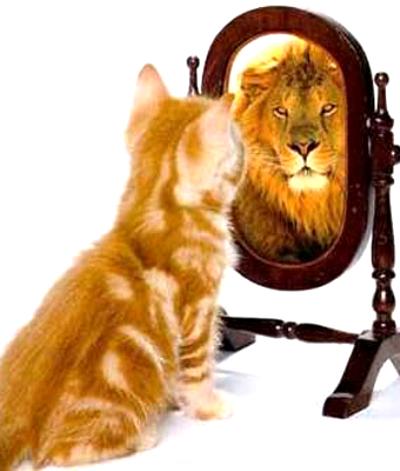
Finding a Cure for Self-esteem

I’m going to tell you how to make a million dollars.  It’s easy – just write Self-Help books.  This is about to become a growth industry that’s absolutely recession proof – like trash collector.  It’s based on the classic marketing model: give people a disease and then sell them the cure.  Here’s how it works.

Sometime back in the 70s-going-on-80s we decided that people were basically miserable.  There was no empirical evidence for this, but we thought that nobody was very happy.  Personally, I think we were just suffering from a 70s hangover — but who am I?  Anyway, rather than pass this woeful state of depression on to our children, we decided to change the world.  We loaded up our kids with self-esteem and convince them that every worldly delight was within their grasp.  All they had to do was set their mind to it, and they could accomplish anything.  Nobody looked at this strategy very closely; for example, we didn’t bother giving these kids tools like self-discipline.  We preferred to emphasize attitudes like entitlement.  Regardless, most people and institutions fought the self-esteem revolution with a vengeance.  Kids were cocooned and coerced.  Nothing unpleasant ever crossed their teeny horizons and we told them over and over, that they were special little beings.   Whenever anything disagreeable raised its ugly head, the cry of “What about the children?” would echo throughout the land, and that was the end of that.  Likewise, nothing short of “excellent” was ever sufficient praise for these kids — even for the most modest efforts.  This tyranny went from toddler to teenager and for twenty years, it ruled the world.  There are still traces of it kicking around today.  Believe me, you’re taking your life in your hands if you try to get between a hovermom and her cub.

Now, fast forward to 2011.  There’s this huge segment of people in our society who are around 30 years old.  They have a modicum of higher education, a low-maintenance job, a decent income and tons of leisure time.  They are that upper middleclass backbone that keeps our society on the straight and narrow.  Unfortunately, despite all the trappings of success and genuine well being, these folks are dissatisfied.  In fact, they spend most of their time actively pissed off.  Somewhere between high school and the Home Equity Loan, the world changed out from underneath them.  Through a series of knees to the emotional groin, they discovered that the world outside their immediate circle didn’t actually think they’re anything special.  In fact, the world in general thought they were rather dim bulbs and, for the most part, took outrageous advantage of them.  They still cling together cuddling each other with daily doses of “You’re so awesome!” but, in reality, they know they aren’t.  Plus and this is what dropped the ice cream into the mud puddle — they’ve discovered that praise and applause are not automatic and accolades for adults take a hell of a lot more hard work than it ever did in high school.

On a daily basis, these people just feel trapped.  Their kids are overweight and not at all as precocious as the ones on TV.  Their spouses are preoccupied (at best) but mostly uninterested.  Their coworkers don’t care if they live or die – not really.  And they might hang out with their friends, but they never have any lifestyle-changing adventures with them.  Nobody thinks they’re the best and the brightest anymore, and gravity is starting to make them sag.  It’s a pretty bleak picture.

Let me take a minute to clarify.  This isn’t every thirty-year-old in North America, but there are a lot of them.

The stunning part of this scenario is that the whole crowd still believe they’re the centre of the universe.  They think there’s something wrong with them, and they’re looking around for a get-fixed-quick-scheme.  You and I both know this is ridiculous but for the last five years or so, there’ve been any number of books, blogs and websites written about this.  They all focus exclusively on the rude awakening the vast majority of these self-esteem babies have been suffering.  The latest hocus-pocus is something called self-compassion, a kind of Stuart Smalley “give yourself a shake” therapy.  As far as I can tell, nobody, including the proponents, has any idea what it’s supposed to do.  However, depending on who you talk to, it can mean anything from auto-induced tough love to a hot bath with candles and incense.  The only universal is the 30-somethings are buying this stuff by the carload, and nobody ever says, “Life is tough.  Get off your ass and get used to it.”

So if you’re not doing anything this week and want to make a million dollars or so, come up with a reasonable-sounding title that has “you” or “your” in it.  Fill in 200 pages with a whole pile of short chapters with words like Honesty, Evaluation, Engaging, Embracing and Empowering in them.  Then, introduce the whole mess with a Foreward that blames the parents for everything from the death of disco to the current economic recession.  Finally, finish it off with a message for the readers to indulge themselves more often because they deserve it.

You’ve got the makings of a bestseller.  But whatever you do, don’t say, “Hey, look, you spoiled brats!  You need to get over yourselves.”  That’s not what they want to hear, and they’re not going to pay for that.

April Fool’s Day Quiz

April Fool’s Day is one of our unofficial holidays, like St. Patrick’s Day and Mother’s Day.  The origins of the holiday are obscured by history although it is mentioned in Chaucer’s Canterbury Tales (1392.)  Recently, however, an early reference to April “fools” was discovered in the archives of the ruined abbey of Saint Bartholomew in Newcastle.  The National Trust is currently translating what is believed to be the original manuscripts of the Norse saga Sven Spiser Sin Frokost.   The parchments, of course, are incomplete, but one section tells of a maiden named Margrathe who is visited by Norse raiders, led by a northern Dane called Svendalcus.  They threaten her with rape and murder, but she tells them if they leave her unmolested, she will cook them a glorious meal of a wonderful fish.  Margrathe, somehow manages to lure Svendalcus into the forest where she kills him, chops him into bite-size pieces, makes a stew and feeds him to his men.  The chronicler then has a little bit of medieval fun, calling the Vikings “April Fools” because they can’t tell the difference between fish (fisk, in ancient Norse) and people (folk.)  There is some speculation that this may also be the earliest reference to those hideous British traditions: the pun and the practical joke.  Seriously, scholars have determined there is a connection between Sven Spiser Sin Frokost and the French version of April Fools called Poisson d’Avril through the Norse conquest of the French coast known as Normandy.  Either way, the translation, although still incomplete, is available online at the National Trust.

In honour of the day, I’ve collected a few questions that are prankish in their subtlety.  Try to answer as many as you can without using Google.  Good luck!

On October 4th, 1957 the Soviet Union invented the Space Age when they launched Sputnik I into orbit.  Sputnik was shaped like a lopsided basketball.  It was approximately 60 cm (2 feet) in diameter and weighed about 84 kilograms (185 lbs.)  In space, of course, it was weightless.  Sputnik stayed in orbit around the Earth for three months and burned up completely when it re-entered the atmosphere.  Since then various countries have launched just about 8,000 objects into space — everything from tiny communication satellites to huge sections of the International Space Station.  Currently, what is the Earth’s largest satellite?

How long was the 100 Years War?

It’s generally accepted that an antique is an object which is at least 100 years old and represents a different time period.  After that, there’s really no limit.  Antiques can be as small as a set of Louis XIV thimbles or as large as the Bayeux Tapestries.  Their prices fluctuate wildly and are entirely dictated by current taste and public demand.  For example, King Tutankhamen’s solid gold coffin, which weights approximately 110 kilograms (240 lbs.) is worth around 5 and a half million dollars as a golden object, but as Tut’s Tomb, its actual value is priceless.  So, strictly in terms of size (and not price) what is the largest antique ever sold?

Americans honour their past presidents.  They build them libraries and give them museums.  They put them on stamps and on money.  They carve their faces into mountains.  They bury them with pomp and ceremony and their graves become national shrines.  But how many US Presidents are not buried in America?  Can you name them?

Speaking of presidents, who is buried in Grant’s Tomb?

Ty Cobb was one of the greatest baseball players of all time.  “The Georgia Peach,” as he was called, played 22 seasons with the Detroit Tigers.  He set 90 major league records.  He had 4,191 major league hits, a record that lasted until 1985 when it was finally broken by (disgraced) Cincinnati Reds outfielder Pete Rose.  Cobb still holds the record for the highest career batting average and most career batting titles.  However, unlike Babe Ruth, Joe Dimaggio, Mickey Mantle and many, many other great players of the game, no team has ever retired Ty Cobb’s number.  Why?

You’re standing on the south side of a river — with a tiger, a goat and a bale of hay.  Your mission is to get all three safely across to the north side of the river.  The current is too strong to swim.  You have a boat but it can only carry you and one other item.  If you leave the tiger unattended with the goat he will eat him; similarly, if you leave the goat unattended with the bale of hay, he will eat that.  How do you accomplish your mission?  (Here’s a hint: don’t think outside the boat.)

It’s spring, and the fashion houses of Paris, New York and Milan are about to unveil their new spring clothing lines.  Yves St Laurent, Gucci, DKNY and everybody else on the planet are introducing the new must-have what-to-wear fashions for women all over the world.  At every retail outlet from Mumbai to Maine, last year’s styles are going on sale to make room for the new stuff.  With all this going on, who is the largest designer and manufacturer of female apparel in the world?  (Here’s a hint: it’s not WalMart.)

Jimmy’s father has five sons named Ten, Twenty, Thirty, Forty and … What’s the fifth son’s name?

Ferdinand Magellan was the first European to circumnavigate the globe.  His expedition set out in 1519, and the voyage took 3 years.  Sir Francis Drake was the first Englishman to circumnavigate the globe.  He left England in 1577, and it also took him 3 years.  Two hundred years later, Captain James Cook was the greatest navigator and explorer of his age.  In all, he led three expeditions to circumnavigate the globe — in 1766, 1772 and 1776, but which one didn’t he finish?

What normal attribute of the human body makes the vast majority of people on Earth better than average?

Finally, which of these is a practical joke?
(Look for the answers next week in “All the Answers”)