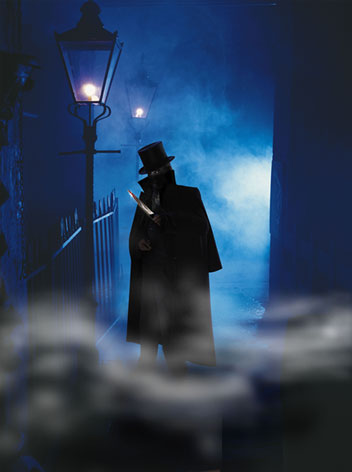
Jack the Ripper: Where Nightmares are Made

On chilly dark evenings, footsteps still echo in the Whitechapel district of London. Sometimes, if there’s a mist, you can hear them making their muffled way in the night. They are ghosts of sounds, travelling through time from their far away shadows. They live in our minds, where the light is dim and uneven. It flutters close to our eyes. The smooth stones at our feet slip away from us, and we step slowly. The streets are slender and the walls are high. They turn and fade with long shadows of shapes of people that move like silence in the night. There are corners and alleys too deep for us to see them…black shades…they are only sounds of voices that have no words. There are faces. We are among them. They move past us without features. Just seen and then gone. We cannot be sure of what we see. Our senses are tricked by the dark and the night.

This is the half-light world of the East End of Victorian London. It’s a world we’re never seen and can only imagine. It’s crowded and dirty and smells like rotten food and unwashed people. It’s a place that’s greasy and old, with narrow walkways and sputtering gaslight, shaded faces and shiny hands. Too many people and not enough money, it has shallow, gasping breath and it coughs dry and alone in the night. It’s a place where nightmares are made, and, in 1888, it made one. It called itself Jack the Ripper.

For a few months in 1888, Jack the Ripper stalked the dim streets of Whitechapel, London. Forever after, he walks in our collective memory. His name is synonymous with evil. He is that thing we look over our shoulders for, on lonely nights. He is the horror we can’t talk our way out of.

Jack the Ripper was not the first serial killer, nor the most prolific, nor even the most hideous (although that is a relative term) but he is the most remembered. People who know nothing about history, crime or violence still recognize his name. Given what we now know about serial killers and their motivation, he would be quite pleased to know that he’s been so famous for so long. He might even laugh.

So what is the fascination? Why do we still fear him? How did Jack the Ripper creep into our subconscious and why is he still hiding there? Even Count Dracula, a Victorian horror in his own right, doesn’t hold that kind of power. Why Jack the Ripper, and what did he do to all of us on those chilly, dark evenings in Whitechapel?

It was on such a night, August 31st, 1888 that Mary Ann Nichols walked down Whitechapel Road. She stopped outside a grocer’s on Osborne Street to talk with Emily Holland, who had once shared rooms with her. The Whitechapel Church bell struck the half hour; it was 2:30 am.  At 3:15, Constable John Thain passed the entrance to Buck’s Row and Constable John Neil walked down into the little street. There was nothing unusual.  At 3:45, Charles Cross and Robert Paul entered Buck’s Row on their way to work. They found the body of a woman, lying in the street. They thought she might still be alive so they went off to find a policeman.  Constable Neil was continuing his rounds, and, within a few seconds of Cross and Paul’s leaving he entered Buck’s Row and also found the woman.  She was Mary Ann Nichols, the first victim of Jack the Ripper.

At the inquest, it was revealed that Nichols’ throat had been cut — twice — from left to right, and the mutilation of her body had been done by a left-handed man — a very experienced left-handed man. The wounds were precise and death was immediate. Also, it was revealed that earlier, Nichols had been thrown out of her lodgings, because she had no money. This was not unusual. It was also stated that she had been drinking heavily and had gone “out” with a couple of men to get some money for more drink and to pay for a room for the night. This, also, was not unusual. Mary Ann Nichols was only one of many women, who, for a few pennies, would accompany a strange man into one of the dark corners of WhiteChapel, East End, London.

Eight days later, on Saturday, September 8th, at about 5:30 am, Elizabeth Long was walking down Hanbury Street. She noticed a woman she knew, Annie Chapman, but did not stop and talk to her. At approximately 6:00 am, less than a half hour later, John Davis left his room at #29 Hanbury St., probably to use the outdoor toilet. In a shallow recess by the door he discovered the body of a woman. It was Annie Chapman.

At the inquest, Elizabeth Long testified that she had been on her way to Spitalfields Market — Saturday was Market day – and that the streets were crowded. She also stated, that when she saw Annie Chapman, she was standing in front of #29 Hanbury St., talking to a man. She didn’t see his face, but she described him as about 40, wearing a dark coat and a deerstalker’s cap. She also said he had a shabby-genteel appearance and that he was only slightly taller than Chapman who was about 5 feet tall.  John Davis testified that, before he discovered the body, there had been nothing unusual about that morning, and he did not see or hear anything. Each of the other 17 occupants of #29 said exactly the same thing. The yard where the body was found was about 12 feet square and there was only one exit – back onto the street.  Annie Chapman’s throat had been cut from left to right, she had been horribly mutilated and part of her uterus had been removed. All of this took place in the dim light of morning — on a crowded London Street — in less than 30 minutes! And nobody saw or heard anything.

 

Friday: Jack the Ripper: Letters from Hell
Occupy Wall Street or Whatever!

I’m old enough to remember when Monty Python swept the neighbourhood.  It was too funny!  You just had to talk about it, and it kept getting better and better.  That’s the way I feel about the Occupy Wall Street movement which has rapidly turned into Occupy Whatever!  I simply can’t stop talking about it.  Every time it comes up on the panel, some new absurdity raises its lovely head and I’m caught between laughing my haunch off and saying to anybody who’ll listen. “Did you see that?”

First of all, let me get serious and clarify.  I’m not opposed to people exercising their democratic right to assemble and protest.  Knock yourself out!  Also, I do believe there is an unholy bond between large corporations and government that needs to be broken.  Okay!  I just think there’s a lot of jawboning going on when the same amount of energy could be put to good use.  If it’s any consolation, when the Tea Party starts yipping I feel the same way – more about that later.  The problem is, to skewer Marshall McLuhan, the movement has become the message.   It seems the physical act of standing, sitting or lying around in a park is of paramount importance here.  The commitment to change is limited to physically being there.  It’s like finding a charity or social cause on Facebook and tapping the “like” icon: it’s a nice gesture, but it doesn’t do any good.  In fact, every inane remark or other bit of nonsense, no matter how small, that comes out of the Occupy movement has the cumulative effect of downgrading what’s really important.  The genuine need for change and all the hard work that that entails has been hijacked by a dog and pony show that closely resembles America’s Got Whiners and it’s playing on Comedy Central.

For example, recently, conservative YouTubers (and quite a few others) were rolling on the floor laughing at a viral video from Occupy Atlanta.  You can see it here.  It’s long and full of boring, but if you check it out for just the first minute you can get the idea.  It shows just how directionless and ineffectual the Occupy Whatever! movement really is.

Spoiler Alert!

Notice the repeat bleating.  Didn’t any of these people read Animal Farm in high school?  Plus the incredulous look on Congressman Lewis’ face is priceless.  I’m not going to put thoughts in the guy’s head, but I don’t think he can believe what he’s seeing.  If you’re tough enough to hang in there to the end the best part is the guy with the microphone showing his commitment to nobody’s democracy but his own and shouting down the opposition.  I am certain that this is not representative of the entire movement.  However, if stuff like this is being passed off as a serious attempt to change society, all I can do is shake my head – words fail me.  And, the scary part is this is the public face of the movement, I’m not creative enough to imagine what goes on when the Smart phones are shut off.

In the same vein, here are some recent quotes:

“As long as these big corporations have a good crony capitalist in the White House, they can rely on DC to bail them out until the whole system goes bankrupt, which, I am afraid, is not very far off.”

“At this point, I don’t see any difference between George Bush and Obama.  The middle class is a lot worse that when Obama was elected.”

“I have children and grandchildren, and I don’t want them to grow up in this world.  I want the world to change.  It can be done.”

“I’m just saying this feels an awful lot like the 60s or 70s when I was a kid.  I mean, you have the same feeling out here that government and nation have parted paths, and the people will bring the government back to the nation.”

“We got sold out!  Banks got bailed out!”

“You leave your country and you expect things to be better in America, a step or two up from what you left back home.  And then there’s this rude awakening: America is just not what it used to be.”

“Republicans, Democrats and independents are stepping up and demanding we put our fiscal house in order.  I think the overriding message after years of borrowing, spending and bailouts is enough is enough.”

Time for a shock: these come from a BBC quiz, and they’re salted with quotes from the Tea Party.  But could you tell the difference?  It’s difficult if you’re not careful, because they sound so similar in tone.  Yet, I doubt very much if Tea Partiers would be welcomed with open arms by the folks who say they represent the 99%.  In fact, I think they`d be met with scorn.  By the way, you can take the quiz here, if you like.

It’s not one philosophy or one action or one quote that has turned the Occupy Whatever! movement into a joke for me.  It’s the incredible waste of organizational skills, time, money and energy.  The people who are part of the Occupy Wall Street movement have shown they can get things done.  They`ve shown remarkable organizational skills and a strong commitment to effect change.  If they were to turn that energy into just one bank boycott or one corporate embargo, the real effects would be monumental.  Unfortunately, I don`t think they realize that democratic change is a long and arduous process; it`s not a montage from an action movie.  It takes long hours and hard work, and while I recognize the need for speed to find a way out of this mess, I’m convinced it doesn’t involve sitting around some park all day.  However, I`ll take what I`m given and enjoy the grins — while I got èm.

The True Nature of Capitalism

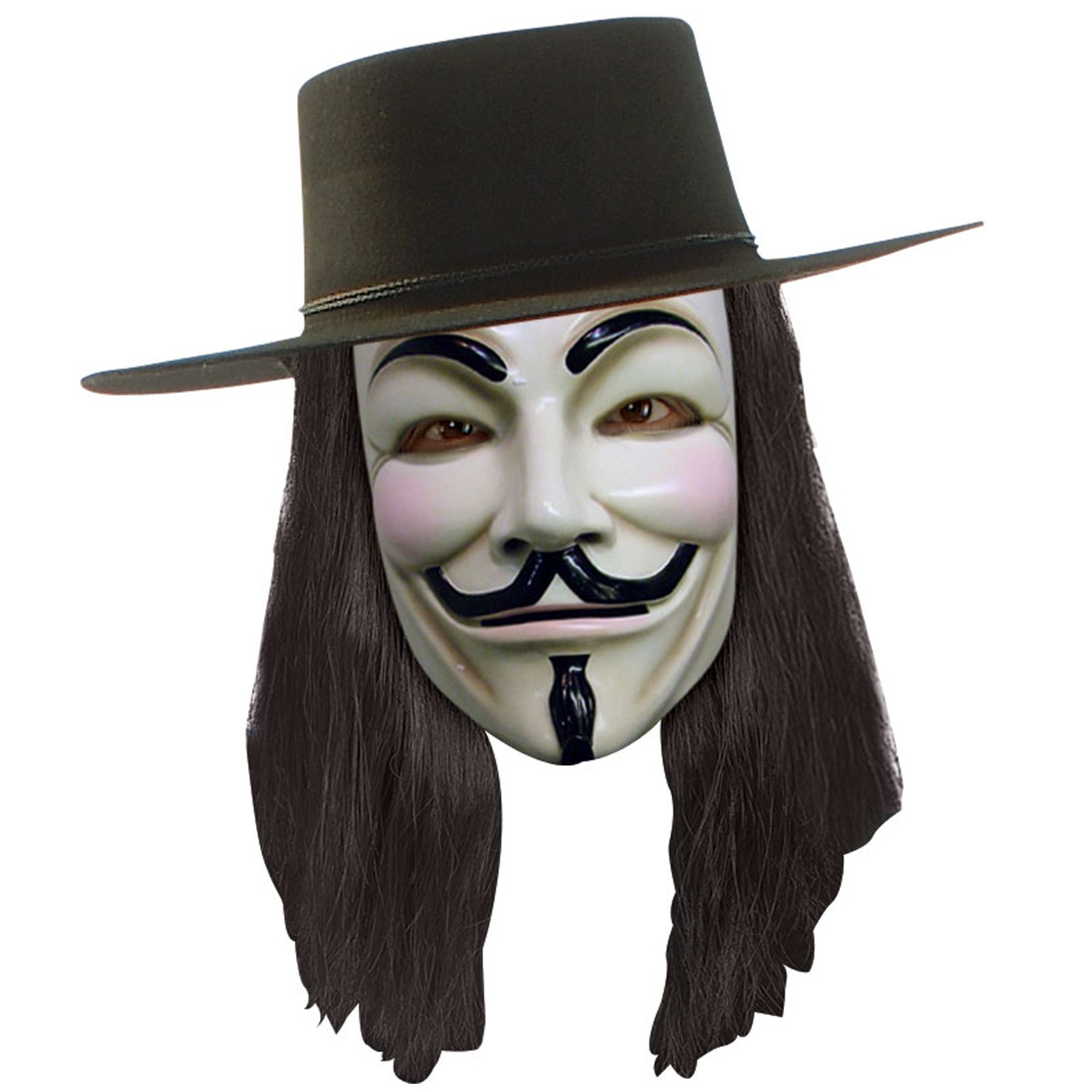
As the Occupy Wall Street party gets rockin’ across the continent and the capitalist factories of China fatten their profit margins by pumping out Vendetta masks (that’s a cheap shot, by the way) I think it’s time to hit pause on the merry-go-round and take a look at where we stand.  It’s obvious the Occupy Whatever! Movement has more talking heads than a defanged Hydra, but the general stream of consciousness coming out of these Babes-in-the-Woods is that capitalism is the villain – now and for all time.  I’ve begged to differ on that question ever since I discovered marbles were legal tender, but having an open minded discussions with these people is like trying to teach a moose to dance.  It’s just not going to happen because the moose keeps getting annoyed.  The major stumbling block is a marked misunderstanding of what capitalism is, does and what it’s supposed to be.  So, let’s take a look at the Merriam-Webster, shall we, and see if we can’t clarify the situation.

Cap-i-tal-ism noun: an economic system characterized by private or corporate ownership of capital goods, by investments that are determined by private decision, and by prices, production and the distribution of goods that are determined mainly by competition in a free market.

That’s a pretty milquetoast definition; no mention of fangs or green saliva.  And we all know that things we know to be true don’t always match what the dictionary would lead us to believe.  So let’s try again.

Here’s the real deal.  Capitalism is about making money – greed, if you will.  It’s a manmade device that has no conscience and no morality.  No other animal on this planet uses it, and it causes a distinct imbalance in the fortunes of all human beings.  It has pushed people to exploit their world — physically and intellectually — to discover and fashion goods and services to sell to their fellow human beings.  It’s responsible for all we see and a ton of stuff we don’t.  Nothing in this world happens without capitalism having its fingers in the pie.  So how did we get this way?

It all started when Grog the caveman had two spears and Eddie his neighbour had none.  Grog traded his extra spear to Eddie for whatever he brought back to the stew pot that evening.  It was a simple transaction.  Over the course of time, Grog discovered that he could eat pretty well — without chasing mastodons all day — just by sitting in the cave, making spears for guys like Eddie, who did.  It was a good arrangement.  Since that time, capitalism has grown and spread throughout the world.  It has gotten extremely complicated (for example, I have no idea if Hedge and Mutual Funds are even different) but, in essence, it’s still a series of simple transactions.  We might think we’re 21st century mega-sophisticates, but, in fact, we’re all just a pack of Grogs and Eddies, with various credit limits.

The current problem with capitalism comes not from a freewheeling free market meltdown but from a lot of contemporary malcontents who spent their formative years at the Alec Baldwin School of Economics where they whiled away their time studying Wishful Thinking with a midnight minor in dystopia movies.  They are under the growing misconception that the world has been corrupted by a select group of James Bond Super-Villains who are part of a nefarious plot to …do what?… I’m not sure.  In general, I think it involves taking money from people who don’t have any – if that makes any sense.  Honestly, I’m not being sarcastic I truly do not understand what the Super-Villains are being accused of  – aside from just being nasty.  Anyway, the malcontents have been yipping and storming around for the better part of my lifetime, raging against the capitalist machine.  Unfortunately, they’ve been bitching for so long that governments have forgotten their real function and are being dragged along for the ride.  FYI, government’s only purpose is to protect me and all the other mes out there, give us a good education, keep us healthy and not let us die alone in the dark.  However, with all the whining, the malcontents have managed to muddy the lens so badly nobody can get a clear picture of what’s going on anymore.  What they have always failed to understand, despite overwhelming evidence on a daily basis, is there is no Super-Villains’ Club, and capitalism is not the root of all evil.  In fact, it’s capitalism’s benevolence which has given us the time and leisure to theorize and chatter about just how evil capitalism is or isn’t – but that’s for another time.

Capitalism, by definition, is all about making money.  It has no other reason to exist, it’s not on the verge of extinction and it works in Darwinian splendour.  Companies that make money flourish and grow: companies that don’t wither and die.  It’s that simple.  Getting upset about huge corporate profits is like getting mad at the wolf for eating sheep.  It’s what they do.  And it’s just as senseless to ask the wolf (on moral grounds) to stop chewing, or, at least to share; that’s a good way to lose some fingers.  The only way to deal with the capitalist wolves among us is to control the one thing they’re all looking for, money – which, by the way, the general population already does.  The power of the people is not standing on a street corner, holding a sign; it’s the cash in their wallets, right there next to their credit cards.  If you want to put a stop to Kellogg’s, quit buying Frosted Flakes.  And here’s the beauty of that.  It works with every company on the planet from Grog and Sons: Spear and Arrow Makers, to J. P. Morgan, General Electric and Wal-Mart.

These Occupy the Whatever! people are just regenerated 60s activists, out there getting in the way of the general problem at hand.  I agree it’s about time we put a stop to this unholy alliance between government and business.  However, instead of ragging on the bankers for cashing their bailout cheques we should be outraged at the governments who wrote them in the first place.  Our governments have no business going into business for themselves; that’s not their job.  It’s time to make it plain to our elected elite that their time in office is directly connected to how well they manage our money.  Meanwhile, it’s also time to vote with our wallets and financially punish every capitalist who took our involuntary taxpayer generosity — by loudly doing business with their competition.  It’s the only thing they’ll listen to.

But until people recognize the true nature of capitalism, I’ll tip my hat to a new generation.  It’s no wonder we all got fooled again.