Arrivals:
 1924 – Lido “Lee” Iacocca, an American icon and automobile executive. Iacocca’s career can be summed up quite nicely as The Good, The Bad and The Ugly. The Good – Iacocca was part of the design team that put together the Ford Mustang, a classic automobile, in league with the 56 Chevy and the T-Bird. The Bad –In 1979, when Chrysler was going broke, he was the first of the Big Car Maker to go crying to the federal government for money. His extortion knew no bounds when he threatened every single taxpayer in the country with mass unemployment unless he got what he wanted – loan guarantees. The government caved, and it set the stage for this most recent robbery by Big Auto. And The Ugly – Iacocca was the executive behind the Ford Pinto, a car so badly designed it burst into flames whenever anybody touched it.
1930 – FM 2030, a futurist from the 70s who legally changed his name to reflect the future when, he believed, titles, gender and ethnic origin would be irrelevant. Unlike his colleague Alvin Toffler, FM (I guess, to his friends) was long on theory and short on analysis. He didn’t really spot trends and take them to a logical conclusion so much as just pronounce: this is the way it’s going to be. He did have some good lines though. Things like, “I have a deep nostalgia for the future” and “I’ll never eat anything that had a mother.” He is currently frozen in cryonic suspension, in Scottsdale, Arizona, waiting for the future.
—
 1989 – It’s a story that could have been written for Disney. On the morning of October 15th Wayne Gretzky, the greatest hockey player who ever lived, was on the verge of breaking Gordie Howe’s all-time scoring record. In fact, he was only one point behind. That night, Gretzky and his LA Kings were going to play the Oilers in Edmonton. The Oilers were Gretzky’s old team. He had played in Edmonton for 9 years, winning 4 Stanley Cups, thrilling the crowds and breaking every hockey record known to man – except one. Now, Gretzky was back and you could touch the tension as every eye in Edmonton, was focused on Wayne Gretzky one more time. It was his chance to give his old fans another glimpse at glory, and cool as the other side of the pillow, Gretzky didn’t disappoint them. At five minutes into the first period, he got an assist: the record was tied. Then, with less than a minute left to play and the Kings down 2-1, Gretzky whipped a backhand past goalie Bill Ranford to tie the game and break the record. Gretzky’s hometown fans went mad with delight. Cue the music? Cue the credits? No. The game went into overtime and Gretzky scored the winning goal just to punctuate his achievement for the fans who had supported him so hard for so long. Did Wayne Gretzky plan it that way? Probably. We don’t call him The Great One for nothing.
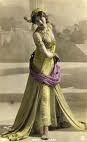 1917 – In the spy business, nobody has better brand recognition than James Bond — except maybe Mata Hari. She is the popular femme fatale in everybody’s fantasy. In reality, however, she wasn’t much of a spy, if she was a spy at all. Margaretha (Zelle) Macleod was a Dutch dancer and apparently not a very good one. She had learned her art in the wilds of Indonesia and her exotic movements were augmented by her inability to keep her clothes on during her performances. In Paris, in 1905, this got a lot of press. Very soon, Mata Hari, as she now called herself, was very famous and in demand — not only as a dancer but also a bed partner. “Promiscuous” is such a hard word, but Ms Macleod took to her newfound celebrity with enthusiasm and spent the better part of the next ten years horizontal. This is what got her into trouble. When World War I broke out, Mata Hari remained strictly neutral, sleeping with both French and German officers equally. The French, never ones to share, thought something nefarious was going on and arrested her for espionage. The trial was quick, the verdict was a formality, and on October 15th, she was taken out and shot. It was the making of the girl. At 41, she was losing her charms and would have simply vanished into history if that French firing squad hadn’t made her immortal.
—
Departures:
1930 – Herbert Henry Dow, the guy who started Dow Chemical. Apparently, according to tons of sources, this is how he turned little itty bitty Dow Chemical into DOW CHEMICAL, a huge international kick-ass company. It’s long and complicated (and I don’t believe it) but…. In the early 20th Century, Dow discovered a way to produce bromine (don’t ask me what it’s used for) for 36 cents a pound, which he sold in America. At the same time, a German cartel of companies had fixed the price of bromine in Europe at 47 cents a pound. They warned Dow not to sell his inexpensive bromine in Europe or they would flood the American market with cheap stuff and drive him out of business. Dow ignored them, and the Germans retaliated by indeed flooding the market with bromine at 15 a cents pound. Dow was on the verge of bankruptcy when he came up with a cunning plan. He bought all the bromine he could, repackaged it and shipped it back to Europe for sale at 27 cents, even lower than his original price. The Germans never caught on and Dow Chemical made a gabillion dollars. If nothing else, it’s a cute story.
1964 – Cole Porter, an American song writer from the days of Tin Pan Alley and Broadway theatre. However, unlike his contemporaries Porter was independently wealthy and so never had to work the music publicizing houses on West 28th in New York. He spent most of his early years in Paris and only came back to New York when his songs were successful. Over the years, he wrote some of the most popular songs of the era, including “Night and Day”, “Anything Goes”, “I’ve Got You Under My Skin”, and “Begin the Beguine.” He also wrote that standard favourite that’s in all the So You Want to Play the Guitar books “Don’t Fence Me In.” His most successful show was Kiss Me, Kate, a reworking of Shakespeare’s Taming of the Shrew!



 WD Fyfe