Time Flies October 6

Arrivals:

1846 – George Westinghouse, whose story is both complicated and boring but essential to everybody in the 21st century.  In a nutshell: when Thomas Edison invented the light bulb, he was absolutely convinced that it should be powered by direct current electricity (or DC.)  On the other hand, Westinghouse knew that this method wouldn’t work and proposed using alternating current (or AC.)  A huge feud ensued, but — long story short — Westinghouse was right and Edison was wro…wro… not right.  So, thank God for Westinghouse; if it hadn’t been for him, we’d all be watching television in the dark.

1914 – Thor Heyerdahl, an ethnographer who came up with this wild theory that the people of the South Seas (Polynesia) had actually come from Peru.  Most people pooh-poohed the idea but rather than sit in his office and argue about it, Heyerdahl decided to prove it.  He built a raft out of balsa wood, called it the Kon-Tiki, and set sail west from South America.  After about 3 months at sea, he eventually hit an island in the South Seas and thus proved it could be done.  This adventure made Heyerdahl really,  really famous.  However, recent DNA testing has proven that Heyerdahl was really, really wrong.  Oh, well!  At least he gave it a try.

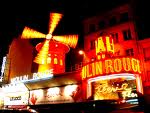
1889 – Joseph Oller opened The Moulin Rouge, a night club in Pigalle, the red-light district of Paris.  It was the saucy Belle of the Belle Epoque.  Legend has it that both the can-can and the striptease were invented at the Moulin Rouge.  This isn’t true.  However, they were both perfected there.  Originally a place for prostitutes to demonstrate their wares, the Moulin Rouge rapidly gained a reputation for its risqué performances.  Actually, this was its undoing.  As more and more of the gentry came to take a walk on the wild side, the shows became tamer and tamer until eventually the management actually hired real dancers.  Today, the Moulin Rouge is a weary tourist-trap with a fantastic show (like the Tropicana in Havana).  But you can still feel what it was like way back when, in the Moulin Rouge posters painted by the artist Henri de Toulouse-Lautrec.

1927 – The Jazz Singer premiered at the Warner Theatre in New York.  It was the first mainstream movie with sound.  There had been sound in films before this but nothing so realistic or synchronized.  From the moment Al Jolson says “Wait a minute, wait a minute. You ain’t heard nothin’ yet!”, “silent” movies just faded away, and “Talkies” became what people wanted to see.  It was the end of an era and of many actors’ careers, when their voices couldn’t bear the scrutiny of the new technology.  The great Charlie Chaplin laughed at sound and thought it was just a phase.  He believed comedy was essentially pantomime and continued to make “silent” movies until 1940 when the public’s overwhelming expectations forced him to change. 

Departures:

1892 – Alfred, Lord Tennyson, Victorian poet who, in 1854, wrote “The Charge of Light Brigade”, which has become an indictment of senseless war in general and Imperial adventures in particular.

Actually, Tennyson wrote it to glorify courage, honour and fortitude in the midst of brutality and war.  He saw nobility in duty and singular distinction in defying overwhelming odds.

When can their glory fade?
O the wild charge they made!
  All the world wonder’d.
Honour the charge they made!
Honour the Light Brigade,
  Noble six hundred!

It’s amazing what 150 years of high tech slaughter will do to high ideals!

1951 – Will Keith Kellogg, the guy who started the gigantic breakfast extravaganza, Kellogg’s, in Battle Creek Michigan.  With about a million different kinds of cereal Kellogg’s owns breakfast the way Donald Trump owns real estate.  Unlike other early food companies who diversified over the years, Kellogg’s mainly stuck with breakfast.  Recently, however, they’ve had to modify their product to accommodate commuters who can’t handle a bowl full of milk while they’re travelling to work.  They’ve met the challenge with cereals squashed into bars that can be eaten one-handed.  Incredibly, Kellogg’s Toasted Corn Flakes started out as health food – and it actually was.  Today, with all the salt and sugar and hydrogenated-whatever added, you might be further ahead to eat the box.


Time Flies October 5

Arrivals:

1902 – Ray Kroc, not the founder but the guy who is actually responsible for the omnipresent McDonald’s brand.  In the 1950s, Kroc took a hamburger joint in San Bernardino and turned into a fast food phenomenon with over 20,000 restaurants worldwide.  McDonald’s is everywhere and catches a huge amount of flak because of it.  It’s the corporation everybody loves to hate.  Over the years, McDonald’s has been accused of everything from inventing obesity to slavery.  I’m not kidding; they actually have.  When McDonald’s is not issuing statements and fighting lawsuits, they’re serving 58 million customers a day.  This is despite huge negative press from books like Fast Food Nation and films like Super Size Me.  It’s ironically fascinating that even though everybody and his friend takes cheap shots at Ronny Mac, there’s always a line at McDonald’s.

1954 – Sir Bob Geldof, a used-to-be musician whose string of hits with the Boomtown Rats equals one – “I Don’t like Mondays”.  In 1984, he made a bold career move and became an activist, specializing in African famine relief – virtually a recession proof-profession.  He co-write “Do They Know It’s Christmas” and organized Live Aid, the mega concert that featured all manner of musicians — except African ones.  It was a huge success, and the rest is history.  Geldof went on to become Sir Bob; and now he dines with presidents and kings.  He’s also available to speak about poverty and famine at about $100,000 a whack.  He doesn’t like criticism, though, and once called Russell Brand a very bad name.  Brand retorted, “It’s not surprising that Geldof is such an expert on famine: he has, after all, been dining out on “I Don’t Like Mondays” for thirty years.”

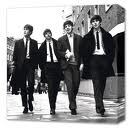
Nobody knew it at the time, but the universe changed completely on this day in 1962.  The Beatles released their very first hit, “Love Me Do”.  An innocuous little ditty, it simply swept aside everything else.  To say the Beatles were more than just musicians is like saying a tsunami is a big wave.  They were the sound, style, touch and attitude of the 60s and of the huge generation of Baby Boomers who inhabited it.  For the first time in human history, youth had a voice.  And even though it wasn’t any different from any other generation’s, it existed, and it was loud, and the Beatles symbolized it.  Their music, their look, their slang, but mostly their hair said, “Your children are different.”  It was a clear, visible separation of the generations.  Richard Lester, in his movie A Hard Day’s Night (1964), captured the sense of the early Beatles.  In essence it was the first music video, and it was filmed around style and social commentary (very mild-mannered), not a dedicated love interest.  It showed the Beatles as more than entertainment, but as an irreverent lifestyle that was being emulated by young people all over the world.

Departures:

1892 – It was the old West.  In a spectacular show of bravado, the Dalton Gang decided to rob two banks simultaneously, and, to really put mustard on the hotdog, decided to do it in their home town: Coffeyville, Kansas.  The Daltons had been robbing trains for about 2 years, so they knew their business.  Unfortunately the townspeople knew them.  The minute they went into the banks, the locals went for their guns.  In the shootout that obviously followed, Grat and Bob Dalton were killed, as well as two other members of the gang, Dick Broadwell and Bill Power.  A third Dalton, Emmett, survived, even though he was shot over 20 times.  Incidentally, every one of the Dalton brothers had started out as a lawman.

1983 – Earl Tupper, the fellow who invented Tupperware in the 1940s.  Originally, it was the only product of its kind (Tupper owned the patent) and it was sold in various stores.  In the 1950s, Tupper teamed up with a marketing genius, Brownie Wise, who withdrew Tupperware from the shelves and sold it exclusively through home parties.  It was the first multi-level marketing plan, and it succeeded beyond anybody’s wildest expectations.  Suddenly suburbia was up to its elbows in Tupperware parties.  Everybody had Tupperware, and everyone was making money – including Tupper.  In 1958, he sold Tupperware to Rexall, renounced his American citizenship and bought an island in the Caribbean to live on.

Time Flies October 4

Arrivals:

1931 – Dick Tracy, the original CSI, made its first comic strip appearance in the Detroit Mirror newspaper.  Tracy was way ahead of its time and you can see many of the story lines and plot twists in today’s TV crime dramas.  For example, Tracy thought nothing of killing off recurring characters – even if they were women or good guys.  This was unheard-of in the 30s.  In 1990, Tracy was briefly resurrected in a cool Warren Beatty movie with Madonna, Dustin Hoffman and Al Pacino.  Unfortunately, there may not be any more Dick Tracy anythings because, in an ironic twist, Tracy himself is tied up in court over who owns the rights to the hard-boiled detective.

 1941 – Anne Rice, author whose real name is Howard Allen O’Brien.  This woman has a lot to answer for.  Since when did vampires become cozy?  You want cozy?  Get a kitten.  Vampires, as dictated by the absolute real way the world works, are erotically evil creatures who stalk the shadows, looking for unsuspecting folks like you and me.  They entice us, trap us and do things to us that are…un-natural.  Since Rice introduced Lestat in Interview with the Vampire (1976) vampires have become cuddlier and cuddlier.  Now they’re riding the bus and sitting in Biology class.  Is our society so desperate to feel good that we have to kill off the last remaining wonderful evil?  What next?  Who Wants to Marry a Zombie?  Don’t say I didn’t warn you?

1883 – The old time train line, The Orient Express — even the name conjures up luxury and intrigue! — began its original journey from Paris to Constantinople.  More than nostalgia, the Orient Express is the elegance of the art of travel that has been lost in the 21st century.  I don’t care how you dress it up; fast food, fast planes, canned air and a movie are not the way to travel.  Slipping through the Austrian twilight at a table with a coffee and the after dinner evening – that’s the way to go.  Then rocking asleep, listening to the exotic Balkan night rushing past your window and waking up to a whole different country:  this is leisure.  Unfortunately, it’s been lost forever — the Orient Express shut down in 2009.

1957 – Sputnik I was a satellite launched by the Soviet Union.  It marked the start of the Space Age and the Space Race and confirmed that the United States was #2 in terms of engineering and technology.  Bluntly, it scared the hell out of them.  In actual fact, Sputnik I didn’t do much: it was basically an 84 kg football.  However, the launch kicked Cold War hysteria into high gear.  The Americans immediately threw huge wads of money at vast new programs in science and math, and the result was Neil Armstrong who one-small-stepped onto the moon, 12 years later.  A super trivia question nobody ever gets: What is the largest satellite orbiting the Earth?

Departures:

1989 – Graham Chapman, is the 5th funniest man who ever lived.  He’s still funnier than Terry Gilliam (who isn’t funny at all, anymore.)  Chapman was part of Monty Python’s Flying Circus, the British television show that was the biggest influence on comedy since Charlie Chaplin.  He died the day before the 20th anniversary of the first broadcast of Flying Circus.  When asked to comment, Terry Jones, another Python, called it “the worst case of party-pooping in all history.”

1989 – Secretariat, was apparently, a gifted athlete, who won the Triple Crown (Kentucky Derby, The Preakness and the Belmont Stakes) in 1973.  He was the first horse to win the Triple Crown since Citation in 1948.  He was honoured all over the place.  ESPN named him one of the top 100 athletes of the 20th century.  The Post Office issued a Secretariat stamp in 1999, and he was inducted into the Kentucky Athletic Hall of Fame, the first non-human to be so honoured.  Not bad for a guy who couldn’t even tie his own shoes.