Game Of Thrones: What’s Next?

game-of-thrones

It’s been two weeks since the end of Game of Thrones, and people are still bitchin’ about it.  The problem is there are just too many unanswered questions.  For example, who paid off Cersei’s debt to the Iron Bank?  What was the conversation when Grey Worm and the Unsullied show up on the Isle of Naath – unannounced?  (“Who the hell are you guys?”)  And who was that Dornish-lookin’ dude at the High Council?  So, in the interests of a little closure, here are a few (somewhat plausible) scenarios that could happen after the credits rolled for the last time.  There are tons more, but seriously, does anybody have another nine years to invest in the soap opera that’s Westeros?  (D’uh!  Of course we do!)

The Dothraki – Suddenly unemployed (it’s not as if rape and pillage are marketable skills) the Dothraki are pretty much screwed.  A lot of them hitch a ride home on whatever ship will take them.  However, the ones that remain end up bitter old men, working in the stables shoveling horse poop for rich people or giving pony rides to bratty kids at Name Day parties.

Daenerys Targaryen – After Drogon carries Daenerys’ body away, he flies to Meereen and drops it at the feet of Daario Naharis.  Always the pragmatist, Daario summons Kinvara, Melisandre’s Red Priestess boss, and commands her (on pain of death) to bring Dany back to life.  After some argument (and a knife to the throat) she does.  Overjoyed, Daario hugs Daenerys, but she pushes him away screaming, “Where are my dragons?”  Realizing that the love of his life is batshit crazy, Daario builds the world’s first lunatic asylum and puts her away.  However, he commands all the guards and attendants (on pain of death) to maintain the charade that Dany is still Queen of the World and any day now, Jon Snow will show up and put her on the Iron Throne.  Eventually, Daenerys escapes, but by this time, she’s so looney tunes she thinks she can fly and jumps off the parapets of the Great Pyramid.  Daario breathes a sad sigh of relief and continues to rule the cities of Dragon’s Bay, wisely and well, for many years.  He dies quietly in his sleep.

Drogon – Since dragons live for millennia, after dropping Daenerys at Daario Naharis’ feet, Drogon spends the next several centuries getting ambushed by every wannabe tough guy trying to prove himself by “slaying the dragon.”  (This includes a much-mistold encounter with St. George.)  Finally, fed up with constantly looking over his shoulder and wanting a little peace and quiet in his retirement years, he moves to “a land called Honahlee” and changes his name to Puff.

Bran Stark – Absolutely useless as king, Bran spends most of his time flying around with his raven friends — just like he did during the Battle of Winterfell.  When called upon, he generally stares off into space and offers enigmatic instructions that nobody understands.  Invariably, all his best advisors get pissed off and quit, leaving the Six Kingdoms in the hands of the two drinking buddies, Tyrion and Bronn.  Bars, brothels and bingo halls thrive, and King’s Landing becomes a Vegas-style tourist destination for the rest of the world.

Davos Seaworth – After leaving the Small Council, Davos opens a school for illiterate sailors, called Sink or Spell.  It’s an incredible success, and soon there are franchises all over Westeros.  Davos becomes rich, buys Dragonstone, totally renovates the place and turns it into a retirement community for pirates, smugglers and other seafaring folk.

Samwell Tarly – After years of frustration, Sam also quits the Small Council (he wasn’t actually a maester, anyway.)  He moves Gilly and the kids to Castle Black, where he can be close to his only friend, Jon Snow, and pursue his passion for writing.  Away from worldly distractions, he produces a number of respected volumes, including Greyscale: Kill or Cure; Gendry Baratheon: The Man Who Should Be King; and his most famous work, The Girl with the Valyrian Dagger.

And finally:

Arya Stark – In her quest to find what was west of Westeros, Arya’s ship, the You Know Nothing (homage to her brother/cousin, Jon) sailed to the edge of the world.  Apparently, the Flat Westeros Society was right.  They narrowly escape falling into the abyss and, after a few mutinies, manage to make it back to land.  After that, Arya spends many years trying to jumpstart a series of business ventures (including forming a mercenary group called The Second Daughters) each one more unsuccessful than the last.  Reduced to living in abject poverty (with a serious ale habit) Arya’s life changes dramatically when Samwell Tarly’s biography of her, The Girl with the Valyrian Dagger, becomes a surprise bestseller.  She goes on the lecture circuit and earns a decent living, making personal appearances and selling autographs.  Unfortunately, her estate would miss out on the big money when the HBO miniseries, Arya, starring Jennifer Lawrence and Alex Baldwin (as the Winter King) is cancelled in preproduction and replaced by something called Game of Thrones.
News Of The World (2019)

earth

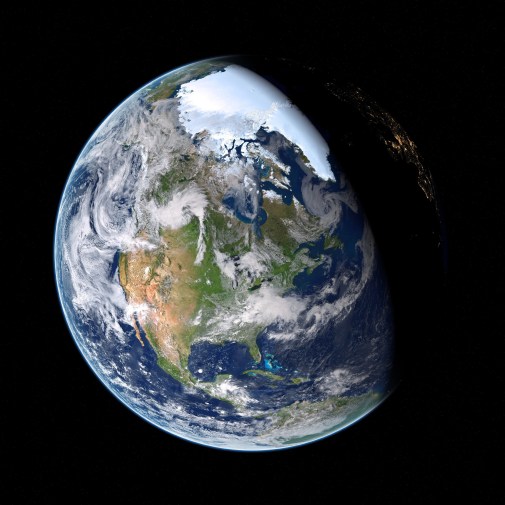
Generally, North Americans believe that the rest of the planet is inhabited by angry people who hate us, so it follows that most media outlets don’t concern themselves with “foreign” news.  However, as spring slowly slides into summer — and there’s not much going on locally except baseball and basketball playoffs — a few items slip across the ocean, just to prove we remember that the rest of the world is still rotating.

In Hong Kong, a couple of thousand people held a march to commemorate the 30th anniversary of Tiananmen Square.  (Yeah, it’s been 30 years!)  Meanwhile, in the rest of China, nobody much noticed because officially the Tiananmen Square Protest (read Massacre) didn’t happen.  Oddly, most of the marchers look as if they weren’t even born when Deng Xiaoping ordered his tanks to clear out the student protesters and reaffirm Mao’s maxim that “political power grows out of the barrel of a gun.”

The European elections are over and, like 99.99% of North Americans, I have no idea what just happened.  First of all, it looks as if everybody and his sister gets a political party in Europe, and aside from the Greens, they’re all known by a variety of acronyms.  Plus, aside from the far right and the far left, to the untrained eye, they all look remarkably similar.  Then there’s the question of who represents who.  Here’s just one example (and this scenario played out all over Europe on Sunday.)  According to the media, in France, Madame Le Pen kicked the crap out of Monsieur Macron — except Le Pen’s group got 23.3% of the vote and Macron’s got 22.4%.  That’s less than a 1% difference!  And, according to my math, this means the majority of French people (54.3%) voted against both of them.  I understand that Europeans have been playing at politics for a lot longer we have and – look around — it’s worked out pretty well.  Besides, given our recent electoral history, we have no room to point fingers.  However, from this side of the Atlantic, it all looks like Game of Thrones – minus the dragons.

And finally, back in Asia

There’s a serious problem on Mount Everest – overcrowding.  Apparently, so many people want to stand “at the top of the world” that climbers have to form a line to reach the summit.  That means standing around in the cold and the wind and the lack of oxygen, waiting your turn.  And this year, the wait time is anywhere between 30 minutes and an hour and a half.  The problem is, like tourists everywhere, these idle alpine adventurers are dropping tons of trash on the pristine mountainside – which (from the pictures I’ve seen) isn’t pristine any more.  And, unlike most tourist attractions, there aren’t any janitors up there to clean up the mess.  As much as I worry about climate change, I’m beginning to think it’s going to be bucket lists and selfies that destroy this planet.

Tune in again next year for more news of the world.

Happy Birthday, Queen Victoria!

queen-victoria

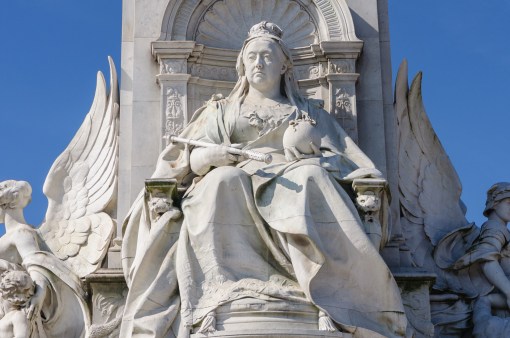
Today is Queen Victoria’s 200th birthday!  For those of you who are unfamiliar, Queen Victoria is William and Harry’s great-great-great-great-grandmother.  She reigned in Britain when Britain ruled the world.  She was the most influential woman of her time (by a nautical mile) and therefore has been both loved and hated by history.  Currently, thanks to PBS and Judy Dench, she’s enjoying a personal renaissance, and some have even bestowed upon her the saintly title of early feminist.  However, I’m old enough to remember a time when she was considered the embodiment of every uptight, sexually repressed, socially regressed, narrow-minded, bigoted, colonial attitude that was wrong with our world.  In fact, not so many years ago, calling someone “a Victorian” was an insult.  Popular culture is history’s master, and even though history does not change, the people who write about it do – regularly.

The truth is, there is no one verifiable truth about Queen Victoria.  At various times during her reign, she was both adored and scorned, lauded and mercilessly lampooned.  She was frequently cheered in the streets but also survived 8 assassination attempts.  As a constitutional monarch, she had no legitimate power, yet through her ministers and her family, she influenced events in Britain, Europe and around the world for over half a century.  It isn’t called the Victorian Age for nothing!

The reason our appreciation of Queen Victoria gyrates so wildly is that our world prefers simple, expedient answers.  We don’t like nuances and generally resort to: good people do good things; bad people are sinister and “never the twain shall meet.”  Unfortunately, Queen Victoria doesn’t fit into that neat package.  She used her influence and the British navy to fight the slave trade, yet believed it was Britain’s God-given duty to colonize and civilize the world.  She encouraged legislation that successively gave women better education and employment opportunities, property ownership and even divorce and child custody rights; yet she believed gender equality was “a mad, wicked folly.”  She supported the Reform Act that extended the vote to most working men — even though it eroded her royal power.  She rode on a railway when it was still considered dangerous.  She used chloroform in childbirth when religious leaders were preaching that it was against God’s will.  She was an early advocate of the telegraph, photography and, in later years, the telephone and electric lighting.  Yet, despite her great admiration for science, she still believed she was Queen by “divine providence.”  And even though she was the secular head of the Church of England, she employed Protestants, Catholics, Sikhs, Hindus and Muslims in the Royal Household, and, for years, stubbornly campaigned for (and eventually achieved) religious freedom throughout the British Empire.

In contemporary times, we have the luxury of hindsight and the leisure to judge, and we’ve judged Queen Victoria rather harshly.  Generally, she’s still seen as the reigning queen of a nasty world of Dead Europeans who, by their thoughts, words and deeds, were sinister.  Actually, history isn’t that tidy.  The truth is Queen Victoria was neither a pioneering feminist nor a blood-spattered imperialist; she was simply a person of her time.  She did the best she could with what she had to work with — and it takes a lot of arrogance to criticize anybody for that.