
How Josiah Wedgwood Created Black Friday

Today is Black Friday.  It’s the day when half of America lines up for hours, searching for an incredible bargain, and the other half waits impatiently to sell it to them.  To some, this is the seed of greed in America; to others, it’s capitalism at its finest.  Regardless, unless you flunked math, history and economics in high school, you know that without our much maligned consumer society, our world would look markedly different from what you see out your window.  And most of us would have neither the energy nor the leisure to wax critical on the whole process.  However, did you ever wonder why people buy so much useless junk and literally kick other people out of the way to get at it?  The answer’s quite simple, really: Josiah Wedgwood had smallpox — and survived.

History does not always run on big events.  For example, one of the reasons Drake, Hawkins and rest of Elizabeth I’s Seadogs kicked the snot out of the Spanish Armada in 1588 is their cannons were shorter.  Thus, they could reload faster and, therefore, held superior firepower over their Catholic adversaries.  A much overlooked detail, to be sure, but absolutely critical to the history of Europe and the world.

Likewise, Josiah Wedgewood’s bout with smallpox as a child, insignificant as it might be, was a decisive event that changed human history.  When Josiah recovered, he was apprenticed to his elder brother as a potter, but because his legs were still weak from his illness (a condition that lasted his entire life) he couldn’t work the foot-powered potter’s wheel for long periods.  Thus, he spent just as much time designing pottery, working with glazes and selling his wares as he did actually making them.  Unhitched from the daily grind of producing pottery, Josiah had time to figure out how to effectively sell it.

The story is long and quite complicated, but here is the gist of it.  Josiah’s business career coincides with the early rumblings of the Industrial Revolution.  James Watt’s steam engine was putting people power out of business and creating a whole new class of folks unfettered from the land.  This new urban class of managers, foremen, clerks, artisans etc. etc. were stuck in the “middle” — between the obscenely rich aristocrats and entrepreneurs and the virtual slaves from the mines and the factory floors.  Plus, unlike their parents, who had been practically self sufficient, without land, this new “middle” class had to buy every necessity of life rather than produce it for themselves.  Essentially, Josiah’s pottery works had been handed a huge new consumer demographic that nobody had seen before.

Obviously, all these new people moving into the urban centres of Britain needed plates, cups, jugs etc. but that’s just the nuts and bolts part of the story.  What separates Josiah Wedgwood from every other guy with a lump of clay was his understanding of the market.  He realized that this new middle class was not living hand to mouth.  They had a modicum of leisure time and disposable income.  He also saw that they were willing to use this income to distinguish themselves from the poorer urban masses.  More importantly, even though they didn’t really have the coin for it, they wanted to emulate the social superiority of wealthy aristocrats and the new-fashioned nabobs of trade and industry.  Josiah simply thought outside the 18th century box and cashed in on this middle class social climbing.
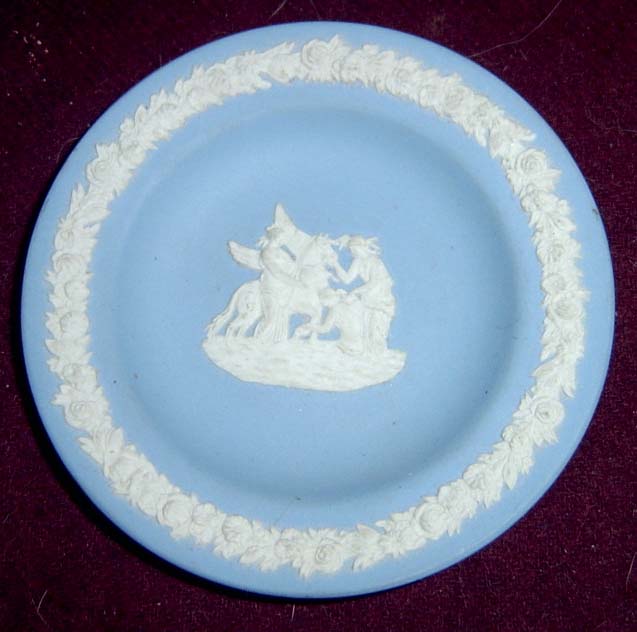
Basically what he did was create unique pieces for his wealthier clients — and then mass produce less expensive knockoffs for everybody else.  Suddenly Harvey and Maud, the uppity couple from Pembroke Lane, could eat off plates and saucers just like King George III’s wife, Queen Charlotte.  Wedgwood even called it “Queen’s Ware.”  His Jasperware was elegant, expensive and exclusive, but anybody with enough shillings could afford a posh replica.  Plus, Wedgwood treated his clients as if they were upper class, by bringing the marketing tools of the aristocracy down to the middle class.  He used illustrated catalogues just like exclusive art dealers.  He had salesman who came to your home, written guarantees and free delivery.  Not only that, but he also produced objects of art.  Before Wedgwood objet d’art were the exclusive province of the upper class who could afford to squander money on trinkets and antiquities.  After Wedgwood, everybody had household ornaments.  He made Etruscan busts and Grecian urns that were well within the price range of even the most modest home.  The thriving middle class, striving to keep up appearances, bought this stuff by the wagon load.  Even today, his powder blue and ivory white Greek motif plates are recognized around the world, and many of us have these useless pieces cluttering up our shelves and coffee tables.

Josiah Wedgwood was the first person to sell the sizzle instead of the steak and make you pay for the garnish.  He understood how the middle class ego worked and, frankly, it hasn’t changed in over 200 years.  Those people who lined up this morning for the 80 inch television set aren’t buying solid walls of entertainment; they’re buying a physical expression of their success.  By recognizing this need and filling it, Josiah Wedgwood single-handedly create our consumer society in the late 18th century.  It’s been going strong ever since.  Today’s madness at Target, Kohl and Walmart is just the latest incarnation of two centuries of marketing.
The True Nature of Capitalism

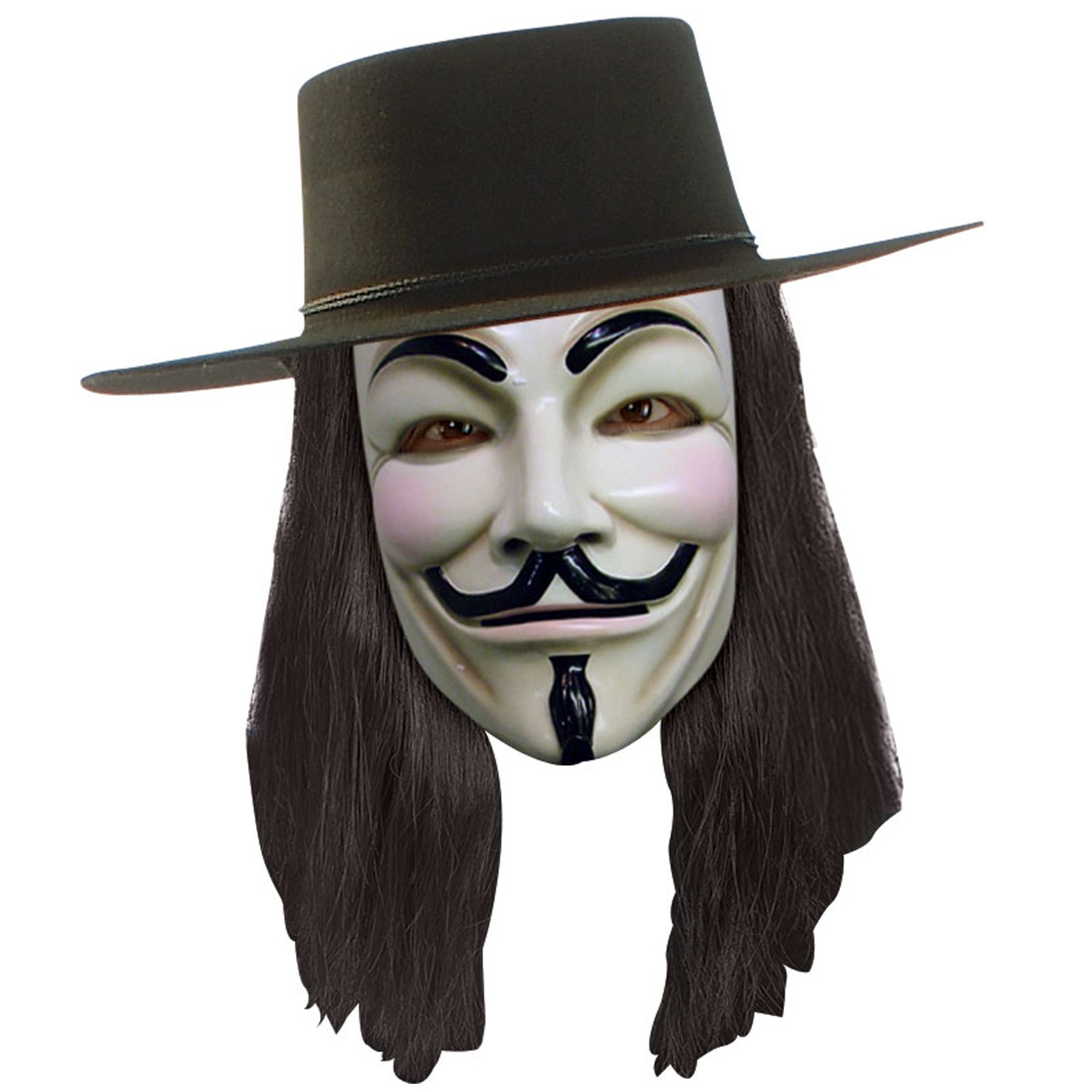
As the Occupy Wall Street party gets rockin’ across the continent and the capitalist factories of China fatten their profit margins by pumping out Vendetta masks (that’s a cheap shot, by the way) I think it’s time to hit pause on the merry-go-round and take a look at where we stand.  It’s obvious the Occupy Whatever! Movement has more talking heads than a defanged Hydra, but the general stream of consciousness coming out of these Babes-in-the-Woods is that capitalism is the villain – now and for all time.  I’ve begged to differ on that question ever since I discovered marbles were legal tender, but having an open minded discussions with these people is like trying to teach a moose to dance.  It’s just not going to happen because the moose keeps getting annoyed.  The major stumbling block is a marked misunderstanding of what capitalism is, does and what it’s supposed to be.  So, let’s take a look at the Merriam-Webster, shall we, and see if we can’t clarify the situation.

Cap-i-tal-ism noun: an economic system characterized by private or corporate ownership of capital goods, by investments that are determined by private decision, and by prices, production and the distribution of goods that are determined mainly by competition in a free market.

That’s a pretty milquetoast definition; no mention of fangs or green saliva.  And we all know that things we know to be true don’t always match what the dictionary would lead us to believe.  So let’s try again.

Here’s the real deal.  Capitalism is about making money – greed, if you will.  It’s a manmade device that has no conscience and no morality.  No other animal on this planet uses it, and it causes a distinct imbalance in the fortunes of all human beings.  It has pushed people to exploit their world — physically and intellectually — to discover and fashion goods and services to sell to their fellow human beings.  It’s responsible for all we see and a ton of stuff we don’t.  Nothing in this world happens without capitalism having its fingers in the pie.  So how did we get this way?

It all started when Grog the caveman had two spears and Eddie his neighbour had none.  Grog traded his extra spear to Eddie for whatever he brought back to the stew pot that evening.  It was a simple transaction.  Over the course of time, Grog discovered that he could eat pretty well — without chasing mastodons all day — just by sitting in the cave, making spears for guys like Eddie, who did.  It was a good arrangement.  Since that time, capitalism has grown and spread throughout the world.  It has gotten extremely complicated (for example, I have no idea if Hedge and Mutual Funds are even different) but, in essence, it’s still a series of simple transactions.  We might think we’re 21st century mega-sophisticates, but, in fact, we’re all just a pack of Grogs and Eddies, with various credit limits.

The current problem with capitalism comes not from a freewheeling free market meltdown but from a lot of contemporary malcontents who spent their formative years at the Alec Baldwin School of Economics where they whiled away their time studying Wishful Thinking with a midnight minor in dystopia movies.  They are under the growing misconception that the world has been corrupted by a select group of James Bond Super-Villains who are part of a nefarious plot to …do what?… I’m not sure.  In general, I think it involves taking money from people who don’t have any – if that makes any sense.  Honestly, I’m not being sarcastic I truly do not understand what the Super-Villains are being accused of  – aside from just being nasty.  Anyway, the malcontents have been yipping and storming around for the better part of my lifetime, raging against the capitalist machine.  Unfortunately, they’ve been bitching for so long that governments have forgotten their real function and are being dragged along for the ride.  FYI, government’s only purpose is to protect me and all the other mes out there, give us a good education, keep us healthy and not let us die alone in the dark.  However, with all the whining, the malcontents have managed to muddy the lens so badly nobody can get a clear picture of what’s going on anymore.  What they have always failed to understand, despite overwhelming evidence on a daily basis, is there is no Super-Villains’ Club, and capitalism is not the root of all evil.  In fact, it’s capitalism’s benevolence which has given us the time and leisure to theorize and chatter about just how evil capitalism is or isn’t – but that’s for another time.

Capitalism, by definition, is all about making money.  It has no other reason to exist, it’s not on the verge of extinction and it works in Darwinian splendour.  Companies that make money flourish and grow: companies that don’t wither and die.  It’s that simple.  Getting upset about huge corporate profits is like getting mad at the wolf for eating sheep.  It’s what they do.  And it’s just as senseless to ask the wolf (on moral grounds) to stop chewing, or, at least to share; that’s a good way to lose some fingers.  The only way to deal with the capitalist wolves among us is to control the one thing they’re all looking for, money – which, by the way, the general population already does.  The power of the people is not standing on a street corner, holding a sign; it’s the cash in their wallets, right there next to their credit cards.  If you want to put a stop to Kellogg’s, quit buying Frosted Flakes.  And here’s the beauty of that.  It works with every company on the planet from Grog and Sons: Spear and Arrow Makers, to J. P. Morgan, General Electric and Wal-Mart.

These Occupy the Whatever! people are just regenerated 60s activists, out there getting in the way of the general problem at hand.  I agree it’s about time we put a stop to this unholy alliance between government and business.  However, instead of ragging on the bankers for cashing their bailout cheques we should be outraged at the governments who wrote them in the first place.  Our governments have no business going into business for themselves; that’s not their job.  It’s time to make it plain to our elected elite that their time in office is directly connected to how well they manage our money.  Meanwhile, it’s also time to vote with our wallets and financially punish every capitalist who took our involuntary taxpayer generosity — by loudly doing business with their competition.  It’s the only thing they’ll listen to.

But until people recognize the true nature of capitalism, I’ll tip my hat to a new generation.  It’s no wonder we all got fooled again.

Occupy Wall Street: Part Deux

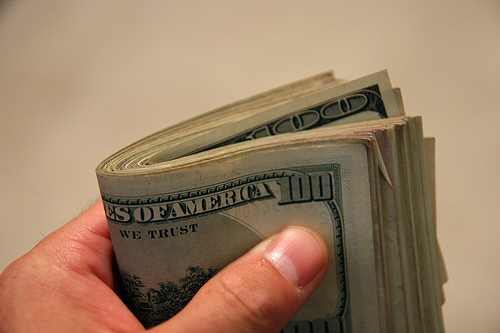
I thought it was hilarious when Warren Buffett, the guy who can blow his nose with 100 dollar bills, supported Barack Obama’s Let’s Eat the Rich 2012 Pre election Campaign.  It was a ringing endorsement from somebody who doesn’t need to care how much the taxman wants.  After all, he’s got a room full of lawyers to make sure Barack’s IRS boys don’t get it.  But for pee-your-pants funny, nothing beats George Soros coming on as the Daddy Warbucks spokesperson of the Occupy Wall Street movement.  If I were a conspiracy theorist, I’d be wondering if he didn’t want to tear the system down just so he can buy Manhattan cheap and turn it into a private estate.  It’s always stand-up comedy time when the uber-rich start telling us peons how the real world works.  Quite frankly, when your other seven cars are limos, there’s a reality gap between you and the general population.   George might be talkin’ sympathy and solidarity, but I don’t think he’s going to be slingin’ his Armanis in Zuccoti Park any time soon.   Hell, even Roseanne, Sarandon and their celebrity cohorts clear off before dark, and Sean Penn hasn’t even shown up yet.  Word is he’s still saving puppies in Egypt.

Personally, I’m always suspicious when rich people start talking about effecting positive change with no visible return on their investment.  They didn’t learn to be rich people at the Mother Teresa School of Business Ethics, so when I can’t see their profits, I keep my hand on my wallet, just in case.  Buffett, Soros and their ilk are intimately connected to Wall Street, so when they endorse a movement that’s committed to tearing it down, I get worried that they’ve got something up their sleeves that isn’t a Rolex.  But let’s put these characters on the back burner for a minute.  We’ve got to keep an eye on them but…  For all the other capitalism-sucks-and-I-hate-everything crowd, here’s how capitalism actually works to effect positive change – and all without a bunch of gullibles wasting their time in New York, tapping their laptops to the tune of “We Shall Overcome.”

Half a world away from the high media lights of Occupy Wall Street, the streets of Paris, France are undergoing a fundamental change.  The city is building an infrastructure to accommodate a fleet of pay-as-you-drive electric cars.  Called Autolib’ and based on Paris’ successful Velib’ bicycle sharing system, the project is a partnership between the French government and the Bollore Group.  You can read more about it here, but in essence, it works like any car cooperative.  You pick up a car at one of the stations, go about your business, and when you’re done, you return it to a station and walk away.  And if that isn’t sweet enough for you, the cars are 100% electric so you haven’t dirtied your hands with ethical or unethical oil and you haven’t contributed to the chokehold humans are putting on our urban environment.  Plus it’s cheap: individually, it’s a lot less expensive than buying, outfitting, insuring and feeding even the smartest Smartcar for a year.  It sounds like a wonderful idea, but let me set the record straight: it’s all a capitalist plot.

The Bollore Group is a family-owned multibillion Euro company that’s been around for just about two hundred years.  They obviously have some smart folks in their planning department because somebody looked around and said something like, “Hey!  The days of sucking oil and belching smoke are coming to an end.  We need to change our modus operandi and cash in on the future, n’est ce pas?”  So in the true spirit of capitalism, they’ve invested 100 million Euros in the Autolib’ adventure which is a good product that people will buy into – and oh yeah, it might just change the urban landscape forever — for the better — but that’s beside the point.   The reason they’ve put their money where their minds are is to make a profit, pure and simple.  And here’s the rhetorical question: what’s wrong with that?  Autolib’ cars are going to move people around Paris, cheaply, easily and greenly.  Will anybody be harmed if the Bollore Group makes a busload of Euros doing it?  I doubt it.

The bottom line is it’s worth it to me (and a lot of other people) to pay for a quick, occasional rent-a-car.  It’s a great little idea in so many ways I’m not seeing a downside.  My world is getting clean, reliable, personal, inexpensive transportation that puts a big dent in the fossil fuel empire we all live in.  I’m paying less for it than for dinner and dancing once a month — and it can work in every city in the world.  Somehow, I find it hard to get angry at the corporate person who put this thing together.  If he or she or their families live in abject opulence for the rest of all eternity, it’s no skin off my nose.

So here’s my question: who has done more, in the last few months, for the future wellbeing of this fragile rock in space I live on, Vincent Bollore and his group of rabid capitalists or the Occupy Wall Street professional malcontents?  Never mind; I already know the answer.  The real problem is the folks down at Liberty Park (or whatever they’re calling it this week) are not part of the solution.  And as the movement spreads, they’re going to be an even bigger part of the problem.  If even half of those people wake up tomorrow morning and commit that same energy to effectively changing the world instead of wandering around rebaking pies in the sky, we could fix some of these problems.  But it’s not sexy to toil away at little ideas when you’ve already decided to repaint the big picture.  As far as I’m concerned, as a wise man once said quite differently: “The fault is not in the banks but in ourselves.”

Friday: The True Nature of Capitalism