 Everybody knows we’re getting fat. You can’t go anywhere without being reminded that our Western society is plumping up like a corn-fed chicken. And it’s not just statistical anymore: some far away Body Mass mumbo-jumbo spread over an entire state and distilled into a percentage. No, everybody knows somebody who’s carrying an extra twenty pounds (Sometimes, it’s them!) and most of us actually know a few people who are waddle-over-to-the-fridge-for-another-corndog obese. Fat is breaking down the doors of our society and coming in for dinner. Normal is becoming one more chin and one less visible belt buckle. Everybody knows this, but nobody knows why.
The general consensus is our society’s problem with personal lard comes from junk food and video games. While this is true, it doesn’t tell the whole story; to do that, we need to go back in history and look at who is actually responsible: Henry Ford.
Most of us know Henry Ford as the guy who invented the assembly line. This is a good way to pinpoint him in history, but it’s not strictly true. The automobile assembly line was invented by Ransom E. Olds; Ford just borrowed (stole?) the idea and made it work. Olds went on to build Oldsmobiles, and Ford changed our society forever. Here’s how it happened.
Throughout most of history, ever since Khufu the Egyptian decided he wanted a big funeral, there was only one way to make things: local craftspeople. These were individuals (and, probably, their sons) who toiled away, usually at home, producing one item at a time. This changed with the Industrial Revolution when factories and machines started doing the grunt work, but, in general, precision jobs, even into the 20th century, were done individually. In 1913, Henry Ford (who, BTW, didn’t much care for history) changed all that by producing an inexpensive and reliable automobile on that assembly line he stole borrowed. The economics is complicated, but, in a nutshell, Ford brought his labour costs down to the point where he could actually pay better wages. In essence, he produced an automobile his own workers could afford. It went like this: while Ford was selling his Model T for $360.00, over in Lansing, Olds was selling Oldsmobiles for $4,000.00 (the price of a decent house at the time.) In fact, Ford made the Model T (or “Tin Lizzy”) so cheap you were a fool not to buy one. Within ten years, there were 20 million automobiles on the roads of America, and nearly half of them were Model T’s.
So what has this got to do with fat people a hundred years later? (I thought you’d never ask?) This is where the dominos of unintended results start to fall, and once they get going, they move pretty quickly.
Before Ford’s transportation revolution, the majority of the workload in the world was done by a vast army of horses. They pulled, hauled and lifted most everything, carried goods and people to and from the marketplace, plowed and harvested, and, on Sunday, took the family to church. They were as ubiquitous then as the automobile is today. However, as more and more people bought cars and trucks for work, pleasure and transportation, fewer and fewer people needed those horses. They began to disappear, along with all the industries associated with them. Things like livery stables, harness shops and the thousands of farms that once grew the hay, straw and oats needed to keep a four-legged army on the road every day: all went poof. Over the next few years, millions of acres of fertile land went from producing fodder for horses to food for people. The change was so rapid and our agriculture so efficient that, all over the country, growers,  distributors and wholesalers found themselves with literally megatons of extra food on their hands. They had to figure out a way to get rid of it without bankrupting everybody through oversupply. Their solution was to add value to their products by processing them: the difference in price between a bag of flour and a loaf of bread is huge.
This also widened their market. With rapid transportation, processed and preserved food could be shipped all over the country — with no loss to spoilage. Suddenly, Georgia peaches were available in Milwaukee in cans, Florida oranges showed up in Chicago as juice and Nebraska corn became nachos in Arizona. Bisquick™ biscuits might cost a little more than grandma’s, but they were way more convenient. Frozen Birdseye™ vegetables didn’t taste quite as good as fresh, but it beat shopping every day. Canned and frozen became the norm as we sacrificed taste and quality for quick and easy.
From there, it was only a matter of time (two decades and a World War) until the automobile itself became a link in the food chain. In the 50s and 60s, young people with disposable income were spending their evenings cruising the suburbs a la American Graffiti. The drive-in restaurant was the place to meet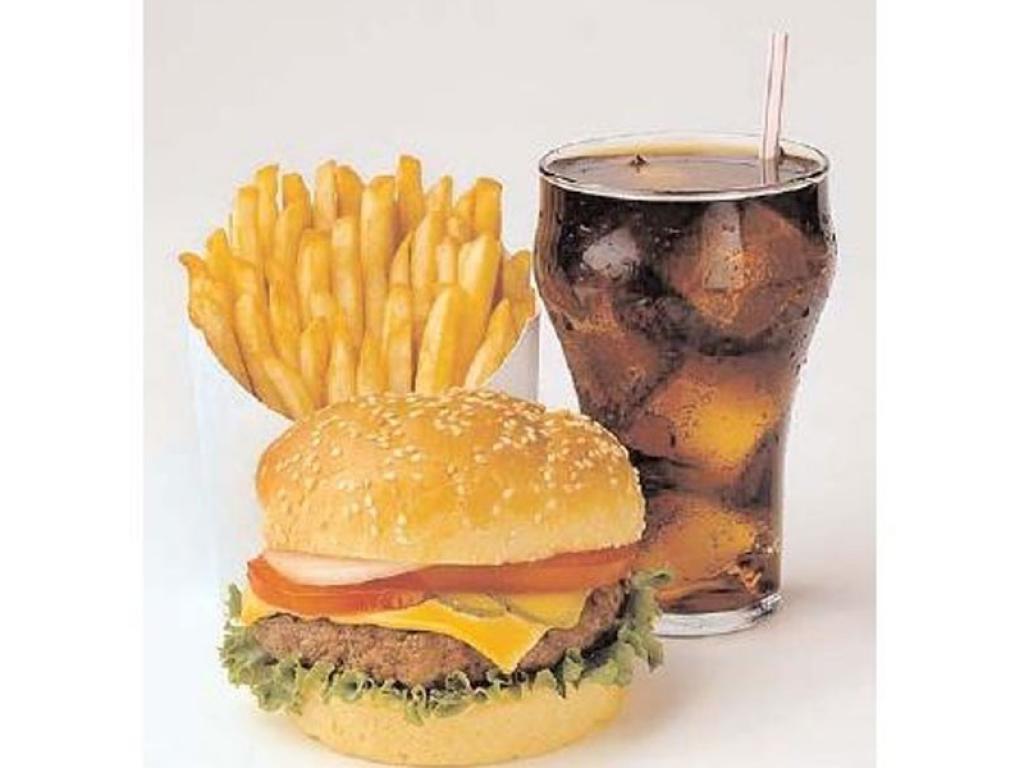 and greet the opposite sex and share a Cherry Coke™ and a cheeseburger. In the great scheme of things, an Idaho potato might be worth about 10 cents on its own, but turn it into Mcdonald’s fries, and it’s worth a dollar; 45 cents worth of Texas hamburger became a $3.99 Big Mac™. Raised on cake mixes, TV dinners and canned vegetables, young people didn’t hesitate to gobble up acres of fast food and wash it all down with buckets of soda pop. It was the natural extension of value-added foodstuffs.
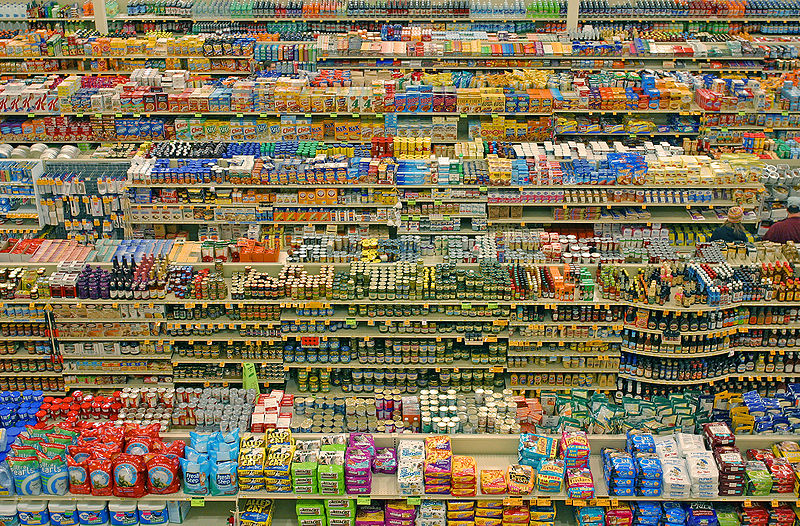
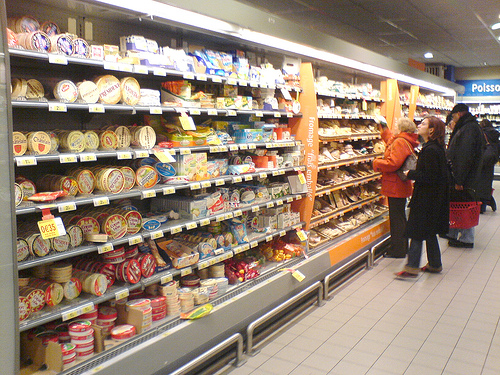
Today, automobiles allow us to live miles away from where we work, but on the long road home, there’s a cornucopia of drive-thru fast food, just waiting to eat dinner with our children — and we don’t even have to get out of the car! Our long commutes mean very few of us pause to eat breakfast or have time to pack a lunch. Therefore, after sitting in the car for an hour and at our desk for another two, by the time the cashew-carrot muffin comes around — healthy or not — we have two. It’s easier and sometimes cheaper to eat the carefully preserved pre-chopped salad, feed the snack pak lunch to our kids and microwave the frozen lasagna for dinner than to buy a raw chicken and figure out what to do with it. Actually, it’s incredibly difficult to even find unfinished food anymore. Next time you’re in a grocery store, look around and compare processed food to fresh; it usually runs at a three-to-one ratio.
Of course, we’re getting fat, and, yes, Angry Birds™ and Pizza Pops™ are to blame. But history has a way of giving us unintended results, and if Henry Ford had been a farmer instead of an economic wizard, we might not have had either.

 WD Fyfe