Arrivals:
1846 – George Westinghouse, whose story is both complicated and boring but essential to everybody in the 21st century. In a nutshell: when Thomas Edison invented the light bulb, he was absolutely convinced that it should be powered by direct current electricity (or DC.) On the other hand, Westinghouse knew that this method wouldn’t work and proposed using alternating current (or AC.) A huge feud ensued, but — long story short — Westinghouse was right and Edison was wro…wro… not right. So, thank God for Westinghouse; if it hadn’t been for him, we’d all be watching television in the dark.
1914 – Thor Heyerdahl, an ethnographer who came up with this wild theory that the people of the South Seas (Polynesia) had actually come from Peru. Most people pooh-poohed the idea but rather than sit in his office and argue about it, Heyerdahl decided to prove it. He built a raft out of balsa wood, called it the Kon-Tiki, and set sail west from South America. After about 3 months at sea, he eventually hit an island in the South Seas and thus proved it could be done. This adventure made Heyerdahl really, really famous. However, recent DNA testing has proven that Heyerdahl was really, really wrong. Oh, well! At least he gave it a try.
—
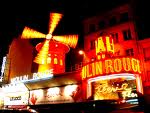 1889 – Joseph Oller opened The Moulin Rouge, a night club in Pigalle, the red-light district of Paris. It was the saucy Belle of the Belle Epoque. Legend has it that both the can-can and the striptease were invented at the Moulin Rouge. This isn’t true. However, they were both perfected there. Originally a place for prostitutes to demonstrate their wares, the Moulin Rouge rapidly gained a reputation for its risqué performances. Actually, this was its undoing. As more and more of the gentry came to take a walk on the wild side, the shows became tamer and tamer until eventually the management actually hired real dancers. Today, the Moulin Rouge is a weary tourist-trap with a fantastic show (like the Tropicana in Havana). But you can still feel what it was like way back when, in the Moulin Rouge posters painted by the artist Henri de Toulouse-Lautrec.
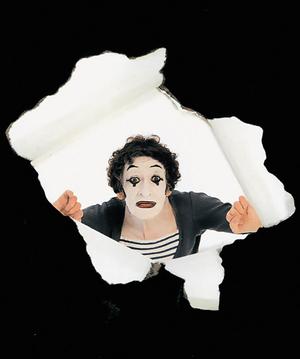
1927 – The Jazz Singer premiered at the Warner Theatre in New York. It was the first mainstream movie with sound. There had been sound in films before this but nothing so realistic or synchronized. From the moment Al Jolson says “Wait a minute, wait a minute. You ain’t heard nothin’ yet!”, “silent” movies just faded away, and “Talkies” became what people wanted to see. It was the end of an era and of many actors’ careers, when their voices couldn’t bear the scrutiny of the new technology. The great Charlie Chaplin laughed at sound and thought it was just a phase. He believed comedy was essentially pantomime and continued to make “silent” movies until 1940 when the public’s overwhelming expectations forced him to change.
—
Departures:
1892 – Alfred, Lord Tennyson, Victorian poet who, in 1854, wrote “The Charge of Light Brigade”, which has become an indictment of senseless war in general and Imperial adventures in particular.
Actually, Tennyson wrote it to glorify courage, honour and fortitude in the midst of brutality and war. He saw nobility in duty and singular distinction in defying overwhelming odds.
When can their glory fade?
O the wild charge they made!
All the world wonder’d.
Honour the charge they made!
Honour the Light Brigade,
Noble six hundred!
It’s amazing what 150 years of high tech slaughter will do to high ideals!
 1951 – Will Keith Kellogg, the guy who started the gigantic breakfast extravaganza, Kellogg’s, in Battle Creek Michigan. With about a million different kinds of cereal Kellogg’s owns breakfast the way Donald Trump owns real estate. Unlike other early food companies who diversified over the years, Kellogg’s mainly stuck with breakfast. Recently, however, they’ve had to modify their product to accommodate commuters who can’t handle a bowl full of milk while they’re travelling to work. They’ve met the challenge with cereals squashed into bars that can be eaten one-handed. Incredibly, Kellogg’s Toasted Corn Flakes started out as health food – and it actually was. Today, with all the salt and sugar and hydrogenated-whatever added, you might be further ahead to eat the box.
 WD Fyfe