Occupy Wall Street: A History Lesson

I don’t usually spend much time perusing Forbes’s billionaire list (it makes me feel poor) but between the current economic meltdown and the Occupy Wall Street protests, I decided to take a look and see just who these rich bastards are.  A couple of things surprised me.  First of all, a third of the Top 100 is still American.  I would have thought the numbers would be a lot less.  Granted, some are repeat offender family members, but that’s to be expected; inheritance laws being what they are.  (The Waltons, for example, have enough money to buy Neptune if they want to, and the Koch brothers aren’t far behind.)  The second thing is most of the names I expected to see aren’t there.  There are no Rockefellers, Astors, Gettys, Duponts or Vanderbilts – just to name a few.  In fact, none of the names I remember as being synonymous with wealth show up on the list at all.  It strains the imagination to believe the Carnegies and the Harrimans are looking around for lunch money, but they’re no longer the super rich I remember from my youth.  Times apparently have changed, and 100 million dollars ain’t what it used to be.  The next thing that struck me is that, of the thirty-two Americans in the Top 100 Billionaires, twenty of them are “self made” according to Forbes, and of those twenty, ten of them “made themselves” with computer technology.  All in all, an interesting haul of useful information from a twenty-minute Google search, but what does it all mean?

First of all, the recent rumours of America’s economic demise are greatly exaggerated.  The US government might be choking itself to death on debt, but it seems American business, if not booming, is bashing along quite nicely.  Secondly, despite what some would tell you, being rich is not a closed shop.  Money in America is not concentrated in the hands of a few permanent players who refuse to share the ladder of success with the poor.  I’m not stupid enough to think that every kid is a potential Horatio Alger character, but I am smart enough to know they exist.  After all, two thirds of the richest people in America made their money in their own lifetimes.  Their offspring might end up ignorant dolts like Conrad Hilton’s, but these folks haven’t been sitting on their assets, reaping the dividends of grandpa’s ingenuity.  Thirdly, wealth is transitory.  JohnD. Rockefeller was once the richest man in the world; today, the Rockefeller family doesn’t even get honourable mention.  To paraphrase Chris Rock (cleaned up for an adult audience) “He might be rich, but he ain’t wealthy.”  Finally, America has moved past the Industrial Age.  Aside from the Walmart children and Michael Dell, the super-money in America is being made out of digital thin air.  The Industrial Revolution is over, and the Post Industrial Revolution is upon us — even though most of us don’t recognize it.

Here’s a quick history lesson.  The wealthy industrialists of the 19th century made massive amounts of money on the backs of cheap, abused immigrant labour and indolent government regulations.  They pillaged their way across America giving most governments the finger and doing as they pleased.  They fixed prices, bought politicians and corrupted both the Stock Market and the money supply.  They centralized supply and demand in their own hands and built a personal infrastructure that exploited the hinterlands to facilitate it.  Their workers were used up, worn out and thrown away, like any other tool of the trade.  They were, at best, laissez-faire capitalists and, at worst, ruthless pirates.  In short, they weren’t called Robber Barons for nothing!
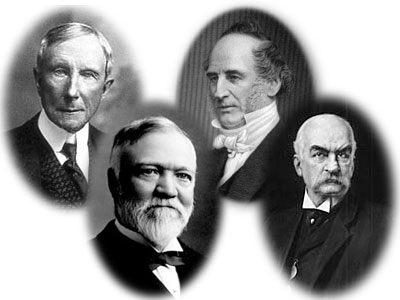
Now here’s the part the Occupy Wall Street crew never learned in high school.  That was over a hundred years ago.  Those people are dead.  The only thing that remains from those times is the names of the guilty, shown off on places like Carnegie Hall, Rockefeller Center and The Ford Foundation — to name just a few.  Laissez-faire capitalism hasn’t been seen in America since FDR learned his ABCs.  Since 1933, there have been enough government regulations written to clearcut every forest in Minnesota, twice over.  Commercial legislation may not be perfect but – folks, get it through your heads — it’s not 1881 anymore.  Labour and industry are not naturally antagonistic.  Arbitrarily resetting the clock to accommodate that lost political philosophy isn’t doing anybody any good.

Not only that but the great smokestack industries of America are dying, and they’re not coming back.  American workers do not toil away in factories and foundries these days, making good money building toasters and televisions.  They don’t have to; Asians are doing it for them.  And because of that, the days of lifetime assembly line employment are fading.  Just take a quick look at Detroit and points south.  Industry in America doesn’t need masses of unskilled labour anymore, and it’s never going to again.  This is a fact that howling at the banks is not going to change.

Here’s another history lesson.  When the Industrial Revolution swept through England and America, every home-based craftsman who didn’t change was wiped out.  For good or evil, they were ruined by the changing economic times.  We live in a similar age.  As the old-fashioned industries fold up shop in America, workers are going to have to change.  They are going to have to get new marketable skills — skills that are in demand.  Work ethic isn’t good enough anymore.   Nor is trying to resurrect dying industries, and screaming for industrial concessions and government bailouts to do that, is madness.

Open your eyes!  Google, Facebook, iTunes, Oracle and on and on are all billion dollar industries with no moving parts.  They’re American — born and raised.  They bestride the world beyond the wildest fantasies of Rockefeller, Vanderbilt, Astor and J.P. Morgan put together.  They’ve turned ordinary people into multi billionaires in less than a decade.  This is the future.

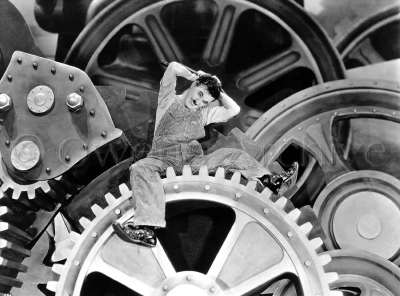
We can be Luddites, metaphorically tossing our shoes into the virtual machinery of our times with Occupy Wall Street nonsense, or we can look beyond our past (and our noses) to see what’s happening around us.   Either way, we need to remember this:  the Luddites may have stopped the machines for an afternoon or even a whole day, but they didn’t stop history for one second.

Labour Day: A Brief History

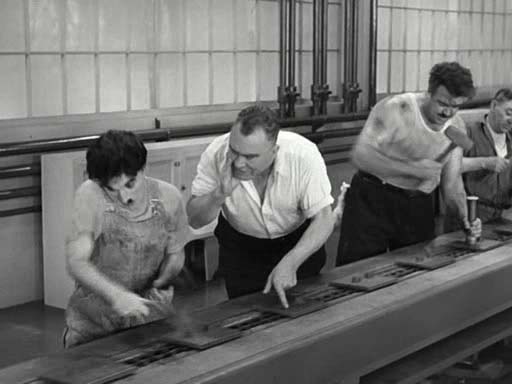
As we all know, Labour Day has fallen on hard times as of late.  Canadian commerce keeps chugging along; therefore, many workers (labourers, if you will) have to work on the first Monday of September.  For the rest of us, it’s the last long weekend of the summer — time to heat up the barbeque, cool off the drinks and relax one last time – ‘cause pretty soon the great Canadian winter is going to bring us six months of Don Cherry and Hockey Night in Canada.  However, as you’re sitting with a cold one — fat, dumb and happy the kids are going back to school tomorrow – here are a few historical tidbits to chew on before the steaks are ready.

Legend has it that Labour Day is actually a Canadian invention.  It’s the result of two canny Conservative Prime Ministers and a hard-case Liberal newspaper editor.  I don’t know if the story’s exactly true or not, but I’ve heard it told this way a couple of times, so it’s mostly true.  Besides, it makes a good story.

In 1872, the Typographical Union of Toronto was on strike against The Toronto Globe newspaper – which, by the way, is the great-grandfather of today’s Globe and Mail.  The noted Liberal politician, George Brown, was none too happy about this, since he had founded the Globe in 1844, and it was his paper they were striking against.  He rooted around in his law books for a while until he found some antiquated anti-labour laws and had the strike leaders arrested for conspiracy – 24 of them!  Other labour leaders decided not to take this sitting down and organized a mass rally in Ottawa for the first Monday of September, 1873.  Remember, Canada was less than a decade old at this point, and there was great concern that the shiny new Dominion would not survive.  Socialists roaming the streets, making outrageous demands (a 54 hour work-week, for one) were seen as a serious threat to the orderly conduct of business and to the country.

Enter one, Prime Minister Sir John A. Macdonald, the wiliest politician this country has ever produced.  In 1873, Macdonald’s government was up against the wall.  (Long story short: they’d been taking bribes from railroad companies — really, really big bribes.)  So, where other people saw lawless socialists attacking the foundations of our nation, Sir John saw potential votes and a chance to slap the crap out of the Liberals.  He promised the marchers, as God was his witness, to repeal the anti-union laws.  Unfortunately, the railroad bribes were so big that Macdonald’s government didn’t survive.  Fortunately, his promise did.  The Trade Union Act of Canada was passed in 1874.  Pretty soon, everybody and his brother (pun intended) were legally demanding things like a 54 hour work-week and time to eat their lunch — and those September marches continued.

Meanwhile, in the USA and over in Europe, trade unionists were working away, trying their best to get a few decent working conditions themselves.  Internationally, labour leaders all had the same agenda.  They wanted something a little better than legalized slavery for their people.  Then, if there was any good will left over, they figured a little dignity for the working man would be nice, too.  Most union demonstrations revolved around May 1st.  The thinking was that people would come out and join spring dempnstrations after a long winter.  Plus, the trade union/radical/socialist message could tag team with May Day celebrations already in progress.  After all, May Day stuff — like music and street fairs and dancing around a pole — had always been the practice of common folk.  Obviously, the thinking was sound because the idea caught on.  Today, May 1st is universally recognized as International Worker’s Day — and it’s a legal holiday in over 80 countries!

Back in Canada, the trade union movement was growing apace and in the industrial heartland of the north eastern United States, it was exploding – almost literally.  On May 1st, 1894, labour disputes erupted in violent and deadly clashes in Cleveland, Ohio.  Then, at the end of June, the first large interstate labour action took place: railroad workers in several states staged a boycott in what came to be known as The Pullman Strike.  Just as an aside, American President Cleveland ordered federal troops to put down the strike.  Hundreds of people were injured and 13 union workers were killed.  However, this isn’t important to our main story.

Our Prime Minister at the time, John Sparrow Thompson (never heard of him have you?) saw what was happening in America and around the world and decided to defuse the situation before it got started.  As the Pullman Strike in the US was entering its fourth week, on July 23, 1894, his government declared that the first Monday in September would be a national holiday.  It would be in the tradition of those original Ottawa trade union marches — dedicated to the labour movement and appropriately called Labour Day.*  The more cynical historians say this was simply a move to draw attention away from May 1st.   Whatever Thompson’s motivation, even though Canada had its share of labour pains, it avoided most of the bloody clashes that characterized the international labour movement — situations like the Haymarket Massacre in Chicago in 1896, which started as a peaceful May Day union march and ended up scattered with corpses — over twenty dead.

Labour Day was a small concession to the early trade union movement, but it demonstrated that Canada and Canadians do recognize the importance of ordinary working people.  So, if you get a minute between long weekend activities, lift your glass to the men and women who gave us this holiday: there were a lot more of them than George Brown, John A. Macdonald and John Thompson.

*President Grover Cleveland also created an American Labor Day less than a month later.

Curses: Foiled Again!

As Campaigner-In-Chief, Barack Obama, fights for his political life, his strategy is simple.  He gets off the Darth Vader Bus of Despair with a clear message for the American people: “Folks, let’s all hitch ourselves to the Blame Bush Bandwagon ‘cause it’s all his fault.”  Little does he know that he is maligning the single most accomplished president in the history of America!  Dubya was the one guy who stood tough against both the stars that govern us and metaphysical forces that we cannot yet hope to understand — and triumphed.  No other president — not Lincoln, Roosevelt, Kennedy or even the great Ronnie Reagan — can stand in the hall of greatness where Dubya resides.  He is solitary in his achievement, a true American hero, who lifted his country out of a morass of hopelessness.

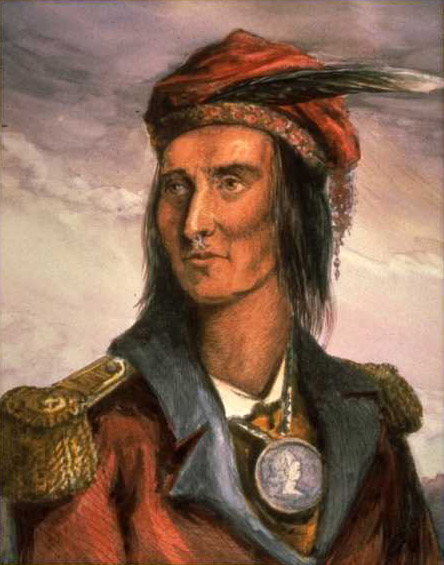
It all started 200 years ago, in 1811, when resident bully William Henry Harrison and an American militia army kicked the crap out of Tecumseh’s little brother Tenskwatawa and a bunch of his Native American buddies at the Battle of Tippecanoe.  However, don’t throw the racist stone just yet, because the Native Americans involved had been swindled out of their land — fair and square — a couple of years before at the Treaty of Fort Wayne.  Moreover, they had surrounded Harrison’s militia with intent to do bodily harm and (all sides agree) threw the first punch (or spear as it were.)

The problem was Tenskwatawa was a bit of a part-time spiritualist, and he had foreseen the battle in a dream.  He told his followers that the American bullets would not harm them, and there would be a great victory.  Unfortunately, hot steel very seldom obeys the laws of the spirit world, and when the dust settled, the great victory was somebody else’s.  The result was an end to a mighty Native Confederation (and a lot of name calling around the council fires that winter.)

Click all you want there's nothing there

At this point, the tale gets really interesting and the evidence gets really sketchy.  In fact, the only hard proof we have that any of the rest of this ever happened comes from a 1930s Ripley’s Believe it or Not cartoon.  However, in my day, most people who never made it out of History 12 (and some who did) believed it.  The story goes that because of Harrison’s actions at Tippecanoe, Tecumseh or his brother Tenskwatawa (who, given the evidence, had the hilarious nickname, “The Prophet”) placed a curse on the American Presidency.  Either Tecumseh, as he lay dying, or Tenskwatawa many years later, essentially said that Harrison would be elected President, but he would die in office.  Not only that, but one of them (???) went on to say that every twenty years, forever after, no president, elected in a year ending in zero, would make it out of the White House alive.  Apparently, the Shawnee know how to hold a grudge.

Meanwhile, back at the facts, for the next 140 years Tecumseh’s Curse kept ticking away like a top-end Rolex.  Harrison, was indeed, elected President in 1840, at his second kick at the can.  He caught a cold giving the most boring inaugural speech in American history and died a month later.  In 1860, Abraham Lincoln was elected president and although he survived his first term, was re-elected in 1864 and assassinated by John Wilkes Booth less than a year later.  Next, James Garfield, elected in 1880, was shot by Charles Guiteau in July of 1881 and died that September.  However, to be fair, this may have had more to do with the presidential medical staff than a Native American curse.  Apparently, Garfield’s wound was not life threatening, but his doctors were and that’s what finished him off.  In 1896, William McKinley beat William Jennings Bryant to become the 25th president of the United States, and rather than quit while he was ahead, he ran for re-election in 1900.  He beat Bryant again, but the next year, while touring the World’s Fair in Buffalo, was shot by anarchist Leon Czolgosz and died within days.  In 1920, Warren Harding was elected to the Oval office.  He lasted long enough (3 years) to preside over one of the most corrupt administration ever and be considered one of the worst presidents.  He died in San Francisco in 1923.  The jury’s still out on the cause of death; opinions range from stroke to food poisoning to suicide.  There’s even one theory that he was murdered by Mrs. Harding (who oddly enough burned all his papers when she got back to Washington.)  Franklin Delano Roosevelt had to work very hard, indeed, to fulfill Tecumseh’s Curse.  He was elected president in 1932, 1936, the magical 1940 and 1944.  He finally died of exhaustion and a cerebral haemorrhage in April, 1945.  John Kennedy was elected in 1960 and died in Dallas in 1963.  I’m not going to go into the wherefores and the whys of JFK’s death because if you ask any four people their thoughts about it you’ll get six different conspiracy theories.

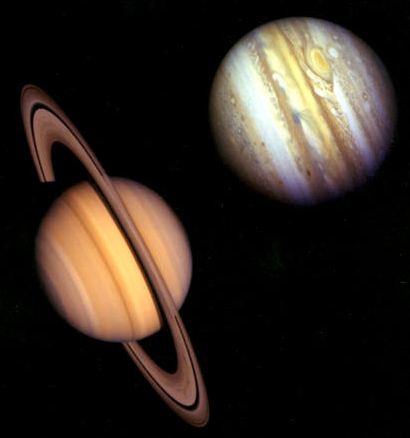
Of course, many people do not believe in NativeAmerican curses.  Unable to accept the metaphysical power which surrounds us every day and only primitive people possess, they pooh-pooh the idea.  Many prominent astrologers maintain that the regularity of presidential death has nothing to do with Tecumseh, his brother or anyone else.  It is, in reality, controlled by the stars and the evidence is available to anyone who wants to open their eyes.  There is an astrological cycle which occurs every 19.8 years when Jupiter, the faster orbiting planet, crosses paths with Saturn, the slower planet.  Since Jupiter rules politicians and Saturn rules death, something catastrophic is bound to happen.  Luckily, however, the stars are only concerned with American politicians or we’d have others world leaders popping off with the same annoying regularity.

Fortunately, in the 21st century, George W. Bush came along and put a stop to both 19th century Native American cursery and ancient Americo-centric astrology.  He was elected in 2000 and served two full terms in office.  (There was a moment there when the pretzels nearly got him, but in the end, he prevailed.)  When his presidency was over, he packed his bags, waved good-bye, and went back to Texas, hale and hearty.  Barack Obama, the Democrats, Jon Stewart and the girls from The View can continue to blame him for everything from the National Debt to obesity in preschoolers, if they want to.  However, even they have to admit that when George W. Bush stepped away from the White House, he’d lifted the curse that had plagued America for a century and a half — and even realigned the stars.  Not bad for a straight C student from Yale!

But, wait a minute, you might ask.  What about Ronnie Reagan?  Reagan was a great president who won the Cold War and gave us “trickle-down” economics.   However, as any supporter of either the Tecumseh Curse or the Jupiter/Saturn theory will tell you, Reagan was elected in 1980, and he died from Alzheimer’s, which was already very apparent during his last days at the White House, when Nancy and Frank Sinatra were running the country.