History, Bitter & Twisted October 17

Arrivals:

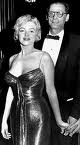
1915 – Arthur Miller an American playwright who wrote Death of a Salesman in 1949.  At any given time, there are more high schools performing Death of a Salesman than any other play – except, perhaps, Thornton Wilder’s Our Town.  First of all, it’s easy – no costumes, no sets – and secondly, it’s a great play.  In 1953, Miller wrote The Crucible a thinly disguised indictment of the HUAC and the McCarthy communist witch hunts.  HUAC didn’t like being made fun of: in 1956, Miller was subpoenaed to appear before the committee.  When he wouldn’t name names, he was charged with contempt of Congress and blacklisted.  In the late 50s Miller wrote The Misfits, a dramatic vehicle for his wife who was tired of playing dumb blonde romantic comedies.  It was Marilyn Monroe’s last movie.

1933 – Jeanine Deckers, who was known for a short period as “The Singing Nun.”  Deckers’ story is the quintessential tale of a “one hit wonder” gone wrong.  In 1963, her song “Dominique” was discovered and played on the radio, ad infinitum.  In January, 1964, she appeared on The Ed Sullivan Show.  A wave of nunophilia swept the world.  In 1966, her song was made into a movie called The Singing Nun, starring Debbie Reynolds.  Not to be out-done, ABC produced a TV series starring Sally Field called The Flying Nun.  In 1969, Elvis Presley and Mary Tyler Moore made a movie about nuns called Change of Habit.  Deckers, herself, left the convent to pursue a singing career, but by that time, public sentiment had changed, and “nuns” were over — singing or otherwise.  She failed miserably.  Meanwhile the Belgian tax man came calling, wanting his share of the revenue generated by “Dominique” and unwilling to take “nun” for an answer.  Broke and, probably, disillusioned, Deckers and her longtime companion, Anna Pecher, sat down one night in 1985 and shared an adult beverage and a huge overdose of barbiturates.

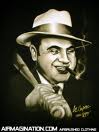
1931 – Al Capone was convicted of Income Tax evasion and sentenced to 11 years in prison.  Capone was not the biggest crook in the world, but he certainly had the highest profile.  He was born in New York City, which, at the turn of the last century, was a virtual incubator for criminals.  He moved to Chicago in the early 20s and set about establishing himself as the go-to guy for bootlegging, prostitution, gambling and murder.  At the height of his power, the Chicago Outfit was making over $100 million a year (and that’s in 1920s dollars.)  He ordered the St. Valentine’s Day Massacre in 1929, an execution-style killing of seven members of rival Bugs Moran’s North Side Gang.  This brought Capone front and centre before the Bureau of Prohibition, and they sent in Special Agent Eliot Ness and he Untouchables.  This is the stuff that legends are made of. 

1973 – In the midst of the Yom Kippur War, the Organization of Petroleum Exporting Countries (OPEC) imposed a crude oil embargo – first on, the United States and then on most western industrial nations.  This is the first time that the Third World or developing nations had flexed their economic muscles and the short term impact was devastating.  Within months the price of crude oil went through the roof and the world economy teetered on the verge of collapse.  Oil producing nations became super-rich and most industrial nations went into an inflationary recession.  That was in the short term.  In the long term, the world did not give up its dependency on oil (although it should) and the price continues to escalate.  However, the industrial west managed to absorb the shock and adapt to the new situation.  On the other hand, nobody knows what the developing nations are doing with their piles of petro-dollars, and they are still “developing” – except Dubai, which is bankrupt.

Departures:

1910 – Julia Ward Howe, the woman who wrote “The Battle Hymn of the Republic.”  The music had been around for years and had been taken up by the Union Army as a marching song called “John Brown’s Body”, during the Civil War.  Howe must have heard the tune many times as Union troops marched south to do battle.  According to Howe, she woke up one morning with the poem completely formed in her mind, and all she did was write it down.  It was published in The Atlantic Monthly in February, 1862.  It immediately became synonymous with the Union side in the Civil War and has since become a standard at American political gathering.  The lyrics have been rewritten many times, most famously as “Solidarity Forever” the trade union anthem.   In 1973, Elvis sang An American Trilogy which combines “The Battle Hymn of the Republic” with “Dixie” and “All My Trials.”  He is probably the only performer who could get away with that south of the Mason Dixon line.

2001 – Jay Livingston, who won 3 Academy Awards for Best Original Song: “Buttons and Bows” in 1948, “Mona Lisa” in 1950 and Doris Day’s signature tune “Que Sera, Sera” (Whatever Will Be, Will Be) in 1956.  He also wrote the theme music for the TV series Mr. Ed and Bugs Bunny’s opening number “This Is It.”  Probably his best known work, however, is the theme for Bonanza which originally had lyrics so god-awful they were dropped after the first show.  You can still find it, with the lyrics, on YouTube, and it’s hilarious.
History, Bitter & Twisted October 16

Arrivals:

1758 – Noah Webster, already a celebrated educator when, in 1807, he started collecting words.  He kept at it, and 21 years later had 70,000 of them.  He put them all in alphabetical order and published them as An American Dictionary of the English Language.  The thing that has always intrigued me about dictionaries is that they’re supposed to be the place you look to find the correct spelling of any word.   However — and here’s the problem — if you don’t know how to spell a word, how the hell are you supposed to find it in the dictionary?

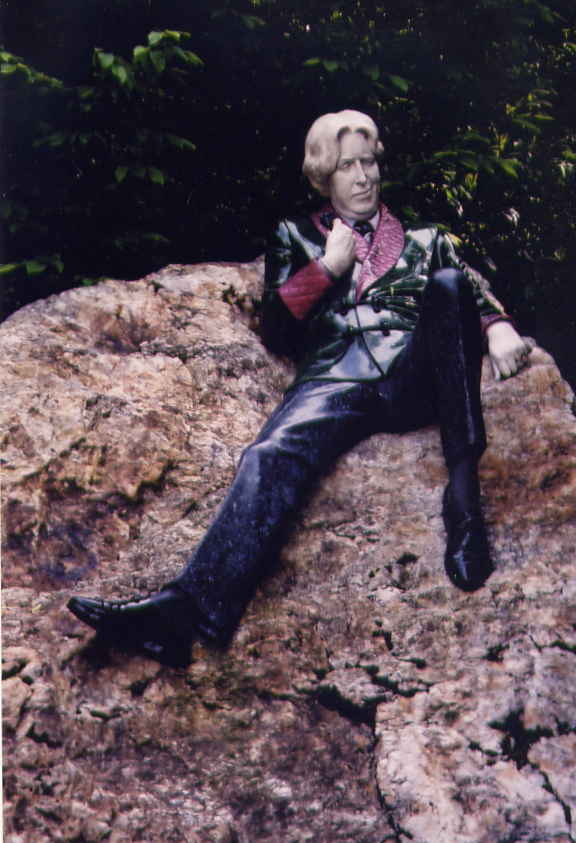
1854 – Oscar Wilde, the undisputed Godfather of gay men everywhere.  His flamboyant style and acerbic wit has set the gay tone for over 100 years, and, to pile on the irony, he did it all during the height of the sexually-repressed Victorian era.  He also wrote poems and plays and one good novel.  But he is best remembered as the king or queen of the epigram with such delights as:

“Experience is simply the name we give our mistakes.”

“Consistency is the last refuge of the unimaginative.”

“ I can resist everything except temptation.”

1923 – In one of the most important events in the 20th Century — and I’m not kidding — Walter and his brother Roy formed The Disney Brothers Cartoon Studio.  Disney never did much except make movies and make money; however, he did understand a few of things.  First of all, he realized that the world was a big place and there was room for his products outside the United States.  Secondly, perhaps inadvertently, he recognized that the American Industrial Age was coming to an end and that the country had to change to an Information/entertainment based economy.   From the beginning, Disney had a huge effect on the world (Mickey Mouse was always a big hit in Europe and Asia) and, as more information industrialists followed his lead American culture spread into every corner of our planet.  Today, Disney owns Information the way past industrialists like Carnegie and Mellon owned steel and aluminum.  Furthermore, half of Disney’s revenue comes from foreign markets.  Likewise, the American economy is shifting, albeit slowly, away from assembly lines and smokestacks to phone apps and downloads.  Second generation companies — like Microsoft, Apple, Google and Facebook — are dominating the world and generating huge revenues.  But it was Disney, more than anyone else, — and there were a lot of them — who took the lead to transform  America from the Industrial Age of the 19th Century to the Information Age of the 21st

1973 – Henry Kissinger of the United States and Le Duc Tho of North Vietnam were jointly awarded the Nobel Prize for Peace for ending the Vietnam War with the Paris Peace Accords.  Giving these two guys the Peace Prize is like giving Lindsay Lohan an award for abstinence.  The US and North Vietnam had been slugging it out for years, and immediately after signing the agreement, they just kept right at it.  There was no peace, just American disengagement.  Two years later, North Vietnam launched a huge offensive which resulted in the Fall of Saigon in May 1975.  At least Le Duc Tho had the class not to accept the award.

Departures:

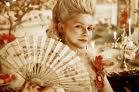
1793 – Marie Antoinette, the last legitimate queen of France, was taken to the guillotine in Place de la Concorde in Paris and executed.  The mob jeered wildly as she stepped up to the blade and burst into song when it whacked off her head.  Popular history has never settled on an assessment of Marie Antoinette.  Originally, she was seen as an evil influence on a weak King, her husband Louis XVI; later, as a frivolous monarch who lived in extravagance while her people starved.  Recently, she’s enjoyed a bit of a renaissance and is now seen as a woman more sinned against than sinning.  While Marie was not the brightest bulb on the Christmas tree, she didn’t have fangs and green saliva, either.  Basically, as Queen, in the French Court, Marie Antoinette had no more influence over events than the gardener, and she was killed merely because the mob could get at her.  Also, even though she may well have been dumb enough, there is no proof whatsoever that she ever said “Let them eat cake.”

1946 – A whole bunch of Nazis were executed at Nuremburg Prison in Germany.  They were, in no particular order, Alfred Rosenberg, Joachim von Ribbentrop, Alfred Jodl, Ernst Kaltenbrunner, Hans Frank, Wilhelm Frick, Wilhelm Keitel, Fritz Sauckel, Arthur Seyss-Inquart and Julius Streicher.  Hermann Goering, who was convicted with his buddies, cheated the rope and committed suicide.  Martin Bormann, also found guilty, was never actually found.  The whole works of them got exactly what they deserved.

History, Bitter & Twisted October 15

Arrivals:

1924 – Lido “Lee” Iacocca, an American icon and automobile executive.  Iacocca’s career can be summed up quite nicely as The Good, The Bad and The Ugly.  The Good – Iacocca was part of the design team that put together the Ford Mustang, a classic automobile, in league with the 56 Chevy and the T-Bird.  The Bad –In 1979, when Chrysler was going broke, he was the first of the Big Car Maker to go crying to the federal government for money.  His extortion knew no bounds when he threatened every single taxpayer in the country with mass unemployment unless he got what he wanted – loan guarantees.  The government caved, and it set the stage for this most recent robbery by Big Auto.  And The Ugly – Iacocca was the executive behind the Ford Pinto, a car so badly designed it burst into flames whenever anybody touched it.

1930 – FM 2030, a futurist from the 70s who legally changed his name to reflect the future when, he believed, titles, gender and ethnic origin would be irrelevant.  Unlike his colleague Alvin Toffler, FM (I guess, to his friends) was long on theory and short on analysis.  He didn’t really spot trends and take them to a logical conclusion so much as just pronounce: this is the way it’s going to be.  He did have some good lines though.  Things like, “I have a deep nostalgia for the future” and “I’ll never eat anything that had a mother.”  He is currently frozen in cryonic suspension, in Scottsdale, Arizona, waiting for the future.

1989 – It’s a story that could have been written for Disney.  On the morning of October 15th Wayne Gretzky, the greatest hockey player who ever lived, was on the verge of breaking Gordie Howe’s all-time scoring record.  In fact, he was only one point behind.  That night, Gretzky and his LA Kings were going to play the Oilers in Edmonton.  The Oilers were Gretzky’s old team.  He had played in Edmonton for 9 years, winning 4 Stanley Cups, thrilling the crowds and breaking every hockey record known to man – except one.  Now, Gretzky was back and you could touch the tension as every eye in Edmonton, was focused on Wayne Gretzky one more time.  It was his chance to give his old fans another glimpse at glory, and cool as the other side of the pillow, Gretzky didn’t disappoint them.  At five minutes into the first period, he got an assist: the record was tied.  Then, with less than a minute left to play and the Kings down 2-1, Gretzky whipped a backhand past goalie Bill Ranford to tie the game and break the record.  Gretzky’s hometown fans went mad with delight.  Cue the music?  Cue the credits?  No.  The game went into overtime and Gretzky scored the winning goal just to punctuate his achievement for the fans who had supported him so hard for so long.  Did Wayne Gretzky plan it that way?  Probably.  We don’t call him The Great One for nothing.

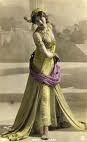
1917 – In the spy business, nobody has better brand recognition than James Bond — except maybe Mata Hari.  She is the popular femme fatale in everybody’s fantasy.  In reality, however, she wasn’t much of a spy, if she was a spy at all.  Margaretha (Zelle) Macleod was a Dutch dancer and apparently not a very good one.  She had learned her art in the wilds of Indonesia and her exotic movements were augmented by her inability to keep her clothes on during her performances.  In Paris, in 1905, this got a lot of press.  Very soon, Mata Hari, as she now called herself, was very famous and in demand — not only as a dancer but also a bed partner.   “Promiscuous” is such a hard word, but Ms Macleod took to her newfound celebrity with enthusiasm and spent the better part of the next ten years horizontal.  This is what got her into trouble.  When World War I broke out, Mata Hari remained strictly neutral, sleeping with both French and German officers equally.  The French, never ones to share, thought something nefarious was going on and arrested her for espionage.  The trial was quick, the verdict was a formality, and on October 15th, she was taken out and shot.  It was the making of the girl.  At 41, she was losing her charms and would have simply vanished into history if that French firing squad hadn’t made her immortal.

Departures:

1930 – Herbert Henry Dow, the guy who started Dow Chemical.  Apparently, according to tons of sources, this is how he turned little itty bitty Dow Chemical into DOW CHEMICAL, a huge international kick-ass company.  It’s long and complicated (and I don’t believe it) but….  In the early 20th Century, Dow discovered a way to produce bromine (don’t ask me what it’s used for) for 36 cents a pound, which he sold in America.  At the same time, a German cartel of companies had fixed the price of bromine in Europe at 47 cents a pound.  They warned Dow not to sell his inexpensive bromine in Europe or they would flood the American market with cheap stuff and drive him out of business.  Dow ignored them, and the Germans retaliated by indeed flooding the market with bromine at 15 a cents pound.  Dow was on the verge of bankruptcy when he came up with a cunning plan.  He bought all the bromine he could, repackaged it and shipped it back to Europe for sale at 27 cents, even lower than his original price.  The Germans never caught on and Dow Chemical made a gabillion dollars.  If nothing else, it’s a cute story.

1964 – Cole Porter, an American song writer from the days of Tin Pan Alley and Broadway theatre.  However, unlike his contemporaries Porter was independently wealthy and so never had to work the music publicizing houses on West 28th in New York.  He spent most of his early years in Paris and only came back to New York when his songs were successful.  Over the years, he wrote some of the most popular songs of the era, including “Night and Day”, “Anything Goes”, “I’ve Got You Under My Skin”, and “Begin the Beguine.”  He also wrote that standard favourite that’s in all the So You Want to Play the Guitar books “Don’t Fence Me In.”  His most successful show was Kiss Me, Kate, a reworking of Shakespeare’s Taming of the Shrew!