History, Bitter & Twisted October 10

Arrivals:

1924 – Today is Woodmas in the Church of Ed Wood, Sacramento, California.  It celebrates the birthday of, obviously, Ed Wood, the worst film director, producer, writer etc. etc. in history.   Wood’s films are so bad you can’t smoke enough dope to enjoy them.   After the guy died, and there was no possibility of his making any more movies, Ed and his films starting gathering some kind of cult status.  There are Ed Wood Festivals, documentaries, blogs and… a church.  There was even a Tim Burton movie Ed Wood (1994) with Johnny Depp (of course) and Martin Landau (he won an Oscar).  All of this proves there are a lot of people in this world with time on their hands.

1924 – Author James Clavell, who wrote 3 incredibly good books, one mediocre one and then went into the toilet with the last two.  He co-wrote the screenplay for The Great Escape and wrote and directed To Sir with Love.  The 3 incredibly good books were King Rat, Tai-pan and ShogunShogun was made into a super miniseries.  The mediocre book was Noble House.  And I don’t care about the last two.

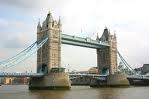
1971 – London Bridge was re-dedicated in the Arizona desert at Lake Havasu.  In 1968, the city of London sold the bridge to American millionaire Robert McCulloch.  McCulloch dismantled the bridge, numbered all the pieces, shipped it to Arizona and put it back together, just like a great big 3-D jigsaw puzzle.  There is wide speculation that McCulloch thought he was actually buying London’s more famous Tower Bridge.   However, both McCulloch who bought the bridge and Ivan Lucklin who sold it to him deny this.  My thought is that if I made this big an idiot mistake, I’d deny it too, and I’d make sure everybody else along the way denied it.   Extra points trivia question: What is the largest antique ever sold?  Answer: London Bridge

1886 –  Griswald Lorilland showed up at the 1st Annual Autumn Ball at the Tuxedo Park Club, wearing a short dinner jacket.  The jacket had been first tailored by Henry Poole & Co for Edward, the Prince of Wales.  The Prince had made it quite fashionable in England, and it had migrated across the Atlantic.  Fashion being what it is, the “tuxedo” was soon copied by the smart set in New York and eventually became de rigueur in ultra formal wear for anybody who thought he was somebody.  Most of these snobs had no idea the jacket had been originally designed for informal dinner wear.

Departures:

1985 – Orson Welles genius-schmeeniuss!  First of all, half his projects were re-edited by the studios, half weren’t even finished and the other half weren’t any good.  Secondly, Welles was way better on radio than he ever was on film.  Thirdly, he only made two good movies in his life, and one of them wasn’t Citizen Kane.  And lastly, he did War of the Worlds (ON RADIO) when he was 23.  It was a stroke of genius, but Welles thought he could live off that rep for the rest of his life.  Oh, yeah!  And he didn’t spend most of his time in Europe because they are soooo much more creative than we are; it was because he couldn’t figure out how to do his income tax.

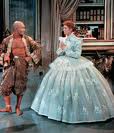
1985 – Yul Brynner, a competent actor who brought brilliance to the two roles he is most identified with: Mongkut, King of Siam, and Chris, the gunfighter in The Magnificent Seven.  He was part of the original cast of The King and I on Broadway and won an Oscar for the movie version.  He reprised the role many times.  He returned as Chris in a sequel to The Magnificent Seven but it was awful.  He was pretty good, however, playing Chris in Westworld.  Unfortunately, the poor guy died of lung cancer
History, Bitter & Twisted October 9

Arrivals:

1940 – John Lennon was born in Liverpool, England.

Let me tell you for a fact that Lennon is laughing his ass off at all the hoopla around his 70th birthday.  He would be the first to bury the 60s, not praise them.  As the accolades pour in and pass over the corpse, he would see it for what it is: the dying gasps of a generation who can’t admit to their own irrelevance.  Yes, every thread of our social narrative from 1960 to 1970 went through John Lennon before it ever got woven into the fabric of history.  Yes, he was the embodiment of our youth and our search for truth, then justice and meaning, and, finally peace — in a time that was so crazy even the inmates finally refused to run the asylum.  And yes, much of what we see and hear in the 21st century — way beyond music — is directly connected to what Lennon saw and heard and interpreted for us.  But no, he wouldn’t put up with these geriatric reminiscences and hourly mind-numbing renditions of “Imagine” and “Give Peace a Chance.”  He would see it for what it is — 60s worship — a religion built on the Instamatic snapshots of our immortal youth coerced on every generation since then.  Lennon spent his life pushing aside the old order to make room for the new, and the hilarious irony of this three-ring birthday would not be lost on him.

1969 – In a courtroom in Chicago, the Chicago 8 — led by Abbie Hoffman, Jerry Rubin and Bobby Seale — were on trial for conspiracy, rioting, bomb-making, littering and pretty much everything else.  The charges had come out of the mayhem at the 1968 Democratic Convention.  The trial was not going well.  Bobby Seale was gagged and tied to a chair.  Hoffman and Rubin were playing silly bugger, hurling insults at anything that moved, and Tom Hayden was thinking about Jane Fonda.  The judge, Julius Hoffman (no relation) was clearly out of his depth and had lost control of the proceedings.  On October 9th, outside the courtroom there was a crowd gathering: hippies, yippies, students, disaffected youth, all urban warriors, hardened soldiers of the street battles that had percolated through the 60s.  Fresh off the five-day conflict that had been the Democratic Convention, these people were veterans.  There was some fear (not unfounded) that they would storm the place and release the defendants.   In a surprise show of force, the authorities called in the National Guard.  This was not the first time “The Guard” had been called out to keep order, but it was a clear signal to anybody who was listening that the days of tolerance for overzealous youth were finished.  The playful 60s were over, and 7 months later they would abruptly end when the National Guard opened fire at Kent State.

Departures:

1967 – Ernesto ‘Che’ Guevara, literally the poster child of the revolution, was killed in the Bolivian mountains.  He had been wounded and captured 2 days before.  He was executed without trial and buried without ceremony.  He became the Alberto Korda image.  But what is he really?   A lofty ideal on a t-shirt?  An imaginary college hero?  A paladin with an AK?  In reality, Che was a revolutionary.  He saw in the Revolution a singular hope for millions of people.  With the established order swept away, the Revolution could begin to remake the Socialist Man.  It would find the clean water for the people who needed it and the food.  It would educate everybody’s children.  It would turn the wealth of the nation into power and justice for each of its citizen.  It would change money into morality.   And he knew that the Revolution was a real thing, a living, breathing entity that would grow and change and reach into other dark corners of the world.  It would spread hope and courage wherever it went.

But he was a philosopher, not a king.  On January 2nd,1 959, with victory in his pocket, he walked down the Prado in Havana, the master of all he surveyed.  But his job was already over – he just didn’t know it.   First, there was the slaughter.  Enemies of the Revolution were taken to La Cabana and shot…and shot…and shot.  Until Fidel’s new partners, the Russians, told him to quit.  (Do you know how much blood it takes to sicken a Soviet?)  Then it was the Cuban economy.  Che became Finance Minister and Minister of Industry, but with philosophic solutions to pragmatic problems, production imploded and there was no wealth to re-distribute.  In 1965, Che left Cuba and went to Africa to continue the Revolution.  Despite himself, he became just another neo-colonial adventurer, bent on telling Africans how to shape their future.  He wrote of the Congo: “This is the history of a failure.”  Then, Bolivia.  Friendless and unfunded, without Fidel to smoothe the way, he was trapped in his own Revolution — unable to change his ways and unwilling to change his mind.

So what was Che?  Ernesto ‘Che’ Guevara was the last Lancelot, a knight errant, imbued with the righteousness of the Revolution.  His quest was motivated by the poverty, injustice and hopelessness he saw all around him.  His Holy Grail was the nobility of the best of mankind, the idealism of all history, distributed for everyone.  But in the end, like Lancelot, he could only see the Grail.  It was forever kept out of his grasp.

Time Flies October 6

Arrivals:

1846 – George Westinghouse, whose story is both complicated and boring but essential to everybody in the 21st century.  In a nutshell: when Thomas Edison invented the light bulb, he was absolutely convinced that it should be powered by direct current electricity (or DC.)  On the other hand, Westinghouse knew that this method wouldn’t work and proposed using alternating current (or AC.)  A huge feud ensued, but — long story short — Westinghouse was right and Edison was wro…wro… not right.  So, thank God for Westinghouse; if it hadn’t been for him, we’d all be watching television in the dark.

1914 – Thor Heyerdahl, an ethnographer who came up with this wild theory that the people of the South Seas (Polynesia) had actually come from Peru.  Most people pooh-poohed the idea but rather than sit in his office and argue about it, Heyerdahl decided to prove it.  He built a raft out of balsa wood, called it the Kon-Tiki, and set sail west from South America.  After about 3 months at sea, he eventually hit an island in the South Seas and thus proved it could be done.  This adventure made Heyerdahl really,  really famous.  However, recent DNA testing has proven that Heyerdahl was really, really wrong.  Oh, well!  At least he gave it a try.

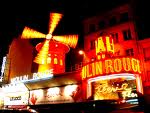
1889 – Joseph Oller opened The Moulin Rouge, a night club in Pigalle, the red-light district of Paris.  It was the saucy Belle of the Belle Epoque.  Legend has it that both the can-can and the striptease were invented at the Moulin Rouge.  This isn’t true.  However, they were both perfected there.  Originally a place for prostitutes to demonstrate their wares, the Moulin Rouge rapidly gained a reputation for its risqué performances.  Actually, this was its undoing.  As more and more of the gentry came to take a walk on the wild side, the shows became tamer and tamer until eventually the management actually hired real dancers.  Today, the Moulin Rouge is a weary tourist-trap with a fantastic show (like the Tropicana in Havana).  But you can still feel what it was like way back when, in the Moulin Rouge posters painted by the artist Henri de Toulouse-Lautrec.

1927 – The Jazz Singer premiered at the Warner Theatre in New York.  It was the first mainstream movie with sound.  There had been sound in films before this but nothing so realistic or synchronized.  From the moment Al Jolson says “Wait a minute, wait a minute. You ain’t heard nothin’ yet!”, “silent” movies just faded away, and “Talkies” became what people wanted to see.  It was the end of an era and of many actors’ careers, when their voices couldn’t bear the scrutiny of the new technology.  The great Charlie Chaplin laughed at sound and thought it was just a phase.  He believed comedy was essentially pantomime and continued to make “silent” movies until 1940 when the public’s overwhelming expectations forced him to change. 

Departures:

1892 – Alfred, Lord Tennyson, Victorian poet who, in 1854, wrote “The Charge of Light Brigade”, which has become an indictment of senseless war in general and Imperial adventures in particular.

Actually, Tennyson wrote it to glorify courage, honour and fortitude in the midst of brutality and war.  He saw nobility in duty and singular distinction in defying overwhelming odds.

When can their glory fade?
O the wild charge they made!
  All the world wonder’d.
Honour the charge they made!
Honour the Light Brigade,
  Noble six hundred!

It’s amazing what 150 years of high tech slaughter will do to high ideals!

1951 – Will Keith Kellogg, the guy who started the gigantic breakfast extravaganza, Kellogg’s, in Battle Creek Michigan.  With about a million different kinds of cereal Kellogg’s owns breakfast the way Donald Trump owns real estate.  Unlike other early food companies who diversified over the years, Kellogg’s mainly stuck with breakfast.  Recently, however, they’ve had to modify their product to accommodate commuters who can’t handle a bowl full of milk while they’re travelling to work.  They’ve met the challenge with cereals squashed into bars that can be eaten one-handed.  Incredibly, Kellogg’s Toasted Corn Flakes started out as health food – and it actually was.  Today, with all the salt and sugar and hydrogenated-whatever added, you might be further ahead to eat the box.