Tunisia: Part I — The End of the Beginning

Just in case you missed it, Mohamed Bouazizi is dead.  He died on January 4th, 2011.  He was buried, where he lived, in a little village outside a place called Sidi Bouzid.  From all accounts, Sidi Bouzid is a neat little town, relatively poor but without the screaming poverty that inhabits most of Africa.  Likewise, Mohamed Bouazizi was an ordinary guy.  He was 26.  He’d been to school for a while (like everybody else) and was working away at life, selling vegetables.  Nothing special?   Just another guy?

On December 17th, 2010 Mohamed Bouazizi was selling his vegetables in Sidi Bouzid when the local police came along.  From here, the story is a little hazy because, at that point in time, Bouazizi still wasn’t noteworthy enough to merit much documentation.  I don’t know who did what to whom but basically the cops were tense because Bouazizi was selling veggies without a permit.  Apparently, they confiscated or destroyed his produce and gave him more than a couple of whacks for his trouble.  Selling vegetables may or may not be illegal in Sidi Bouzid, permits notwithstanding; I don’t know.  That’s not really important anymore anyway because, later that day, Bouazizi got himself a couple of litres of gasoline, went to the steps of the government office, poured the gas over his head and lit a match.  As protests go, this was a good one.  And, as they say, the rest is history.

If you’re still confused, Sidi Bouzid is in Tunisia, and Bouazizi’s protest is what started the whole mess over there.  The situation has fallen out of the news cycle recently, but the analysis and discussion is still all over the Net — if you want to dig around a bit.  If not, here’s the discount version of what’s happening.  Tunisia is a little country in North Africa, economically divided into the relatively affluent north and the relatively poor south.  Since it became independent from France, in 1956, Tunisia has had only 2 rulers.  Both governed with varying degrees of success and oppression.  Compared to other parts of the Moslem world, Tunisia is stable and has strong ties with Europe.  It has a well-educated population and rising standard of living.  All of this is much more evident in the north than the south.

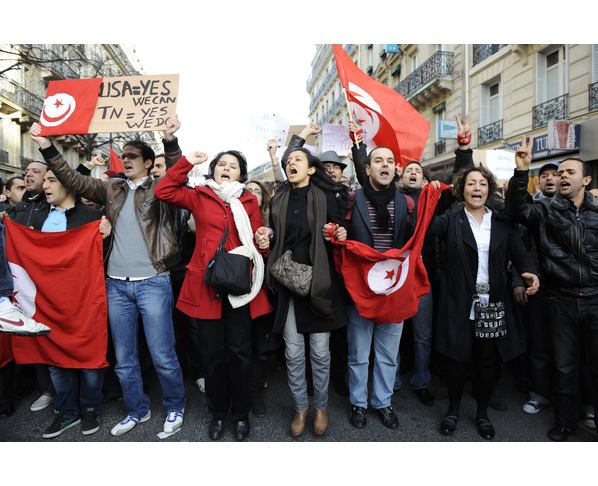
 Within that framework, on December 18th, the people in Sidi Bouzid held a protest against the government and the treatment of Bouazizi.  As word spread so did the protests.  On December 24th, the police shot a protester, and all hell broke loose.  The peaceful demonstrations became full-blown riots, and the police responded with more bullets.  By the 28th, the unrest had reached the capital, Tunis, and the entire country was boiling over.  President Ben Ali made several attempts to control the situation but no amount of band-aids could cover the wounds that were opening up.  In the first two weeks of January, 78 people were officially shot (and probably a whole bunch more unofficially) but even this heavy hand couldn’t slow the upheaval.  On January 14th, Ben Ali dissolved the government.  He took the first plane to Saudi Arabia — with his family and, as is customary in these situations, likely enough cash to see them through the winter and beyond.

Today, the interim government is trying to hold the country together, long enough to have elections, and the people of Tunisia are still in the streets.  According to their constitution, elections must be held within 60 days.

Tunisia is a long way away from here.  It’s little.  It doesn’t have a very big voice in the affairs of the world.  However, right now, Tunisia is probably one of the most important places on the planet.  The people there are in the streets, looking for a better life for themselves and their children.  But there is a lot more at stake than that.  What happens in Tunisia in the next couple of months is going to have a profound effect, not only on the world as we know it, but on world history itself.  And believe it or don’t, the course of that history may well depend on what you do in the next couple of weeks.  Ordinary people are going to decide what happens in Tunisia — ordinary people like Mohamed Bouazizi and ordinary people like you, if you’re willing to give it a try.
Wednesday:  Tunisia and Canada: A Clear Connection

The Gunboats of Diplomacy

I’m not one to cling to a dead horse, so I’m reluctant to revisit the problem with censorship in this country.  However, I think somebody has got to clear up a gross misunderstanding that is affecting the debate.  Last week, the Canadian Broadcasting Standards Council banned Dire Straits’ song “Money for Nothing” from the public airwaves.  It is now illegal to broadcast this song in Canada.  Also, last week, Library and Archives Canada cancelled a screening of Raphael Shore’s film about Iran’s nuclear program, called Iranium.  Instantaneously, the “lefties are ruining the country” club connected the dots and knee-jerked themselves into a frenzy.   According to them, these two events had triggered the end of the world — the crack of doom was clearly visible, liberty was dead and Jack Layton was going to rule the Earth as Satan’s evilest minion.   Folks, if you don’t know what you’re talking about, shut up.  These two events are totally unrelated, and your yipping and whining is muddying the water for real people who want to fix this stuff.  Here’s what’s really going on.

“Money for Nothing” was banned because somebody in the Loud and Proud crowd got bored one afternoon and decided to be outraged, 25 years after the fact.  (The song is a quarter of a century old and Dire Straits hasn’t even been a band for over 15 years.)  The bureaucrats at CBSC probably got tired of all the phone calls and e-mails and decided, “Okay, let’s just ban the damn thing so we can get some peace and quiet around here.”  Everybody was duly shocked — again — at how much power Politically Correct has in Canada.  However, nobody was willing to stand up to these bullies, and the world kept spinning.  Library and Archives Canada’s decision to cancel the screening of Iranium is seriously different.  Let me explain.

In the good old days people, with boats and guns (mostly Europeans) ran the world, and they told the people without boats and guns (everybody else) just exactly how they wanted things done.  This was called “gunboat diplomacy” and in case you were sleeping in Mr. McClellan’s history class, here’s how it worked.  Country A would anchor a gunboat in the harbour of Country B.  A minor diplomat would tell the local potentate to do as he was told or else the boat in the harbour was going to open fire, and keep shooting until everybody came around to Country A’s point of view.  King Whoever, of Country B, really didn’t have much choice in the matter because he didn’t have any boats or guns, so he usually agreed to whatever Country A wanted.

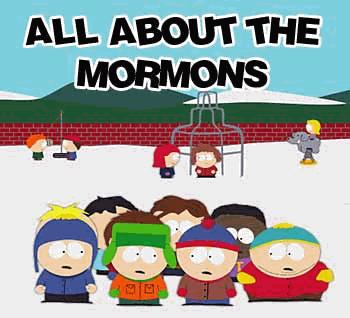
Flash forward 200 years, and gunboat diplomacy has never really gone away.  It’s just changed slightly.  These days, Country A says something like “I don’t want to see any more Moslem cartoons.”  They back up their demands with threats of riots, murder and suicide bombings.  Country B doesn’t want to see murder and mayhem on their streets, so they quietly agree.  They make up some crap about diversity and inclusion to save face, but in the end, they do as they’re told.  One of the most famous cases of 21st century “gunboat diplomacy” was when the TV show South Park was going to depict Mohammed in an upcoming episode.  They received several hundred e-mails saying — in no uncertain terms — that was not a good idea.   The creators of the show decided it was safer to pick on Tom Cruise’s religion than Osama Bin Laden’s and they changed the episode.  Diplomacy works.

Now let’s move over to the situation at Library and Archives Canada.  They were scheduled to show the film Iranium, a documentary about Iran’s nuclear program.  The Iranian government disagreed with the tenor of the movie and their embassy sent a letter to the Library, requested the screening be cancelled.  Immediately afterwards, according to spokesperson Pauline Portelance, the federal institution began receiving e-mails and phone calls from “members of the public” who threatened to protest, and when these threats became “serious” and a couple of suspicious packages showed up at the door, Library and Archives Canada decided it had some “security concerns” (where have we heard that before?) and did, indeed, cancel the screening.  Call it what you will, but it looks to me like Country A made its point.

That would have been the end of it except for Jim.  I don’t know anything about Jim except he strikes me as an ordinary guy.  He’s from New Westminster, he has a dog and apparently he doesn’t like to get pushed around.  In another life, Jim is Heritage Minister James Moore in Stephen Harper’s Conservative government, and he used his political power wisely and ordered Library & Archives Canada to show the film.  He told them to address the security concerns but show the film.  He is adamant that the film must be shown.  I don’t think he’s ever seen it; I don’t think he even cares what’s in it.  But he understands that it’s time to quit kowtowing to threats of violence and do the right thing.

Finally to clear up any misunderstanding, these are two completely different situations, with two completely different results.  One is a perfect example of Canada’s ongoing inability to act like adults; whereas, the other is Country A trying to tell Country B what to do.  So, for all those people who want to sit on their hands and moan around playing “Ain’t it awful,” do something about it or go listen to Dire Straits on YouTube.  Me?  I’m going to party with folks like Jim.

When the gods are changing

It’s hard to live in a time when the gods are changing, but it’s loads of fun, too.  This transitional world we live in is so full of cool it’s difficult to sort things out.  So many neat things are going on right now that I’m totally pissed I’m never going to see where they end up in 50 or 100 years.  Honestly, I haven’t completely comprehended our world since back in the 20th century.  Sometime around the Y2K scam, I started to lose track, and even though I faked it for a couple more years, the gaps in my understanding just got too big.  Now, like old underwear, there are far too many holes in my knowledge to ever claim decency again.  Fortunately, the world has gotten so large that I can just narrow my focus, avoid the stuff I don’t recognize, and keep on moving.  There are certain things that I miss from the old world, though; things that were quaint and homey and comfortable.

For example, I miss quiet contemplation on the bus.  In the olden days, people on buses used to sit there, stunned, staring straight ahead.  They read books and newspapers.  They decided what to have for dinner.  They mulled over their problems.  They carried open bags with their new possessions in them.  Sometimes, they talked to each other in that secret mono-voice reserved for private words in public places.  They looked out the windows and thought about their lovers.  Buses were romantic places.  These days, buses are full of people who stand when there are seats available and boldly declare to their invisible friends that they are indeed on the bus.

I miss babysitters, too.  I think it’s too bad that a whole generation of young people are probably going to have to resort to prostitution to pay for their music and hairstyles.  Babysitters should have been made an essential service — years ago.  They allow us to have time.  Sometimes, adults need adults only.  There’s something relaxing about having a second cup of coffee after dinner when somebody else is going to do the dishes.

Restaurants are made for love affairs because they capture time for the person you’re with.  A few years ago, the one requirement for a quiet evening like this was that the chairs in the restaurant weren’t made of plastic.  These days, however, most restaurants offer complimentary crying babies or young families eager to share their experience.  It’s difficult to have a trivial conversation when 4-year-old Kay-lee (with a K) at the next table is pffting her potatoes and going for distance.  In the olden days, a good babysitter would have saved both those marriages.

And I miss newspapers: those big Sunday thumpers that killed half a forest to make and half a morning to read.  They had complete sections that you could trade across the breakfast table.  They were big enough to fold, so you could drink your morning coffee.  They were lazy with long stories.  They had movies you wanted to see and places you wanted to go.  They had columnists from faraway Chicago and Frisco, who caused discussions and arguments, and the loser made breakfast.  And they had crossword puzzles that might take all day — even with help.  Today, news and opinion are a solitary business backlit and scrolling, rushed through on our way to somewhere else, over a breakfast we can eat with our hands.

And I don’t like “relationships.”  They’re artificial affairs.  They’re built on the premise that the squiggy feeling in the bottom of your belly has a beginning, a middle and an end.  They take too much thought and are almost corporate in their planning.  Following their path is like playing a video game where each success leads you to the next level — more difficult with bigger dangers – until, finally, it’s too familiar to play anymore.  I prefer the olden days when people had love affairs that began by accident — at places like bus stops.  They took time to unfold, over longer and longer, long evenings.  And even though they always began as separate adventures, unlike relationships, love affairs got passed back and forth so many times that they became a jungle of intertwisted experience that can never be understood separately again.

This isn’t a brave new world we live in; it’s a brilliant place, with new and exciting things going on, all the time.   And even though, most days, I can’t wait for tomorrow, I still like the feel of yesterday.