I Met a Marxist in Ireland

A Shop Window in Rome

I met a Marxist — not the craft-beer-and-Prius kind but the real meal deal.  He was one of Lenin’s Lads and proud of it.  We eyed each other, like wary animals, across an ad hoc Irish pub party, casually exchanging a few beer-whet barbs through the crowd.  He was younger, better informed and quicker on the wit than I was, but I haven’t been afraid of Marxists (not the real ones, anyway) since Brezhnev dropped the collective ball in the early 70s.  Besides, I had the advantage: I’d been there before, many times.  Eventually, sensing a game of “let’s you and him fight,” the party metaphorically parted so the two of us could get at it.  I seldom walk away from an intellectual punch-up, so I figured what the hell.  My new friend, however, had a few things on his mind.  After a couple of pleasantries, he looked at me and said, “The fascists are coming.”  It took me a few seconds to realize he didn’t mean me, and from that revelation on, we spent the rest of the evening agreeing to agree.

The far right movement in Europe is not only alive — it’s on a roll.  Statistically, it’s the fastest growing political movement west of the Urals.  In fact, many Euro-centrist politicians are moving right to accommodate this new political reality.  FYI, I’m not talking about black jacket, Neo-Nazi skinheads — although they are the far right’s willing allies — I’m talking about Mom and Pop fascists.  These are ordinary people (of an increasingly younger demographic, BTW) whose traditional social and political views see the 21st century European landscape as a comedy of errors which the current politicos either can’t (or won’t) put right.  They have lost their faith in Europe’s left and right wing revolving door governments, each one more inept than the last, and want, above all else, stability.

This movement has its roots firmly planted in two separate but equal gardens of discontent.

First, the ever-expanding European economic crisis: a financial disaster which has now taken on a destructive life of its own.  For

These Products Weren't Commonplace
These Products Weren’t Commonplace

the last half century, the uncrowned heads of Europe have been spending money as if they were Midas’ mistress; when they ran out of ready cash, they just borrowed more.  Now the piggy banks are empty, the credit cards are maxed and the banks are demanding their pound of flesh.  Take one guess who’s being asked to pay the bills!  Those same folks who are getting financially pistol-whipped by their governments’ fiscal irresponsibility — which, in some places, verges on criminal negligence.  Across Europe, people have watched their savings, insurance, homes, pensions and jobs vanish.  Officially, unemployment sits somewhere north of 10%.  Unofficially, it’s much higher, and among young people it’s close to 50% (in parts of Portugal and Spain.)  These numbers are biblical in their devastation.  Elections come and go, governments rise and fall, but there’s no relief in sight.

Secondly, many Europeans believe their culture is under attack — not only by radical Islam from without, but by their own politicians from within.  For the past two (maybe three) decades, they’ve been subjected to ever increasing volumes of feel-good rhetoric, yet the Moslem ghettos get bigger, more radical and immigration (legal and otherwise) increases.  They see a seemingly infinite conflict stretching out before them like some endless Orwellian misery.  More and more, politicians are being physically attacked and even killed.  Political commentary and satire are being intimidated, and artists, the very soul of any society, are being murdered or go into hiding.  These are not the hallmarks of a vibrant, dynamic culture.  Nor do images like that of Drummer Rigby, hacked to death in broad daylight, instill confidence in an already sceptical population.  And the brazen taunts of the unrepentant murderers add powerful punctuation to the message: “Your leaders are impotent.”

But They Weren't Hard to Find
But They Weren’t Hard to Find

There are no short answers to either of these questions, but the longer the powers that be dither around looking for one, the closer the fascists get to finding it.  Golden Dawn in Greece, Democracia Nacional in Spain, Casapound in Italy, BNP in Britain: the list is long and it’s growing.  Even the powerful National Front in France, once the darling of conservative politics, is now seen by many as too mainstream, too willing to compromise right-wing ideals for a slice of the political pie.  There are other forces at work in France these days, and they showed up in huge numbers (over 200,000 in Paris alone) to protest Francois Hollande’s gay marriage law.

My newfound Marxist friend didn’t want to fight with me over petty politics; he wanted to warn me that conditions in Europe are changing, and that even though the factions are small and scattered fascism is on the move.

Postscript
Oddly enough, since I’ve been back in North America, Vladimir Putin and his Russian Duma have passed a law outlawing “gay propaganda” (whatever that means) by an astounding margin of 436 – 0.  A little closer to home, in my country, a provincial sports federation has banned turbans from the soccer pitch.  They say it’s for safety reasons, but a shocking 87% of the people in the province support the ban.
Big Brother? So What!

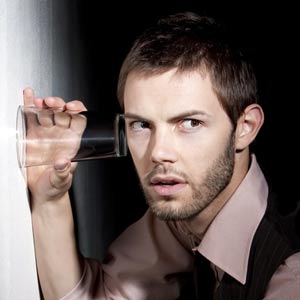
telephoneThat incredible crinkling sound you hear is millions of outraged people getting their knickers in a knot over the revelation that the good ole US of A has been spying on them.  The news has sent the sales of Reynolds Wrap off the charts as tinfoil hats are, as of last week, the must-have fashion accessory this summer.  Meanwhile, thousands of pasty-faced conspiracy theorists are emerging from their moms’ basements to a rousing chorus of “I told ya so!”  It seems the much sci-fi-ed American police state has arrived, and the general consensus is anger and disbelief.  The New York Times, head cheerleader of the Obama presidency, has been hinting that there might possibly be a credibility gap in the current administration, while other, bolder media outlets are dusting off the n-word: Nixon.  Good luck with that comparison!  However, before we start gathering the nails to add crucifixion to Obama’s list of accomplishments, we need to stop, take three deep ones, and put a serious eyeball on this latest episode of I Spy.

First of all, this isn’t an Obama initiative, so get off the guy’s back.  It has all the earmarks of a Bush/Cheney adventure — which every report I’ve read says it is.  I’m no friend of President Obama, but the only mea culpa he has to answer for here, is why, as with Guantanamo Bay, he didn’t shut it down.  And honestly, given the massive intel the grey suits are collecting for him, why would he?

Secondly, and more importantly, Americans have been eavesdropping on Americans (and others) since before J. Edgar decided that John Dillinger was Public Enemy Numero Uno.  If you think this most recent bit of chicanery is a one-off, audacious attack on civil liberties, I’ve got a bridge in Brooklyn I need to sell.  The fact is, there are over thirty different law enforcement agencies in America, and each one of them has a history of covert operations against American citizens.  Plus, they all have the technical capability and the ethical elasticity to get the job done, with — or without — a court order.  However, before you get all tight-jawed and start passing out gratuitous judgement calls, remember there’s a dirty little war going on, and the bad guys aren’t necessarily wearing black hats.  The nasty folks of this world have upped the ante on the nasty things they’re willing to do to the rest of us; playing by the rules is only one of a number of priorities we need to think about.

Finally, and for me this is the WTF moment, the same people who are yipping themselves hoarse about the sanctity of privacy aretelephone1 dancing all over Twitter, telling the world what they had for breakfast.  They’re spreading their profile across the Internet as fast as their little thumbs can tap out the info and sending kilobytes of personal and financial data to everybody who wants to know it — from Amazon to Zappos.com and all points in between.  Actually if the NSA (or anybody else) wants a running commentary on the private lives of most Americans all they have to do is join Facebook and they’ll get it from their own lips.  It seems a bit much to weep bitter tears over the death of a sacred cow when you’re the one who slaughtered him.

Beyond all this, though, the most interesting part of the whole situation is that the guy, Edward Snowden, who pulled the mask off this incarnation of Big Brother has fled to Asia; specifically, what the media are calling Hong Kong.  Nobody seems to be wondering why.  However, the last time I looked, Hong Kong was part of China, and it did occur to me that the folks with the most to gain from a monumental cock-up in the American intelligence community might be the Chinese.  It will be interesting to see if Hong Kong’s cut-and-dried extradition treaty with the US holds up against a determined effort by the boys in Beijing.  Just sayin’.  Stay tuned, and remember you heard it here first.

Culture Shock, Jetlag and Me

4 am1There’s a fundamental difference between 3:15 a.m. and 4 in the morning.  Four in the morning is “Famous Blue Raincoat” cool.  It has the sound of smooth blues and dim brick cafe light; silhouette wooden chairs and a remembrance of stale yesterday in its eyes.  3:15 a.m., on the other hand, is just sleeplessly maddening.  It’s the exotic and the ordinary, separated by 45 minutes.  Intercontinental travel is like that: yesterday and today separated by a few lost hours stranded in the sky.  In the end, you’re left with a middle of the night kitchen table, ordinary dark from a street light window and the room full of deep roasted Italian morning, dripping into the coffee pot on the counter.  Two equidistant perceptions processed at the same time.  Utterly confused by what the senses know to be true, they shut down, and for long minutes you stare-face — catatonic into the weakening darkness.  You know morning will eventually arrive, but it isn’t going to be Italian and no amount of caffeine boost European stimulates can change that.  It’s called culture shock and it’s not supposed to happen when you come home.

Human beings were never meant to climb into aluminum tubes and fling themselves across oceans, time and space.  We were meant to stay home, close to the fires of our own tribe, huddled together against the “others” for warmth and protection.  That’s what fifty thousand years of step-by-step civilization has taught us.  Twenty-first century cultural voyeurism, sped forward by jet engines and the insanity of cheap airfares, is unnatural and disturbing.

The problem is nothing prepares the traveller for the “other” tribe.  No amount of tourist tales, photographs or video recordings can replicate the smell of hot tea on a Galway cold morning.  No carefully arranged after-dinner story is as lovers’ quarrel loud as an eavesdropped afternoon in the Borghese, when she finally throws the ring in his face.  It doesn’t work that way.  You need boots on the ground.  Unfortunately, once you get them there you’re already lost.  That exotic you so carefully loaded into your vacation starts passing for normal, and the ordinary life you put on pause to get there (here) becomes a fami4 amliar memory.

This morning, I’m reminded (again) that Italian coffee doesn’t travel further than the street it’s supposed to be brewed on; this place, strange as it may seem, is my house; and despite the fact that my mind thinks it’s cocktail hour yesterday, it’s nearly dawn in what feels like tomorrow.  It’s called jetlag and my theory is that it’s Mother Nature’s way of holding culture shock at bay.

Essentially, the hours scattered like unruly sheep need time to re-flock into a new normal.  Meanwhile, the senses, unable to process the discordant information they’re receiving, shut down to give the synapses time to catch up.  So the dripping coffee pot becomes an hour glass; the half-light night, an incubator; and that strange 45 minutes between exotic and ordinary, the gestation period – because all true travellers are really cultural mutations struggling to be reborn.