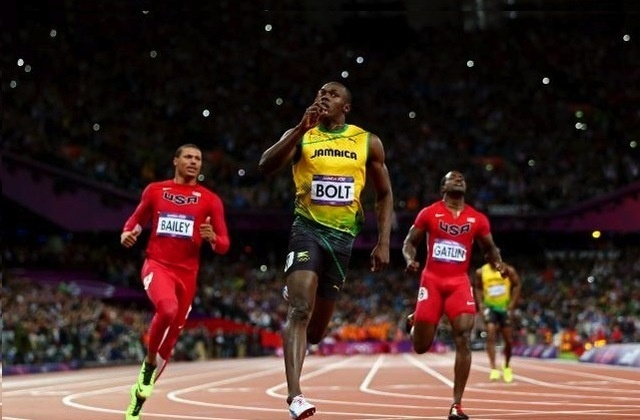
The Commonwealth: Use Your Imagination

Deep in the afterglow of an incredible Olympic Games and a rekindled British spirit, there’s talk around the campfire that maybe the Commonwealth isn’t just a quaint affectation of a used-up Super Power.  In fact, no less an illustrian than ex-Canadian and convicted felon Conrad Black has run the idea of a resurrected Commonwealth up the international flagpole to see if anybody bothers to salute.  It’s a curious notion that isn’t going to get a lot of attention, but maybe it should.

In theory, The Commonwealth is the natural devolution of the British Empire – a collection of states bound together by (if nothing else) a common colonial experience.  These states share a tradition of British law, parliamentary democracy, education and language.  They are, in reality, and according to Commonwealth doctrine “not [entirely] foreign to each other.”  So much for theories.  In truth, the Commonwealth is an organization (and I know I’m going to get some emails about this) badly in need of a purpose.  What good it does do around the world goes largely unnoticed, and most people assume it’s just a holding tank for stodgy old colonials, with a few dusty monarchists congealing on the side.  Realistically, the Commonwealth simply does not swim where the big boys feed.  It has neither the infrastructure, the management nor the common direction to heft any weight internationally.  It’s only raison d’etre seems to be to voice a few high-minded principles and host the Commonwealth Games.

The weird thing is, however, an invigorated Commonwealth actually makes a lot of sense.  Look around.  Who takes the United Nations seriously anymore – aside from guys like Chavez and Mugabe?  Even Obama works around them when he feels the need.  OPEC is permanently attached to their petro-dollars, and the Arab League isn’t interested in anything beyond the Middle East and whatever anti-Israeli rhetoric is flavour-of-the-week.  Meanwhile, the European experiment is rapidly turning brown, and the Euro itself is on the verge of folding up like a cheap lawn chair.  If Merkel and Hollande can’t find some common ground soon, this time next year, this planet’s largest economic unit might be slowly sliding into the Mediterranean.

On the other economic hand, four of the sixteen largest GDPs in the world belong to Commonwealth nations.  In total, the Commonwealth has a combined Gross Domestic Product of over ten trillion dollars.  That’s second only to the EU and the USA.  It has a population of 2.1 billion — which makes it the largest single organization in history.  Folks, that’s enough purchasing power to get a discount outta WalMart!  Merely turning the Commonwealth into a Free Trade Zone without any other added economic attractions — would be like hitting the world economy with a double dose of adrenalin and a Red Bull™ chaser.  Whatever recession the IMF had in mind – forget about it.  It would be over instantaneously.  Individually, the Commonwealth states have enough natural and human resources to feed, clothe and power the world.  As a single economic unit with proper development and a little imagination, there is simply no limit to what it can accomplish.
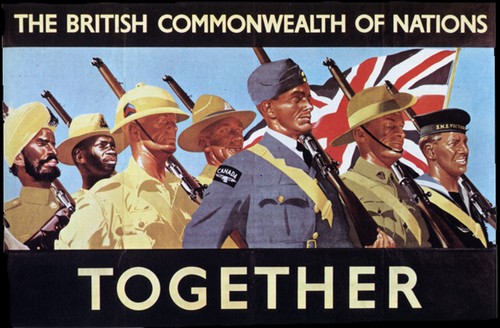
Actually, the idea of a super-economy, built out of the British Empire, is an old one.  It’s a 19th century philosophy that found its voice in Joseph Chamberlain, a Victorian Era politician.  His idea was to form the Empire into a closed shop, eliminating trade barriers within the British Empire but erecting tariff walls around it.  Forged as a single economic unit, the Empire would generate immense internal wealth and secure Britain’s position as the world’s only superpower for another century.

Unfortunately, Chamberlain never convinced the British government to step away from its policy of free trade.  As early as 1910, the balance of British trade was beginning to tilt away from the Empire in favour of America (with a corresponding outflow of cash.)  Four decades of that — and a couple of expensive world wars — and Britain simply couldn’t afford its empire anymore.  A simplistic view I’ll grant you, but true all the same.

Very soon, empires will no longer be political; they’ll be economic.  The Commonwealth has the potential to be history’s greatest superpower, but don’t hold your breath.  There are too many national egos involved.  But mostly economists don’t make policy; politicians do.  Unfortunately, they have neither the imagination nor the political will to make something as radical as a non territorial political entity work.

Olympics: A Postpartum World

The Olympics are over, and for those of us who have been going solid walls of TV coverage for the last two weeks, there’ll be a day or two of decompression – postpartum depression, if you will.  Since there’s only one way to “get the athlete off your back” and that’s going cold turkey, there will be some minor side effects.  They might include (but are not limited to) engaging in meaningless tests of skill with your friends or relatives, listening to various national anthems on YouTube and experiencing an uncontrollable urge to visit Jamaica.  Not to worry, though: these cravings will pass with time, and normal (whatever that is) will happen again, whether you like it or not.  Good luck!

Incredible as it seems, while you and I were gone, the world was carrying on without us.  Ironically, just as Team GB (Great Britain, for the uninitiated) was proving it could still run with the big boys, David Cameron’s coalition government was showing some serious signs of Banana Republic instability.  Davey boy needs to get his political house in order before the Olympic honeymoon‘s over, or he’s going to be relegated to shouting insults from the other side of the aisle.  Bad as that seems, Europe’s problemo numero uno is still the red ink that’s hemorrhaging out of Greece, Italy and Spain.  It’s obvious that the cozy relationship Angela Merkel had with her Gallic neighbours died when the French people au revoir-ed Sarkozy in May.  Angie better start cracking the Euro whip, or, overwhelmed by his own ideology, newly-minted French president Francois Hollande is going to try retrofitting his 20th century politics into Europe’s 21st century problems.  The last thing Europe needs right now is another dose of what got them into this mess in the first place!

Meanwhile, over in the desert, Bashar al-Assad is going for the gold as Syria’s candidate for dick-tator of the year.  At last count, he had out-Mubarak-ed Mubarak, and with the help of his Iranian buddy Ahmadinejad, was going for the full Gaddafi.  Correct me if I’m wrong, but didn’t we just slap the crap out of Muammar for half the malfeasance this guy is getting away with?  Assad is hanging onto power in Syria by his eyebrows, and if he thinks his friends in Tehran are going to pull his almonds out of the fire, he ought to give his head a shake.  As of the massacre in Aleppo, the only way Assad is going to end his days is Syria is getting dragged through the streets of Damascus in his underwear — and there’s nothing he can do about it.  Prolonging the agony is not going to save him.

It’s not all bad news, though: in America, Mitt Romney has named his running mate, Paul Ryan.  Ryan is a game changer.  Suddenly, the American presidential election is a whole lot more than just uber-cool Obama versus Massachusetts’ answer to The Man from Glad™.  It’s now a campaign of ideas.  Finally, somebody’s going to have to start talking about all the red ink America’s been accumulating (I’m looking at you, Barack) and offer something more than “hope” as a solution.  This may be the first time — ever — that an incumbent president had to run against the other party’s vice-presidential choice!  But what the hell!  We may even get beyond Wheatley versus Pedro (ala Napoleon Dynamite.)  Who knows?

Tons of other stuff happened while you and I were watching Usain Bolt dismantle the record books and rebuild them in his own image.  For example, somebody discovered a huge island floating in the Pacific, north of New Zealand.  It’s called a ‘pumice raft,” and it’s made of coagulated rocks from an undersea volcano.  Apparently, this thing is as big as Belgium!  And, oh yeah: the Americans went interplanetary again and landed a rover on Mars.  The pictures are fantastic.

So, don’t get too bothered about your Olympic hangover.  There’s plenty of other things going on in the world.  Besides — football season starts in less than three weeks, and the World Series is right around the corner.

Olympics: The Spirit of Competition

Oddly enough, after two weeks the 2012 Summer Olympics are not getting stale at our house.  There seems to be a never-ending series of Olympic Moments that stalls the reality train for yet another event that somehow turns into a television afternoon.  And these aren’t just those Chariots of Fire flashes of exalted victory and weeping defeat that the media loves so much.  They’re revelations of what young people are capable of.  What constitutes dedication and excellence?  What brings these human qualities together in the same place at the same time and drives athletic performance forward?  It’s easy to dismiss the Olympics as the gargantuan circus it has become — and I’ve done it a number of times — but that’s just the glitzy bag they’re dressed in.  There’s more to them than that.

The Olympic mottoCitius, Altius, Fortius” (Faster, Higher, Stronger) is actually a secret code that unlocks a hidden room in our human DNA — a tidy little place where the competitive genes are stored.  Yes, that’s right: as much as contemporary North Americans wish to deny it, we are genetically programmed to be competitive.

Human beings are social animals, not unlike a troop of chimpanzees or a herd of elephants.  We travel in packs and, therefore, have a burning need to know just exactly where we fit into the hierarchy of the group.  It’s Mother Nature’s way of making certain our species survives, by insuring that the strongest genes get passed along.  Once we establish that primeval, it’s not such a big step to London 2012.  Those young people running, jumping and lifting are doing what comes naturally.  Crudely put, they are just answering a call of nature.

Here in the 21st century, there is a strange idea that we should limit a child’s exposure to competition as if it were radon (Remember that stuff?)  In fact, the “everybody gets a rainbow” philosophy has pretty much taken over in North America.  This is just bad.  It’s like punishing owls for sleeping all day.  Take a look at any schoolyard.  Those little kids figure out who the Alpha dog is pretty quickly — even though they’ve been told repeatedly they’re not supposed to do that.  They know who runs the fastest, who has the coolest backpack or who knows all the words to “Call Me Maybe.”  They don’t have to keep score.  It all comes perfectly naturally to them.  This is because, from the day we’re born until the gophers start delivering our mail, we are constantly going head to head with something.  If you don’t believe me, ask any parent about the incredible duel they had with their two-year-old.  That kid is measuring his abilities, honing his skills, detecting and tailoring his talent — so he can deal with an unforgiving world someday.  In essence, he’s competing with the world that mom and dad have created to keep him safe!  They don’t call it “The Terrible Twos” for nothing.

Instead of trying to sacrifice 5,000 generations of the human condition on the altar of some Flavour-Of-The-Week self-esteem Dr. Phil nonsense, we should be encouraging competition.  Striving for excellence is not wrong, even if you get left behind.  The Olympics clearly shows that.  Forget about the glare of the klieg lights and the stabbing “how do you feel?” microphones, and take a look at that poor bugger who’s bringing up the rear.  They never stop.  They finish — even when they know they haven’t got a hope of ever touching an Olympic medal.  And when it’s all over and they go home, they aren’t “devastated” human beings, questioning their self-worth.  They’re standing tall, three axe handles across the shoulders, proud of their accomplishment because they hung in there with the best.  Not only that, but they’ll probably start training all over again, just for another chance to try.

The Olympics might be a five ring circus.  So be it.  However, we need to bring some of that spirit of healthy competition home to our children — because, these days, when every kid gets a gold medal, everybody (including the kids) knows damn well it doesn’t mean anything.