The Worthy Cause: A Contemporary Menace

I’m fed up with causes.  The next person who tells me I have to be aware of something is going to get kicked in his protruding parts. This isn’t my fault, either: for the last decade, I (and everybody else west of Warsaw) have been beaten over the head with Worthy Causes.  We’re numb.  We’ve been bludgeoned so many times that there’s simply no feeling left.  The nerves are dead.  The heart strings have all been plucked right out of their sockets.  Only jerks have any tears left to jerk.  Stop it!  If you have any mercy left in your soul, stop telling me how much I have to care.  I care, alright, but every second of every minute of every waking hour is just too much for any human being to endure.  Even Gandhi took a day off once in a while.

I don’t know where all this started.  I have a theory, however, that in the post-industrial world, we had a lump of semi-educated, middle management people who were facing permanent unemployment and rather than let them starve, we created the Worthy Cause industry.  I’m not talking about charity — although, I suppose, the ultimate goal of the Worthy Cause people is to make off with some of your money.  I’m talking about the relentless “Ain’t It Awful?” message that grinds holes in your soul.  Over the last generation, we have built a massive multi-national information infrastructure whose entire purpose is not to solve problems, but merely to tell the rest of us just how bad these bad things are.  Every single disease, social question or natural catastrophe has at least three different agencies bombarding us with that message.  And these agencies are flourishing because they have no natural enemies..d’uh…they represent a Worthy Cause.  It’s like being attacked by unicorns; you can’t fight back.  In fact, I can’t even give you any specific examples because, if I did, I’d get a barrage of “Tell that to the families of the victims” emails.

That’s the real problem.  The Worthy Cause has attached itself to our psyche like some kind of benevolent leech.  We think we get integrity points if we publicly support a Worthy Cause.  We don’t.  Every breathing human being, even serial killers on death row in Texas, is against debilitating diseases that kill millions.  It’s what you’re supposed to do; it’s not a moral choice.  When you join the fight against any disease, there’s nobody on the other team.  Yet, people are clicking the [name the cause] “Like” icon on Facebook like a bunch of Rhesus monkeys getting food pellets; it makes them feel good.  Walk down any street, and you’ll see a phalanx of people wearing awareness ribbons in every colour under the sun — including purple (which, I assume, has something to do with the British Royal family.)  Honestly, it’s impossible to keep up with which colour means what.  Young people are wearing so many of those plastic platitudes on their wrists it’s a wonder they aren’t all walking like Quasimodo going to the bell tower.  I don’t really care what people do (although I do worry that the cause-of-the-week wristbands aren’t biodegradable) but I’m concerned that the purpose is now part of the problem.  Stop any of those people sporting their symbols of solidarity and they’ll probably tell you that they are raising awareness for this, that or the other Worthy Cause.  The question is, however, how much awareness do we need?  More importantly, how many of those resources we’re channelling into raising awareness might not be better spent dealing with the original problem?
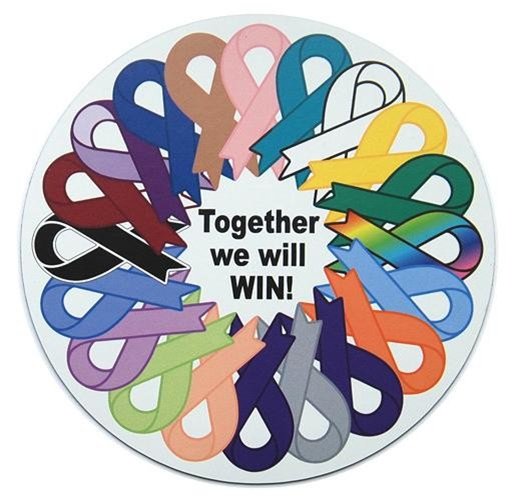
Awareness is a multi-billion dollar industry.  Although originally it served to educate and involve ordinary people in the serious problems that face our society, recently, it has taken on a life of its own.  At any given moment, you can find a dozen Worthy Causes, each with its own feel-good celebrity, elbowing one another for media position.  Disease and disaster are being marketed like soup and shampoo.  The problem is as the media onslaught gets louder — despite the ribbons, buttons and bracelets — I’m not the only one who’s become calloused over.  I’m just the one who will actually admit it.


St. Andrew’s Day

Today is St. Andrew’s Day.  For those of you who suffer under the handicap of not being Scottish this is Scotland’s national day.  Basically, it’s St. Patrick’s Day with more booze and less brag.  The Scots are a hardy northern people known for thrift and ingenuity.  Whereas it can be said that the Irish built America, it’s not as widely known that the Scots already owned the place when Paddy and Liam got off the boat.  That’s the gist of it, really.  Although the Scots basically shaped our modern world, they don’t get much credit for it – simply because they are who they are.  So just who are these Scottish people?

The Scots obviously come from Scotland, a windy, cold, rainy pile of rocks, stuck out in the North Sea.  Since nothing grows in that harsh environment, the economy, from the dawn of time, has been based on theft.  Any agriculture that ever did exist is an odd combination of barley, oats, sheep and large stones.  The barley was grown for whiskey, a number one Scottish priority.  The oats was for porridge, which in Scotland, even today, is eaten with a knife and fork.  The sheep were raised for wool, woven into the Scottish national dress (which actually is one) and the stones were provided by God to throw at the English.  That’s about it for agriculture except for Scottish cattle — which are strange, squat, hairy and orange.

Geographically, Scotland is divided into the Highlands and the Lowlands.  The only noticeable difference between the two is the Lowlands have less wind and the Highlands have more rocks.

Politically, the Scots, since the time of the Picts, have separated themselves into clans.  In other words, they are a clannish people, wary and suspicious.  For most of Scotland’s history, individual clans fought each other in ruthless battles for possession of their worthless stony soil.  However, on occasion, the clans would forget their petty squabbling, join together and rise as one man to get beaten up by the English.  This happened with such frequency that finally in 1603, the Scottish King James VI reluctantly agreed to be England’s king, as well — probably just to keep peace on the island.

For recreation, the Scots enjoy all sports that allow time for smoking and drinking.  These include golf (a good walk spoiled) curling, darts and snooker.  However, when pressed, the Scots play rugby, a primitive form of American football where the object of the game seems to be murder.  They also play soccer, that dull game that yuppies watch every four years, and something called hurling (which is nothing like it sounds.)  The strangest of the Scottish sports, however, is the caber toss, which can only be described as bulky men throwing telephone poles at each other.  Curiously enough, this game has nothing to do with Alexander Graham Bell, the Scotsman who invented the telephone.

Over the years, the Scots have made major contributions to the evolution of Western society.  In prêt a porter fashion, they’ve given us plaid — a severe, regimented, itchy woollen, best suited to private girls’ school uniforms and ugly sofas.  In the world of cuisine, they are the masters of the haggis, a sheep’s stomach stuffed with oats and an assortment of other evil ingredients that normal people throw away.  This mess is boiled until everybody loses interest, securely stored until it rots, and served on high holidays.  Musically, their instrument of choice is the bagpipes (which have been called the missing link between sound and noise.)  The pipes, as they are affectionately called, are normally played outside because their cacophony can fill an auditorium and people have been known to leave just to make room for them.  Unfortunately, in the realm of the arts, Scotland’s greatest poet, Robbie Burns, has never been translated into English.  Even his best known work, Auld Lang Syne, is only trotted out on New Year’s Eve because nobody has a clue what it means.  Of course, the Scots’ greatest contribution to the modern world is Adam Smith’s Wealth of Nations.  This long-winded dissertation is said to be the first modern work of tedious prose.  Although it is referred to with stunning regularity, no living human being has read it cover to cover, and most contemporary economists would just as soon read the Glasgow phone book.  In essence, Smith’s message can be summed up in two heavily accented sentences (Try it!) “It’s every man for himself, pal.  You’re on your own.”

These days, the Scots are easily overlooked in the family of nations because they speak a language only they understand.  Linguistically, it is related to English, Scots Gaelic and gibberish and has a close sliding scale connect with Scotch whiskey: more whiskey, less English.  As contemporary philosopher, Robin Williams observed, the Scots are the only people in the world who answer questions with the intonation of another question.

Despite all these disadvantages, the Scots have a lot to be proud of.  This is embodied in their national symbol, the thistle, a tenacious prickly weed that can survive anywhere on the planet.  And there is no place on this planet where Scotsmen and women haven’t gone.  They left their country in droves.  Who wouldn’t?

So today, St Andrew’s Day, as you go about your business (just like you didn’t on St. Patrick’s Day) remember the Scots have a day, too, and a fine tradition.  It stretches across time from James Watt, James Chalmers and James Dewar, to John Shepard Barron, Billy Connolly and Craig Ferguson.  And above all else, remember: Sean Connery, a Scotsman, is still the best James Bond.

Oh! And, by the way, I’m first generation Scots.  You can knock your own gang!

India’s Economic Revolution

Last week, everyone was focused in on America’s Black Friday retail shenanigans – as well they should be.  There’s no doubt the world economy desperately needs some conspicuous consumption right now, and those half-crazed American shoppers didn’t disappoint us – although the pepper spray was a bit much.  However, on the other side of the world, getting largely ignored outside of India, there was some even better economic news.  This news was largely ignored outside of India because, beyond the outsourcing debate, India itself is largely ignored by the Western World.  While all economic eyes are hypnotized by the Great Chinese Dragon, the Indian Juggernaut (a Hindi word, by the way) is steadily gaining momentum.  Nobody is ever going to say that the Indian economy will save the world from international recession. (Dare I use the d-word?)  However, it’s certainly going to be a game changer.

Here’s what happened last week.  It’s all very complicated and you can read a slightly slanted version here, but in essence the Indian government opened up the country to foreign, hypermarket chain, investment.  What does this really mean?  In a word — Walmart.  The international retail bogeyman is coming to the sub-continent!  Just as an aside: in North America, we are blinded by Walmart.  However, around the world there are several other hypermarkets — including France’s Carrefour and the UK’s Tesco plc, ranked two and three by revenue — and they are major retail players internationally.  For example, Walmart has 189 outlets in China, but Carrefour has 184.  Walmart might be the biggest kid on the block, but — to mix a metaphor — it’s not the only game in town.  I’m not going to debate the various merits and demerits of Walmart here — that’s for another time – but Walmartophobia aside, this is excellent economic news.  Let me explain.

To most North Americans, India is a combination of Russell Peters, Slumdog Millionaire and Apu from The Simpsons.  In general, most of us don’t ever get past Bollywood or the local tandoori restaurant.  We are walking encyclopaedias of ignorance when it comes to what’s south of the Himalayas.  This isn’t because we’re stupid; it’s because, for the last decade, we’ve been looking at the Yangtze, not the Ganges.  However, times are changing.

I’m not going to bore you with statistics, but here are just a few incredible numbers.  There are over one billion people in India.  Although nearly half of them live below the poverty line, the Indian middle class is huge, and it’s expanding faster than any other place on the planet.  In real numbers that translates into 350 million people with disposable income.  In 199,1 the average per capita GDP in India was (U.S. dollars) $329.00. This year, it’s $1,265.00, and by 2016 it will almost double to $2,110.00.  Do the math!  The standard of living in India is growing at a phenomenal rate.   Those are all pretty spectacular numbers, but the one that tops them all is the median age in India is 25.  That means half a billion people between the Indian Ocean and the Bay of Bengal are under 25 years old.  This is primo, prime time purchasing power.  The market for Levis alone is breathtaking.

This brings us full circle back to India’s new government policy to allow what they call “multi-brand retail” outlets — superstores.  Last Thursday, the Indian government opened up a vast retail market.  It doesn’t take a genius to figure out that we’re not just talking about a couple of big box stores out in the suburbs.  The ripple effect of adding 350 million potential customers to the world economy is going to be huge – and it’s not only because of end-user retail goods, either.  For example, there are going to have to be warehouses, fleets of trucks, forklifts.  How many shopping carts do they need?  How many computers and cash registers?  How much cash register tape?  Coat hangers?  Staplers?  The little tags that show the price?  The list goes on and on, and this is just the beginning.  All this stuff has to be manufactured and purchased before the first family in Mumbai lays down a single rupee in retail sales.

The folks in Cincinnati are still part of the largest retail market in the world, but while they’re fighting over a big screen TV at Target, there’s been a seismic shift in Asia.  The potential is huge, and we’d better pay attention to it.