 If you’ve got some time to waste and want a few serious grins, invite a bunch of old people over for a wine and cheese. It might not be all that much fun at first (everybody griping about their various ailments) but invariably those old folks are going to get around to gabbing about the 60s. It’s unavoidable. There’s even an unwritten rule somewhere that says whenever you talk to people from the 60s, you have to talk about the 60s. It’s like dating a vegan: you’re going to hear about it — long before you ever decide to sleep with them.
Old people love to rattle on about back in the day, and with a couple of Pinot Noirs under their belt, there’ll be no stopping them. In fact, if you don’t set some strict limits, they’ll be hauling out the hookahs in fond remembrance. The neat thing is, though, you’ll get to hear some of the most outrageous lies ever told west of Paul Bunyan. Edith Hamilton on her best day couldn’t write them any better. Plus, old people are cunning. To cover their ass, in a kind of an all-purpose pre-fabrication, they’ve come up with this amazing disclaimer: “If you remember the 60s, you weren’t there.” With that adage tie-dyed into the conversation, the sky’s the limit. The highs become the highest, the sex becomes the sexiest, the music becomes the musiciest, and everybody went to Woodstock — except the ones who were at Glastonbury, Altamont and the Isle of Wight. (Just for the record, I only got as far as Strawberry Mountain — and that’s only because my sister covered for me.)
I understand these are subjective truths. When one is young and immortal,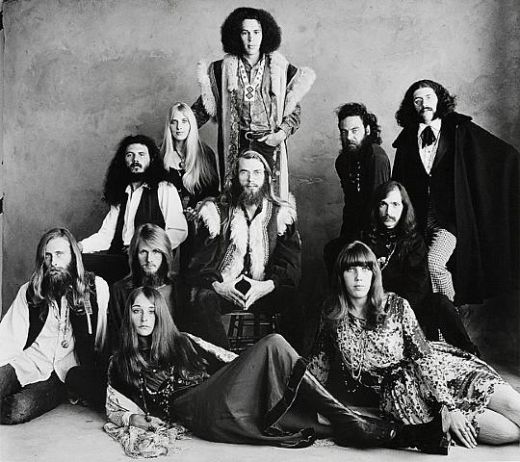 everything is bigger, brighter and better. I have no problem with that; we all do it. For example, when I was a kid, I heard World War II veterans talk about the woods outside of Bastogne as if it were a Boys Only Christmas Party — with Nazis. The problem I have is when the love-in gets rolling and people start filling in the details, they go from fanciful to false without missing a beat. Suddenly, Uncle Fred (who’s been selling mattresses since forever) claims he spent his college years smoking peyote with Don Juan Matus and Janet (the secretary at the Auto Claim Centre) is talking about riding with Sonny Barger to Morningstar Ranch — and beyond. Most of this stuff just didn’t happen. Even though I’ve never been known to let the truth get in the way of a good story, I have a serious problem when these old buggers start chopping the tall-tale timber. Why? I’m old, bitter and twisted, that’s why.
Here’s the real deal (and I don’t care what these Johnny-Come-Latelys have to say about it.) Back in the day, the shorthairs outnumbered the longhairs by at least 20 to 1, and they used their vast majority like an exclusive club. Yeah, yeah,  yeah! We all listened to the music, spouted the anti-war propaganda, and groped around looking for free love, but when push came to shove, way more kids spent their evenings studying for Mr. McLellan’s Biology exam than ever sparked up in the dark and listened to Grace Slick. The counterculture gap then, was a lot bigger than it is now, and the dividing lines were very clear. As Ken Kesey once said, “You’re either on the bus or off the bus.” The truth is most of the people claiming retroactive relevance these days were never on the bus. Not only that, but at the time, they looked very much askance at anybody who was. Later on, when the 60s became the darling decade, they rewrote their personal history to mitigate their circumstances and claim part of the cool.
I’ve got nothing against charlatans as such, but I hate like hell seeing the dork who worked on the yearbook claiming to be the king of counterculture when he and his football friends used to think it was hilarious to chase my friends with his dad’s Buick. Actually, I’m not that bitter. I’ve long since given up trashing these gasbags, it just irks me that they continue to dine out on a decade they were never part of.





 WD Fyfe