“Scars” is a short story originally published in QWF Magazine a few years ago. I’ve decided to cut it into bite-sized pieces and post it here to start a new series called Fiction Fridays. This is Part 5 and the story is complete.
 The three scars were long and deep, cut into the floor in another century and now smooth and round with age. Idly she pushed her sandal off and followed the lines with her toes. They ran parallel and started close, spread slightly for an inch or two and then shallowed and died. Her toes splayed as they moved through the lines, and, near the end, had to spread to follow the form. The grooves were wide enough to hold her comfortably and she lingered there in their ruts.
The drinks were tall and sweaty. Their sides dripped and ran, their white water puddles made high top pearls on the dark wooden table. It was only the other two customers that kept her from licking the sides of her glass.
They had walked all morning through the lower town. It had been cool and touristy, with people from the market laughing and performing for them. They had bought fruit, the huge fresh kind that only comes in the tropics, and tried stupidly to get the woman to wash it for them. Then they had started up the long steep streets that led to the old town. The morning faded, and the fierce heat afternoon found them wandering over the stones of the last century. It made them stop to argue about washing the fruit which she ate anyway. It was rich and pulpy and the sticky juice ran down her face and her arms, leaving dirty streaks. And his tone was, “You’ll be sorry!” But she didn’t care because the juice was cool and she was thirsty, more thirsty than she had ever been. And there was more, the deep purple colors hanging in the string bag he carried. But she didn’t ask; he was angry anyway. And they continued up away from the sea and into the hot afternoon.
And now she was cradled in the scars underneath the table, feeling them with her large middle toe, stroking the rounded sides and pausing in their length. It was cooler here, not much, but the thick dark walls and the deep shadows helped. And the afternoon which had covered them and collected in streaks where their clothing fit was waning, moving across the white sky, too late now to stalk them. But they were still quiet from the climb, their hair lank at the back of their necks, their clothes dry stained and their muscles languored and tired. So they sat, idling their drinks; he, reading the thumb-worn brochure from the counter and she, smoothing caresses out of three ancient scars.
She turned her drink in her hand, feeling the cool wet of it on the ends of her fingers and leaned forward and sucked at the straw, filling her mouth with the frothy liquid. He looked up.
“Don’t drink so fast on an empty stomach. In this heat you’ll get sick.” he said.
She swallowed. She remembered hearing that from her father once but she thought he had been talking about horses.
“This was a slave market,” he said matter-of-factly.
Her toes stopped in the middle scar and she pulled her foot back under her chair.
“See?” he said, pointing the brochure at her, “A slave market.”
She looked away across the thick sill, out into the gravel afternoon. The pebbles crunched under the tall heels of a woman walking just out of sight. She felt her through the soft of her footfalls that moved with a practiced space in sound and speed.
“High heels, on the gravel, in this weather?” she thought.
“Just right here was for viewing and over there where the bar is was the prom…in…prom”
“Promenade,” she corrected.
“Promenade,” he repeated. “And they were kept out in the yard. Trooped from the ships just the way we came.” He was obviously delighted with his discovery and was warming to it.
The woman came in through the tall open doors. Her dress was crisp orange, stiff and sharp, even in the heat. Her hat was full, with a trail of white ribbon that fell from the side. The shadow of it partially hid her face and forced her to hold her head a little too high. She stopped full on her feet then walked past them. She walked with the same measured step and sat down at a table across from them, so that she was in the shallow shadows. Her profile and her right shoulder were in their direct view. She took off her sunglasses and laid them on top of her gloves, white like her hat ribbon and her shoes.
“The owners lived upstairs, and this was the first building in the Americas to have running water.”
The waitress walked by them, carrying a tray with a bright metal coffee service, a small decanter of amber liquid and two wide crystal glasses. She poured the coffee, added one spoon of sugar and stirred it. The woman nodded her head to thank her and the waitress turned to go back to the bar.
“Could we have another, please?”
“Remember you haven’t eaten anything today except that fruit and that’ll probably make you sick. It said in the brochure that you should wash everything thoroughly and avoid the local produce.”
“Just one more won’t kill us. Besides, it’s too hot and I’m tired”
“Don’t whine, Jen. Just remember what I told you. You’d hate to spoil everything by getting sick. Yes, miss. One more for each of us.”
The woman sat turned slightly away from them. She reached back from her handbag with a cigarette and snapped a large, old-fashioned lighter. The flame briefly illuminated her face fully, and Jen saw that she was older than she had originally thought. Her body and carriage had been firm, her legs and arms round with female muscles. Her legs were crossed and her dress rode up on her thighs. She was toying with her shoe, half on her foot, pushing the heel back and forth with her toes. Yet her face was full and held the extra worry lines that made Jen think of her mother. The woman turned and caught Jen staring. Jen looked away but still saw the woman pull a thick lungful of smoke from the cigarette and exhale it as she now stared at Jen. She did this twice, while Jen, avoiding her eyes, finally became so embarrassed she reached for her purse.
“I have to go to the toilet,” she said and stood up and turned and left the table.
She passed the waitress bringing their drinks and acknowledged her with a slight smile. They met between tables and had to turn their bodies to get by. They passed close enough for Jen to hear the rustle of fabric her thighs made when she walked and smell her perfume that touched her tongue for a second. It was exotic and old and tasted musty. Then she was gone and it was gone and the toilet was cool. The tiles were nearly cold on her feet. Her feet? She had forgotten her sandals under the table and had walked barefoot through the restaurant, bar, slave market. Her first inclination was to go back and she eyed the floor suspiciously from the inside of the door. Everything was white and bright and clean.
“No puddles,” she thought. “And doors!”
She went to the first cubicle and shut the door. Her baggy walking shorts slid easily to the backs of her knees, but her panties were damp and rolled down the outside of her thighs. The middle clung to her hair and formed a bright shield half way down. The walls were clean and white with no trace of leftover graffiti, what a Ladies room is supposed to be. She reached and unrolled the paper, wadding it up and remembering to wipe down as the doctor had told her, not up as her mother had taught her. She checked for color and stood up, unrolling her panties and pulling up her baggy shorts. She twisted and picked her clothes into place and was about to flush when the outside door opened and someone came in. She stood nervously still, trying to control even the sound of her breathing, waiting for a cubicle door to close, so she could leave. But none did, and even though she didn’t want to meet the woman in orange in the female privacy of a toilet, she flushed and opened the door.
It was the waitress preening in front of the mirror, whipping at her long cheek bones with the stubby hairs of a make-up brush, her hands expertly smoothing the deep shade and avoiding the intricate dangle of her earrings. She bit at her lips to puff the color and Jen automatically bit at her own. Their reflected eyes met in the mirror and Jen stepped forward, pulling her fingers through her hair, adding some shape to the lank strands.
“You are still warm here, Mrs,” the waitress said.
Jen smiled, “I’m not used to the heat. We don’t get heat like this at home.”
“No, Mrs.”
Mrs. seemed odd to Jen. Nobody called her Mrs. anything-ever-and she never thought of herself as Mrs. She ran water over her hands. It felt cold. She didn’t like Mrs. Jen looked up sideways at the waitress again. She was well-done, a beauty. “But obviously older than me,” Jen thought. Then she looked at herself in the mirror: her hair hung, she had no make-up and her face showed the greasy remains of the sunscreen she had put on that morning. Her earrings were small, colorless spots. Her lips looked washed, tired and washed.
The waitress put away her stubby brush and watched the younger woman for a second. She took a squat copper bottle from her bag.
“Sometimes, Mrs., it’s better to feel better,” she said.
Jen straightened and turned away from the mirror.
“Here. Let me show you.”
The waitress reached around Jen’s neck and into her hair. Her fingers spread and pushed the hair up and away from her neck. Jen stiffened, but the woman pushed further, drawing even the tiny guard hairs up and away from Jen’s skin. Jen felt her pulse rising and beating against the heel of the woman’s hand as it firmly held her head and her hair. Her breath caught.
“Don’t call me Mrs.,” she said, “Please,” as her breath escaped.
The waitress reached up with her free hand and turned the copper bottle over Jen’s exposed neck. Three liquid drops felt like pearls as they slid from the bottle and touched her skin. They were cool and old and musty and spreading, seeking the ruffles of each pore that drank at them. The woman smiled up at Jen as the liquid dissolved or evaporated or soaked in. Jen felt the the woman’s fingertips and the drag of her nails as she released her hair and worked the last of the perfume into the hollow of her neck where the small hairs were.
“Women sometimes need pleasant things when they are warm. It feels better now?”
“Yes” Jen said, and it did. She felt cool and smooth. The dry skim added to her body and spread out into her shoulders. The taste cleared her head. It was the same scent as when the two women has passed in the restaurant. The drag was gone. She felt stronger, more, even exotic.
Jen turned back to the mirror and ran water over her hands. She scooped handfuls onto her face and rubbed the sunscreen traces away. The water wasn’t even cool, but it felt good. She took her hands and ran them through her hair, plumping it. They strayed to where the waitress had touched and her fingers lingered where hers had been, where the drops had fallen. Jen dragged them away and touched them to her lips. The taste was the same, unfaded. She lifted her head to say thank you and caught the edge of a reflection leaving the washroom. Her face was already dry.
The restaurant room had changed. Had she been in the washroom that long? The shadows were bigger, longer. And there were more people, at least a dozen. Jen looked for the waitress and found she was already busy, so she made a wide circle to her table, feeling the smooth glossy wood on the bottoms of her feet. She slid the pads of her feet against the wood, nearly skating across the floor, gliding to her table, concentrating on the feel of the wood, the spaces in the planks, the small sucking sound her steps made.
“Better than the click of high heels,” she thought and looked up to find her table. The woman in orange was standing over Neil, listening intently to him. She stood angled over the chair on his left side. She leaned on it heavily. Her breasts were tucked between her arms and pushed out under his head. Jen watched as Neil’s eyes drooped from the woman’s face to the long ‘Y’ of her cleavage and shyly back to her face again. Jen knew the woman knew she was there, but she dropped her purse on the table anyway, scraped her chair back and bent down to retrieve her sandals. On her hands and knees she crawled under the table. From below, the woman’s legs seemed longer and her high heels made the calf muscles tight, almost powerful. The sharp hem of her dress cut the hint of the line of her upper leg.
“She must shave every day.” Jen thought and hooked her sandals towards her. They slid over, revealing the three long scars in the floor, and Jen automatically touched at them with her fingers. The fit was perfect. The measure of the length and the space between. And the sides weren’t rounded but puffy, humped as if they were swollen.
She got up quickly and showed off her sandals like a hunting trophy to explain her behaviour, then dropped them and sat down. Neil looked at her defiantly. He had been looking at another woman’s breasts but she had left him alone and so it was somehow her fault, and besides it was alright to look at breasts anyway. But all he could say was, “Where have you been, dear?”
Before she could answer that she’d had to pee (it always bothered Neil when she talked that way in public) the woman broke in.
“Your Neil has been telling me the history of this place. It was a slave market. But he has forgotten his manners and didn’t invite me to sit. My name is Telia, and you are Jennifer.”
The “t’s” were on the front of her teeth, the pronunciation was firm and from the beginning of her mouth, melodic and Caribbean. No need for Telia to say “pee”; Neil was looking uncomfortable enough for forgetting his manners and displeasing the woman.
“I’m sorry I…” he started to say, but Telia continued.
“Your hotel is not far from here, Jennifer, but it is a long walk. If you stay for the show I will arrange a car. I will arrange a car anyway, but you must stay for the show. It’s very naughty. You will be my guests for the…”
Neil interrupted rudely, “I’m sorry, but we can’t stay.” He was looking harassed, “And at home we don’t have to invite people to sit; they just do it.”
Telia straightened up and turned her head slightly. “You are a long way from home, Neil.” she said finally
“Did you come for the show?” Jen asked. Her foot had found the three scars again, and she was instinctively stroking her toes through them. She reached for her drink. It had melted, blotting the coaster with liquid that soaked through the cardboard fabric. It stuck to the bottom of the glass when she lifted it. Jen avoided the straw, pushing it aside with her tongue, and drank deeply, pulling her upper lip back from her teeth to strain the ice. She set the glass down, touching the coaster to the table first to break the vacuum. It came off the glass with a small, wet sound. She set the glass down on the table, rubbing it into one of the high puddles that had formed. Now her toes rested easily in the scars, only the middle one trembling slightly.
“No, I am waiting for someone. A new employee,” Telia said, making a slight gesture in the air with her right hand.
Jen drank again.
“A new hostess,” Telia said.
Jen slightly watched the recognition spread over Neil’s face, even though she kept her eyes on Telia. She knew he had been flirting, showing off his local knowledge for the attractive woman who had approached him in a bar. Talking to her with authority. The waitress Jen had met in the washroom came to the table.
“Louise, these nice people are my guests this evening. And they will be using my car later. Have it brought around.”
“Really, we can’t stay.”
“I’d like another drink, please, Louise.”
“Jen, we have to go.”
“I will talk with you later. Unfortunately, I have to work now.”
“Really, ma’am, we…”
“‘Telia,’ Neil, please. If you need anything; Louise.”
“Thank you, Louise.” Jen said, trailing her right hand under her hair to the back of her neck.
“And you, sir?” Louise said.
“No, no, thank you. Look, it’s awfully nice of you, but really. It’s starting to get late and we have a big day tomorrow.”
“We will talk later. I really have work to do,” Telia said, dismissing herself.
She returned to her table and sat down, turning ever-so-slightly away from them. The big lighter flashed and she cupped the flame in her hand, holding it for a second against her cigarette. From Jen’s angle, it appeared as if she was holding the fire to her face. Then the flare died and Jen noticed the room had gotten quite dark, the shadows were bolder and the tiny lights enclosed and futile. The long tropical afternoon only lingered, useless and forceless, unable to defy the inevitable twilight.
“Where did you go? I’ve never been able to understand why it takes women so long in the toilet. And that woman cornered me. I couldn’t very well tell her to leave.”
Part 5
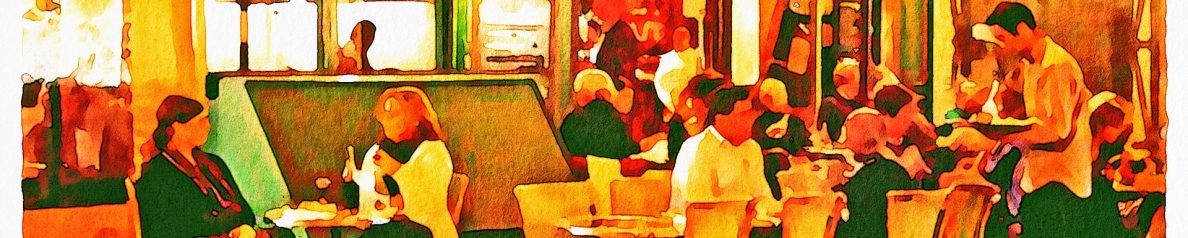
The room was darker and much more attractive. It was thick with glossy illuminated wood. The bar was in the right corner, shiny with light and glass; crystal columns that reflected on the dark tables, and in the faces and the eyes of the people. There were even more people now, arranged around the dark tables, their faces lit by single candles, or left as silhouettes in the larger darkness. Where had the light gone? Jen looked forward through the open window. There was still light outside, hampered by the gathering twilight but still clear.
“Why didn’t you tell me that woman worked here? I was telling her all about it: who we were, where we were staying, and, of course, everything about this place; just like I knew what I was talking about, and all the time she knew. I feel like a complete fool. What took you so long? Where did you go, anyway?”
Jen looked down from the open window. Sitting in front of the light Neil’s features were indistinct and dissolving into shadows.
“I had to pee.” she said.
“Oh, Jen! Look, I’m tired and dirty. I just want to go back to the hotel and clean up. I’ll stay for a little while, but come on! I walked all over today.”
The ceiling was high, lost in the upper reaches of the walls. Jen turned her chair so she could find it, following the blunt staircase that rose from the expanse of pale smooth floor that she had skated over. The wood of the floor was light and long, spreading from the bar to the stop of the staircase that ran, quick and large, up from nowhere. It hung on the wall and followed it, suspended, hanging from the darkness and disappearing into it. The room, the tables, the people: all seemed to flow towards the long floor. Enclosed by the abrupt, shiny crystal of the bar, and the sudden rise of the stairs, it was backed by the black, wet wall. It was the focus.
“I don’t know why we ever came in here in the first place. You were tired or thirsty or something. You’ve been difficult all day. First it was the fruit, then you had too much to drink, then ganging up on me with those other two women. That was just too much. I don’t want to be her guest; I don’t want to have her car; I don’t want anything, right now.”
Neil’s left hand emphasized his words, crossing over the table in front of him, with the palm down. The fingers spread out towards her. A different girl came with Jen’s drink. Jen reached up and plucked it off her tray.
“Thank you,” she said.
“And you, sir?” the girl asked.
“Nothing. I don’t want anything.”
Jen took a small taste of it through the straw and set the glass down. She turned her chair back, directly facing Neil. She couldn’t really see his face at all, anymore; couldn’t see if he was angry or sad, disappointed or cruel. She watched the place where his face used to be, and, from the edge of her eye, saw the girl sitting with Telia. She was small, small enough for a man to hold. She wore dark clothes with bright white ruffles at her throat and her hands. Her hair lay over her back. Her earrings touched the light; her gloves were small; her shoes tied at the ankles. Jen saw Telia reach across and hold the girl’s wrist. She watched as Telia took the girl’s glove off, each finger pulled out and away, as if it was her own hand. She examined the girl who dipped her fingers obediently. Jen moved her foot away from the scars on the floor. They were warm and moist from the warmth of her foot. She trailed the moisture with her toe as she pushed her sandals toward her chair.
“I’d like to stay for a while,” she said.
There was no sound from the shape that was Neil. And there was no silence in the room to hear if he was breathing.
“You’ve had too much to drink,” he said, “And I think we better go.” His voice was sullen, deep after the high-pitched sounds he had been making.
“No,” she said
She stood up and gathered her purse and her drink together, balancing them in one hand. She bent and lifted her sandals by the ankle straps, holding them firmly. The scars looked deep in the dim light and dark wood, deeper than she’d realized. She stood waiting, feeling the arm of the chair resting on the back of her leg. Neil didn’t move, didn’t speak.
“I’ll meet you back at the hotel,” she said.
“What brought all this on?”
She felt awkward standing there over him, balancing her purse and her drink, trying to think of something to say. She couldn’t think of anything. She couldn’t even see him. She turned her head into the darkness, expecting something, then walked the few quiet steps to Telia’s table. She placed her drink and her purse on the table, sat down and dropped her sandals on the floor.
“You’ve decided to stay for the show. Good. Jennifer, this is our new girl, Mary. Mary, this is our Jennifer. She’s a long way from home, so we must make her feel especially welcome. Oh yes, we must. It will be just us. Girls’ night out.”
Mary touched the back of Jennifer’s hand. Jennifer smiled and sipped her drink. Her foot was already searching under the table for scars.
 There are five houses in a row. Each is painted a different colour and each inhabitant is a different nationality. They each own different pets, drink different beverages and drive different cars.



 WD Fyfe