
The Wheel — A History

wheel

Everybody yips about The Wheel as the greatest invention of all time.  What a media whore!  Think about it!  What can you actually do with a wheel?  Not much!  Try it!  Look around for something round, (pie plate, saucer, jar lid, even one of those ancient DVD discs — it doesn’t matter.)  Now, try and find a use for it.  Frankly, once you’ve done Frisbee, you’re pretty much finished.  The fact is, despite the hype, a wheel, by itself, is absolutely useless.  And whoever invented it must have been a dumbass.  Imagine the caveman conversation.

“Hey, Marvin!  What you got there?”
“I call it a wheel.”
“Cool!  What does it do?”
“Watch this!  I just give it a push, and look, it rolls all the way down the hill.”
“Cool!  And — uh?”
“And nothing.  I go down, carry it back up the hill and do it again.”
Serious silence.
“Dude!  We’re like friends and everything, but that is totally stupid.”
“That’s all you know.  The wheel is going to be a big thing, someday.  It’s goin’ be as big as like fire, probably.”
“Man, you gotta stop lickin’ those shiny frogs.”

Here’s the deal.  In order to do anything except roll away, wheels need other wheels.  Plus, they need something to control the spin and some way to attach the spin to something else (i.e. transfer the energy.)  In other words, they need an axle, and that concept it very complicated.  It took prehistoric humans 10,000 years of circular hit and miss just to figure out they could use tree trunks as rollers to move heavy stuff like stones.  And it was another millennium plus before Egyptian Pharaoh Ramses II’s two-wheeled chariots kicked the crap out of the Hittites at the Battle of Kadesh in 1274 B.C.  However, it was actually a Roman genius, Vitruvius (who most people have never heard of, BTW) who unleashed the tireless potential of the wheel axle, when he built and used the first vertical waterwheel around the time of Christ.  Eighteen hundred years later, steam turned the wheels axles of the Industrial Revolution, and from there, it didn’t take very long (less than 200 years) for NASA’s Planetary Surface Exploration Device to be doing wheelies on Mars.

So even though the wheel gets all the credit, it’s really the tireless work of the axle that is one of the greatest human achievements of all history.

Law — A Brief History

law

Ever since our hairiest ancestors came down out of the trees and grouped themselves together against the dangers of an unforgiving world, we have made laws to govern ourselves.  In the beginning, they were simple tribal dictates that set out reasonable behaviour within the group.  Things like no stealing another guy’s vegetables, no peeing upstream from the village, everybody gets a slice of the mastodon, and no loud music after 11:00.  In those days, there was only one punishment for breaking the rules.  You were banished from the protection of the tribe and your life expectancy went from short and brutal to zero.  Early humans understood that society was fragile, and if some wiseass wanted to be a jerk, he endangered the entire group.  It was simple, rough and ready, but it worked.  Humans, as a species, not only survived but thrived as a communal beast.

As our society progressed and got more complicated, so did our laws.  We still had to protect ourselves against the unreasonable acts of certain individuals, but we measured the punishment in accordance with the severity of the crime.  We remember this period today in the often quoted homily “an eye for an eye and a tooth for a tooth.”  These were still simple laws, but they worked well because everybody in the group understood the rules, and they were enforced by the entire community.  For example, if Benjamin got caught eating Abraham’s carrots, he was expected to replace them – with a little extra for Abraham’s trouble – and all was forgiven.  Once again, these rules allowed us to progress as a society because we didn’t have to spend all our time guarding ourselves and our property against theft and vandalism, and we could concentrate on other things, like food and shelter.

As our society progressed even further, more and more people came under the protection of the law.  Our rural villages developed into urban towns and started to interact with other large groups who had also adapted laws to protect their societies.  This caused a serious problem, though, because our social groups were getting so large that not everybody knew all the rules nor understood them.  Plus, although the rules between different groups were very similar, sometimes individual laws were surprisingly different.  For instance, if the people in Town A understood that donkeys must be tethered, when those same people went to Town B, where donkeys were allowed to roam free, their first thought would have been, “Wow! Free donkeys!” and they would have helped themselves.  You can see how there’d be some misunderstandings; wars have been fought over lesser things.

Luckily, it was about that time that a guy named Hammurabi came along.  Hammurabi was a Babylonian king who took all the rules he could think of and wrote them down.  (Actually, he had them chiselled into stone, but the result was the same.)  It was called the Hammurabi Code; a big, heavy copy of it is sitting in the Louvre in Paris, if you want to take a look.  Hammurabi also set down all the punishments that fit the crimes, so everybody in his kingdom knew exactly where they stood – vis a vis the law.

This was great, and even though laws changed dramatically over the centuries, Hammurabi’s system worked for the next three plus millennia.

But, wait a minute!  It ain’t over yet!

Fast forward to the late 1960s, and suddenly everything went to hell.  Somehow (for no reason I can fathom) our society decided that nearly 4,000 years of success didn’t matter, and we’d actually gotten the entire system backwards.  Back in those days, the thinking was: we’d been making laws to protect society from those individuals who wish to do it harm (murderers, thieves and such) but what we need are laws to protect those individuals (murderers, thieves and such) from the wrath of the society they’d harmed!  The idea caught on even though it’s based on a weird dichotomy.  The fact is, the only way to protect individual rights within a society is to have a strong society to begin with, and protecting individuals who wish to harm it weakens our collective trust.  In other words, if Benjamin gets caught eating Abraham’s carrots and nothing’s done about it, the rest of us begin to think we should get some free carrots, as well.  Do that enough times and it’s called anarchy.

It’s an interesting experiment: I’m curious to see how long it takes us to get out of it.

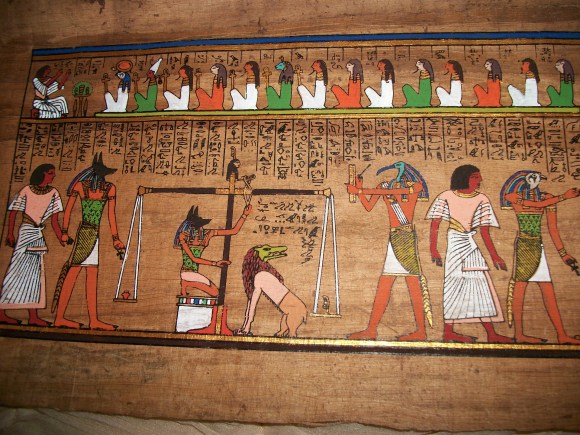
Gods Of Old!

gods

Although old is a relative term, generally, old people never get anything and (some would say) deserve even less.  Children annoy them, teenagers avoid them and adults talk to them in that voice we reserve for pets.  Their stories are long, their habits are confusing and they play way too much “Remember When.”  However, old people have it over everybody else on the planet because they have their own set of gods!  These gods and goddesses, like the pantheon of Valhalla or Olympus, govern all aspects of “older” life.  They appear to us slowly as we tack on the years.  They slyly watch as we slowly trade in our tequila for iced tea, push-up bras for baggy sweatshirts, stiletto heels for comfortable shoes and muscle cars for minivans.  And by the time we’ve replaced vodka shots with a glass of wine and clubbing with crossword puzzles, they have our fate firmly in their hands.  These gods should not be ignored because we’re all going to have to deal with them one day.

Cutonya – The goddess of beautiful grandchildren.  With one glance, she turns any grandchild into the cutest, funniest, most talented little kid on the planet.

Kwikus – This is the god who manipulates the calendar so that days, weeks and seasons magically disappear, and suddenly it’s Christmas– again.

Noxia — This is the god who finds joints and muscles we never knew we had and torments them with annoying little aches and pains.  This is punishment for all the times we were mean, thoughtless and rude when we were younger.  Get used to it!

Poof — The goddess of the unexpected fart.

Scritch – The god of the inappropriate itch.

Folus — The god of aggressive nose hair.

Wat – The god of selective hearing.  This god saves us from all the stuff we didn’t really want to hear in the first place.

Notagin — This is the most helpful of the gods.  He’s the one who protects us from all evil.  He keeps track of our experiences and steers us away from making the same stupid mistakes we made when we were kids.  We should never overlook Notagin, because old people who do, end up giving all their money to Nigerian princes or greedy grandchildren who have no honour.

Myosotia – Sometimes called the Goddess What’s-Her-Name, she takes proper names and puts them just out of reach.  She also hides small objects like keys in the very place we left them.  Oddly enough, Myosotia doesn’t bother with memories that are 20, 30 and even 40 years old — which remain crystal clear.

Metamorpho – This god transforms professional people like doctors, lawyers, accountants, police officers and even judges and politicians into children – who get younger and younger every year.

Kilomornow and his twin sister Saggeth – These two tricksters love practical jokes like shrinking clothes that hang in the closet, adding extra numbers to bathroom scales, distorting mirrors and moving body parts just a little lower to the ground.

But mostly, old people’s lives are governed by the Queen of the Gods:

Idonkare – The most powerful goddess of all, Idonkare spends her time lounging around with her indolent lover, Sowat, playing backgammon and eating nachos, yet her power is so awesome that merely invoking her name brings harmony and comfort to the universe.  For example:

“Looks like you lawn is gettin’ a little long there, Herb.”
“Idonkare!”

Or:

“It’s the trendiest restaurant in town and I’ve got reservations!”
“Idonkare!”

And, of course:

“Grandma, nobody wears a Hawaiian shirt and Lederhosen!”
“Idonkare!”