South Sudan: A Short History

If I was even a minor official in the government of South Sudan right now, I’d be just a little bit pissed off.   A couple of days ago, July 9th, the Republic of South Sudan became the newest nation on the planet.  There was wall-to-wall media coverage.  Juba, the capital, was full of cameramen, reporters and dignitaries — Obama’s grandma was there, for God’s sake!  Even the bimbos at CNN were pronouncing Salva Kiir Mayardit properly.  Everybody and his friend was trying to grab a piece of history.  Today, less than a week later, you can’t find enough news about South Sudan to fill up a good-sized Tweet.  I’ll grant you Mia Farrow and George Clooney have a lot of things to do, and the Western media is busy eating its own over the Rupert Murdoch debacle, but this has got to be one of the fastest kiss-offs in history.

The people of South Sudan have been at this nation-building business for quite some time.  This is because they are totally different people from the folks in the north.  There’s been a lot of rhetoric about Moslems and Christians lately, but don’t take that to the bank; it isn’t worth much.  The fact is the northern Sudanese are Arabs, and the southern Sudanese are Africans.  The only reason they were ever in the same country in the first place is the British wanted to save money in the late 40s when Sudan was still a colony – except it wasn’t.  It’s all rather confusing, but here’s a decaffeinated account.

The entire British Empire was an administrative mess for most of its history, and Africa was particularly complicated.  In the case of South Sudan, first of all, Egypt and Sudan were never actually British colonies.  In the 19th century, Sudan was part of Egypt (although their legal writ didn’t go very far up the Nile.)  Egypt, on the other hand (and therefore Sudan) was, legally, an independent province of the Ottoman Empire.  Of course, the reality was different.  The British were running the show in Cairo.  There was a huge British presence in Egypt because the Brits owned the Suez Canal and they were going to protect it, come hell or high water.  Therefore, they basically told the Khedive of Egypt (the local dictator) he could either do as he was told or Britain would find a new Khedive with better hearing.  The Khedive listened the first time — every time — and it was a good arrangement.  Egypt was independent (wink, wink) and the Brits wandered around as if they owned the place.  Britain extended its formal authority into Sudan only after Herbert Kitchener put a stop to the 19th century’s version of Al Qaeda (with maxim guns) at the slaughter of Omdurman in 1898.  After that, Sudan was considered (get this) a condominium under Anglo Egyptian control, but South Sudan was always administered as a separate province.  Again, it was a good arrangement.  However, after World War II, in a wave of postwar austerity, the Brits decided to save some money and combine the two colonial administrations.  It didn’t really matter who was what in 1947 because the Colonial Office ran the country without a whole lot of input from the local folks – so nobody cared.

Unfortunately, when it came time for independence, it mattered a great deal.  The British screwed up.  They were in such a rush to feel the “winds of change,” they forgot that what they’d been calling Sudan for less than a decade was actually two different countries — and had been for thirteen centuries before they got there.  So, in 1956, when the British said, “You’re all Sudanese now.  Have fun.  Be good.  See you around!” and packed their packs and left, the result was civil war.  It ran hot and cold for the next fifty years.

To the South Sudanese, this week must look like déjà vu all over again.   Here they are trying their best to join the family of nations, and the family seems to have disappeared, just like it did in 1956.  I’m sure there are tons of things going on, but I’m seriously perplexed that none of it is making its way into the media.  It’s like the world’s newest nation dropped off the face of the earth.  Celebrities and the media played a huge role in getting these people a negotiated independence.  They can’t just walk away now.  As of Saturday,

the South Sudanese automatically qualify as one of the poorest nations on earth.  They need everything.  We’ve heard a lot of hot air in the last ten years about nation building; South Sudan is a perfect opportunity for the world to help some pretty diligent people build theirs.  Here is a chance for the rest of us to do it right.  I’m just worried that now that it’s no longer “trendy,” we’re not going to even try it.

Canada Day Trivia

Every country has national legends.  These can be myths like Paul Bunyan or real stories that start out as fact and, over the years, gain a life of their own.  George Washington didn’t chop down his father’s cherry tree, and if he did, he probably blamed it on Billy, the kid next door.  William Tell didn’t actually shoot an apple off his son’s head.  In fact, the facts are sketchy on whether Tell even had a permit to carry a crossbow.  Legends define a country, though; they give it an identity.  They embody the best qualities of a nation and serve as a signpost for young people.

We don’t have a lot of heroes in Canada.  We tend to steer away from hero worship and avoid our own history as if it could give us a rash or something.  Interestingly enough, seven of the top ten Greatest Canadians are part of our living memory, not our historical one.  It’s not that Canadians don’t like history; we just aren’t interested in our own.  When we go looking for heroes, Terry Fox trumps Laura Secord and Tommy Douglas trumps Thomas Darcy Magee — for good and sufficient reason.  There are tons of Canadians who’ve never heard of Laura and Darcy.  Plus, Canadians, like Americans, have all kinds of misconceptions about our country.  For example, Gideon Sundback, the guy who invented the zipper, wasn’t Canadian.  He was born in Sweden and lived in the United States.  The factory was in Canada – in St Catherines.  But here are few things that are true and may give you an insight into our national character.

Canada is one of the few nations in all of history that has never fought a war for territorial gain.  Historically, when we fight (and fight hard) it’s for human principles, possessing other people’s dirt doesn’t interest us; we prefer to wage war for ideals.

Toronto, the town we love to hate, is the most educated place in the world.  There are more university degrees in Tee-Oh than in any other major city on the planet.  (It makes you wonder where all the Maple Leafs fans come from, but it is what it is.)

Up until February 15th, 1965, Canada did not have a national flag.  Nobody felt the need for one.  On state occasions, when all the other kids were hoisting their flags, we borrowed the Red Ensign.  However it was never our official anything.

Contrary to popular belief among foreigners, our national symbol is not a Tim Horton’s coffee cup.  It’s the beaver, who is probably smarter than the British lion, the Russian bear and the US eagle combined.  As the world’s only official rodent, castor canadensis embodies all that is Canadian: hard work, diligence and a genius for reshaping a harsh environment to everybody’s benefit.

Canadians consume more macaroni and cheese than any other people in the world.  And that’s not per capita, folks; that’s straight up-and-down bulk.  Therefore, at any given time in Canada, chances are good that somebody, somewhere is eating Kraft Dinner or a reasonable facsimile.

Canada has the longest coastline in the world – 243,000 km or 151,000 miles.  There’s nothing significant about it.  We just got lucky with Hudson’s Bay and all those northern islands.  However, trivia lists all point it out like it’s something we’ve accomplished.  Hurrah, Canada!  Standard time, the Canadarm and coastlines!  Woohoo!  We’re Number One.

Canada is the largest producer of Icewine in the world.  We also produce the best Icewine in the world because — by law — the grapes have to be colder (-8 degrees Celsius) than other countries’ grapes, before they can be picked.

The Canadian comedy team Wayne and Shuster were on the old The Ed Sullivan Show more times than any other act.  They made sixty-seven appearances, an American media record which still stands and is not likely to be broken any time soon.  Americans like Canadian comedy.

Long ago, Canadians discovered insulin.  Recently, we captured the incredible energy source, antimatter, for a record 16 minutes and the other day we may have found a cure for Hepatitis C.

There is a story that goes like this.  When the Nazis overran the Netherlands in World War II, the Dutch royal family fled to Canada to escape capture and ensure the continuation of the royal line.  During their exile, Princess Juliana became pregnant.  The child, who would be 4th in line to the Dutch throne, could not be born in a foreign country.  The Canadian government issued a proclamation declaring that Princess Juliana’s hospital room was extraterritorial so the new princess would not have dual citizenship.  It was a wonderful gesture between two embattled nations, and it’s remembered every year during Ottawa’s tulip festival – tulips originally given by a grateful Dutch monarch.

When I was very young and the old guys had a few too many adult beverages, I heard a different story.  It was about a group of Canadian soldiers who slipped across the English Channel one dark winter night in 1942.  It was the middle of World War II, and Nazi military strength and the occupation of Europe were at their height.  Canadians had raided Hitler’s Europe once before, at Dieppe in August.  They suffered over 3,000 casualties, nearly half their contingent.  However, the little Canadian boat sailed on through the night, avoiding German submarines and patrols and ducking under the primitive radar.  It anchored quietly in the pitch black, off the coast of Holland.  The Canadian soldiers left the ship and rowed ashore.  They went inland a few hundred yards to get off the sand.  Half of them stood guard and the other half dug up enough Dutch dirt to fill a couple of burlap bags.  They carried them away and rowed back to the ship in total darkness.  When they were loaded, the ship turned and ran for England.  The bags were transferred to a Canadian Navy corvette which sailed, as a convoy escort, back to Canada.  They were given to the Dutch royal family and the dirt was carefully placed under the four legs of Princess Juliana’s hospital bed.  Princess Margreit, Juliana’s third child, was born on Dutch soil.

I don’t know whether my story’s true but it’s the stuff legends are made of.

Happy Canada Day, everybody!

Barack Obama: Partying like it’s 1967

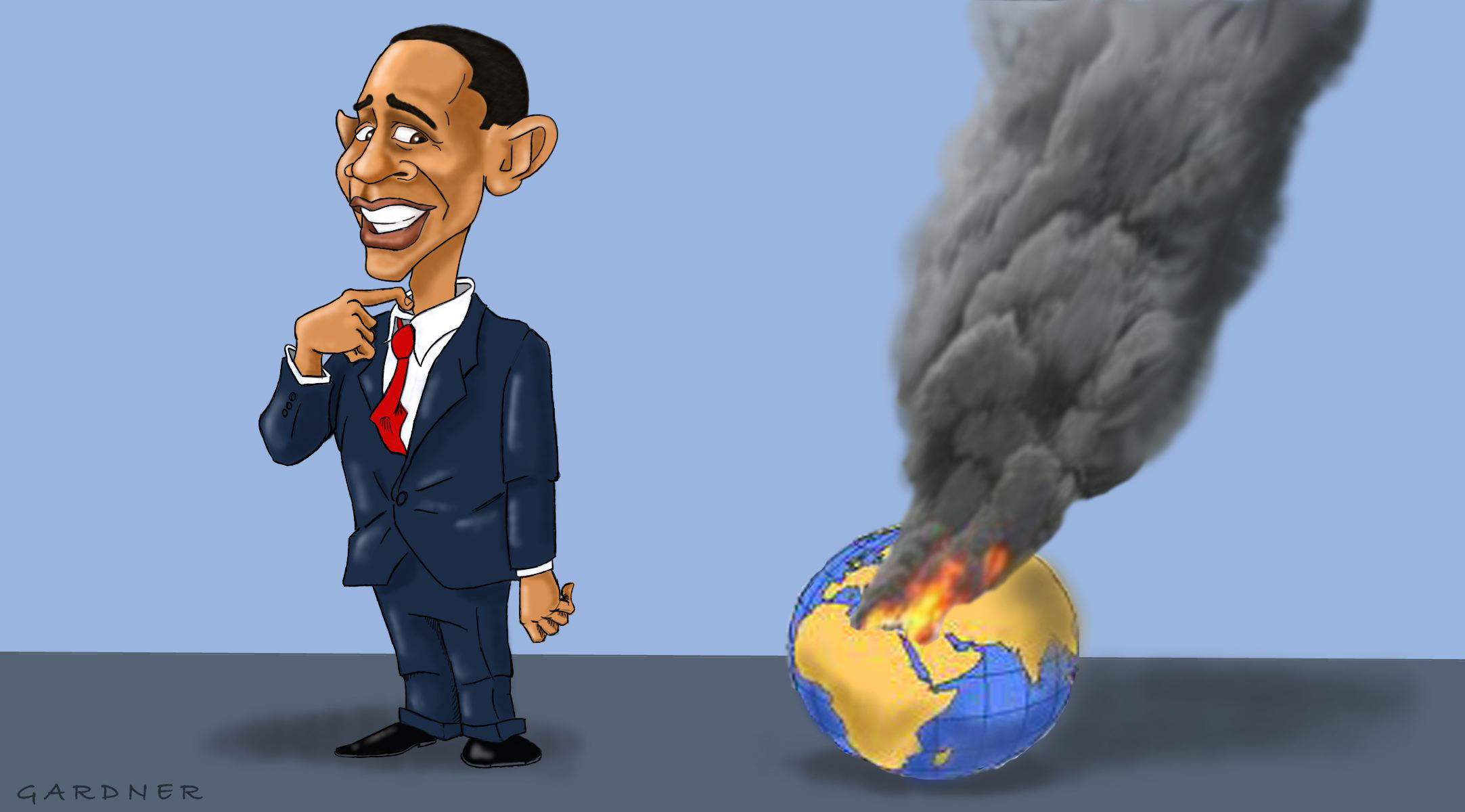
I’ve never seen the movie Dumb and Dumber; I don’t have to.  All I have to do is sit back and watch President Barack Obama and the US State Department stumble around, stomping on the flowers of the Arab Spring, and I’ve pretty well got the storyline.  These guys make the Keystone Kops look like Sherlock Holmes.  Obama’s most recent foray beyond the Beltway, on May 19th, was one of the oddest speeches I’ve ever heard.  Apparently, it was a major policy statement.  Who knew?  From my point of view, Barack Obama’s Middle East policy sounds, looks and acts like a 2011 cut rate rerun of the much despised Bush Doctrine.  To be sure, Obama stuck to his guns and threw in a lot of rhetoric about change, but that was probably just force of habit.  After all, he’s been yipping about change for nearly four years now — without very much of it actually happening.

Anyway, according to Obama, the way America will effect change in the Middle East is by throwing a couple of billion dollars at the Egyptians, starting a civil war in Libya and ignoring Tunisia and Yemen altogether.  Furthermore, if Bashar al-Assad in Syria doesn’t quit shooting people in the streets America is going to get really, really angry.  And, if Ahmadinejad in Iran continues his reckless pursuit of nuclear weapons, Barack will personally denounce him and call on the world to apply more sanctions, more often.  None of this is new or even news.

After that, the speech was padded out with some fancy footwork, dancing around the situation in Bahrain, where, it seems, there are several different ways to ruthlessly suppress political opposition — and America recognizes all of them.  There were some further admonishments of Iran – like Ali Khamenei cares what Obama thinks – and a friendly wave to the women in the crowd.  However, absolutely glaring by its absence from the Obama Doctrine was any mention of Saudi Arabia and Pakistan.  To be fair, Pakistan is not technically in the Middle East, and perhaps Obama will get around to them later, but Saudi Arabia is smack dab in the middle.  In fact, its importance in the area is what most presidents have called “paramount.”  Talking about the Middle East without talking about Saudi Arabia is like singing the Old Macdonald song without any of the animals: it doesn’t make any sense.  I hate to resort to rhetorical questions but: Is the Kingdom so perfect as to resist the forces of change and self-determination Obama’s talking about?  Or did they just get lost in the desert?   Don’t get me wrong: I don’t mind the realpolitik that says leave the Saudis alone; I just distrust the motivation.  After all, those are Saudi troops in Bahrain.

Of course, Obama saved the best for last – Israel — and the guy was on a roll.  He started off by saying “the status quo is unsustainable” then went on to say “The borders of Israel and Palestine should be based on the 1967 lines…”  I’m not even going to grace this with an argument.  Obviously, the people in the State Department have never seen a map of the Middle East.  Israel’s pre-1967 borders were indefensible; that’s why they had a war!  Granted, it only lasted six days, but it was pretty memorable.  Who, in their right mind, would think those same borders could be defended any better in 2011?  Wild guess?  Nobody!

The world has changed since 1967.  For example, back then, Elvis was a newlywed, Che Guevara was still alive and a guy by the name of John McCain had just got himself shot down over North Vietnam and was checking in for an extended stay at the Hanoi Hilton.  We were watching Get Smart, The Beverly Hillbillies and Gilligan’s Island on TV and Aretha Franklin was about to record “Respect” – the first time.  Personal computers were unheard of, phones were attached to the wall and most cars got three miles to the gallon.  Hell, we didn’t even have the metric system!  If “the status quo is unsustainable,” how does turning the clock back 44 years help the situation any?

The problem is that it’s not Obama’s fault.  He doesn’t know anything about foreign relations.  Niall Ferguson, a well known British historian, has said — on more than one occasion — that the guy’s clueless.  He’s depending on the State Department to treat him right; this is where you get the dumber part of the equation.  The US State Department has never been the brightest bulb on the Christmas tree, and recently they’ve been spending most of their time unplugged.  This latest adventure in the world of the unknown is just a continuation of the stumble/fumble in the Middle East that started last December.  For example, now that the Egyptians are going to try Mubarak for murder, do you think Gaddafi’s is going to go quietly?  Sometimes I think Hillary’s recruiting her researchers and diplomats at WalMart.

Luckily, Hezbollah and Hamas are still going way too fast on the Crazy Train to let the Palestinians take advantage of the situation.  Nothing is going to happen
for a while, and by that time maybe the American people will quit relying on Hope and Change and take a look around them.  Me?  I’m going to give up
downloading movies and just watch CNN for laughs.