I Refuse

no

The world is large and it’s full of wonder, but it’s also an obstacle course of nasty.  This is the stuff that we know is unfair, stuff we know is a scam, stuff that insults our intelligence and our integrity.  In general, we just have to put up with this crap– or spend our entire lives cultivating an apoplectic ulcer.  However, there is one way to survive without being totally pissed off all the time: that’s to stop, take three deep breaths and refuse to participate.  Here are just a few things I refuse to do.  (Some of them are more serious than others.)

I refuse to use Gillette products – A while ago, the multinational boys at Gillette made a video that called me (and every other man) a bad friend, a bad father/brother/uncle, a bad role model, a bad mentor, generally a bad person, certainly a sexist and quite possibly a … anyway … you get the idea.  Their only purpose, as far as I can see, was to cash in on trending “toxic masculinity.”  So be it.  Well, I’ve been called a lot of names over the years, but I’ve never paid anybody for the privilege – and I’m certainly not going to start now.

I refuse to wear short pants – I know it’s uber-fashionable, but in ten years, we’re all going to laugh ourselves stupid at the photographs.  Here’s the deal.  Unless you’re a swimmer, a diver, a runner, a pole vaulter or an ice hockey player (think about it!) there is no logical reason for a grown man in the northern hemisphere to wear shorts to work.  Just sayin’!

I refuse to Tweet – My only mission in life is to communicate, and Twitter is the poster child of communication in the 21st century.  So what’s the problem?  Quite simply, Twitter is the meanest, nastiest, most judgemental, disrespectful, petty form of communication since Grog the Caveman grunted obscenities at the Neanderthals down the road.  History is going to look at our time and conclude most of our problems came from the horrible way we talked to each other – and I’m not willing to be part of that.

I refuse to eat liver – I have no philosophical quarrel with liver, but I ain’t going to eat it.  (This is my mother’s fault.)

I refuse to give money to charity — Sounds hard-hearted and it is, but in my defence, I’ve donated tons of clothing, furniture and food over the years.  I’ve recorded radio programs for the blind, cooked pancake breakfasts, swept floors, washed dishes, picked up garbage, sold raffle tickets and taught public speaking in a federal prison – all gratis.  When I get to the Gates of Valhalla, I’m not going to have anything to be ashamed of in the good works department.  My problem with giving cold hard cash to charity is there’s always a middleman somewhere, and no one is ever willing to tell me how much he’s taking off the top.

And finally

I refuse to be lectured by teenagers – I’ve always worked on the premise that the ideas of young people are fresh.  They look at the world with an untrained eye, which gives them a lot of latitude — and that’s a good thing.  However, I’m not interested in being berated for my many failures by someone whose biggest accomplishment so far is mastering puberty.  The notion that kids bring just as much to the table as the experts who’ve studied the problem for years is ludicrous.  Here’s how it works: if your kitchen is flooded, who are you going to call to fix the water pipes – some child fresh out of middle school or a professional plumber?  The choice is yours, but I’m going with the plumber.
I’m Crap At Social Media

social-media1

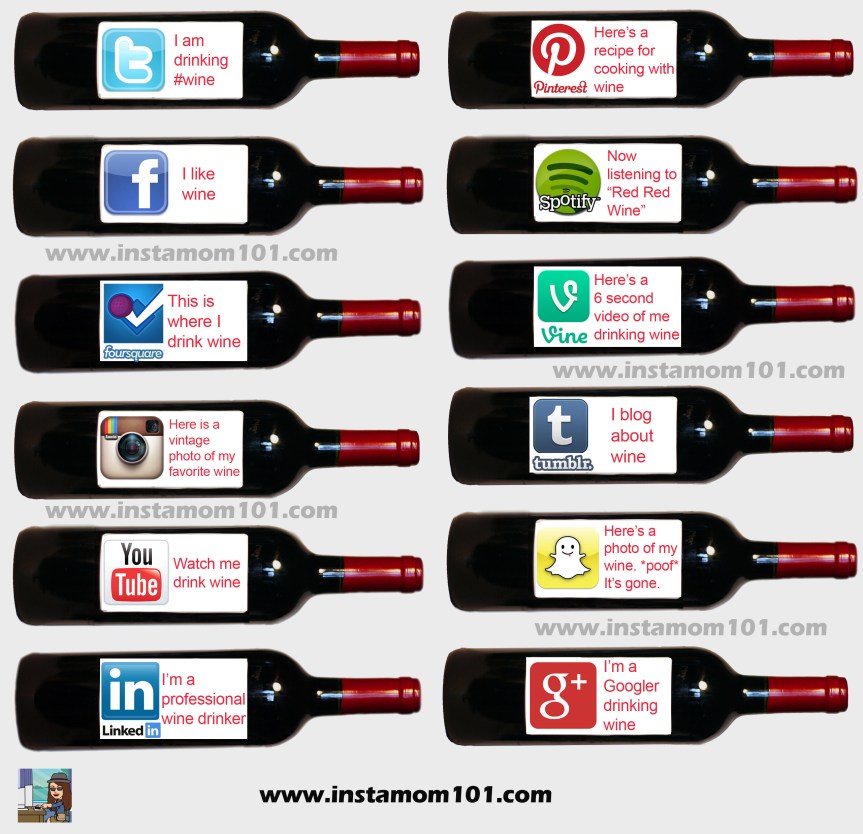
I love Social Media.  I think it’s one of the coolest benefits of living in the 21st century.  It’s as if the Internet has given us a gigantic cocktail party.  Unfortunately, I’m crap at it.  The problem is, for the life of me, I don’t understand how it works.  Yeah, yeah, yeah!  I know the techno-gabble that keeps it together – you post, I post, somebody else posted, we all click “like” or “share” or some such other thing and walk away happy – but after that, I’m lost.  And I truly believe that’s why I’ve never actually been invited to the party.

First of all, I’m old enough to remember pen and paper.  This is a major disadvantage.  Back in the day, when you had something to say, you had to stop, take a minute, think about it, and then take pen in hand.  This forced even the stupidest among us to try and present a comprehensive idea and back it up with a cohesive argument.  Social Media is a lot faster than that.  So, as a consequence, I’m just not intellectually prepared to take a Facebook meme, an Instagram photo or a 140 character treatise on the evils of supply-side economics all that seriously.

Secondly, there’s just so damn much of it.  Social Media is everywhere – Twitter, Facebook, Instagram, YouTube, Reddit, Pinterest – God Almighty!  It never ends.  The sheer volume of relentless information is overwhelming.  No wonder people are wandering around the streets like zombies, thumb-numbing their telephones.  Personally, I don’t have enough hours or energy to sort through the Cute Cat Videos, the angry Trump Tweets and recipes for pan-fried kale to get to the good stuff – forget respond.

And finally, I’m not absolutely certain I want to spend a lot of time chasing Social Media.  I’m all for sharing ideas and discussing them ad infinitum.  (I’m usually the last man standing at real cocktail parties.)  However, for my money, people who think what they had for lunch (or where they had it) is noteworthy, need to reread their Copernicus.  Most of the trivia of everyday existence is – uh – trivial, and recording it across Cyberspace doesn’t give it any extra significance.

It’s not Social Media’s fault I can’t figure it out.  The fact is, in human years, Social Media is still a teenager, and we all know what an emotional and intellectual game of hopscotch that is.  So, for the time being, go in peace, Social Media.  Maybe, in a few years, I’ll be a little smarter and you’ll be a little older — and then you and I can have an adult conversation.

Fake News … Not New!

fake news1

These days, everybody and his friend is yipping about fake news as if millennials invented it last Tuesday, and … OMG! Ain’t it awful?  Well, here’s a real news flash!  There’s always been fake news, and this current crop of journalists and their Internet Overlords (If it isn’t trending on Twitter, it didn’t happen.) are just the latest incarnation.  I’m pretty certain some of the hieroglyphic accomplishments of the Pharaohs are embellishments, and we know for a fact that more than a few of the stories Herodotus (the Father of History) told were not necessarily factual.  The thing is Herodotus knew what every journalist since, discovers: the truth is a moveable feast.   Let me demonstrate.  Here are two sentences that say the same thing – except they don’t.

After extensive public dialogue, Mayor Quimby and his supporters have stepped up to tackle the homeless crisis in our city.

Bowing to extensive public pressure, Mayor Quimby and his cronies have finally stepped up to do something about the homeless problem that plagues our city.

See what I mean?

Two of the greatest purveyors of less-than-the-truth journalism were the 19th century dynamic duo of William Randolph Hearst and Joseph Pulitzer.  They fought it out in 1890s New York to see who could grab the most readers (read “followers”) with clickbait headlines and salacious stories that would make BuzzFeed blush.  These two crazy kids were so good at manipulating public perception that Joe is now considered the Father of Modern Journalism (Yeah, he’s the guy the award is named after.) and Willie started a war.

But the Big Kahuna of fake news is Malleus Maleficarum (The Hammer of Witches.)  This little ditty was published in 1487, just about the time Gutenberg’s printing press was radically changing European society (think: early Renaissance Internet.)  It was written to raise public awareness about the presence of witches in the world and offered some proactive advice on how to deal with them – notably, burning them alive.  However, it was just one clergyman’s (read: “influencer’s”) personal opinion, and it had no basis in fact or even the religious doctrines of the time.  It was disavowed by every authority on the planet from Martin Luther to the Pope (Even the Inquisition said it was hogwash!) but, unfortunately, the public fell in love with it.  Then, as the Reformation gathered steam and European society broke into two conflicting camps, Malleus Maleficarum became the go-to text to beat the other side with.  In those days, labelling someone a witch immediately discredited them and anything they had to say.  (Ring any contemporary bells?)  It was a bestseller for over 200 years, second only to the Bible, and was considered unassailable truth until the Enlightenment came along and said, “WTF were we thinking?”  Even today, many people believe in demonic possession and tons more believe that witchcraft is some ancient pagan religion.  (BTW, Wicca is no more an ancient religion than I am.  It was made up by a retired British civil servant, Gerald Gardner, in the 1950s.)

Yes, in the 21st century, fake news is serious, not because it’s there (It’s always been there) but because gullible people have immediate Internet access to other gullible people all over the world.  The problem is, back in the time of Herodotus, or even Joe Pulitzer, stupidity was a retail commodity, confined by geography.  These days, geography doesn’t matter, and stupidity is being traded wholesale in every corner of this big, round world.

The only solution is don’t believe everything you think.