Autumn — Part 2

Photo – Carolyn Bourcier

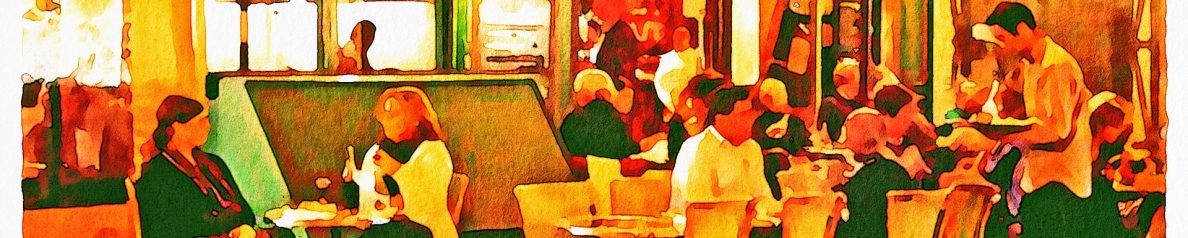
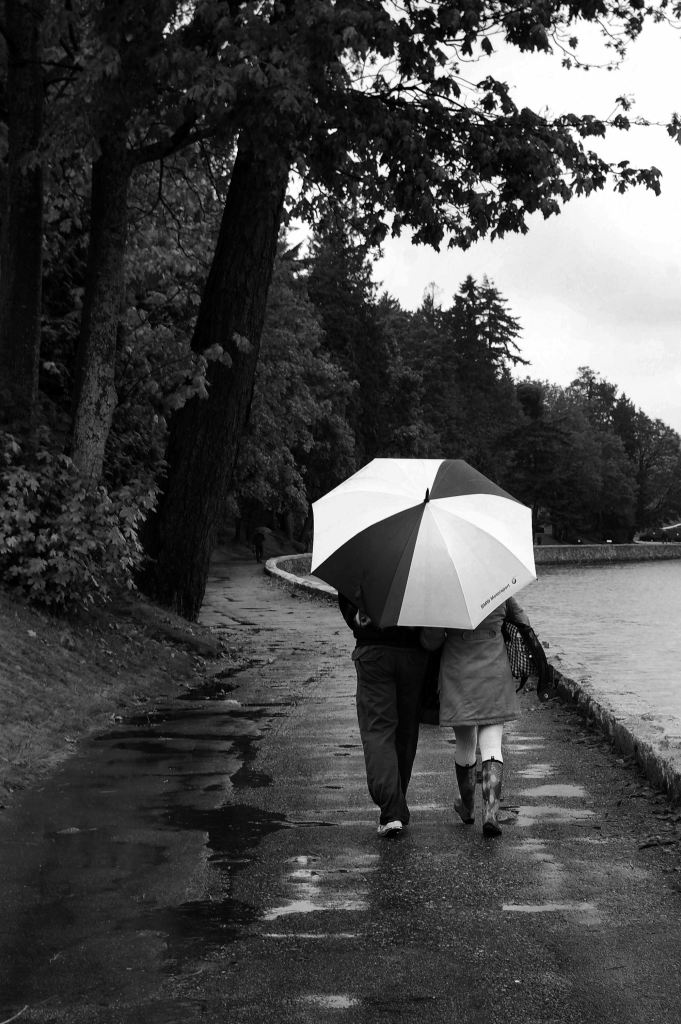
Somewhere in a slate grey morning, fog-deep in the quilts and pillows, they decided to be friends.  It was in the middle of her Vonnegut years, (so there was that) but mostly it was a hedge against the growing November darkness.  She secretly vowed to learn how to cook (but didn’t mean it) and he considered writing poetry (but didn’t do it.)  Mostly, it was buttoned-up coats and kicking leaves, and once, they got lost in their own town when they went walking without watching.  Sometimes, they dreamed of dusty old bookshops full of dusty old books with finger-worn pages and faded covers, and they wondered how romantic that would be.  But she had a library card, and it was three stops on the bus, so they spent their Saturdays curled in the bedroom, reading books they didn’t have to search for.  There was an old-fashioned restaurant, though, with bow-tied waiters and empty tables, that turned the lights on in the late afternoon.  It was on the way home, so they would stop there and have hot soup or old world meat pies.  Sometimes, they would bring their own candles and would order one dessert with two forks and drank wine — so they could explain things to each other.  And that was romantic enough for them.  Along the way, he taught her French (because that’s what he did) and she taught him numbers (because that’s what she loved.)  After a while, they decided they liked walking in the rain and, forever after, looked forward to cloudy days.  Once she went home for her brother’s wedding, and the sun shone large and cold every day, and he missed her and slept on her side of the bed.  She brought him back a piece of the cake with a squashed red rose on it.  She said she was sorry for squashing the rose, so he ate it to be polite.  One Sunday, they decided to go to church (just in case) and one night, for no reason they could remember, they ended up listening to French jazz in a damp basement club.  Occasionally, they would have other adventures as well, but they both knew they mostly preferred buttoned-up coats and walking in the rain – so that’s what they mostly did.  Even after she got over Kurt Vonnegut and got a job teaching mathematics; even after they moved to a bigger apartment; even after they were married and had children and bought a car and had to cut the grass and had regular vacations; even after the years scattered behind them like autumn leaves in the November breeze.  Even after all that, the thing they loved the most was buttoned-up coats and walking in the rain — because one slate grey morning, fog-deep in the quilts and pillows, they decided to be friends.

Autumn — Part 1

Photo — Carolyn Bourcier

Yesterday, I felt the smell of autumn in the air — like an unexpected someone from the past with time on her hands and memories to tell.  Because we remember autumn, she and I — fresh days and school books and sacred secrets so tender you could cut them with a glance.  Long afternoons dark with broken hearts and lingering poetry no one will ever read.  And she and autumn spoke as though the years were stored in cardboard boxes, dusty, glue-dried and sagging.  Then, at the end, she said she’d missed me and kissed me on the cheek in the glove-cold street of the autumn afternoon, because …

Autumn is the long notes of the last jazz piano when the café is closed and only the serious remain, sitting like abandoned angels unable to fly.  And there, somewhere in the final tales of lingering whiskey, they wonder if second-hand love could possibly redeem them.

Autumn is a park bench moist with morning, waiting like a reluctant traveller who’s been left behind.  And there’s a puddle, quiet with reflection and a footprint and floating leaves leftover from the wind.  And the worn letter plaque tells no one but the sky that Arthur Wilson liked to walk his dog.

Autumn is stone empty streets slanted with light from the windows of strangers.  But you keep walking because you don’t know if they’re warm with conversations, or silent with despair.

Autumn is a movie, old and familiar, when the outside night is bony and brittle and full of the dark.  So you pour the wine in the kitchen and break the chocolate onto a plate.  And you cozy into your one-light twilight and wait for the melancholy.

And autumn is a black-and-white San Fran foggy night, heavy with crime.  He’s turned his collar high so only his eyes can see her, standing in the silhouette shadows, sinister with deceit.  And he knows (because he always knows) that she will walk away, and the sound of her footsteps will be his only souvenir.

Fiction — Valentine’s Day

sylvia

Sylvia looked at the moon, a smudged coin disappearing in a cloudy sky.  It would rain soon, probably before morning.  That didn’t matter: she planned to be safe in bed by then.  Tomorrow night, she was going north, but tonight – tonight was hers.  Tonight was an ice-cubed whiskey in a heavy glass.  The fish?  No, the beef — with scallops to start and a wine so red it turned black on her tongue.  Then coffee and honey-wet pastry, sticky and sweet, and a hotel bedroom key.  It was a night of boat neck shoulders, cuff length sleeves and a tight walk hemline.  It was a night of long jewelry earrings that touched her throat, a dancing emerald ring and tall heels.  It was a night that men and their women noticed her when she walked in, watched her sit down and wondered who she was there for.  It was a night of little tongue candles that made licking shadows.  A night of dim shaded faces and intimate reflections.  It was a night of eyelashes and lipstick and deep silver fingernails.  It was a night breathing with seduction.

Once, a few years ago, when she was much younger, she’d brought a man to a night like this.  He was a handsome European with diplomatic immunity and a coming career.  He spent the evening trying to recruit her into his bed, like a qualified negotiator.  The evening faded and finished, and Sylvia walked away.  Unfortunately, a couple of days later when Sylvia didn’t call, he came looking for her and ended up meeting Mirac in an underground carpark.  Since then, Sylvia kept these nights to herself.

On the other side of the moon, Karga was reading a bedtime story to his two sons, Mustafa and Taavi.  It was a tale of a reluctant thief and a clever slave girl, Morgiana, who made him rich.  He read parts in English so his boys would get to know the words.  And when he was done, he went downstairs, drank tea with his wife and waited for the rain.

Sylvia raised her glass to where the moon should have been.  And all alone in a crowded restaurant, she touched her lips to the cold glass, drank, and waited for the warmth of the whiskey.