4 Ways To Find Truth – Plus 2 More


Truth is an elusive commodity.  We humans have been hunting it ever since Lucy and her girlfriends dropped out of the trees, in Ethiopia, mucho millennia ago.  Over those centuries (and certainly in the last 5,000 years of recorded history) it was generally agreed that there were only four ways to actually find truth.  Most of us learned this when we took Philosophy 101 in university (to punch up our grade point.)  However, here in the 21st century, our ever-expanding egos have outrun our ability to think rationally.  We now dismiss most of our society’s collective wisdom (including the search for truth) as the archaic ramblings of dead Europeans.  To that end — surprise! — the Millennials have added two new ways to find truth.

puzzle-1152792_1280

Using the modern analogy of the bus stop, let me demonstrate.

Let’s say we’re embarking on the great journey of life and need to know where to catch a bus (the bus being a clever metaphor for truth.)  Here are the four traditional ways to find the bus stop.

1 — The Authoritarian Path — Somebody tells you where the bus stops.
This is the simplest and most direct method, unless, of course, the authoritarian figure you choose is a jackass.  In that case, you’ll probably end up either praying for a bus, fighting with your neighbours to see who drives the bus, or being told that The Fearless Leader doesn’t like buses and you better learn how to walk.

2 — The Scientific Path — You experiment until you discover where the bus stops.
This is the most common method.  It involves standing at various places along various streets, waiting for a bus to a) show up, in the first place, b) stop, or, c) drive right by.  This will work — eventually.  Unfortunately, truth by trial and error normally results in a lot of error, and you can literally spend years waiting for a bus.  In most cases, by the time you do figure it out, collate all your data — test and retest — you’re too damn old to enjoy the bus ride.

3 — The Mathematical Path — You collect other people’s theories about where the bus stops.
Sometimes called The Peer Pressure Path, this method relies on finding out where other people wait for buses and standing there too.  Although this method does work, given the number of people in the world, how easily influenced they are and the vast number of buses available, the chances of you actually getting the bus you want are pretty slim.  Generally, you’ll spend most of your life riding around on somebody else’s bus.

4 — The Artistic Path — You intrinsically know where the bus stops.
This method consists of knowing in your soul that the bus always stops where the sign reads “Bus Stop.”  When this works, it is a thing of beauty.  However, the vast majority of people who claim to be artists can’t actually read.  Thus, they spend their days, wasting their time (and yours) waiting for the bus under Stop signs, No Parking signs and Directional markers.

In conclusion, the truth remains as elusive as ever.  However the Millennials may have solved the problem.

Here are the two new ways to find truth:

5 — The Social Media Path — You use technology to tell everybody where the bus stops.
This occurs when (even though you have absolutely no evidence to prove it) you type “There is a bus stop at 8th and Alma” into your computer.  You accompany this information with a cute kitten, a puppy or some boobs and send it into out on Facebook, Twitter, Instagram and any other social media you can think of.  Your “Friends” “Like” your post and “Share” it with their “Friends,” who, in turn, “Share” it with their “Friends” who … you get the idea.  Soon, somebody creates a website “Fans of the 8th Ave Bus Stop.”  Other websites follow and people begin podcasting, blogging and vlogging about the bus stop.  The mainstream media picks up the trend, and within the next 48-hour news cycle, there are 14 news reports, 3 documentaries, several celebrity interviews and an HBO drama in development.  Within days, so many people are aware of the Bus Stop at 8th and Alma that, even though it doesn’t exist, it becomes the truth.

6 — The Offended Path — You’re suddenly offended that the bus doesn’t stop exactly where you want it to.
This method works on the premise that you are not responsible for finding your own bus and that the bus company is systemically evil for not providing you with one.  What happens is you read somewhere that there’s this really cool bus stop at 8th and Alma.  You immediately start bitching and moaning, that you don’t have a bus stop, using buzzwords like “injustice,” ” inequality,” “corporate greed” and “social change.”  The mainstream media, already aware that the bus stop at 8th and Alma is trending, take up your cause.  (Victims are news.)  The bus company, scared skinny of negative publicity, don’t even try to explain that there isn’t actually a bus stop at 8th and Alma.  Instead, they reroute several other buses (inconveniencing hundreds of people) to put a bus stop in front of your house — so you’ll shut up.  Invariably, you’ve  raised so much awareness — and money — as a social activist you can afford to travel by taxi.  Truth and Justice are served.

Somebody once said, “The Truth will set you free.”  These days, I’m not so sure.

Seperating the Facts from the Truth

One of the most amazing things about facts is how mutable they can be.  I’m not talking about changing the facts.  That’s impossible.  As John Adams once said, “Facts are stubborn things; and whatever may be our wishes, our inclinations, or the dictates of our passion, they cannot alter the state of the facts and evidence.”  Nor am I talking about this stupid “truthiness” that’s garnered so many headlines since Stephen Colbert coined the word in 2005.  I don’t think many people realize that this is actually a comedic device invented for laughs and regardless of who or how many people take it seriously, it isn’t.  I’m talking about rearranging the facts to create a faux truth which is then widely accepted as not only a reasonable facsimile but an actual alternative, indistinguishable from — and equal to — truth itself.   It’s a sort of mutant truth, accepted and unquestioned, as if it were the real thing.  Here’s how it’s done.

Everybody knows that Britt Reid, the Green Hornet, is the son of Dan Reid.   This is a fact.  Dan Reid was named for his father Dan Reid (Senior, I guess?) who was a Texas Ranger.  Dan Reid pere, and six other Texas Rangers were on the trail of outlaw Barthalamo “Butch” Cavendish when they were ambushed.  In the ensuing battle, the Texas Rangers didn’t have a chance and they were all killed except one: John Reid, Dan Reid’s brother.  Even though he was badly wounded, John Reid survived, clinging to life until, luckily he was discovered by an itinerant Native American, named Tonto, who nursed him back to life.  When John Reid was healthy enough to saddle up again, he made a black mask out of his dead brother’s vest and spent the rest of his life as (It’s getting kind of clear here, isn’t it?) the Lone Ranger.  The Lone Ranger, therefore, is, in fact, the Green Hornet’s great uncle!  This is the indisputable truth.  And it’s why Michel Gondry should be taken out and horsewhipped for making that mockery called a movie, The Green Hornet in 2011.  He juggled the facts unmercifully, and a whole generation now believe his version of the story.  This is how the truth gets waylaid.  However, Gondry’s sins are for another time.  This is just an illustration of how the facts remain, even when sometimes the truth gets lost by sloppy scholarship or undisciplined directors.  Again, let me illustrate.

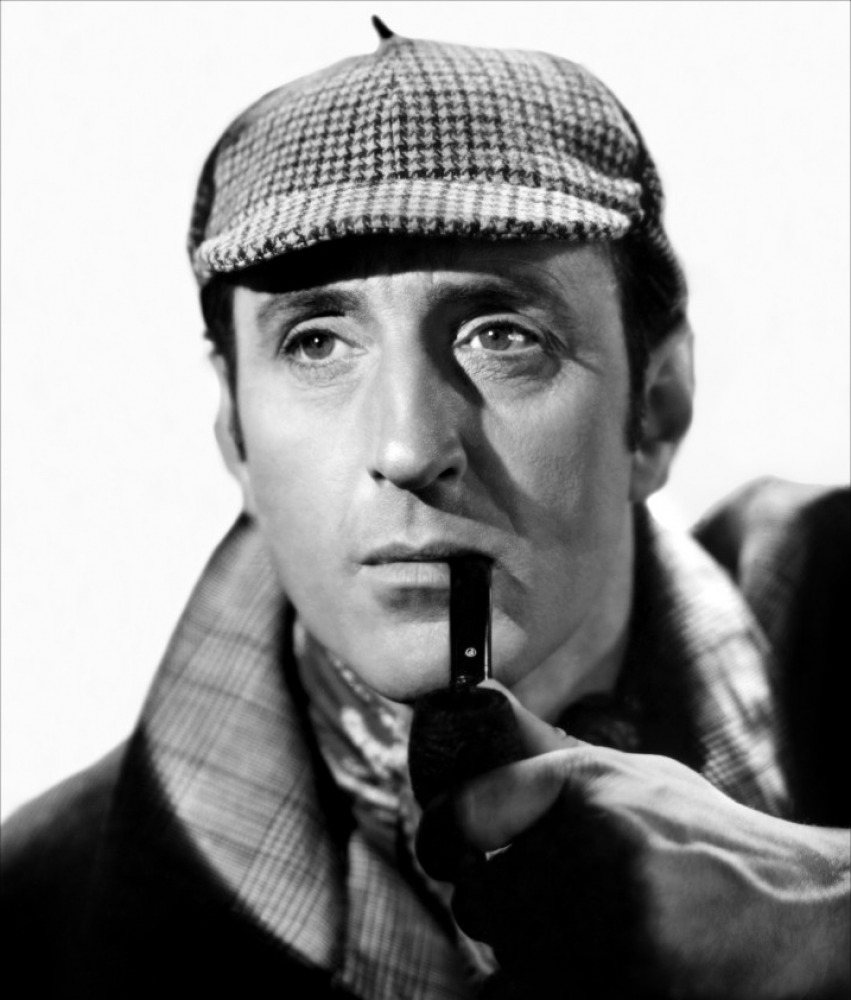
There is a widely held belief, purported by William S. Baring-Gould, that Sherlock Holmes and Irene Adler had a love affair which produced a son who became, in later life, the great detective Nero Wolfe.  Stuff and nonsense!  Baring-Gould has taken a few isolated facts and woven them into a fiction that has gained enormous credibility.  However, even though many accept this as the truth, including many reputable writers, nothing could be further from it.  Let’s look at the facts — objectively.

It is well known that Irene Adler was the love (or as close as he could get) of Sherlock Holmes’ life.  He kept a portrait of her on his desk, and she was the only woman he ever spoke about with grudging admiration.  It is also well known that in May, 1891, Holmes and Professor Moriarty fought a life-and-death struggle on a ledge over the Reichenbach Falls, in Switzerland.  It was reported at the time that, locked in mortal combat, both adversaries slipped from the dizzying heights and plunged to their deaths.  Of course, we now know that, in fact, Holmes defeated Professor Moriarty but was unable to return to Watson because he was set upon by Moriarty’s henchmen.  However, for three years, Holmes was presumed dead; his whereabouts, unknown.

This is all factual information.  From it, we can conclude that Holmes must have been severely injured.  Otherwise, he would have simply rejoined Watson in the nearby town of Meiringen.  Therefore, we can also conclude that, because of his injuries, Holmes would have needed assistance to descend the mountain.  These are two reasonable deductions, worthy of Holmes himself.  The tricky part, however, is after recovering from his injuries, what would make Sherlock Holmes abandon his career as a detective for three years?  Nothing else had ever captured the soul of Sherlock Holmes – except, perhaps Irene Adler whom, we know, was living on the continent with her husband.  Therefore, it is more than reasonable to assume that it could only be Irene Adler, out hiking on a late spring vacation, who found Holmes and rescued him (not unlike Tonto.)  We can further make the case that (given their history) in his weakened state, Holmes succumbed to Ms. Adler’s considerable charms.  In short, as she nursed Sherlock Holmes back to health Irene Adler seduced him.  No other explanation is possible.

The result was a child; however, not, as some would claim, a boy, but a girl whom they named Monica (from the Greek monos which means “solitary or alone.”)  Obviously, in the early 1890s, this was a very delicate situation.  Clearly, a love affair and an illegitimate child would have folded up Irene Adler’s marriage like a cheap lawn chair.  Furthermore, Holmes was not really daddy material.  The child was given to a local Swiss couple named Delacroix, who changed her name to “Monique,” and raised her as their own.  Eventually, consumed by guilt, Holmes and Adler parted, never to see the child — or each other — again.

Monique Delacroix grew up totally unaware of her biological parents.  During the First World War, she met Andrew, a dashing British military officer.  They married in 1919, when he left the service and took employment as a Vickers’ armaments representative.  They had one child, born November 11th, 1920, whom they named “James,” after his paternal grandfather.  Unfortunately, Monique and her husband, in a weird stroke of irony, were both killed in a climbing accident, in the early 1930s.  Eleven year old James went to live with his father’s sister, Miss Charmian Bond.  James Bond completed his education in England and went on to a brilliant career in British government service.  Thus, when we examine the facts objectively, we find that Sherlock Holmes is not, in fact, the father of orchid detective Nero Wolfe, but, indeed, the maternal grandfather of James Bond, 007!

As we can see, it is easy to fall into the trap of alternative truth.  Even though the facts remain the same, sometimes they can be mismanaged, or perhaps unwittingly manipulated to produce, not a deliberate lie, but an untruth, all the same.  Michel Gondry and William S. Baring-Gould were not maliciously trying to deceive us; yet deceive us they did.  Therefore, it is always best, when faced with an acceptable truth, no matter how plausible, to return to the facts to make your own judgement call.