Self-Help and the Modern World

Have you ever noticed that people who buy Self-Help books never buy just one?  They always have three or four of them kicking around.  Usually they’re all on the same subject, but sometimes — and this is really scary — they’re all over the map.  There are people (we all know them) who could use a little help, self or otherwise.  There are also people who genuinely want to improve themselves; their outlook, their personality, their world, in general.  There’s nothing wrong with that!  In fact, most of us could do with a tuneup every once in a while.  However, this is the basis of the Self-Help industry.  They know, that we know, that there’s something wrong with us.  All they have to do is sell us the cure.  And that’s the reason people buy so many Self-Help books: they are a cure — that doesn’t work.

Self improvement is not a recent innovation.  There is probably something called A Slave’s Guide to Better Cowering written in hieroglyphics on a papyrus scroll, buried in the Nile Delta somewhere.  However, Self-Help is less than a hundred years old.  Its rapid development into a multimillion dollar industry runs exactly parallel with the development of our contemporary society.

There are two reasons Self-Help has become such a lucrative business.  First, we are losing our sense of family, and secondly we have lost our sense of community.

As we head off into the 21st century, our homes are no longer multigenerational.  Our parents and grandparents do not return to the family in old age.  Increasingly, they are warehoused, first in retirement communities, and then in care facilities.  Likewise, as most families consist of one or more working adults, childcare is outsourced, first to Daycare then the public school system.  Although these may be excellent institutions, they simply do not have a personal, vested interest in either education or development (beyond immediate behavioural problems.)  In other words, it’s a lot easier to fly right if you have grandma looking over your shoulder — or Dad — because they have an emotional attachment to you and pretty much everything you do.  You are the centre of their world, and they genuinely want to help you find your way around.  Likewise, as you grow older, your emotional connection to your parents and grandparents is strengthened by, if nothing else, proximity.  Nobody in a multigenerational family is left on their own to fend for themselves.  It isn’t in anybody’s emotional best interest.   Just as an aside, I know there are excellent care facilities everywhere with expertly trained staff, and I cast no aspersions on them.  However, at the end of the day, nobody wants you to succeed at life as much as grandma and grandpa do — and that lasts forever.  As we continue to replace the functioning parts of our multigenerational families with multi-task, care-for-hire personal assistants, we are turning ourselves into individual entities, relying on the kindness of strangers for our well-being.

It works the same for neighbourhoods.  In the old days, for better or for worse, the multigenerational family actually cared what the neighbours thought.  This was simply because they knew who the neighbours were.  They didn’t merely share the back fence; they shared community values and responsibilities.  Neighbours were involved with the comings and goings of the neighbourhood, which included Bob’s diet or Janet’s quit smoking plan.  People were available to help, and they did.  In essence, neighbours were all in it together.  However, as that community disappears, we are not only becoming physically isolated in the world; we are now increasingly psychologically alone.

The mantras of the Self-Help crowd are “Show personal responsibility” and “Take ownership of your problems.”  This is just a sugar-coated way of saying, “Good luck!  You’re on your own!”  Since we no longer believe we can rely on the traditional community to support us, we go looking elsewhere for help.  Invariably, this means throwing money at the problem; either through professional assistance or Self-Help.  And there we are again, back at that one-size-fits-all guide to personal growth, wealth and happiness: the Self-Help book.

Somehow, I find it impossible to believe that somebody sitting in their converted laundry room cranking out 800 words a day, has any connection to my quest to quit procrastinating.  They may have a good plan.  It may have worked wonders for them.   However, unless they know my heavy schedule of avoidance behaviour, I’m afraid they’re going to come up short.  By the same token (and I’m sure this worked for you, too) no three-chapter discussion of “How to Dress for Success” ever trumped my mother telling me to wash my hair and put on a tie.

Sometimes, the best self-help comes with some sharp-tongued maternal assistance.

Queen Elizabeth II’s Diamond Jubilee

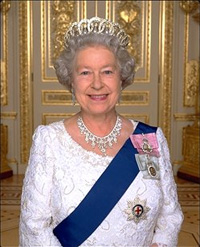
Today, February 6th, 2012, is Her Majesty Queen Elizabeth II’s Diamond Jubilee.  For sixty years, Her Majesty has been the Queen — and that’s the gist of it, really.  She is not a queen, one of many queens, although there are still many queens in the world.  She is The Queen – universally recognized.  This is partially to do with the enduring power of the British monarchy – nearly 2,000 years old – but mostly it’s to do with the Queen herself.

In 1952, when Queen Elizabeth succeeded to the throne, Britain was still an imperial power.  Winston Churchill, who had served Queen Victoria, was the Prime Minister of Britain and Harry S Truman, a haberdasher from Missouri, was President.  He was the last President who did not have a university degree.  Joseph Stalin, a peasant from Georgia, was the ruthless master of the Soviet Union, and Chairman Mao, a librarian from Hunan, ruled China.  Vladimir Putin, Sarkozy, Merkel and David Cameron weren’t born yet; nor were Mr. and Mrs. Barack Obama.

People wrote letters to each other.  Telephones were attached to the wall, and long distance calls were an event.  People still sent telegrams.  In 90% of the British Commonwealth (as it was called) television was an intriguing rumour.  Most people didn’t fly, and great distances were covered in boats and trains.

In 1952, the majority of Queen Elizabeth’s British subjects earned (in American dollars) less than $250.00 per month.  However, beef was 85 cents per lb, chicken, 56 cents and apples (when you could get them; Britain still had wartime rationing) were only 19 cents per lb.  Fresh fruits and vegetables were outrageously expensive out of season, and there was no such thing as fast food.

In 1952, walking on the moon was the stuff of science fiction; Sir Edmund Hillary hadn’t even walked on Mount Everest yet.  Although transistors had been invented by Bell Laboratories in 1947, it would take Sony, a Japanese company that didn’t exist yet, three more years to commercially market the Transistor Radio.

In 1952, Queen Elizabeth was Time magazine’s “Man of the Year” and nobody thought that sounded strange.

In 1952, automobiles didn’t have seatbelts.  Cyclists didn’t wear helmets, and consumer products didn’t come with warning labels.  There were repair shops for household items.  Doctors made house calls, and lawyers didn’t advertise.

In 1952, the world was halfway through the 20th century.  The good old days were vanishing and our contemporary society was just being born.

It is a testament to Her Majesty that, despite the upheavals of a world that now seems to be spinning faster than most of us can understand, she has maintained an unassailable dignity. For sixty years, she has represented the best of what we are supposed to be.  Quietly and continually, she has done what was expected of her, not perhaps what she herself wanted to do.  She has spent a lifetime dedicated to her task — without comment or complaint or the flares of ego so common these days.

Few, if any, institutions have survived intact from 1952.  They’ve all been swept away by history.  Yet, Queen Elizabeth II remains The Queen.

The Super Bowl, the Jacksons and Man Boobs

Unless you’ve been totally mesmerized by Mark Zuckerberg’s overnight transition from dorm-room geek to greedy capitalist, you know that this Sunday is Super Bowl Sunday — the game that’s more than just a game.  It’s a time when hyperbole from throughout the land gathers in one spot (this year it’s Indianapolis) to produce the biggest anticlimax of the year.  Personally, I love the Super Bowl.  I watch it religiously.  As a traditionalist, I assemble every, sodium-soaked, sugar-saturated, that-stuff-will-kill-you faux food I can find.  I chill the beverages; I clean the TV screen; I realign my bum groove on the sofa.  Some years I even send out for pizza.  Then I settle in to watch what will always be just an average game because every year the Super Bowl is never as good as the month of playoffs that precede it.  It just never is!  The real drama is over, and all you have left is hype.  Yet, the Super Bowl is still the biggest sporting event in the world.  Sure, piles more people watch World Cup and the Tour de France or even some weird cricket championship in India, but that doesn’t matter.  The Super Bowl is Numero Uno, the Big Kahuna*.  The one everybody talks about.  But it wasn’t always that way.  It took Michael and Janet Jackson to turn a regular winner-take-all championship game into a worldwide phenomenon where over half the people watching don’t even know the rules.

Here’s a quick and dirty history lesson.  Years ago, back when Madonna actually still was a virgin the NFL thought it was the toughest kid on the block.  It wasn’t; it was just the only game in town.  Regardless, the NFL treated everybody like crap, including their players and the fans, and made tons of money doing it.  In America, excess profits breed ruinous competition, so a couple of really rich guys decided to set up their own league and cash in on some of that coin.  They organized the AFL, and for seven years, the two leagues spent millions, duking it out for players, fans and television rights.  Finally, both sides realized that fighting with each other wasn’t the best way to maximize the bottom line, so, in 1966, they decided to settle their differences and merge.  On January 15th, 1967, they held an AFL/NFL championship game which, for want of a better term, they called the Supergame, which almost immediately morphed into the Super Bowl.

In the beginning, the Super Bowl wasn’t actually all that super.  It was a championship game but no big deal beyond the domestic fan base – boys to men.  There was lots of advertising, but mainly for the regular manly stuff like cars and razorblades and aftershave.  The halftime show worked on the college bowl game model: every once in a while a recognizable name, but, in general, Disney kids and marching bands.  That was it and it stayed that way until 1993 when Michael Jackson hove up on the horizon.

The mere anticipation of Michael Jackson performing at halftime during Super Bowl XXVII shot the television ratings through the stratosphere.  Super Bowl ad time was going for six figures and there wasn’t any available.  Everybody and his friend wanted their product front and centre, and they weren’t about to waste that kind of placement on a lame old commercial the audience had seen a thousand times.  Unique Super Bowl ads had been around for a couple of years, but Michael turned them into an art form.  Nor did he disappoint; Super Bowl XXVII was one of the most watched events in television history.

For the next ten years, the Super Bowl halftime show read like a Who’s Who from Billboard magazine.  The actual game shared top billing with the likes of Tony Bennett, Britney Spears, Stevie Wonder, Phil Collins etc. etc.  Even U2 did a solo concert!  Plus, the Super Bowl remained one of the few nationwide television events not fractured by the 500 channel universe.  The domestic TV audience began reaching for 100 million, and worldwide it went off the charts.  Aftershave and razorblades didn’t cut it anymore.  Ads became bolder, flashier and funnier as modern Mad Men went after this captive audience.  Super Bowl ads became an entity unto themselves; a significant part of the Monday morning conversation.  In 2003, The Dixie Chicks sang the National Anthem, the Tampa Bay Buccaneers knocked the snot out of the Raiders 48-21, and Shania Twain and Sting entertained everybody in sight.  Market share and ad revenues were the largest in history.  All was well with the world.

In 2004, Super Bowl XXXVIII was scheduled to be a complete snorer.  New England was clearly a better team than Carolina ever hoped to be.  And the halftime show featured Janet Jackson, the aging sister of a spooky superstar, and Justin Timberlake, fresh off a stint as the lead singer of the non-threatening boy band ‘N Sync.  However, as Gomer Pyle used to say; “Surprise! Surprise! Surprise!”  Not only did the game turn into one of the best in history, but Janet and Justin put on a bit of a show themselves.  Does the term “wardrobe malfunction” mean anything to you?  Janet and Justin’s halftime presentation of Janet’s 38-year-old breast scared the bejesus out of the NFL, CBS and the federal government.  With one foul swat, those two crazy kids turned the Super Bowl on its ear.  Suddenly, one of the gooses that was laying the golden eggs couldn’t be trusted.  And if you can’t trust Janet and Justin not to muck up a halftime show, who can you trust?  Hip Hop?  Rappers?  The people down at Super Bowl Central were on the horns of a dilemma: how to keep pulling them in for the halftime show without opening the door to contemporary entertainment.  They came up with a brilliant solution – man boobs!  They’d get male singers so old they wouldn’t dare take their clothes off!

For the next six years, Super Bowl fans were subjected to some of the greatest names in Geriatric Rock.  The list is impressive: from Paul McCartney (who was born two years before D Day) to The Who (where half the original band was already dead.)  Even Prince, the youngest of the crowd, was pushing fifty so hard he could see the pension plan from there.  Combine that with Springsteen, The Stones and Tom Petty, and it looks like the criteria for employment was what were the kids singing at Super Bowl I?  But here’s the deal.  It worked!  The audience grew.  It’s amazing how nostalgia and half-naked Go Daddy ads can prop up an average sporting event.

This year, it’s Tom Brady’s Patriots, by two touchdowns, over Eli Manning’s Giants — the old Boston/New York rivalry.  The advertisers are showing previews, just as if their ads were Coming Attractions.  A couple of them look decent, although the Avengers went by too fast to notice.  Then, at halftime, Madonna will be wailing away like a virgin.  Madonna may have been controversial in the past, but chances are good she’ll keep her clothes on.  After all, she’s old enough to be most of the player’s m-m-m older sister.

It’s going to be great.  I can smell the guacamole already.

*Just to show you what a big deal the Super Bowl is, notice I didn’t mention football once.