Earl Beatty Has No Balls

(Sorry for the title.  I know it’s cheap but I couldn’t resist.)
For the 6,994,000,000 or so people in the world who are blissfully unaware that Toronto, Canada is the centre of the universe, a public school there, one Earl Beatty Junior and Senior, has banned balls.  You can read about it here.  This has caused some controversy and an immediate reaction from conservative parents in the district.  At a time when there is increasing pressure from activist groups to derail progressive policies, we need to set the record straight with a few facts.

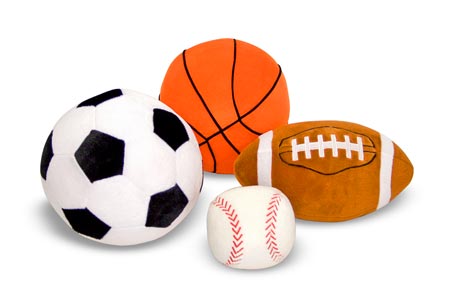
First of all, the school did not ban all balls.  They merely directed parents to be aware that all “hard” balls (up to and including but not limited to) footballs, soccer balls, baseballs, basketballs, volleyballs and probably bowling balls would be confiscated if students brought them to school.    Balls made out of sponge, or nerf material would still be perfectly acceptable and students would be encouraged to enjoy them during supervised recreation.

Secondly, although an outright ban on balls might seem heavy-headed, the school’s reaction was the direct result of a ball-related injury which required hospitalization.  Luckily, it was a parent coming to pick up her child who was injured, not a student.  However, in light of this single event, the school immediately took a proactive approach to prevent any innocent child from getting a noggin floggin’ in the future.

Thirdly, we need to remember that a ball in the hands (or feet) of a child can lead to a potentially dangerous situation.  They may kick or throw it!  Young people have not yet developed the cognitive, judgemental or motor skills to properly handle a ball.  Make no mistake: without the proper skills, balls are missiles, capable of causing great harm – a quick review of America’s Funniest Home Videos is documented proof of this.

Fourthly, overwhelming medical evidence proves a direct link between the use of balls by children and injury.  A study conducted by the American Academy of Pediatrics in 1994 (this is real, by the way) found that between 2 and 8% of all children who play Little League Baseball suffer some kind of injury.  Although there are no hard statistics to show the severity of these injuries, or whether or not they occurred as an immediate result of contact with a ball, they all happened in a ball environment.  We cannot dismiss these findings as natural or “part of growing up.”  It’s obvious that if these children had not been playing Little League Baseball, they would not have come to grievous bodily harm.

Let’s be clear: the banning of balls at Earl Beatty Junior and Senior is a progressive step which could lead to a number of positive outcomes.   It’s a known fact that children left unattended with a ball will attempt to play a game.  Group games, as we know, are detrimental to a child’s emotional growth.  They create “winners” and “losers” a concept which can irreparably damage a child’s self esteem.  It is far better to engage young people in activities that focus on individual skill development and provide positive reinforcement than rank their performance on an artificial scale.

Furthermore, we know that most games played with a ball in North America are Eurocentric (soccer, baseball, basketball etc.) forced on the rest of the world during the colonial and neocolonial periods.   By eliminating the symbol of oppression, the ball, we allow our children to experience the true diversity of our society at the most primal level — play.  Our children are free to explore, without being constrained by a narrow European model.  In our changing society, stressing our diversity is very important.

In a much wider sense, the Earl Beatty ban on balls — if viewed in an open, unbiased manner — could result in a district-wide ban, or even a city-wide ban.  This would encourage our entire nation to open a dialogue on the role of balls in our society.  Perhaps, this could eventually lead to a national “hard” ball registry.  We could then control the indiscriminate use of balls and limit their impact to those who would play with them responsibly.

The future is bright, my friends.  We can change our world and make it a safer place for our children.

However, there are some in our society who don’t want change.  They wish to turn the clock back to a darker time when balls created fear in the youngest and most vulnerable among us.  Against those people, we must stand firm.  We must send a strong message that hope is better than fear.  We must tell them that when any child is put at risk, that is not acceptable.  When it is within our power to spare any child needless pain and suffering, we are morally obligated to do it.  Children are our future.  They are our most precious natural resource.
You Don’t Have Any “Rights”

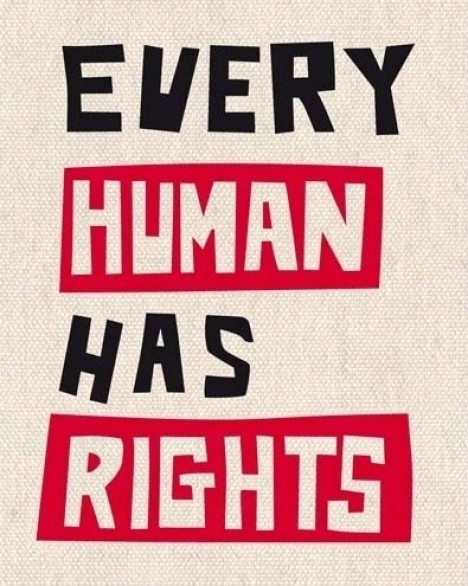
There’s been a lot of talk recently about rights.  Just who has rights?  What are they?  Why are some people being physically restrained from exercising their rights while others seem to have the right to rob us at every corner?   It doesn’t matter which side of the heated discussion you’re on; you probably see the other folks claiming rights they aren’t entitled to while simultaneously trampling all over yours.  This is a natural phenomenon when you deal in “them” and “us.”  However, let me let you in on a big secret. You’d better sit down because this is going to blow your bonnet off.  You have no rights.  None, zip, bupkis — and I’m not just playing with semantics here.  It’s an absolute, etched in stone, shout-it-from-the-rooftops fact.  And while we’re at it, you don’t have any privileges either; that’s just a word people use when they’re pissed off at dissidents.   As in: “Freedom of speech is not a right; it’s a privilege.”  Load-a-crap is what it is.  The only reason we can say what we like about Barack Obama (or anybody else for that matter) is that our society has a bunch of heavily armed young people who say we can.  But before you think you’ve landed in Hyperbole Heaven and gear up to take a run at the appalling “police state” tyranny we supposedly suffer under, that’s not what I’m talking about.  In fact, the quote/unquote police state everyone is so fond of invoking is one of the institutions that allows us to practice those things we mistakenly call rights.

Here’s the truth; like it or not.  Those things we call rights are nothing more than an ad hoc collection of laws that haven’t even been agreed on yet.  They are not inalienable, and they are certainly not universal.  How do I know this?  It’s quite simple.  In our society, two hundred years ago, I had the “right” to wander down to the local slave market and buy another human being to help me do the dishes.  I owned that person: they were my property.  Not only that but a hundred years ago, not one female in North America had the “right” to vote.  Actually, in my country, it wasn’t until 1929 that women were even considered “persons” under the law.  Historically speaking, there are tons of examples just exactly like this — temporary habits mistaken for universal rights and privileges.  Yes, those were “a relic of days more barbarous than ours”* but so is every moment of history before this morning.  Nobody is going to convince me that, in a mere 5,000 years or so of written history, we have reached the pinnacle of human achievement and awareness.  Nor, that in 2011, we finally understand the human condition so thoroughly that we can now pronounce what our rights should and always will be.  That’s just 21st century arrogance.  Honestly, if this is the peak, we are in trouble!  So all those rights everybody keeps yipping about are simply temporary accommodations that may (or may not) change, depending on the circumstances.

These days, we’re spending so much time demanding our nonexistent rights that we’re forgetting how we got them in the first place.  Our society is based on a very few generally accepted principles, guaranteed by the generosity of a whole lot of strangers.  For example, we, as a group, believe you, as an individual, have the “right” to worship your neighbour’s cat if you so choose.  We are willing to make contributions (in fact or in kind) not to you directly, but to the group as a whole in support of that “right.”  Also, we are willing — on occasion — to forego some of our own freedoms to ensure you have that “right.”  This is because it doesn’t belong to you; it belongs to all of us.

However, this guaranteeing generosity is not an infinite commodity, nor is it eternal.  It breaks down quite easily and with surprising regularity.  In times of crisis, it disappears entirely.  And as we have seen throughout history, once it’s gone, it’s very difficult to get back.  Depending on the kindness of strangers only
works as long as the strangers are kind: just ask Blanche Dubois.  Therefore, the only way we can maintain a continuity of liberty to think, speak and act as we please is to maintain the society which nurtures that liberty.

Without the institutions to back them up, our much heralded rights are just an illusion.  Until we understand that, all we’re doing is jacking our jaw or playing
around discussing how many rights can dance on the head of a pin.

*British Privy Council October 18th, 1929

Modern Times and the Lord of Misrule

In medieval Europe, there was a festival held every year in the run up to Christmas.  It went by a number of different names and a number of different shapes, but essentially it was the same all over the continent.  If I were an anthropologist, I would tell you that it was a mutation of the old Roman celebrations for the god Saturn, hijacked by the early Christian church.  And that it was also tied to the even earlier local animistic rituals connected to the Winter Solstice.  However, I’m not an anthropologist, so to me, the whole thing was just a drunken bash.  The Medievals would get together just before the onset of real winter and party – mainly because they weren’t sure if they were going to make it ‘til spring.  They’d eat and drink, gamble and chase women (or men, depending on which side of the bar wench you were on) until after the Solstice and the solemn occasion of Christmas.  Then they’d hunker down and try to survive for another year.

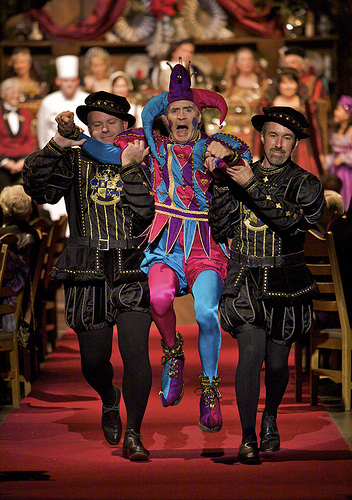
In England, this was called the Feast of Fools or Topsy-Turvy Time.  For twelve days (probably the 12 days from our Christmas song) the natural order of society was suspended and turned upside down – the more ridiculous, the better.  People wore their hats backwards; shepherds carried their sheep.  Peasants stopped toiling and went to the bar; servants were served by their masters, barmaids were treated like ladies, and on and on.  The whole thing culminated in a drunken ceremony on the steps of the handiest church or cathedral, where the unruly crowd grabbed the dumbest Dumb and Dumber oaf among them and crowned him the Lord of Misrule.  He presided over a feast that ate and drank into the early morning.  Over the centuries, these parties got wilder and wilder until they were finally banned, in 1512, by Henry VIII, a guy who knew how to party.  (That just tells you how crazy it got.)

It has stuck me recently that we live in Topsy-Turvy times — except for us they’re all year round.  The natural order of our world has been bent to the breaking point and little or nothing we do makes sense anymore.  For example, our cities are spending tons of money every day, trying to accommodate the needs of the ubiquitous Occupiers: things like extra police, fire and paramedical personnel, sanitation facilities and the essentials of water and trash removal.  These things cost money that our cities wouldn’t normally be spending.  Yet who’s complaining about these extra expenses?  Ordinary taxpayers!  This is exactly ass-backwards.  Let me explain.

Normally, aside from walking on the streets or calling the city to complain about potholes, ordinary people don’t have much contact with their civic government.  They go to work, come home, rake their leaves, lock their doors at night and shut up about it.  Come election time, they vote (in ever decreasing numbers) and once a month, they pay their rent or their mortgage, and that’s about it.  The majority of people in any city don’t even know what services, aside from garbage pickup and community centres, their cities offer.  They don’t need to; they don’t use them.

On the other hand, in every city I know of, there’s a group of people (and it’s getting larger by the minute) who not only know what services are available but actually need them to survive.  These folks, on the bottom end of our social order, are in dire straits.  They need homeless shelters, drop-in centres, clinics, paramedics and way more police protection than the rest of us.  Their very lives depend on the money the city passes around to the various and sundry agencies and institutions dedicated to helping them.  If that money is being spent someplace else, it has a direct impact on their quality of life — such as it is.  Thus, money spent on Port-a-Potties for political activists is literally being taken out of the mouths of the homeless.

It doesn’t make any sense for ordinary taxpayers to complain about the whack in the wallet the Occupiers are giving us.  That tax money is allocated long before we ever write the cheques, on stuff we’re never going to see anyway.  The city managers could just as easily take it down to the local casino and drop it on 14 Red at the roulette wheel, for all we know.   For example, thousands of dollars in my city was spent to encourage children to grow wheat in their backyards.  That didn’t impact my quality of life one bit.  I didn’t get any wheat, but that’s okay: I wouldn’t know what to do with it in the first place.  My point is the money’s gone, folks, and Occupiers or not your tax assessments are going to go up next year.

However, the people who should be bitching, loud and long, are the disadvantaged among us who have a long, cold winter ahead of them.  The money the city is spending on aid and comfort to the Occupiers is all immediate costs.  If nothing else, overtime has to be paid, and that’s real cash – dollars and cents.  At some point, city services are going to suffer — just to make ends meet.  After all, that annual tax increase isn’t going to come until late next year, which is a little late when the snow’s gonna fly in January.  Personally, if I was digging in a dumpster behind KFC, trying to find breakfast, I’d be a little tight-jawed to see a $20.00-an-hour city worker getting time and a half for extra clean-up at the local protest.  A couple of thousand dollars a day is big money when food and shelter are an occasional luxury.

So here’s the deal.  The people who are going to take the biggest kick in the groin from the uber-extra city expenses are oddly silent on the subject — whereas they should be the ones howling, to claw back some of that money, as if their life depended on it (which, in fact, it does.)  Meanwhile, the folks who really aren’t affected by what the city spends (because they have to pay for it, regardless) are roaring away like a lion with a thorn in its paw, just as if somebody at the other end was actually listening.

Me, I want a spot in the front row, when we finally get it over with and crown the Lord of Misrule.