The War On Plaid

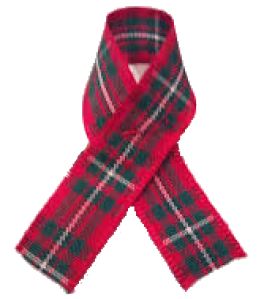
tartan ribbonNovember 30th was St. Andrew’s Day* and I’m declaring war on plaid.  Why?  Last week, after seven unoffending years, a free yoga class at the University of Ottawa, in Canada, was cancelled because of “cultural issues.” (Call it “cultural appropriation.”)  WTF?  Apparently, Downward Dog is a symbol of oppression.  Too bad, so sad — you’re probably better off doing Tai Chi, anyway.  (Ooops!)  But that’s not my point.

If the progressive world wishes to fight for the rights of an oppressed minority, they need look no further than the mean streets and heathery footpaths of Scotland.  Trapped on an island with the great bogeyman of European cultural tyranny, the English — and their minions, the Welsh — we Scots have been getting oppressed for so long it looks like normal to the rest of the world.  And the litany of shame is long.

For centuries, Scots have smiled through the tears as we’ve endured offensive and degrading nicknames like Mac, Jock and Plaidie.  We’ve been objectified in the media — from Brigadoon and Scrooge McDuck to Groundskeeper Willie (I’m not even going to mention Fat Bastard.) and repeatedly portrayed as stupid, cheap and brutal alcoholics who can hardly speak English.  I’m looking at you, Robin Williams.

Our national symbol, the thistle, has been belittled as a weed.  Our music has been lampooned as the missing link between sound and noise.  Our food has been ridiculed as the worst in the world (by the World Health Organization, no less.)  Our underwear (or lack of it) is the subject of mocking public speculation.  Our very name has been appropriated across the planet for a child’s game, hopscotch; a candy flavour, butterscotch; and a transparent adhesive, Scotch tape.  When Mel Gibson turned our national hero William Wallace, into a paint-stained, historically inaccurate, shouting Australian, the world cheered and gave him 5 (FIVE!) Academy Awards — and no voice was raised in Scotland’s defence.

Our national game, golf, an ancient, pastoral activity of poor shepherds, was stolen from us.  Appropriated by the world, it has been transformed into a highly competitive, pay-to-play commercial sport.  It is now the hobby of the very rich — an icon of capitalist success that represents the in-your-face power of the 1%.

However, it is for the tartan that we must weep.  The very symbol of the Scottish family, the intricate, hand-woven patterns were passed down, mother to daughter, for untold generations.  The tartan is a visual reminder of that strongest bond of Scottish familial culture — the clan.  No croft was too humble, no laird was too bold, no Scot or her children were too far from home not to honour the tartan and wear it with pride.  And what did the world do?  PLAID — that’s what!

Ripped from the humble looms of Scottish cottages, PLAID is now synonymous with bad taste all over the world, from those ugly Burberry umbrellas to the ratty, little shirts hipsters wear.  Cheap hotels, discount furniture stores, bargain clothing outlets are all awash in godawful, hideous PLAID.  There’s no end to it, but it must end.

So I’m declaring war on PLAID.  I call on all colleges and universities to ban PLAID from their campuses, and I call on all thinking people everywhere to go to their closets, their linen cupboards, their basements and recreation rooms, and pull the PLAID from your homes.  Pile your PLAID in the streets, and on December 31st, the great Scottish celebration — Hogmanay — burn it.  Burn it so the light from a million fires might reach into the dark night of ignorance and free the Scottish soul from this horrible ordeal.  We must end this cultural nightmare — now!

*FYI, St Andrew’s Day is the Scottish equivalent of St Patrick’s Day — with more booze and less brag.

The Power of “BUT”

butThe most powerful word in the English language is “but.”  It’s a grammatical Liam Neeson with a very particular set of skills that kicks ass.  It’s way better than that greedy little “and” who’s always looking for something extra the minute he shows up.  And, don’t get me started on “or:” grammar’s Hamlet, who couldn’t make a decision if his life depended on it.  No, for sheer conjunctional word power, go with “but” every time.  Here’s why:

1 – “but” sugarcoats the punch in the face — When you want to rip somebody a new one but you don’t want them to get so angry they go home and get a shotgun, throw in a “but.”  For example: “Jennifer, you are one of our most valued employees, conscientious and hard-working, BUT you have the math skills of a goat, and if you don’t get with it, I’m going to fire you so hard your grandchildren will be unemployed.”

2 – “but” pleads your case — When you know you screwed up and you’re looking around for something else to blame, use “but.”  Once again: “I know I drove your car into the side of that guy’s house, BUT you didn’t tell me it had sticky brakes when I borrowed it.”

And if you play #2 correctly…

3 – “but” can even get you off the hook — “Normally, I’d pay for the repairs to your car, BUT if it wasn’t for me, you wouldn’t have ever known about those bad brakes.  Actually, I did you a big favour.”

Also

4 – “but” lets us look on the bright side — When your situation seems about as bleak as the slums of Mordor, try “but” to turn the lemon into lemonade.  “Hey, bro!  Sorry I had sex with your wife and your little sister last month after your birthday party, BUT they both phoned today, and guess what?  They’re not pregnant.  Cool, huh?”

And finally the most badass tool of all:

5 – nothing important ever gets said until someone says “but.” — In any conversation, discussion or argument, you can discount everything that’s said before “but.”  In fact, you don’t even have to listen.  Check it out:

“I understand your point of view, but only the part that happened before you opened your mouth.”
“Of course I agree, but not enough to quit arguing with you.”
“That’s an interesting opinion, but I’m not all that familiar with LooneyTunes cartoons.”
“Certainly, this current refugee problem is a crisis of biblical proportion and Western governments have a moral obligation to offer as much assistance as possible but what are all these gypsies, tramps and thieves doing in my country?”
“I like pasta, too, but there’s no way I’m eating that Italian glue tonight.”
“I’m not a racist but, man, those people are weird.”
“I love you dearly, but if you leave the toilet seat up one more time, I’m going to shoot you in the head.”
Etc. etc. etc.

So here’s to you, “but,” you sassy little conjunction!  Thanks for always being there for us.

People Lie!

LyingPeople lie.  It’s as natural as breathing.  Sometimes we do it for a good reason, but mostly we do it just because we can.  Here are a few examples:

At the dentist:
What they say — “You might feel a little discomfort.”
What they mean — “Welcome to Doctor Mengele’s Emporium of Pee-Your-Pants Pain.”

At the gynecologist:
What they say — “Just relax and let’s take a look.”
What they mean — “Brace yourself, honey. We’re on a quest to find the source of the Nile.”

When you ask directions in a strange city:
What they say — “You can’t miss it.”
What they mean — “I have no idea what you’re looking for, but I know most of the stuff in town is over there — somewhere.”

At a dinner party:
What they say — “I tried something new.”
What they mean — “Your food is going to taste like socks.”

Talking to the computer salesperson:
What they say — “It’s got 8.00 GB usable 64 – bit OS and 1.60 GHz.”
What they mean — “You’re so stupid I could sell you a dead donkey if it had an Apple logo on it.”

At the grocery store:
What they say — “Organic.”
What they mean — “Twice the price and half the taste.”

Internet Travel Advertisements:
What they say — “Hawaii! Airfare from $299”
What they mean — “Hi!  We’re just here fishing for idiots.”

Internet Travel Sites:
What they say — “Hawaii, airfare from $299”
What they mean — “Caught one!”

At family gatherings:
What they say — “It’ll be fun.”
What they mean — “Come on over.  The uncles are going to fight with each other and their kids are going to act like a troupe of deranged orangutans.”

Telephoning the Government:
What they say — “Your call is important to us.”
What they mean — “The department you want is playing Candy Crush right now, but how about a 3 hour rendition of Wagner’s Ring Cycle for flute and bassoon?”

Talking with friends:
What they say — “We’ve been friends for a long time.”
What they mean — “I want to borrow money.”

Arguing with friends:
What they say — “Let’s agree to disagree.”
What they mean — “I can’t believe I’m friends with you — you moron.”

Talking with friends of friends:
What they say — “Yeah, I’ve known him since high school.”
What they mean — “I’m a way better friend than you are.”

Arguing with anybody:
What they say — “That’s racist.”
What they mean — “Wow!  What a logical and concise argument.  This conversation is over.”

Talking with the boyfriend:
What they say — “Hey, love!  What ya thinkin’?”
What they mean — “Any chance of getting laid?”

Talking with the husband:
What they say — “Hey, love! What ya thinkin’?”
What they mean — “Any chance of a sandwich?”

Talking with the girlfriend:
What they say — “Does this dress make me look fat?”
What they mean — “It better not, or the only thing you’re going to be touching after the party is yourself.”

Talking with the wife:
What they say — “This dress makes me look fat.”
What they mean — “I gave up Andrew, that drop-dead-handsome lawyer for you. The least you can do is have the decency to lie to me.”