 I love drug commercials on TV — not those idiot Cialis/Viagra jobbers; they’re way too nudge, nudge/wink,wink for my tastes — the real ones. The ones that put the fear of God into you, then casually mention that they might have a cure, if you happen to be interested. I see them as a 45 second history on our times.
Just to review. The drug commercials usually start with an ordinary middle-class/middle-aged scene. Somebody, sometimes in black and white, isn’t feeling well. The kindly voice-over explains that this ailment, however small, is nothing to fool with. It could be a disastrous medical condition. Unfortunately, only trained professionals can tell the difference. Therefore, it would be best, just for a little peace of mind, to get your sorry ass to the doctor – NOW – or you’re going to die – horribly, miserably and alone. They usually don’t gear it up that bad, but the message is clear: there’s a tombstone out there somewhere. At this point, the drug name is introduced as the only known cure for the disease you don’t have. It’s repeated a couple of times, with its pedigree or references, as the middle-class/middle-aged scene changes to carefree (in colour) recreation, usually swimming or golf. (BTW, all prescription drugs are government approved.) After that, it’s all about, don’t take our word for it “Ask your doctor if Brand X is right for you.” This naturally assumes that we somehow caught the disease, condition or ailment during the first half of the commercial, and now it’s only a matter of treatment. Then — and this is the best part — the voice-over goes absolutely monotone and says something like, “Brand X is not right for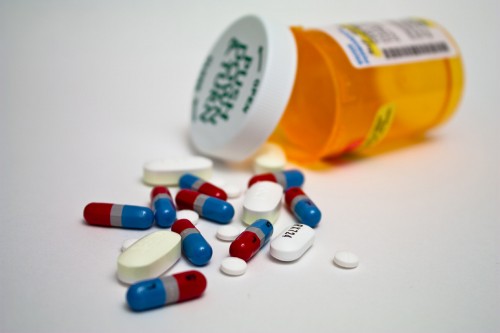 everyone. Serious side effects may include excruciating muscle pain, instantaneous diarrhea and incurable eyeball disease. Talk to your doctor immediately if your tongue falls out. Do not take Brand X if you’re a woman who’s ever even seen someone who’s pregnant or a man with a healthy liver and kidneys.” The middle-class/middle-aged scene then changes to sunset or candlelit dining, with the drug name written in bold across the screen. Fade out and back to reruns of Everybody Loves Friends. There are a number of variations, but, in general, that’s it.
The reason I love these commercials so much is they really are an unconscious historical record of contemporary life. For the last two generations (and maybe three) we have been giving ourselves every social, political, spiritual, economic, You-Name-It-We-Got-It disease known to humanity. We’ve glommed on these malfunctions like an octopus with a fresh clam, giving each one pride of place as we discovered it. I’m old enough to remember when the War on Poverty slyly slipped its leash to become the War on Drugs. As the real and imagined  maladies piled up, we went looking for a cure — even though nobody had ever realistically diagnosed any of the problems. Somehow, we just instinctively knew we had them and now it was only a matter of treatment. Sound familiar? Suddenly, the world was full of social engineers, who, like drug dealers, (legal and otherwise) eagerly offered us all manner of remedies while conspicuously failing to mention the price. Their shtick was (and still is) “Don’t take our word for it. Ask the politicians which government programs are right for you.” We did, and as a consequence, ever since Lyndon Johnson proclaimed The Great Society we’ve been throwing money around like a crack addict who just won the lottery.
The problem is the scenario has never changed. We’re stuck on black and white, somebody’s not feeling that well, and we never get to in-colour carefree recreation – forget candlelit dining. Our social, political, economic etc. problems are not getting better. We have more homeless people now than ever before, our kids are still stupid and the President of the United States still doesn’t understand economics – to name just a few. The cure we’ve been prescribed for the disease we may not even have ever had doesn’t work.
 However, there are serious side effects to all this social engineering. No, our tongues didn’t fall out but they might just as well have. We have become hopelessly dependent on social programs and have abandoned reason in a manic search for them. In short, we have become junkies. The drug is government intervention, and we can’t get enough of it. Like all addicts, our entire focus is now on the dealers to deliver a bigger hit, a larger dose. Every discordant note sends us back to them, every anxiety, every concern, every doubt. We excuse our destructive behaviour and gloss over our need. We lash out in riotous anger and frustration when we don’t get enough. We beg, borrow or steal the money to support our habit; bankrupting our children in the process. We don’t care what it costs anymore; we just have to have it.
Unfortunately, if we don’t do something soon we’re going to be permanently chained to our addiction, and no amount of get-well-quick schemes is going to help us.






 WD Fyfe