 I grow weary of constantly being told how screwed up my world is. I realize it’s a long way from this place to Nirvana, but by the same token, this isn’t the worst of all possible venues west of Lucifer’s back porch. In all truth, we live in a kind of run-down suburb of Disneyland, where most of life’s rougher edges are smoothed over. I had a friend once who said, “If you want reality, go to Biafra.” Biafra isn’t in the headlines anymore; the updated version is Somalia. That’s where the real world lives. What you see out your front window is a man made amusement park, put there for your comfort and entertainment. Personally, I don’t mind people complaining, but there is a limit. There’s a lot of stuff around here that I like, and I don’t appreciate every jerk with an attitude calling it down. I’m not talking about the sentimental slobber promoted by nitwits and Playmates of the Month – rainbows, hugs, hoarfrost on kittens. I’m talking about the stuff that says my world is made of sterner material than what reality has to offer; the stuff that’s always out there but nobody mentions; the things I like about the world as I know it.
I like libraries. I think they’re cool. I can walk in, take a book (any book) off the shelf, sit in a warm, semi-comfortable chair and read it. And if that isn’t good enough for me, I can take that book home. All the library wants is my word that I’ll bring it back. I don’t even have to leave a deposit. They trust me. The only requirement is — I want to. And it’s free. It’s part of what I get just because I live here.
I like buses, too. In my city, for $2.50, I get a vehicle and a driver, who will take me within two or three blocks of anywhere I want to go, anytime I want to go there. I don’t have to ask or even show up on time. Those buses regularly travel around my town just on the off chance that I might want to go somewhere — and that’s 365 days a year.
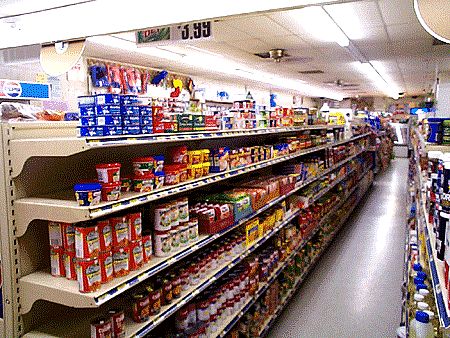 I like grocery stores, too — big ones, small ones, all around the town ones. I’m never more than a kilometre away from food. It’s not just any food either; it’s all kinds of food. It’s food from all over the world in what looks like nearly infinite varieties. If I want to, I can buy vegetables with names I can’t even pronounce. I can buy food that other people have already cooked for me. In some places, I can buy fish so fresh it’s still alive when I buy it. I’ve never been to a grocery store that doesn’t have some kinda crap you don’t even need like pickles and parsley. They’re a garnish, for God’s sake, and we still have tons of it. And here’s what I like the most about grocery stores – they never run out.
I like the cops. Yeah, yeah, yeah, they’re always showing up after the fact, and there are quite a few nasty ones out there, but so what? I like being a mere three digits away from specially trained people whose sole purpose on earth is to keep me from getting my ass kicked or run over by a drunk. I might not see a cop from one week to the next — or until I blow through some red light — but they’re around. They’re like spare tires; you never have to think of them until you need one. Yet, it’s their very presence that guarantees I don’t have to worry that much about involuntarily donating money to every crack addict with a kitchen knife – in my backyard.
I like space. One of the neatest things my world has to offer is space. I’m not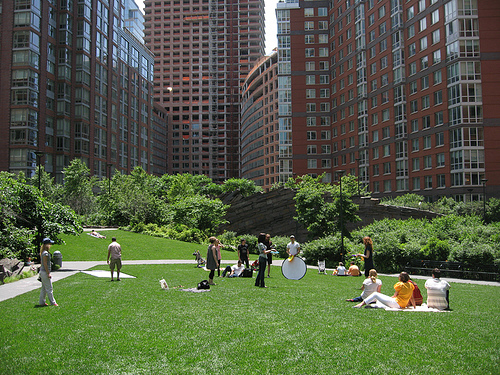 talking about the great outdoor wilderness somewhere north of Rubberboot, Alberta. I’m talking about urban space that makes certain I’m not haunch to paunch with my fellow citizens every minute of every day. On some of the busiest streets in my city, there are benches; places to stop, sit down, take three deep ones and look at the world. As long as I don’t bother anybody I can sit there as long as I like. Or if I don’t like traffic, I have parks – lots of them — green spaces where somebody else cuts the lawn, trims the bushes and plants the flowers — just so I can look at them.
But the best thing I like about my world is, it’s not every man for himself. I’m not on my own against the world. I literally have armies of people who want to help me — all the way from the kid under the information sign, who gives me directions to the surgeon who could perform open heart surgery to save my life — if I need it. It might take a while; it might be so frustrating I could scream, and I might not get the exact result I sincerely hoped for, but at the end of the day, if I’ve got a problem, my world is willing to help me. All I have to do is ask and meet it halfway. If this is a dog eat dog existence, my world is one dog short.
There are a lot of things wrong with the world we live in, a lot of inequities, a lot of solvable problems, but there is definitely an upper end to what we have to complain about. We need to complain, long and loud. It seems to be the only way we can get things done anymore. I’m just saying, we need to open our eyes a little bit wider before we do it.



 WD Fyfe