“Funky”: Kiss of Death and Yuppies in the ‘Hood

There are few words in the English language that carry the destructive power of “funky.”  Way back in the day, “funky” (or “funk” as it was called then) was a musical term.  It was urban black.  It was loose.  It was uncontrolled and it was cool.  It meant something, although most people couldn’t describe it; they just knew it when they heard it.  So much for the history lesson.  Today, funky is the kiss of death.

In every city in North America, there are brilliant little neighbourhoods.  They exist on the fringes of the bigger, more famous areas.  They’re middle ground territory, neither rich nor poor and mostly overlooked in the urban sprawl.  They have houses and apartments, restaurants and shops.  Sometimes they have schools or a theatre or maybe a gas station, but definitely a couple of corner stores and at least one old-fashioned cafe.  These are great little places and people live there — all kinds of people — grandmas and students, bosses, workers, the guy who owns the bakery, Jamal, Eddie and Suzanne.  They’re not some 50s wonderland, filled with Andy of Mayberry characters, but enough local people know each other, or recognize the guy across the street, to make them real neighbourhoods.  They’re what urban planners dream about.

These neighbourhoods go unnoticed for years.   They go about their business and never bother anybody.  Then, one day, somebody wanders by (sometimes it’s a real estate agent, sometimes it’s a journalist, sometimes it’s just somebody with a big mouth) and calls them “funky.”  As in: “3 bdrm, TLC, close to transport, all amenities, funky old-world charm” or “My companion and I dined on authentic Portuguese squid, with plenty of funky atmosphere, for half the price of an expensive downtown restaurant.”  These people think “funky” is a term of endearment.  It‘s not; it’s a death sentence.  It’s a neighbourhood killer because, in actual fact, “funky” is a polite word for gentrification.  It represents the time period between when the first upwardly mobile couple moves in and the last original inhabitant is driven out. 

There are any number of ways for this to happen, but they all basically follow the same pattern.  Brooke and Meghan* buy a house in an area that’s less than ideal, maybe even a little rundown, because they can’t afford the big prices in the tonier parts of town.  They make up for their shabby address by putting on the brag about how great their neighbourhood is.  How urban cool it is.  How it just reeks of diversity.  How Bratislav cuts his own cheese and Nahoud bakes his own biscotti.  In short, how “funky” it is.  Eventually the word gets around: that it’s not such a comedown to live east of Main Street or south of Central, and other people start buying inexpensive addresses.

Any wave in the real estate market, however small, is battle stations red alert for property developers.  They’ve long since figured out that there’s a boatload more money to be made selling thirty brand-new condos, sitting on top of four retail outlets, than there is reselling four single-family homes.  They buy the lots, tear down the houses, vertically sub-divide and parcel it all out as urban living.

In turn, concentrated population increases attract the big boy franchisers — like throwing blood into the shark bait waters off the coast of Australia.  If there be condos; there be McDonald’s, 7-11 and Starbucks.  There might not be a WalMart (urban professionals don’t like them) but at this point, it doesn’t matter.  Wai Chow’s Golden Chopstick or Bayview Meats can’t compete with Earl’s, East Side Mario’s or Flying Wedge.  These people are willing to sign long leases for big money, and local shopkeepers just don’t have that kind of coin.  They’re forced to close and the cycle continues.

Back in “the hood,” Brooke and Meghan, those two crazy kids who started the whole process, aren’t helping matters much.  They aren’t actually living in the neighbourhood.  They might physically be there, but so what?  They don’t work there.  Their kids don’t go to school there.  They don’t ride the bus or shop on their way home.  In fact, they never consistently patronize the local merchants, at all.  They drive in and out of the neighbourhood every day for months, perhaps years, basically waiting for their generic world to catch up to them.  Their furniture is Ikea, their home renovations are Home Depot, their toilet paper is Costco and their gadgets are Future Shop.  When the bakery and the drugstore close, they play “ain’t it awful,” but it never occurs to them that they are the ones who don’t buy doughnuts or have their prescriptions filled.  And as every new Brooke and Meghan move into the neighbourhood, the problem accelerates.  Local merchants can’t pay their ever-expanding rents or taxes on an ever-decreasing customer base, and the developers pick them off, one by one.  At this point, Brooke and Meghan discover the new Starbucks or whatever and start actually hanging around, meanwhile, telling everybody they and their neighbourhood (it’s become their neighbourhood now) are uber-cool.  More people move in; more people move out.  Years pass, life goes on and the city digests the remnants of what was once a nice, vibrant place to live.  More corporations; less local ownership. Civic officials shake their heads and wonder what the hell went wrong.  They consult city planners and urban geographers to see how to artificially create socially and economically mixed neighbourhoods.  They fail.

 Just a bit of advice: if anybody calls your neighbourhood “funky,” run!  It’s a trap.

*Brooke and Meghan’s names have been changed to protect the guilty.

Unexplained Laws of the Universe

Certain laws govern our universe: nature abhors a vacuum, two bodies can’t occupy the same space at the same time, and, of course, the most famous, Murphy’s Law: anything that can go wrong, will go wrong.  These are physical truths that simply can’t be changed by our modern science.  In other words, we have to live with them.  However, there are also a whole pile of things whose sole purpose is to frustrate us and drive us crazy.  These are the things that work the way they do, even though there’s no reason why they should.  I’m not talking about all those funny things that kids wonder about on a stoned Thursday afternoon.  Why doesn’t glue stick to the inside of the bottle?  How come they make cars that can go twice as fast as the legal limit?  Why don’t psychics ever win the lottery?  I mean real stuff that always seems to happen for no apparent reason — what I call The Laws of Consistency.

For example, there is the Law of the Line.  When you go to McDonald’s (or any other fast food place, for that matter) the menu is always above the counter, right there in front of you.  It’s big, it’s bold, it’s backlit and it’s got pictures.  It’s been there since the first McDonald’s opened in Illinois in 1955. Yet, somehow, when you’re standing there waiting, the guy in front of you acts like he’s never seen it before in his life.  Of the billions and billions served at McDonald’s in the last half century, he’s not one of them – nor are any of his friends.  It’s like they’ve all come from an Amish Colony in darkest Sumatra and this is the first time they haven’t had to grow their own food.  They’re overwhelmed with the possibility of meat and absolutely baffled by pickles.

The Law of the Line is a constant.  The same thing happens at the ATM.  The day you have 12 cents in your pocket and 30 minutes for lunch, the woman in front of you is trying to teach her four year old how to electronically renegotiate the mortgage.  Again, at the grocery store, the person ahead of you always argues about the price of beans or better still, buys two items, neither of which has the barcode.  At Starbucks, the person at the counter wants the strangest concoction known to humans — which usually involves double grinding the beans and airlifting vanilla in from the wilds of Jalisco, Mexico.  And don’t even worry about government offices or Motor Vehicles because every single person standing there has at least two DUI’s and is about to license some home-made contraption held together entirely by duct tape.  The only time the Law of the Line doesn’t work is when you’ve got a four-and-a-half-hour layover on a Sunday afternoon at the airport in Provo, Utah.  The one day there’s nothing to do and you couldn’t kill time with a shotgun.

Then, we have the Law of the Price.  The Law of the Price is insidious and constant only by virtue of its inconsistency.  It works like this.  The thing you want to buy never goes on sale.  The thing that is on sale is kinda close, but not really.  It’s the wrong colour, or the wrong height, or doesn’t quite match or doesn’t really do the thing you want it to do – but it’s cheap.  So you’re standing in the store with the thing you don’t want to buy, that’s cheap, and looking at the thing you do want to buy, which costs twice as much. Now, you’re screwed.  If you buy the thing you don’t want — on sale — you’ve spent the money, you’ve got something you don’t really want and you’re never coming back to buy the thing you really wanted in the first place.  On the other hand, if you buy the thing you really want, you’re going to spend a potful of money you don’t want to spend.  Either way, you’re not going to get the thing you want for the price you want to pay.  It just doesn’t happen that way.

Even if, by some miracle, the thing you want to buy actually does go on sale, it’s never a good sale.  The sale price is still more than you want to spend — but not by much – just enough to make you think about it.  Then, when you finally decide to bite the bullet and buy the thing you want to buy, there’s always some little extra crap you need to make it work properly — things like cables or covers or batteries, or gloves or a scarf.  These things never cost that much individually and you need them, so you buy them.  Suddenly, a relatively expensive but affordable purchase is, with tax, 200 bucks over budget, the store guy’s writing it up and you’re looking at Kraft Dinner for the next month. 

There are all kinds of other Laws of Consistency.  There’s the Law of Las Vegas: everybody wins money in Vegas but you.  There’s the Law of the Second-Hand Deal:  anything you buy second-hand breaks within three weeks – guaranteed.  The Law of the Computer Triumph: the computer you just bought yesterday is magically obsolete the minute it comes out of the box.  It goes on and on, and I don’t think I even have to mention the Law of Auto Repair.

These are consistent laws of the universe, and there’s no reason they exist; science can’t explain them, religion can’t ease their pain and no human institution can stand up against their unholy power.  They have no basis in physical reality, but we’ve all been there/done that.  So the next time you lose a filling and discover that your dentist is having a baby and her replacement looks like the villain from a Nazi movie, remember it’s not your fault; it’s just a law of the universe.

Osama, Obama and the Politically Correct

I think it’s finally happened.  We may have finally chased the White Rabbit of Ridiculous down the dark hole and are about to end up a shell-shocked Alice in some Bizarro-Wonderland.  I expect to see the Cheshire Cat any day now, and once he shows up, the Mad Hatter and the Red Queen won’t be far behind.  My infernal optimism for the future of our society has been shaken to the core.  Recent events are turning my girlish laughter into tears.

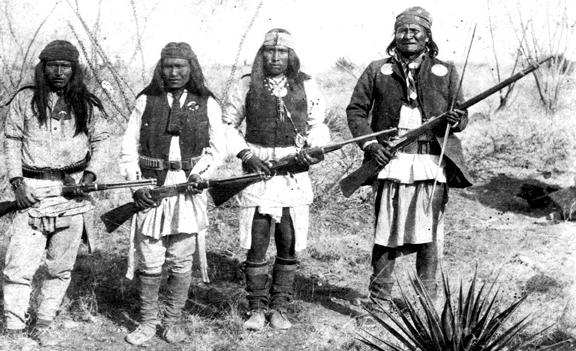
As everybody from Biloxi to Bangkok knows, Barack Obama turned loose his weapons of mild destruction the other day, and the result was a double-tap to the head of the President of the Evil Club — Osama Bin Laden.  I, for one, broke out the champagne and watched the cheering in the streets on TV.  However, it appears our celebrations were premature.  Nobody in the US military ran the operation, codename Geronimo, past the all-powerful Politically Correct police.  Apparently, using “Geronimo” as the codename for the operation is a direct insult to all Native Americans.   (I’m not making this up!)  Apache Tribal Chairperson Jeff Houser, of Fort Sill, Oklahoma, has sent a letter to the White House (displayed on their Tribal Website) to ask the President to apologize for juxtaposing Geronimo’s name with Osama Bin Laden’s.  According to the letter, Native American children “are facing the reality of having one of their most revered figures being connected to a terrorist and murderer…”   Houser continues: “Think about how they feel at this point.”  This is an interesting rhetorical question to a black president who grew up around a few stereotypes, himself.  The letter goes on to say that Native Americans in general — and Apaches in particular — find the codename “painful and offensive.”  Regardless of intent, the military use of Geronimo is yet another manifestation of the history of oppression Native Americans have suffered ever since Chris Columbus brought his tour group to the Americas, over 500 years ago.

I’m not one to downplay the raw deal Native Americans got during the great European migrations of the 18th and 19th centuries.  Nor am I one to try and talk history in an age as repressive as our own.  However, stretching the umbilical cord of injustice from the Chiricahua Mountains in Arizona to a mansion in the suburbs of Islamabad, Pakistan is beyond reasonable.  We are about to go through the looking glass at warpspeed, so I think we should pause briefly and examine our trajectory.

At the risk of splitting hairs, it might be useful to note that Geronimo’s name wasn’t even Geronimo; it was Goyathlay or Goyahkla. (It’s impossible to render spoken Apache* into written English)  According to the story I was told many times, and partially confirmed historically, the name Geronimo was an Apache joke nickname given to Goyathlay after a Mexican he was busy killing, repeatedly invoked the name of Saint Jerome (in Spanish Jeronimo.)  Apache warriors thought it was hilarious that, in the middle of a life-and-death situation, someone would call on an imaginary spirit for mercy.  Later, Americans heard Goyathlay called this, didn’t know any better and figured that was the guy’s name.  It stuck — on both sides of the cultural divide.

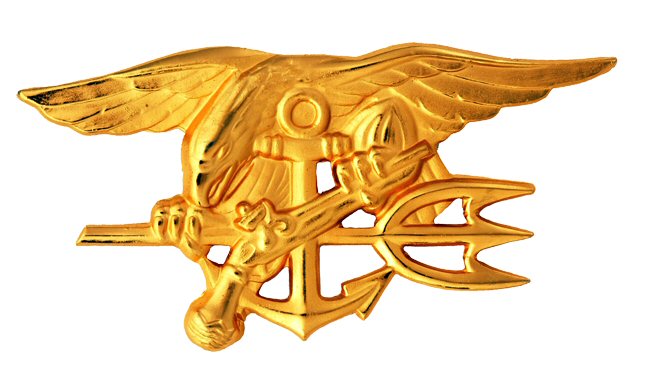
Secondly, Geronimo himself was probably the greatest hit-and-run military tactician North America has ever produced (along with Cochise and Jeb Stuart.)  For thirty years, off and on, he challenged the might of both the United States and Mexico, simultaneously.  Although always vastly outnumbered, he outmanoeuvred and outfought every military force sent against him, and he was never actually beaten in battle.  His daring raids tied up entire armies in fruitless chases that covered the entire southwest, from Texas to Arizona and the northern Mexican states of Sonora and Chihuahua, as well.  While I can’t speak for the guy personally I think Navy Seals dropping out of the sky in the middle of Pakistan, tapping the hammer on the Archduke of Evil, grabbing the body and getting out of there without a scratch, is just the kind of operation he would have loved.  By all reports, he was a feisty old fella up until the day he died and probably would have gone in with the Navy Seals, given half a chance.

Lastly, I don’t know anything about covert military operations, but I do read a lot.  Codenames are not chosen because they bear any relation to the objective — nor, by the way, are they chosen at random.  They are chosen because they are particularly distinct, usually have more than one syllable and avoid too many p’s, b’s and v’s.  All this is so they can’t be screwed up by excited young people in the heat of the moment.  “Geronimo” fulfills these criteria, and that’s it.  A few of the Navy boys may have made the big fist and yelled, “Hell, yeah!  Geronimo!” but considering they were about to be shot at I don’t think anybody should be too offended by that.  Frankly, I don’t think anybody should be offended, at all.

I’ve said all this to say we need to step back from the linguistic House of Horrors we are creating for ourselves.  The time and energy we spend being outraged verges on the ridiculous.  Any number of groups have gotten the shaft over the years, but witch hunting our language is not going to change that.  Certain words are always going to be offensive, I agree — especially when spoken in anger or hate.  But not all words carry that connotation in every circumstance.  We need to quit chasing hurt feelings and use that same energy to deal with real bigotry in our society.

Oops!  Forget it!   I just heard the military has changed the name to Operation Neptune Spear.  I’m off to find Tweedledum and Tweedledee.

*I’ve used “Apache” instead of “Chiricahua” because it is more familiar to everyone.