Western Aid isn’t Working in Africa

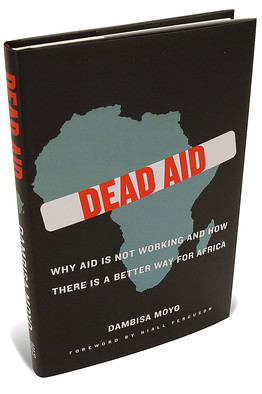
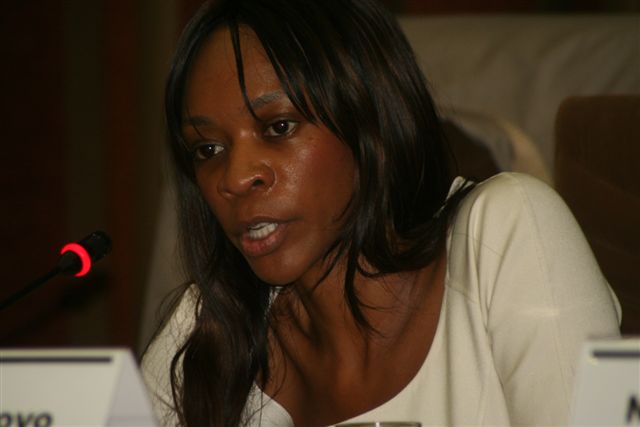
Last week, I threatened to sit in the summer sun and figure out why we keep screwing up in Africa.  Why despite our best efforts to help, are people still starving to death in places like Somalia?  Why haven’t fifty years of aid changed a thing?  And why don’t the next fifty years look any brighter?  I was prepared to do it, but it turns out I don’t have to.  There are smarter people than me in this world and one of them already figured it out.  Her name is Dambisa Moyo, and she’s an economist from Zambia.  A couple of years ago, she published a book called Dead Aid that explains it all.

Dead Aid is a short book, but it covers a lot of territory.  It’s full of information about the recent history of calamities in Africa and the West’s misadventures in trying to deal with them.  There are cute little details like, in general, the perpetual series of IMF (International Monetary Fund) and World Bank conferences, summits and symposiums that are supposed to be dealing Africa’s economic problems don’t actually include very many Africans.  Curious, huh?  These little tidbits are scattered all over the pages.  They paint a very different picture of Africa from the one we’re used to seeing.  However, Moyo’s theories don’t rely on anecdotal evidence.  Here’s where it gets vastly interesting.  The book’s premise is based on facts and figures available to any Bob, Bono or Robert B. Zoellick with an Internet connection.  And they’re simple and straightforward.
First of all, fifty years ago, somewhere between 10 and 20% of Africans lived in poverty; the kind you see on TV.  Today, well over 50% are crowded into that address, and the number is growing – almost geometrically.  In that same time period, over one trillion dollars worth of Western aid has been pumped into the continent.  These numbers are all approximate because it’s impossible to get exact figures.  However, they’re so massive that ten billion dollars or ten million people one way or the other are not going to change the percentages.  These figures are appalling.  What they mean is that, at the very least, the rate of return on Western aid money is one African life reduced to abject misery for every $33.33 spent.  Moyo looks at these base numbers and comes to the only conclusion possible: after half a century, Western aid to Africa is not working.  Then, she goes on to say that, since poverty has actually doubled in the last fifty years, developmental aid is never going to solve any problems in Africa because, in fact, aid itself is the problem.  And the only way to stop the downward spiral of over one billion people from Cairo to the Cape Town is to stop Western aid as soon as possible.  Wow!

When Dead Aid was first published, in 2009, it was branded heresy.  Moyo herself was accused of everything from shoddy research to “killing African babies.”  Yet, nobody disputes the numbers her theories are based on.  These figures are real.  Africa is not on the verge of a catastrophe; it’s right in the middle of one.  We passed catastrophe twenty years ago.  There are parts of Africa where soul killing poverty would be a relief, and it’s been that way for decades.
Yet, no matter how many times we change the tune, the song remains the same.  Live Aid was twenty-five years ago.  An entire generation of Africans were born, lived and mostly died since Bob Geldof and Michael Jackson turned the celebrity spotlights on.  Before that, it was UNESCO, CARE and an alphabet soup of other NGOs working flat out to feed, clothe and educate Africans.  Plus, since the 50s, African aid has been a standard component of most Western governments’ annual budgets.  The continent is awash with Western largesse.  Yet, it’s blatantly obvious that something isn’t working.  Dambisa Moyo may not have the right solution, but she has certainly identified the problem.  Western aid to Africa doesn’t work.

Wednesday: Why Western Aid is destroying Africa

History’s Mysteries

Mislaid Millions

In the spring of 1945, World War II was just about over.  American bombers by day and British bombers by night were pounding Germany cities into rubble.  General Patton’s tanks were sweeping east, racing for Berlin, where the Russians were already on the outskirts.  In short, Nazi Germany was being squeezed to death.  At the center of the inferno that was Berlin stood the Reichsbank, its buildings blown to ashes but its huge reserves of gold still intact – including the millions looted from Europe during the war.  The question was: what does one do with over a billion Reichsmarks in gold?  It was decided to hide it underground and the vast majority was shipped to the Kaiseroda mine, 200 miles south of Berlin.  Within weeks, General Patton’s army overran the area and seized the stolen assets of the collapsing Nazi regime, every cent of which has been accounted for.  However, not all the gold made it to the Kaisarode Mine.  There are records that show a smaller but still vast treasure was sent to the Bavarian Alps, to be hidden there.  It never got there.  Somewhere in the chaos, what modern speculators say could be as much as $50 million in gold, was “lost.”  What happened?  It’s nearly impossible to tell.  Immediately after the war, several people were caught with small amounts of the “lost” gold, but none of them knew anything about what had happened to the majority of the treasure.  There have been several theories put forward, but none of them answers the two basic questions: how does one hide $50 million in gold, and how does one then transport it undetected?  Occasionally, a stray bar or two will surface in odd places like Canada and Thailand, but, so far, their “ownership” has not been traced.  Ironically, the Nazis themselves put certain impurities into their gold ingots so that it could be easily identified.  There have been a few cases of golden objects with these exact impurities found, but, unless one is specifically looking for Nazi gold, these impurities go undetected.  So, unless someone confesses, the whereabouts of the “lost” Nazi gold will remain a mystery.

 Ice Age Map

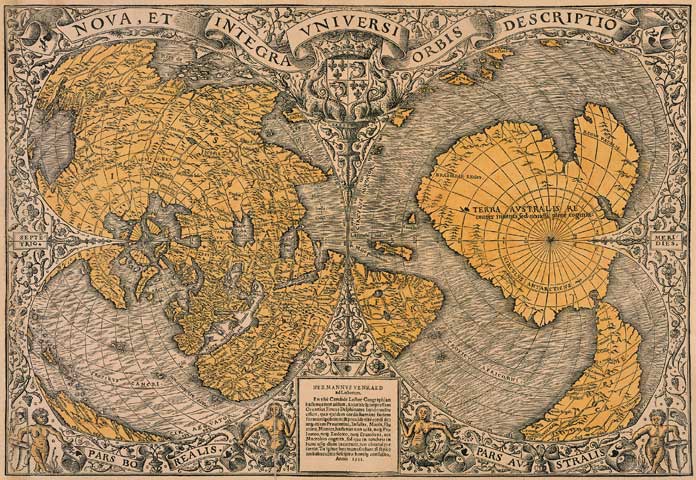
In 1929, a minor clerk working in the Turkish Archives in Constantinople found a map of the world.  The inscriptions on it said that it had been drawn for the Turkish Admiral Piri in 1513 and that it was based on several earlier maps, including one of the ones Columbus used on the first voyage to America, in 1492.  The map caused a mild sensation because, not only was it a valuable historical record but it also showed both the American and African coasts, in fairly good detail.  This caused historians to speculate that a great deal more was known about the world in the 1500s than previously thought.  They never suspected how much, however.

After the initial wave of enthusiasm the map was put away with other documents from the period and largely forgotten about, for the next 25 years or so.  Then, in 1956, Arlington Mallery, a retired naval officer, happened to take another look at what had come to be called “The Piri Re’is Map.”  He noticed something that other researchers had missed: drawn at the bottom of the map was the continent of Antarctica.

How could scholars have overlooked an entire continent?  Very easily.  First of all, Antarctica was not known to exist until about 1820, so there was no reason to look for it on a 16th century map, and, secondly, “The Piri Re’is Map” shows Antarctica as it was before it was covered with ice.  Somehow, even though Antarctica has been covered in ice for over 10,000 years, Turkish mapmakers, in 1513, knew what it looked like!  Unfortunately, that is an impossibility.  In 1929, historians were surprised at the amount of detail on “The Piri Re’is Map;” in 1956, they were devastated.

Although there are many theories, none of them offers anything more than speculation.  The best hope historians have of solving the problem is that the inscriptions say that the map is a copy of some earlier maps.  Could there have been ships sailing the Atlantic before the last Ice Age?  Is Antarctica actually Atlantis?  Nobody knows, yet somehow someone looked under the ice of Antarctica, 400 years before modern seismologists did it with radar in the 1950s.  But how they did it remains a mystery.

The Highland Thing

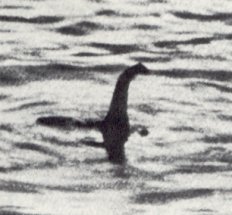
In the upper reaches of Scotland, the summer season comes alive every year when herds of tourists, armed with cameras, head for the Caledonian Canal System.  These tourists aren’t there to admire the engineering feat that constructed the canal, however: they’re there to see, and maybe even photograph, the Loch Ness Monster.  “Nessie,” as she is affectionately called by the locals, has been promoting tourism in the area for at least 1,000 years.  As far back as the 5th century, there is mention of a strange creature who lived in the murky water of Loch Ness.  The legend goes that Columba, the great Christian missionary, frightened the monster back into the water where she now makes her home.  Since then, thousands of people have claimed to have seen something in the waters of Loch Ness, and, although some could have seen logs, or very big fish, and some could have been mistaken, chances are good that not every single sighting is the result of an overactive imagination.

The problem is that there has never been either an authentic photograph or an official search.  In the past, the Loch (Scottish for “lake”) itself prohibited that.  It is extremely deep, deeper than the North Sea, and, although not very polluted, thick and dirty with particles of peat that wash into it.  Even a few feet below the surface, there’s near-zero visibility.  Recently, however, sophisticated sonar and computer imaging equipment has been able to take “Nessie hunters” into the water, and, although they have found some strange things, including ancient weapons, on the floor of the Loch, Nessie herself has proved elusive.  They have detected that some thing (or things) are in Loch Ness.  These things are very large and move very quickly – sometimes even outdistancing sonar – but what they are remains to be seen – literally.  So, is there a Loch Ness monster?  Nobody really knows, but there’s very little evidence that says there isn’t and a whole bunch that says there is.  Yet, even though something just might be swimming around the murky waters of Loch Ness, as of right now, and in the near future, what it is and how it got there will remain a mystery.

Summer: A Time to Wonder Why

Sometimes, reading the news is not the best way to start your day.  I’m not going to recap the body count of disasters pending on our planet, but there seem to be a couple of bucketsful.  So much for the dog days of summer!  Remember when summer was a time when nothing much happened?  When the whole country painted itself into a Norman Rockwell corner and spent the next couple of months lying around, waiting for the colours to dry?  Summer was a time when the beer was cold, young girls were beautiful, old men sat in the park and hot dogs were haute cuisine.  A person could grab a book (that didn’t plug in) and read it or just sit on the grass and contemplate the wisdom of the world.  I’m not lamenting the passing of a former age.  I understand that Rockwell made up those Saturday Evening Post covers, Dennis the Menace was a brat and Father didn’t always know best.  But, however false it might have been, there was a certain security in summer.  It was warm and sleepy.  And there was a vague idea that the bad guys were taking their kids to the beach or something and wouldn’t be plotting our destruction again until after Labour Day.  We had time and leisure to stop and be serious, ask ourselves those insolvable questions or just wonder why.  Nobody ever wonders why anymore.  We all seem to take what we’re given and tough it out.

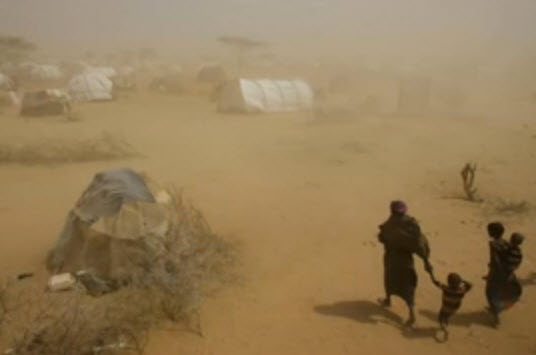
There’s a famine in the Horn of Africa.  People are starving to death where they stand.  At last count over 10 million folks in Somalia were on the endangered peoples list, and it’s only going to get worse.  It’s common knowledge that Somalia is a basket case country.  Nobody’s in charge, nobody knows what’s going on and nobody cares who does what to whom.  By all accounts, even the Mad Hatter’s is looking around and texting WTF.  But do you ever wonder why we can’t feed these people?  I don’t mean just today or for a while; I mean in the long term.  Why, with all the resources at our disposal we can’t face this human crisis and get things straightened out once and for all? I don’t mean to be flippant, but famines in Africa seem to be one ongoing event.  In my lifetime, millions have died, billions have been spent trying to save them, and nothing ever changes.  We can theorize and chatter all we want about neo-colonialism, addressing the root causes of poverty and blah, blah, blah.  But the reality is we’re doing something wrong.  Do you ever wonder why we keep doing it?

The bottom half of Europe is about to go under.  Portugal, Italy, Greece and Spain are financially fast tracking themselves into Debtor’s Prison.  They’ve borrowed and spent more money than they can possibly pay back in ten generations.  Panic is no longer optional.  Currently, the best financial minds in Europe are wearing out calculators, trying to figure a way out of this economic crisis– and they aren’t having much luck.  But they better hurry because if things get any worse, it could possibly destroy the Euro and even the EU itself.  Do you ever wonder why responsible governments get themselves into these financial problems?  It’s obvious to everybody else on this planet that you can’t spend more money than you make.  Why hasn’t it occurred to any politicians?  Aside from times of war or natural disaster, governments should never be in debt.  I’m not saying governments should make a profit but they might try managing their citizens’ money a little better.  National pride alone should kick in somewhere.  It always amazes me that people who manage their own money responsibly allow their governments to act like drunken sailors.  (No offence to the nautical among you.)  And this has been going on since Nebuchadnezzar II borrowed millions to build The Hanging Gardens for no apparent reason — other than prestige.  But do you ever wonder why?

Finally, Rupert Murdoch was summoned to answer a few questions in front of members of the British Parliament.  This is the final act in a scandal that’s probably been going on for over a decade.  Murdoch is certain he’s ashamed of his organization, but he’s just as certain he’s not responsible for it.  To be fair, he probably isn’t.  I don’t think he has the technical knowledge to hack a phone.  And I doubt very much that the old boy stood in a shadowy alley and handed an envelope full of money over to Constable X for the police records.  However, the last time I looked hacking private telephones and bribing policemen were crimes.  Somebody is responsible for them, and the money had to come from somewhere.  It’s pretty cut and dried.  Unfortunately, in this case, although everybody admits villainy was involved, nobody admits to being a villain.  Don’t you wonder why somebody from Parliament didn’t just ask Murdoch who did it?  It’s a simple question: “If you didn’t do it, who did?  Where did the orders come from, and who carried them out?”  There are no complications here.  The guy was sitting there for a couple of hours.  He had time to get a pie in the face.  Yet nobody bothered to ask him who actually committed the crimes his company is accused of.  This is unbelievable!  Nobody has that much influence.

Tomorrow, I’m going to take my electronic newspaper out on the deck.  I’m going to sit in the morning sun — with my coffee — and wonder why.  Why with all our technology, knowledge and problem-solving ability, we can’t figure out how to feed people, manage our finances or convict criminals.  I’m going remember lazy summers, long gone, and try to figure out if I have any answers.  Maybe the folks who run the world should give that a try, as well.