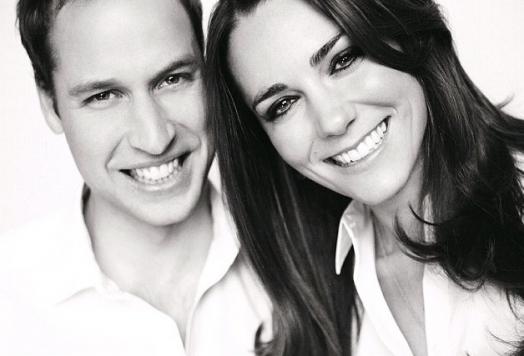
 Unless you were pronounced legally dead sometime last October, you’ve definitely heard about the royal wedding. And if you haven’t been lost in the jungles of Borneo since Tuesday, you saw — or will see — at less part of the ceremony. But if you’re like most people you probably don’t realize what just took place. Yes, Kate Middleton joined the next generation of British Royalty when she married the man who will be king — Billy Mountbatten-Windsor, but there’s more to it than that. The Mountbatten-Windsors have been running the show (in one form or another) in England for close to 1,000 years. Only Queen Margrethe II of Denmark has a longer pedigree in Europe. Over the last millennium, the House of Windsor (as it is styled now) has gone from being absolute off-with-his-head monarchs to reign-but-not-rule royalty and has seen everything (literally) in between. In the last 30 generations, there have been 49 kings and queens of England — give or take a couple of disputed ones and Oliver Cromwell (a religious head case.) In that time, their realm, the United Kingdom, has given the world, among other things, literature, banking, capitalism, industry, a common language and representative democracy. England’s political and cultural legacy is felt in every corner of the earth. And it all started when Bill’s distant ancestor William the Conqueror (affectionately called William the Bastard) crossed the English Channel in 1066, with an army, to claim what was illegitimately his.
The history of the world is intimately tied to the history of England, and the history of England is intimately tied to the royal family. No other family has done more to shape the course of human experience. Some have risen to great power and prominence, shining brilliantly over their time and place, but they have all faded into relative obscurity. The Julia family of Rome founded the Roman Empire and the Augustan Age. Genghis Khan and his descendents ruled vast empires in Asia and Eastern Europe. The Medicis and the Borgias held sway over Italy during the great blossoming of the European Renaissance. The Fuggers financed the Age of Discovery. The Rothschilds and the Barings shaped the beginning of the modern world and the Industrial Revolution. Yet none of them could hope to host an audience of perhaps a billion people in the 21st century. Even the Chrysanthemum Throne of Japan, the oldest continuous dynasty in the world, doesn’t command that kind of attention.
The Windsors took centre stage on Friday, April 29th because — for a thousand years — they’ve been able to adapt to the world around them. Many royal dynasties — the Bourbons, the Romanovs, the Qing (Manchus) — failed to renew themselves as history marched past them. As the divine right of kings gave way to the will of the people, they stood in the path of progress, blindly clinging to their former glory. They forgot their raison d’etre.
 Here’s the history lesson. From the beginning of time, royalty has been the centre of the nation. Tribal chiefs offered protection, direction, organization and the law (albeit arbitrary) to a collection of people with common interests. As tribes grew into states, the monarch give diverse peoples, physically separated, a shared purpose. The wealth of the nation — money and ideas — was collected in one place and redistributed for the common good. For example, roads were built and paid for by people who would never use them, with the understanding that the benefits would eventually be shared by all. The king embodied this altruistic ideal. Despite what modern history books will tell you, royal power has always been derived from the strength of the people, and strong monarchs returned that power in the form of a national ego. This symbiotic relationship helped to concentrate the power of the people and funnel it into great achievements in learning, art and science. It eased the creation of wealth, responded to disaster and established law. But most importantly, the monarch offered the key to prosperity: stability. Dynasties fail when monarchs no longer fulfill this obligation or abuse the trust given to them, and the people naturally reclaim their power. The genius of the Windsors is that, over time, by fair means or foul, they’ve recognized the winds of change and adapted to accommodate the wishes of the people they serve.
In the 21st century, it’s easy to dismiss royalty as a very expensive anachronism; a gaudy bauble left over from a former time. It’s also just as easy to resurrect the magic kingdoms we all knew as children and turn Kate into a fairy princess, complete with her Prince Charming. That’s been done before, with disastrous results — more than once.
The truth, however, is very different. Most people can’t name five British Prime Ministers since 1952, but there are very few people in this world who do not recognize The Queen. That’s not by accident; it’s the prestige she has maintained as the personification of Britain. This is the legacy that William and Kate will inherit — not the territorial kingdom handed down from William the Conqueror. That belongs to the people. Wil liam and Kate are now the next generation of royalty. Their celebrity is ceaseless and relentless. They are expected to be the living symbol of the very best of Britain, the Commonwealth and the English-speaking world. They must be all things to all people; they must give up their personal lives for the greater good. In short, they are no longer just people: they have become an institution of the nation, and perhaps even of the world.
The Queen