International Women’s Day 2011

Yesterday was International Women’s Day; in fact, it was the 100th anniversary of International Women’s Day.  This is a landmark occasion, so, at the risk of being condemned to patriarchal hell for all eternity, I’ve decided to write a few words.  To the arch-feminists in the crowd: yes, I understand I can’t speak with any authority about women.  To the folks caught in a 19th century time warp: no, I haven’t sold out my gender.  To everybody else: keep an open mind.  (One of the hazards of living in the 21st century is the disclaimers just keep getting longer and longer.)

Either way, International Women’s Day is an important event.  It’s a day to stop for a moment, take out the equality scorecard and see how everybody’s doing.  There are three schools of thought on women’s equality: 1) Women have come a long way in one hundred years, 2) No, we (they) haven’t and 3) Oh, God!  Do we have to do this again?  Personally, I roll with #1 — with a ton of asterisks, if, for no other reason than a couple of weeks ago, Hillary told Hosni to clean out his desk.  In 1911, she’d still be baking pies, defending husband Bill and staring down the gossip in the hope that he might be home for dinner.  See what I mean?  There’s something very plus ca change about the relationship between Venus and Mars in our society, but that’s my whole point.

Women may be doing all the things men do, but our world is full of subtle illustrations that women’s equality is quietly missing the mark.

For example, female role models have changed over the last hundred years.  Back in the 20th century, long before anybody thought about the equality of the sexes, the public faces of women’s achievement were people like Helen Keller, Amelia Earhart and Eleanor Roosevelt.  As the women’s movement gathered speed girls looked to Shirley Chisholm, Sally Ride and Sandra Day O’Connor as the kind of people they wanted to emulate.  These days, however, despite over half a century of better education and opportunity most girls know more about the Kardashian sisters and Snooki than they do about Indra K. Nooyi or Olympia Snowe.  And it’s important to note that Snooki is actually replacing the likes of Paris Hilton and Nicole Richie.  This has been going on for a while.  Don’t get me wrong: I’ve got nothing against either Snooki or Kim Kardashian.  They both strike me as very good businesswomen, who have taken limited resources and turned them into substantial bucks.  I just don’t think the girls I knew, back in the day, who worked so hard to be taken seriously by their male counterparts, envisioned sexual marketing as the conduit to equality for their granddaughters.  It’s really all about image versus substance.

The female image has also changed quite a bit since 1911.  In film, for instance, women spent most of the last century as emotionally confused damsels in distress.  Today, they’re far more independent.  They get to choose their partners.  They solve problems.  They have their own storyline.  In action movies, sometimes they get to saddle up with the men and go out and do battle with the monster or the villain.  This all looks very much like an equal opportunity to get eaten by the swamp beast, but take another look.  The boys are wearing some heavy-duty armour but she’s dressed in high heels and a thong.  In other words, it’s “We’re all in this together honey, but you don’t get as many clothes.”  It’s pretty much the same in all movies.  There’s always an extra button undone.  I have no problem with filmmakers portraying female sexuality, but times have changed and movies should also.  When Halle Berry comes walking out of the surf in Die Another Day (2002) she looks remarkably like Ursula Andress walking out of the surf in Dr. No (1962.)  I understand the director did this on purpose.  My question is why?   (And I’m not even going to talk about Catwoman, which is a disgrace.)  I think most people find it hard to believe that any assistant district attorney, or vice-president, or special government agent spends that much time falling out of her clothes.  Yet this is the image of women we’ve all come to expect, if not accept.

Of course, in the end, it’s not only about image.  We just happen to live in a visual age.  It’s how we judge ourselves.  And it’s how we judge women.  At this point in time, celebrities — male and female — hold pride of place in our society.  Scientists, doctors and economists do not.  Sex sells.  These are all facts; we might not like them, but they do exist.  Therefore, it’s only natural that young girls are looking at wild and crazy Kim Kardashian and steering away from stern and steady Condoleezza Rice.  However, history has a way of sorting things out.  Let me tell you a story.  One hundred years ago, in 1911, Marie Curie won the Nobel Prize for Chemistry.  At the same time, she was being ripped apart in the French newspapers for having a love affair with Paul Langevin, a married student who was five years younger that she was.  This went on for months.  Today, history remembers Marie Curie but has all but forgotten the love affair.  Chances are good that, on International Women’s Day 2061, people will remember Irene Rosenfeld, Angela Merkel and Sonia Sotomayor; Snooki, Kim and Khloe will all have been swept away.

Looking for a Few Good (old flabby) Men

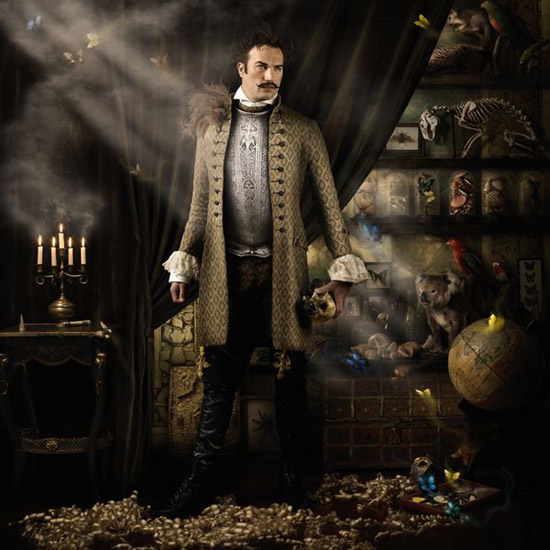
Somewhere around the time our civilization crawled out of the Dark Ages, it was decided that the world should be run by Old Flabby Men.  This was a major step up from Vicious Barbarian Bastards who had been the norm since the fall of the Roman Empire, 500 years before.  The chief advantage of Old Flabby Men (OFMs) was they realized the world had a future, so it wasn’t a good idea to go around wrecking things all the time.  They’d been around long enough to understand that, with a little thought and planning, the world could become a better place.  This cut down on the rape and pillage by about half and confined wholesale slaughter to times of war.  It wasn’t an ideal system, but it stopped gangs of marauding men from stealing everybody’s  turnips every Tuesday, and ordinary people had a chance to do a few things other than starve to death.  Roads and schools were built, people bought homes and raised children (who actually survived infancy) and civilization advanced.

So, for the last 1,000 years, OFMs have made the rules, and, in general everybody else has done as they were told.  For example, when OFMs decided Canada needed a railroad, people got busy, imported boatloads of labour from Ireland and China, and built one.  Things like the mountains, the rivers, and the Precambrian Shield didn’t really hold us up for too long because everybody agreed that a railroad was a good thing.  Actually, it was quite an accomplishment.  We still call it The Canadian Dream.  To their credit, OFMs have done a number of these sorts of things around the world over the centuries — to everybody’s benefit. 

The problem with OFMs, however, is they form an exclusive club.  It’s very hard to get in, and most people aren’t allowed.  In order to join, you have to show up early (when you’re still lean and mean) and you have to toil away for years and years at an idiot job until you, too, become old and flabby.   At this point, if you’re lucky, you get to call the shots.  If not – oh, well!  Of course, any club has the disagreeable habit of forgetting why they’re there in the first place.  They start to worry too much about maintaining their membership and don’t remember their overall purpose.  The OFM club is no exception.  Every so often, they need to reinvent themselves.  Again, this isn’t an ideal system, but it works.  Just as an aside, in the 21st century women have joined the ranks of OFMs, but they can’t be called either old or flabby because that’s not very nice.

Anyway, over the centuries, the exclusive nature of the OFM club has always set a few people’s teeth on edge.  They tend to talk a lot of bull about social injustice, or redistributing wealth, or human rights.  They give off the quaint idea that we don’t really need OFMs and offer any number of alternatives.  This all sounds good, but, in reality, they’re offering unworkable solutions to a non-problem, and they just want to have a crack at making the rules themselves.   Essentially they want to join the club – usually as president.  Every once in a while, this brave talk boils over, the unruly mob gets involved and somebody has a revolution.  The OFMs are dragged from their offices, palaces or counting houses and given the chop.  What follows is a brief return to Vicious Barbarian Bastards.  Ordinary people are, once again, at the mercy of any number of armed thugs, legal or otherwise, who metaphorically start stealing everybody’s turnips.  Civilization falls into disrepair; this is inevitable.  For example, the French Revolution had its Reign of Terror, the Chinese Revolution, its Hundred Flowers Movement; and nobody knows how many people Stalin killed in just one of his many Five Year Plans.  Eventually, saner heads prevail, and the revolutionaries start looking like Old Flabby Men.  They move into the offices, palaces and counting houses recently vacated by the last bunch, and things gradually get back to normal.  This scenario was illustrated by George Orwell, in a cool book called Animal Farm.  And we are about to see it ourselves — up close and personal — in places like Tunis, Cairo and Tripoli.  With any luck at all, the new crop of OFMs will keep a few more of their promises than the last crowd did.  They will recognize that it’s a whole lot better for all of us if they regenerate themselves through the ballot box, not the bayonet.  This saves civilization from stumbling through nasty periods of Vicious Barbarian Bastards — where nothing gets done and we’re all in danger of getting dragged down into anarchy and chaos.

As we journey further and further away from our barbaric past, it becomes increasing apparent that OFMs give us the stability we need to advance our civilization beyond thumping each other on the head at any provocation.  They offer us a grander vision, something beyond the day after tomorrow.  They also take care of the little crap like street lights so we can get on with art and science and medicine.  But mostly, they provide us with the rule of law — so we don’t have to spend our days guarding our turnips against every marauder who wants to take them away from us.  This is extremely important because it gives us the time and leisure to engage in reasonable discussions about the role of Old Flabby Men in our society.

Legal Aliens: We are not alone

Yesterday, the British Ministry of Defence declassified 35 documents and released them to the public.  They’re all about UFOs.  There are over 8000 pages of absolutely brilliant stuff: pictures and drawings, eye-witness reports and secret investigations.  There are testimonials and detailed descriptions of sightings by policemen, air traffic controllers and members of the military.  There’s even stuff about a debate in the House of Lords.  It’s really cool and you can download it for free HERE at the British National Archives.  This stuff covers everything except one teeny-tiny, itty-bitty point.  There is not one scrap of tangible evidence that extraterrestrials have ever visited Mother Earth – not even on a flyby.

Now, before every nerd west of Cape Cod pulls up his fightin’ pants, let me assure you that I believe there is other intelligent life in the universe.  I went to school like everybody else; I understand that there are millions of galaxies, billions of stars and trillions of planets.   I know that the universe is billions of years old.  Simple logic dictates that when you’re dealing with numbers this big, probability is no longer a percentage; it’s a certainty.  Somewhere, sometime, some thing crawled out from under that rock and became self-aware.  It’s a fact.  Anybody who still believes we are alone in the universe obviously flunked Math 12 and didn’t do very well in Science, either.  However, having said that, I don’t believe flying saucers are zipping around our stratosphere, playing peekaboo with American F-18s.  I don’t believe spacemen showed up one day and built Stonehenge and the Pyramids.  And I sure as hell don’t believe aliens crash-landed at Roswell, New Mexico and the government is keeping them on ice in the basement of the White House.  None of this stuff is true.  Here’s why.

Every single theory about alien visitations runs into the same three insurmountable problems.  The first one is the total and complete lack of any evidence.  Just FYI, grainy photographs and jerky videos do not constitute evidence.  I have a 13-year-old niece who Photoshopped Santa Claus with a fighter jet escort; shiny disks in the sky wouldn’t be a problem.  And all those eye-witness accounts are, at best, circumstantial.  I’m sure that the people who report these things do see something (in most cases, I don’t think they’re actually lying) but there’s a huge leap of faith between shapes that move in the distance and alien invaders.  That’s why they call them UFOs: the big word to remember is “unidentified.”  It doesn’t mean “unearthly.”  People see things, but what they see is a whole different matter.  After all, any detective will tell you eye-witness accounts are the least reliable evidence at a crime scene.  Without any physical evidence to back them up, photos, videos and eye-witness accounts are suspect, at best.

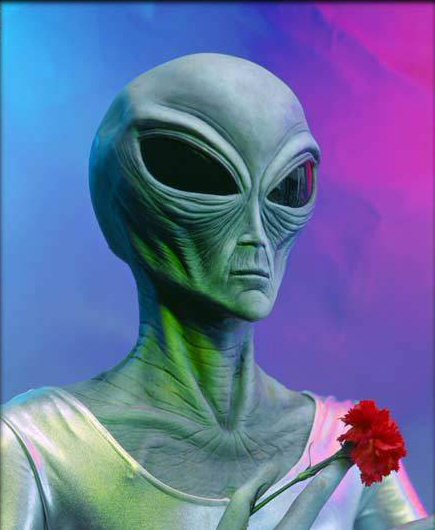
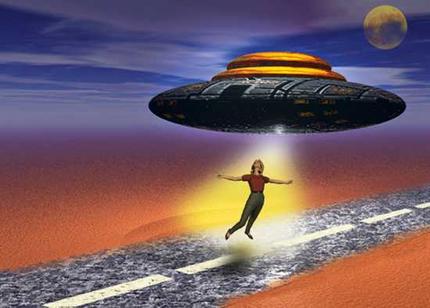
The other thing that bothers me about all these eye-witness accounts is that 90% of the spaceships are flying saucers, and 99% of the aliens look like ET.  Billions and billions of planets, but Toyota has more different kinds of vehicles than the aliens do?  That doesn’t make any sense.  As far as that goes, there’s no reason aliens should have two arms, two legs and a head, either.  Again, billions and billions of planets: you would think that one or two of them might have had a different evolutionary track.  So why, then, do all reported alien sightings feature creatures and technology easily recognized by humans?  Finally, to all those people who claim they’ve been abducted by aliens, I want to know one thing.  Why did they give you back?  Why aren’t you in a zoo somewhere — or stuffed — in some Martian Museum of Natural History?

The second insurmountable problem with alien visitations is, quite simply, why.  Why are aliens coming here?  What’s the attraction?  We are a small planet, revolving around a tiny star in a minor galaxy, tucked away in the corner of the universe.  We’re so far off the Intergalactic Interstate we probably don’t show up on all that many maps.  Our sun is barely visible from Pluto, for god sake.  Anybody else who’s looking wouldn’t even see us.   So why come here?  Are they trying to learn from our exemplary environmental record?  Or is it our successes in international relations?  Or maybe they just want to download some apps?  The truth is we don’t have that much to offer sophisticated beings capable of intergalactic travel.  Perhaps they’re just going Jane Goodall on our ass and studying us, like chimpanzees.  If they are, you’d think they’d want to get a little closer look than stealing a fat guy from Pig’s Nose, Arkansas and probing him.  The only reason I can see that maybe — just maybe — those bright lights in the sky are spaceships is if they’re stolen, and a bunch of alien crack addicts are joyriding in the back of beyond.  Aside from that, there’s no reason for them to come here and certainly no reason for them to come back several thousand times.

This brings us to the third and final insurmountable problem.  Why do aliens always show up in weird places?  Let’s assume, for a second, that there is something here that aliens might be interested in.  Why don’t they just go there and either get it or study it?  There’s no reason any being (from whatever planet) would take the time and trouble to come all the way here and then dick around, flying over Heathley Common in England, making crop circles.  You’d think they’d want to talk to somebody from MIT — or visit the Louvre — or have lunch with Mandela or Obama (or even Ignatieff — he’s a smart guy.)   But no — they go sneaking around in the twilight, over some schoolyard in Nebraska.  Even if aliens can’t figure out who’s running the show on this planet, they must know who the dominant species is and where the majority of us congregate.  Yet you never have alien sightings on 5th Avenue, New York — or Trafalgar Square — or the Kremlin.  It stretches the elastic of disbelief to the breaking point to have several thousand alien sightings but none of them in a populated area like the Tokyo-Yokohama corridor, or Cairo.  This just doesn’t make sense.  After all, if your ancestors built the Pyramids, why not go back there?

What does make sense, however, is despite the intervening 500 years since Copernicus, humans still think that we’re the centre of the universe and that beings from far and wide can’t wait to eyeball us (if they even have eyeballs.)  We’re not folks!  Get over yourselves.  Aliens have way better things to do with their time than flying around the suburbs, waiting for Meghan and Eddie to read the instructions on their Handycam.

The documents from the Ministry of Defence are fun, though, and a great read.   And, quite honestly, I have no logical explanation for half the stuff that’s in there.