When I was a kid, my sisters were wizards. They had magic words that could turn a pillow-high, cozy warm brass bed into the March family living room. They had incantations that produced beautiful horses, stinking French sewers and one sad little dog named Greyfriars Bobby. They could conjure people and places at will, and on one occasion, they harnessed the wind from a stay-home-from-school bitter Saskatchewan storm to propel our ships out of danger. They cast spells that bewitched me so completely that, long before I was allowed to cross the street by myself, I could travel through the puny barriers of time and space with ease. And it was there that my sisters abracadabra-ed their friends for me — Black Beauty, Travis and his dog Yeller, Hans Brinker and the queen of long, lazy summer afternoons, Nancy Drew.
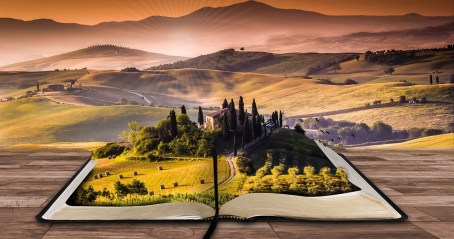
The source of my sisters’ sorcery was the Mayfair Public Library. It was a cavernous basement with high little citadel windows and dim, humming electric light. It was a place of holy quiet, brown with wisdom and heavy with wooden shelves. It was guarded by ferocious matrons in sensible shoes. They kept their eyes on little boys who might be loud — or sticky — but, by then, I knew how powerful and precious books were, so I sat quietly and kept my eye on them. I remember thinking, “I’m a little boy now, but someday… someday, I will decipher your runes and, like Lochinvar,* I’ll come and I’ll take what I want and know your magic for myself.” I knew I would do this. I knew it because my sisters were never jealous witches, concealing their art. Tired of me pestering them to read to me, they were already showing me that the tiny symbols in the books made sounds and the sounds made words — and the words, taken together, made power.
Today I am a wizard. I have spent a lifetime studying the alchemy of words — reading and writing them. I still smile when they are used well in delightful new combinations and still cry when they are abused. I will never tire of their wonder. I do this because once upon a time, in a time that doesn’t exist anymore, five magical sisters loved their little brother so much they taught him how to read.
*My sisters knew Lochinvar personally and, two years in a row, two different sisters memorized his adventures — so I did, as well. Even now, I still have a stanza or two.
 Yesterday, a dear friend of mine, Rosalind (“Ros”) Myers was killed. She was blown to pieces by a bomb, which, I believe, was planted by some renegade members of the CIA. Ros was a dedicated professional, but she was also witty, charming and could be thoughtful and entertaining. Although many of her friends had lost track of Ros in recent years, she will be sorely missed by her colleagues and her father, Jocylen, who is currently serving a forever sentence in a British prison. Ros died as she lives — in television reruns of Spooks on Netflix.
 The most neglected area of psychiatry, psychology and sociology is the influence of fictional characters on our lives and personalities. Unlike family, teachers and friends who, like it or not, invariably have their own agenda, fictional characters are totally altruistic. They are dedicated to us with the love of a thousand puppies. Their very lives depend on us and they return the favour by showing us people, places and things we would never see otherwise. They let us indulge ourselves in the kaleidoscope of life — good, bad, beautiful and ugly — without ever having to get our hands dirty. Over time, these fictional people become our fictional friends. They help shape and come to share our hopes, our dreams, our joy and our despair, while offering us insight into just how we’re supposed to cope with this carnival of emotions. But long before that, before Tom and Huck and Harry Potter, we are influenced by the mythological creatures of our childhood — the Easter Bunny, the Tooth Fairy — and Santa Claus, the guy who taught me the value of sisters and that the world just isn’t fair.
 WD Fyfe