Paris: The Internet

Last week, I discovered a place where the Internet wasn’t alive.  It still existed, though.  After all, I was just outside Paris, not roaming the orangutan valleys of Borneo.  However, when I looked around, I found the www dot world didn’t breathe, pulse or walk on two legs.  It was just a machine.  It was convenient and smart and autocorrected my spelling, but like the ancient rotisserie toaster in my breakfast-included hotel, it didn’t change my life.  It just did as it was told.   That’s not strictly true.  I never figured out WiFi, for example, but that wasn’t the machine’s fault.  I don’t speak technologese in any language.  Regardless, it surprised me that within church bell distance of one of the most connected capitals on the planet, young people had unmasked the omnipotent Internet for what it is – a tool.

I love the internet.  It’s the greatest thing to happen to humanity since Gutenberg decided that the big money was in Bibles.  And like Gutenberg, the Internet has gone from changing history to shaping it — in just a couple of decades.  Of course, most of the big-gun commentators point out that this is because we’re all connected blah, blah, blah.  While that’s true, it’s not the only reason.  In fact, a lot of this new-found connectivity has simply trivialized much of our communication.  Texting, by its very nature, is not serious.  Don’t believe me?  Try double-thumbing your way through a complicated conversation sometime.  It can’t be done!  Personally, I prefer Graham Bell’s 19th century technology when I want to argue a point, if for no other reason than there are no passive aggressive LOLs or LMAOs to get in my way.  Of course, as in poker, if you’re going to be serious, you need to see the other person’s eyes.

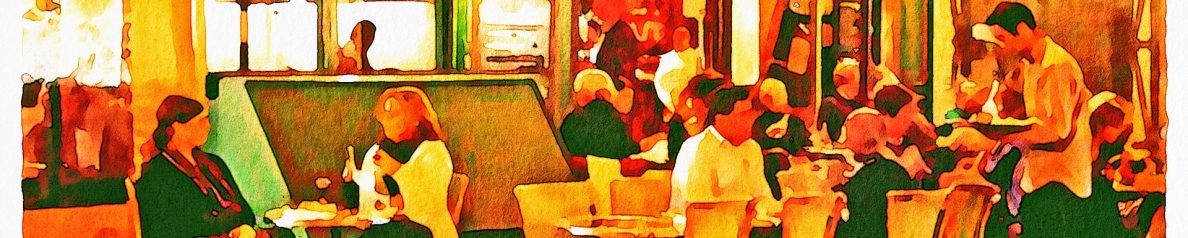
That’s what the French kids were doing in a couple of cafes just outside Paris.  The national election was over and they were talking politics the way their grandparents did (just short of the other fellow’s nose) but with an extra kick.  Every once in a while an animated face would drop back and, with a few finger strokes, reach into cyberspace and haul out a fact.  The Smart Phones then became part of the argument presented like evidence in a court of law.  “Hollande said this.  Look!  It’s right here!”

This is what the Internet really is: a democracy of information.  It gives each of us the same opportunity to be just as smart as the rest of us — or the best of us.  We are no longer ignorant savages.  We have the world’s mightiest tool at our disposal: knowledge.  It doesn’t matter whether we want to know how to tie a Windsor knot or build a flying buttress, the Internet can show us how.  Those French students were going through encyclopedias of information at warp speed so they could wade back into the discussion like political fencers armed with sharpened epees.  They were using the Internet for its primary purpose: a vast depository of the world’s knowledge – everything from Herodotus to Sam Huntington — delivered to the palms of their hands by a digital Prometheus.

But remember: Prometheus was punished for giving gifts to humans and fire unleashed can be destructive.  For the most part, the Internet has been hijacked by social media — Facebook friends “Liking” everything under the sun and telling each other what they had for breakfast.  Serious debate has been overshadowed by Angry Birds™ (a great game, I might add.)  However, for a couple of days, I saw what the Internet was supposed to be: a really, really smart intuitive machine.  Like a paintbrush or a chisel, capable of greatness in the right hand and practically useless without a hand to guide it.
Shakespeare Without Tears

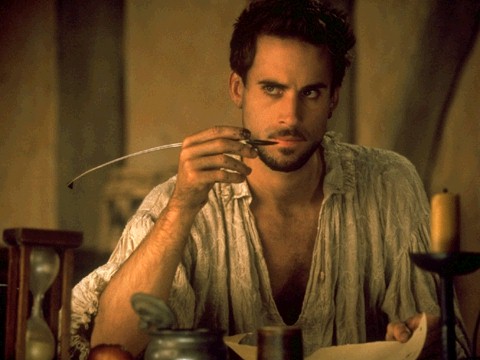
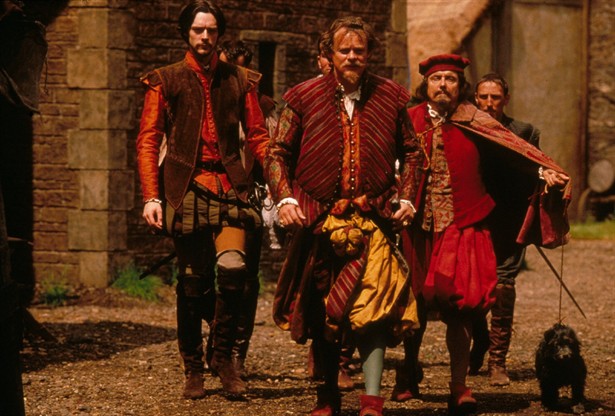
Apparently, Shakespeare’s birthday was a couple of days ago (nobody really knows for sure when it is) and I missed it.  That’s okay really; I don’t care when Shakespeare was born.  Nor for that matter do I care to wander into the great discussion about whether he wrote his own plays or not.  As far as I’m concerned, they could have been written by Fetchin’ Gretchen, the German barmaid at the Golden Hind Hotel.  Shakespeare’s plays exist: if a local boy from Stratford didn’t write them, so what?  Somebody did.

Actually, the only reason there’s any debate at all about who quill penned what for whom is scholars can’t figure out what else to do with Old Bill, now can they?  It’s not like there’s a nerdy little war going on in the Ivory Towers about whether Shakespeare is crap or not.  Rhetorically speaking what do Shakespearean scholars do all day — sit around telling each other how great he was?  That’s the point: Shakespeare is the greatest writer in the English language and nobody disagrees except sophomores trying to be difficult and people who’ve never seen the plays.  Everybody knows Shakespeare is the best, but I would venture to guess that 8 people out of 10 haven’t got a clue what he’s talking about.

Shakespeare appreciation runs into a bunch of trouble in the 21st century.  First of all, unless your education was terminally New Age, you got stuck with the guy sometime in your high school career.  Since modern education means kicking the delight out of everybody but the janitor, chances are good Macbeth was ruined long before Macduff got hold of him in Act V.  Besides, I’d bet even money that the person running the show in Lit. 12 probably didn’t know much more about the Bard than you did.  Cliff Notes work both ways.

The other problem is Shakespeare wrote his plays in Shakespearean English, and we don’t speak that language anymore.  A lot of the clever stuff and the beauty of it is simply lost in translation.  For example, “But, soft! what light through yonder window breaks?/ It is the east, and Juliet is the sun.” doesn’t mean much if you don’t know anything about courtly love.  And that’s the major problem: Shakespeare is talking about things people in the 21st century know nothing about – love and power.

These days, we have reduced love to its lowest common denominator: the relationship.  This is a cerebral little device that cuts our emotional well-being off at the knees.  Having a relationship is akin to owning a small kitchen appliance like a juicer.  You buy the thing, make juice at every opportunity for six weeks or so, but slowly by slowly, it ends up largely unused, sitting in the kitchen, getting in the way.  Occasionally, if guests come over, you might crank it up again, but eventually it gets stored somewhere out of mind until it’s time for the yard sale.  Shakespeare didn’t think that way about love, neither did his audience.  They knew love for what it is and wanted to hear the words that spoke its name.  They didn’t talk about “having feelings” for someone or “taking the relationship to another level.”  (What is this crap?  Angry Birds™ with benefits?)  No!  The Elizabethans were engulfed by love; that’s where “swept off your feet” comes from.  They felt it: they didn’t think it.  They looked forward to it and mourned its passing.  To them, it was what life was made of.  Even though we proclaim our sensitivity at the drop of a puppy, we just can’t get there from here; we don’t know anything about it.

Nor, for that matter, do we know anything about power.  In a world that no longer recognizes obscenities, the mere mention of power can still cause an embarrassed hush.  Power is to us what sex was to the Victorians: a slightly icky necessity of life that nobody should ever speak of.  It’s considered ill-bred to publically pursue power, so we dress it up in altruism and team-building.  Demonstrations of power are the last faux pas in our society, and people who have power are somewhat suspect.   They are always the villains in our stories.  They weren’t in Shakespeare’s time.  His four great tragedies are all about power.  They show the obligation powerful people have to wield it wisely and the consequences if they do not.  It’s not power itself that corrupts Hamlet, Macbeth, Lear and Othello; their demise comes from a deep flaw in their own character.  Their tragedy is magnified by the height from which they fall, not caused by it.  At the end of each play, they die, but the institutions of power are cleansed with their blood.  It is the province of the powerful who remain to set things right again.  In the Elizabethan Age, power was, for the most part, a benevolent force sometimes corrupted by the people who manipulate it — not the other way around, as we see it today.

It’s a shame that a lot of the contemporary “feelings” we have for Shakespeare are just talk.  Unfortunately, it’s too difficult for most people to enjoy Shakespeare these days.  However, it`s not impossible.  But start slowly; Shakespeare’s plays are a big chunk to take in one chew.  You don’t have to sit through an entire play to begin with.  Just go to YouTube and check out Marlon Brando delivering Mark Antony`s “Friends, Romans, countrymen…” speech, or Kenneth Branagh (as Henry V) calling his troops “a band of brothers,” or anything Shakespearean Lawrence Olivier ever opened his mouth for.  Me?  I like to curl up with a bag of Doritos™ and watch The Lion King which is Hamlet without the blood bath.

The Stanley Cup Playoffs: The Rites of Spring

Although it’s going unnoticed by most of the world, today is the start of the toughest sporting event on the planet: the annual Stanley Cup Playoffs.  Yes, I know: World Cup is the Big Kahuna; more people watch baseball; rugby is strength and stamina; and Aussie Rules Football is nothing short of legalized assault and battery.  But, big wow!   Kilo for kilo, the National Hockey League’s Stanley Cup is the hardest trophy on Earth to play for and the most difficult to win.  Tonight, sixteen ice hockey teams will start a two month marathon which is the most grueling tournament in professional sports.  Lord Stanley’s Cup is reserved for the mentally strong and the physically resilient; no others need apply.  If you can’t cut it, go home: this is a game for the brave.

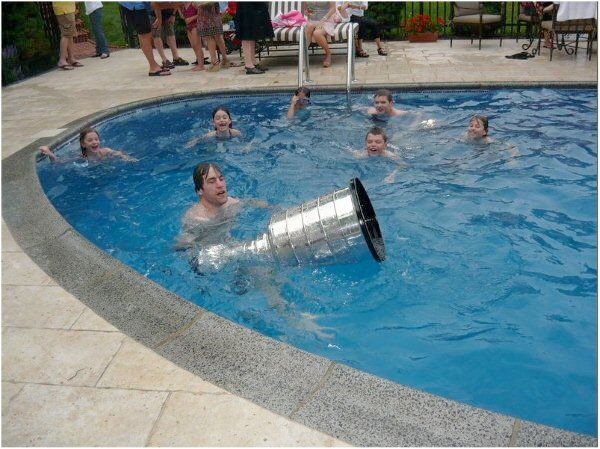
The rules of the Stanley Cup Playoffs are simple: win 16 games – four out of seven against each opponent.  If you do that, the Cup is yours and, unlike most professional trophies, you can do what you want with it.  Most players take it back to their hometowns to show the parents and their old friends what they’ve been doing for the last couple of years.  That’s the thing about the Stanley Cup: it has an old time feel about it.  It’s small town puppies and lemonade, not big city glitz.  The teams might be located in New York and Los Angeles, Toronto and Montreal, but the players come from Pincourt, Grimsby, Livonia and Ornskoldsvik.  They are the boys of winter who learned the game after school.  They played on artificially frozen ponds, just like their grandfathers did on the real thing.  They understand the heritage of the game and the structure.  They know what it takes to win: straight-edged mental toughness that destroys your opponents’ will before he does that to you.  So every second night (or thereabouts) for the next two months, young men will lace up their skates and fly at each other in a series of full-contact ballets, choreographed at 35 MPH.

Directing a 3 inch rubber disc with a curved stick on glare ice takes the hands of Picasso.  Delivering and absorbing punishing body checks in full battle dress takes the physique of Baryshnikov.  Constantly remembering your place on the ice — at top speed — takes the concentration of Boris Spassky and Bobby Fischer combined.  But to do all these things, night after night, travelling back and forth across the continent can only be learned by the self-discipline of desire.  These boys want the Stanley Cup more than anything else in the world.  As children, they dreamed about it and practiced and skated alone with the puck until the stick they carried became an extension of their arm.  As adolescents, they lost teeth, forgot birthdays and missed the girlfriends they grew up with.  Now, as men, they are willing to tape up their injuries, stitch up the gashes, patch over the bruises and ignore the pain and nagging fatigue to take just one skated circle with the Cup in their hands.  Superstition has it that no hockey player may even touch the Cup until he wins it.

To the hockey tribes of North America, the game is more than bone-jarring collisions on YouTube, bare knuckle brawls and concussions.  It is chivalry on ice, played by contemporary knights, with no quarter asked or given.  It is brutal finesse; the meeting of Hermes the Swift and Thor, the Thunder God.  But the Stanley Cup Playoffs are not just a war of attrition, nor is the Stanley Cup a trophy given only to the strong.  In the end, when one team steps forward to touch the Cup for the first time, it will be their mental tenacity that prevails; the strength of mind that has always carried the warrior spirit forward.  It is that indomitable voice that says to each player night after arduous night — “Once more into the breach  … once more.”

I’ve never wanted anything that badly.