Only History Will Judge the Egyptian Revolution

egypt3Even though they never taught us this in school, one of the problems with history is it’s messy.  Timelines tend to overlap, the good guys and the bad guys change sides with surprising regularity, and pivotal events are far more complicated than the “name five causes of” exam questions we grew up with.  As I recall, Mr. Barnaby (not his real name) from Social Studies 12, droned on about The Industrial Revolution as if it started one Tuesday morning after James Watt invented the steam engine.  It abruptly disappeared when an unruly mob of starving peasants got fed up with Marie Antoinette’s “let them eat cake” attitude, tore down the Bastille and started the French Revolution.  That somehow morphed into a Reign of Terror, which ended only when Napoleon showed up and started a bunch of wars.  Oddly enough, all these events took place before Christmas and Barnaby’s musings on the American Revolution — which had nothing to do with the Industrial Revolution (because we studied that last term.)  I said all that to say that, when we’re looking at recent events in Egypt, we must use as our template real history, not the made-up variety we were taught in high school.

Real history shows us that long before Imhotep the Builder decided his Pharaoh needed a stairway to heaven, Egypt was ruled by dictators.  Stick a pin anywhere in the timeline and you’ll find (in various degrees of ruthlessness) Pharaohs, some foreign pharaoh wannabes, an assortment of kings and khedives, the British, and a string of military strongmen.  That’s five or six thousand years without a lick of liberal democracy.  That all changed, however, a little over two years ago, when, during the still misunderstood Arab Spring, the people of Egypt told their latest tyrant, Hosni Mubarak, to clean out his desk.  In was a great victory for democracy, and Mubarak wasn’t even in handcuffs before the interim government set up free elections.  Unfortunately, after a thousand generations of getting stepped on by jackboots, few, if any, Egyptians, outside a cadre of academics, had the faintest idea what that meant.  More importantly, since the first thing they teach you in ruthless dictator school is how to silence the opposition, once Mubarak was gone, the political vacuum he left behind looked like a Black Hole.  In fact, the only organization on the ground between Alexandria and Aswan was The Moslem Brotherhood.  These are the boys (girls aren’t allowed) who think the Iranians are doing a bang up job in the Islamic Republic business.  In the ensuing election, The Moslem Brotherhood slid easily into power and took the vote count as a mandate for their point of view.  And that’s the problem.

In real life — unlike in Mr. Barnaby’s Socials 12 class — not all revolutions are created equal, nor do they occupy an easilyegypt4 definable spot in time.

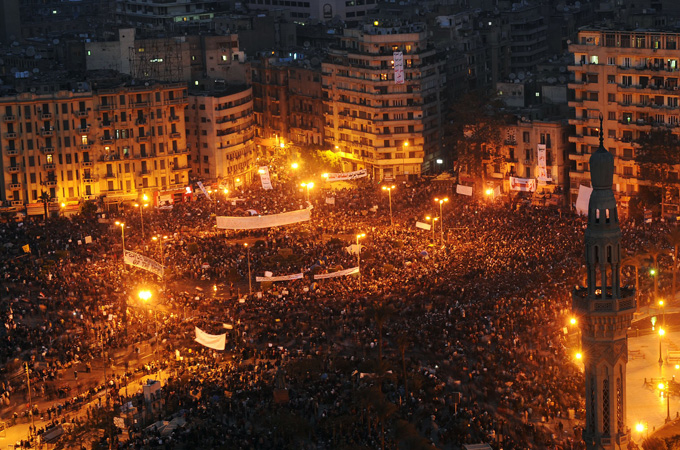
Egypt’s revolution was never about republican ideals, Islamic or otherwise.  It was about economic stability.  Those people who came to Tahrir Square in 2011 may have chanted democratic slogans, but their priorities were closer to home — jobs and affordable prices.  Two years later, that hasn’t changed.  In fact, if anything, the need has gotten worse.  Since the revolution, the tourist industry has collapsed – and, with it, most of the rest of the economy.  Food and fuel prices are in the stratosphere.  (Remember, Egypt does not have vast oil reserves like its neighbours.)  Unemployment is officially listed at around 14%; unofficially, it’s much, much higher.  Young people are hearing long-winded discussions about democratic ideals as their economic future dissolves into the Nile.  Ballot boxes are no damn good without bread on the table.  So they went back into the streets – in their millions — to try and get it right this time.

Unfortunately, the results were predictable: two accelerating political bodies, playing chicken, with Egypt in the middle.  The only national institution with any credibility left, the military, stepped up and told the politicos to fix it or face the consequences.  Defiant in the face of overwhelming opposition, Mohamed Morsi and the Moslem Brotherhood refused — and the rest is history.  Not that neatly-packaged history you learned in high school but real blood-under-the-fingernails history that is happening all around us.

They may occupy only a single chapter in Mr. Barnaby’s textbook, but the French Revolution took 80 years — and two Napoleons — to resolve itself.  The same was true in the United States where the great-grandchildren of Washington, Jefferson and Adams had to fight a Civil War to finally settle their political differences over the cornerstone of the American Revolution, the Constitution.  And the Russians never did get their revolution right, stumbling along for 75 years until the whole thing just collapsed under its own weight in 1991.

Tearing a society apart is easy; putting it back together again is hard work.  Two years is no big deal to the infinite march of history.  So, despite what the pundits might tell you, the Egypt revolution isn’t over.  It’s only just begun.
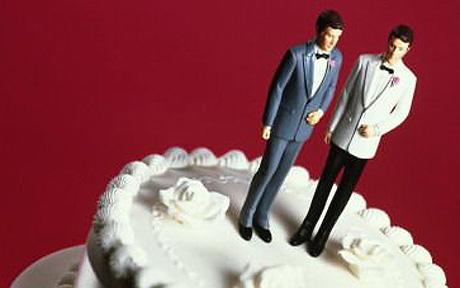
Gay Marriage — and Why Can’t I Own a Canadian?

gay2It’s all very complicated, but, at the far end of the rhetoric, what it boils down to is this: last week the Supreme Court of the United States ruled that California’s — and every other states’ — attempt to ban gay marriage is unconstitutional.  For those of you (like me) who can’t keep track of the nuances of American law, SCOTUS didn’t rule that gay marriage is constitutional; it ruled that banning it isn’t.  Splitting hairs, I’ll grant you, but that’s what lawyers do.  Either way, this week, despite dire warnings, the sun still rose in the east, God’s in his heaven, George Takei hasn’t … well, you get the idea.

Since I’m not particularly gay, the whole on-again/off-again marriage debate leaves me cold.  If anything, I think the gay end of the rainbow gets an awful lot of media ink considering they’re one of the minor minorities in our society.  Frankly, we have more people with gingivitis.  However, on a more personal note, if gay marriage does catch on, I’m totally watching Gay Divorce Court.

Anyway, since the US government has decided to stay the hell of the bedrooms of America, opponents of gay marriage have turned to the church to sanctify their opposition.  This is an old ploy which hasn’t held much water since Clarence Darrow beat up William Jennings Bryan in Dayton, Tennessee in 1925.

However, in that vein, a couple of friends of mine sent me this email, which apparently has been kicking around the Internet for a few years now.  I haven’t checked it for accuracy and take no responsibility for mistakes.  It should be noted that my friends are Catholic and haven’t really cared what the Supreme Court had to say for itself for over thirty years.  (BTW, I don’t plan to turn this blog into a repost emporium, but I just couldn’t resist.)

Here’s the email.

In her radio show, Dr Laura Schlesinger said that, as an observant Orthodox Jew, [she believes] homosexuality is an abomination according to Leviticus 18:22, and cannot be condoned under any circumstance.

The following response is an open letter to Dr. Laura, written by a US resident, and posted on the Internet.

Dear Dr. Laura:

Thank you for doing so much to educate people regarding God’s Law. I have learned a great deal from your show, and try togay1 share that knowledge with as many people as I can.  When someone tries to defend the homosexual lifestyle, for example, I simply remind them that Leviticus 18:22 clearly states it to be an abomination … End of debate.

I do need some advice from you, however, regarding some other elements of God’s Laws and how to follow them.

1. Leviticus 25:44 states that I may possess slaves, both male and female, provided they are purchased from neighboring nations. A friend of mine claims that this applies to Mexicans, but not Canadians.  Can you clarify? Why can’t I own Canadians?

2. I would like to sell my daughter into slavery, as sanctioned in Exodus 21:7.  In this day and age, what do you think would be a fair price for her?

3. I know that I am allowed no contact with a woman while she is in her period of Menstrual uncleanliness – Lev.15: 19-24.  The problem is how do I tell?  I have tried asking, but most women take offense.

4. When I burn a bull on the altar as a sacrifice, I know it creates a pleasing odor for the Lord – Lev.1:9.  The problem is my neighbors.  They claim the odor is not pleasing to them.  Should I smite them?

5. I have a neighbor who insists on working on the Sabbath.  Exodus 35:2 clearly states he should be put to death.  Am I morally obligated to kill him myself, or should I ask the police to do it?

6. A friend of mine feels that even though eating shellfish is an abomination, Lev. 11:10, it is a lesser abomination than homosexuality.  I don’t agree.  Can you settle this?  Are there ‘degrees’ of abomination?

7. Lev. 21:20 states that I may not approach the altar of God if I have a defect in my sight.  I have to admit that I wear reading glasses.  Does my vision have to be 20/20, or is there some wiggle-room here?

8. Most of my male friends get their hair trimmed, including the hair around their temples, even though this is expressly forbidden by Lev. 19:27.  How should they die?

9. I know from Lev. 11:6-8 that touching the skin of a dead pig makes me unclean, but may I still play football if I wear gloves?

10. My uncle has a farm.  He violates Lev.19:19 by planting two different crops in the same field, as does his wife by wearing garments made of two different kinds of thread (cotton/polyester blend).  He also tends to curse and blaspheme a lot.  Is it really necessary that we go to all the trouble of getting the whole town together to stone them? Lev.24:10-16.  Couldn’t we just burn them to death at a private family affair, like we do with people who sleep with their in-laws? (Lev. 20:14)

I know you have studied these things extensively and thus enjoy considerable expertise in such matters, so I’m confident you can help.

Thank you again for reminding us that God’s word is eternal and unchanging.

Your adoring fan.

James M. Kauffman,

Ed.D. Professor Emeritus,

Dept. Of Curriculum, Instruction, and Special Education

University of Virginia

PS (It would be a damn shame if we couldn’t own a Canadian)

I’m Scared of the Mob

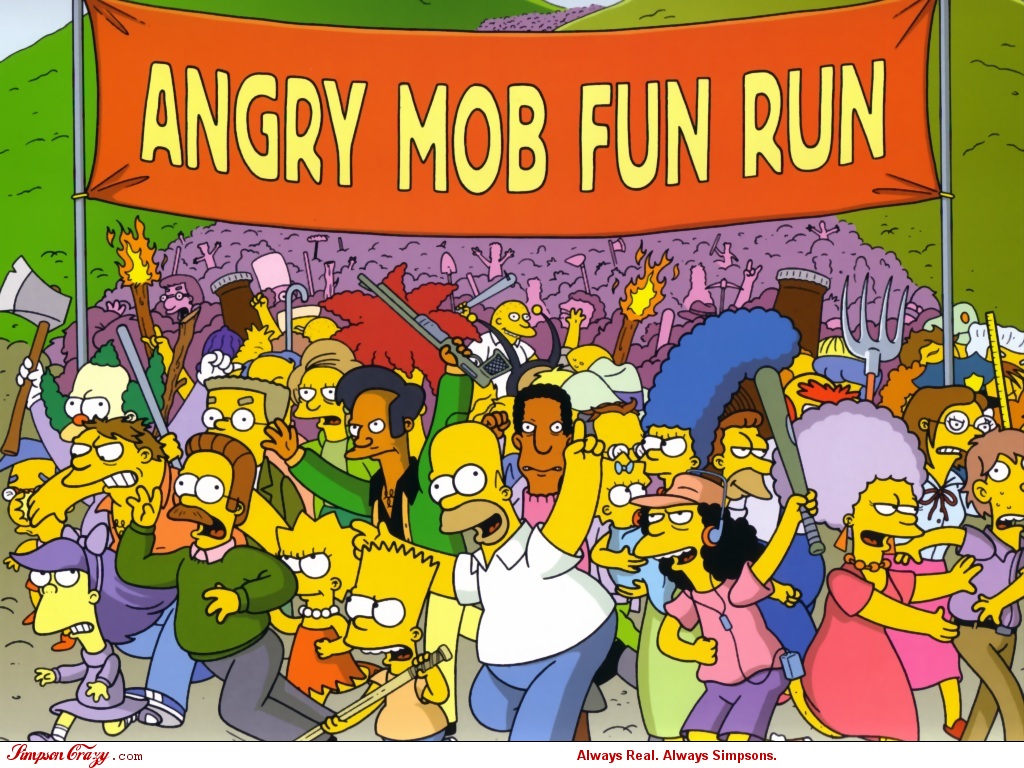
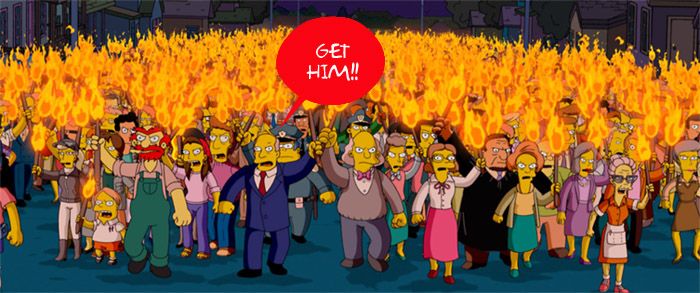
mobOne of the problems with observing our modern world is you spend half your life in fear and the other half with no friends.  Technically, I suppose, these are actually two problems, but they come from the same place: having an opinion and voicing it outside the comfy confines of your own head.  It’s a truism in the 21st century, that whenever you say anything about anything, you’re going to piss somebody off.  Most people get all free speech macho about this, but when push comes to shove, everybody knows that our society is unforgiving when it comes to unguarded opinion.  More importantly, when the mob turns against you, we punish it severely.  This is why we will never produce a contemporary Mark Twain or Stephen Leacock – the consequences of unedited thoughts, in today’s world, are just too dangerous.  Far better to be momentarily safe than monumentally sorry, so people with pens tend to stick to the road most travelled.  Unfortunately, that road is crowded with dumb-ass clichés.  Future anthropologists who attempt to piece together our social structure from the mountain of evidence we’re going to leave behind will naturally conclude we had an unholy obsession with lawyers, rednecks and upper middle class men.  They are the nominated villains for most of our commentators, so the record of our times will read like a bad John Grisham novel.   It’s a sorry state, but it beats the hell out of the world according to Suzanne Collins and E. L. James.

There’s no real problem with history recording our time as the shallow end of the intellectual swimming pool.  None of us is going to be around to be embarrassed by it anyway.  Nor do we have to worry about future chroniclers calling us cultural cowards.  They won’t be the slightest bit interested in our existence.  After all, you get historical ink from speaking up, not lying down.

The thing that burns my beans is that having set the table for a vigorous and dynamic dialogue, we’re now scared skinny of the food fight it might create.  Just look: we have a mostly educated public with the information of the ages at their fingertips (literally.)  We’ve cracked opened the old boys club and now have instant access to all manner of ideas from everywhere and everybody.  Furthermore, we live in a free society, where (for the most part) the rule of law gives free range to these ideas.  Plus our leaders (such as they are) fear public opinion and follow it relentlessly.  Life is good, right?  Wrong!  The first thing we did with this intellectual banquet was set dietary restrictions.  Not to beat the metaphor to death, we have populated our world with so many sacred cows that, in the land of intellectual plenty, we’re starving to death.

It used to be that the only thing that governed public discourse was civility.  There was decorum in our discussion.  For example, we didn’t call each other names – offensive or not.  Perhaps certain subjects were handled delicately, but there was never any thought that they should be avoided.  In fact, it was a matter of honour to shine light into the darker parts of our society – distasteful or not.

mob1These days, those days are over.  We have more social taboos than a tribe of Borneo headhunters.  A plethora of subjects in our world are no longer open for discussion.  Some of them I can’t even name in these pages without hollering up a verbal lynch mob.  In the past few years, this list has expanded exponentially.  Soon the only subjects anyone will feel comfortable commenting on will be the Kardashians’ breasts and the zombie apocalypse.

People like me, who know enough history to understand what the mob is capable of, are cowards at heart.  It’s one thing to go Vaclav Havel on the powers that be and strike out against censorship and oppression, for history shows us that eventually the pen is mightier than the sword.  However, it’s quite another to stand alone in front of a self-righteous mob of your neighbours and colleagues, demanding to be heard while they’re grabbing the torches and pitchforks.  In these troubled times, I do not fear the endless apparatus of the omnipotent state.  It’s the eagerly offended citizen, who created this mess that scares the crap out of me.