
 There’s a fine line between brave and stupid. Brave is charging hell with a bow and arrow; stupid is thinking you’re going capture Satan. If you’ve ever tried to upgrade either your television or your telephone, you know exactly what I’m talking about. You have to be very brave indeed to even attempt it and pretty stupid if you think you’re going to succeed.
A popular misconception in Canada is that the telecommunication industry is run by the Canadian Radio-television Telecommunications Commission. This is not true. The CRTC is a bloated, out-of-touch agency, left over from the 30s. It was put in place originally to regulate (read “limit”) independent radio stations in Canada — to guarantee that everybody listened to the CBC. Within hours of its inception, however, it was discovered that most Canadians live within shouting distance of the US border. Back in the day, this meant that anybody with an antenna could listen to whatever they wanted to – and they did — CBC be damned! Over the next several decades — useless though it was — the CRTC remained, and since nobody cared (they were too busy watching Bonanza and Father Knows Best out of Detroit) it continued to make useless rules and consolidate its power. Soon, the CRTC was in charge of everything from television call letters to satellite communications. However, just because the CRTC makes the rules doesn’t mean it runs the show.
In Canada, the telecommunications industry is actually run by four pseudo criminal organizations I like to call The Four Shysters. The Four Shysters control 95% of all television and telephone services in this country. Under the guise of healthy competition, they operate a virtual monopoly. They own the equipment — which they sell or lease to consumers at prices that rival Tiffany’s and Faberge. They dictate the rates — which are comparable to Tony Soprano’s New Jersey Savings and Loan. And they pretty much do as they please. Not since the evil days of Prince John and the wicked Sheriff of Nottingham has a country been so firmly under the dark boot of tyranny. Canadians pay some of the highest rates in the world for cellular phone service, and there’s nothing we can do about it. Our 500 channel universe is so expensive that most people have turned to Netflix in desperation.
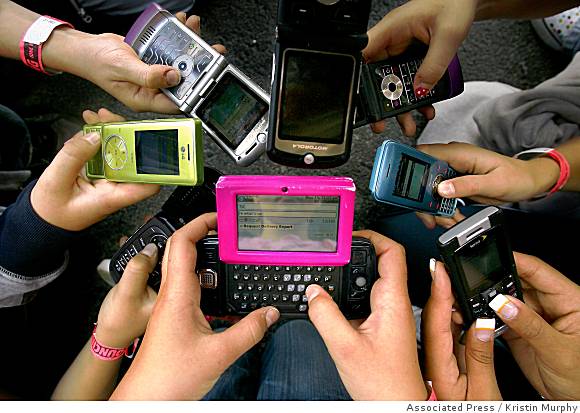 You can’t even shop around because it’s impossible. Here’s how the sordid world of telecommunication in Canada works. Shyster A advertises a free phone with – in teeny-tiny print — a three year contract. You get 200 free minutes a week (between noon and 3 pm) 6 minutes at five cents, 12 minutes at 7 cents, free texting to one friend in Newfoundland, free Web browsing on days with an ‘h’ in them, incoming text messaging at 3 cents a minute, long distance calling at 20 cents a minute to anywhere in North America (except Ontario, Mexico and the United States) no roaming charges unless you walk across a bridge and a free carrying case — for $45.00 a month. Or you can choose to upgrade to one of their 52 other convenient plans. Shyster B advertises a completely different free phone with — in teeny-tiny print — a three year contract. You get 300 free minutes a week (between 11 am and 2pm EST) 20 minutes free texting to two friends on Facebook, one free incoming call a month from your mother, free long distance calling from religious buildings, 10 minutes of free Web browsing (if you’re looking for a restaurant) 13.5 cents a minute overseas calling to sub-Saharan Africa (except Zimbabwe) and a puppy — for $50.00 a month. Or you can choose to upgrade to one of their 47 other convenient plans. Shysters C and D also offer plans equally idiotic. The only standard in the industry is the three year contract (which is etched in the stones of the Pyramids) and the unwritten rule that, if you step one nanosecond outside the prescribed plan, you’re going to get a free prostate exam and a bill for $800.00. How — under any circumstances — can we compare the value of these? We can’t, and that’s what the industry is
banking on. Finally, confusion, the mother of frustration, takes over, and we say, “Give me the one without the puppy.” And we end up paying tons of money for crap we’re never going to use, want or need.
Similarly, our 500 channel universe is so convoluted that Bohr’s Second Law of  Atomic Structure is easier to understand. However, there are certain rules that all Four Shysters adhere to. First of all, you have to buy basic cable; it’s like Health Care. You’re never going to watch any of those channels, but you have to pay for them first because you can’t watch any other TV without them. Secondly, everybody gets the Golf Channel. Thirdly, the one channel you really want to watch is lumped in with The Puppet Channel, Aardvarks and Anvils and Minus One (the arts of Khatphoodistan) and you have to buy the whole package. Finally, sports and news are spread out so randomly that, if you’re not careful, you could end up with The Welsh Lawn Bowling Channel and 24 Timer Nyheder (news from Denmark.) After that, it just gets complicated. Trying to figure out what your particular Shyster is going to saddle you with is like trying to unravel the Da Vinci Code — and don’t even worry about High Definition: it’s a money pit. If you somehow manage to chart a path through this mind field, don’t get used to it: in six months, the Shysters will shuffle the deck and change everything, again. Channel 64 will become 31; 31 will be 107; 107 will disappear altogether and the original 64 will suddenly be in French. Inevitably, our minds rebel, and we just grab anything that looks good. Once again, we’re paying tons of money for crap we’re never going to use, want or need.
 And where is the CRTC in all of this? They’re sitting down in Ottawa, trying to figure out the difference between upload and download. They’re making regulations for Facebook and Google like they were the Testaments of the Prophets and wasting time and money keeping the world safe from Sun News. Meanwhile, The Four Shysters are playing Guy of Gisborne all over the country and pillaging the Canadian people like they were the peasants of Sherwood. This
country needs a Robin Hood to put a stop to this villainy.
Eventually, we all have to upgrade our telephone and television services, but I’m going to hold out as long as I can ‘cause I’m not that brave — and I’m sure as hell smart enough to know, that without any rules, I can’t win.










 WD Fyfe