1984 or Brave New World?

1984

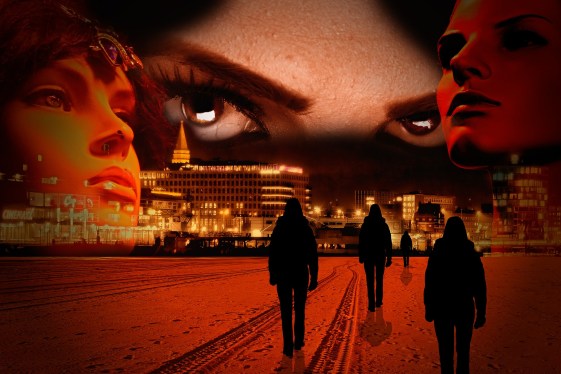
It’s been 70 years since George Orwell published his dystopian novel 1984.  It’s considered one of the pivotal books of the 20th century, and if you haven’t actually read it (in the 21st century, most people haven’t) you certainly know what it’s about.  It’s a complicated tale, but the Twitter version is we better watch out or Big Government is going to go power mad and control (read “enslave”) us all.  Orwell lined up the usual suspects – censorship, disinformation, propaganda, surveillance, informants and fear – to create a pretty scary Stalinist view of the future (read “the present.”)  In fact, it’s so convincing that many of the terms Orwell invented — like Newspeak, Doublethink, Room 101 and Big Brother — are now part of our language.  The problem is George may have got it wrong.  Yeah, yeah, yeah!  Some computer in California is probably reading your text messages and can pinpoint your location, anywhere on planet, but – uh — so what?  Quite frankly, if the CIA, MI5, FSB or the Chinese MSS want to know anything about you, all they have to do is log into Facebook, Instagram, Snapchat, etc., and they’ve got all the information they need.  And that’s the crux of the situation.  Who do we have to fear – our government or ourselves?

For my money, if you want a scarier version of the future (read “the present”) take a look at Aldous Huxley’s Brave New World, published in 1932.  Huxley’s view is deeper and darker and a lot more prophetic.  Huxley’s says the future won’t be bleak and hungry but actually rather happy – too happy.  Huxley’s society is just as closed and lock-step conformist as Orwell’s, but the difference is nobody cares.

In 1985, Neil Postman published a book, Amusing Ourselves to Death, and part of it is a comparison of 1984 and Brave New World.  Here are a few of his observations.

Orwell said that, in the future, many books would be banned.
Huxley said there would be no need to ban books because nobody would read them.

Orwell said that information would be strictly controlled and distributed by the government.
Huxley said that there would be so much information no one would pay attention to it.

Orwell said the truth would be concealed from the people.
Huxley said the truth would be irrelevant.

Orwell warned us about the dangers of the Cult of Personality.
Huxley warned us about the Cult of Celebrity.

Orwell saw a joyless, sexually repressed, poverty-stricken society that had lost its soul.
Huxley saw a drug-soaked, sexually promiscuous, consumer society that didn’t have one.

Orwell feared a manipulated culture.
Huxley feared a trivial culture.

Here, in the 21st century, the future is now, and Big Brother might very well be watching you — but personally, I think the bigger problem is … he doesn’t need to.
Game Of Thrones: What’s Next?

game-of-thrones

It’s been two weeks since the end of Game of Thrones, and people are still bitchin’ about it.  The problem is there are just too many unanswered questions.  For example, who paid off Cersei’s debt to the Iron Bank?  What was the conversation when Grey Worm and the Unsullied show up on the Isle of Naath – unannounced?  (“Who the hell are you guys?”)  And who was that Dornish-lookin’ dude at the High Council?  So, in the interests of a little closure, here are a few (somewhat plausible) scenarios that could happen after the credits rolled for the last time.  There are tons more, but seriously, does anybody have another nine years to invest in the soap opera that’s Westeros?  (D’uh!  Of course we do!)

The Dothraki – Suddenly unemployed (it’s not as if rape and pillage are marketable skills) the Dothraki are pretty much screwed.  A lot of them hitch a ride home on whatever ship will take them.  However, the ones that remain end up bitter old men, working in the stables shoveling horse poop for rich people or giving pony rides to bratty kids at Name Day parties.

Daenerys Targaryen – After Drogon carries Daenerys’ body away, he flies to Meereen and drops it at the feet of Daario Naharis.  Always the pragmatist, Daario summons Kinvara, Melisandre’s Red Priestess boss, and commands her (on pain of death) to bring Dany back to life.  After some argument (and a knife to the throat) she does.  Overjoyed, Daario hugs Daenerys, but she pushes him away screaming, “Where are my dragons?”  Realizing that the love of his life is batshit crazy, Daario builds the world’s first lunatic asylum and puts her away.  However, he commands all the guards and attendants (on pain of death) to maintain the charade that Dany is still Queen of the World and any day now, Jon Snow will show up and put her on the Iron Throne.  Eventually, Daenerys escapes, but by this time, she’s so looney tunes she thinks she can fly and jumps off the parapets of the Great Pyramid.  Daario breathes a sad sigh of relief and continues to rule the cities of Dragon’s Bay, wisely and well, for many years.  He dies quietly in his sleep.

Drogon – Since dragons live for millennia, after dropping Daenerys at Daario Naharis’ feet, Drogon spends the next several centuries getting ambushed by every wannabe tough guy trying to prove himself by “slaying the dragon.”  (This includes a much-mistold encounter with St. George.)  Finally, fed up with constantly looking over his shoulder and wanting a little peace and quiet in his retirement years, he moves to “a land called Honahlee” and changes his name to Puff.

Bran Stark – Absolutely useless as king, Bran spends most of his time flying around with his raven friends — just like he did during the Battle of Winterfell.  When called upon, he generally stares off into space and offers enigmatic instructions that nobody understands.  Invariably, all his best advisors get pissed off and quit, leaving the Six Kingdoms in the hands of the two drinking buddies, Tyrion and Bronn.  Bars, brothels and bingo halls thrive, and King’s Landing becomes a Vegas-style tourist destination for the rest of the world.

Davos Seaworth – After leaving the Small Council, Davos opens a school for illiterate sailors, called Sink or Spell.  It’s an incredible success, and soon there are franchises all over Westeros.  Davos becomes rich, buys Dragonstone, totally renovates the place and turns it into a retirement community for pirates, smugglers and other seafaring folk.

Samwell Tarly – After years of frustration, Sam also quits the Small Council (he wasn’t actually a maester, anyway.)  He moves Gilly and the kids to Castle Black, where he can be close to his only friend, Jon Snow, and pursue his passion for writing.  Away from worldly distractions, he produces a number of respected volumes, including Greyscale: Kill or Cure; Gendry Baratheon: The Man Who Should Be King; and his most famous work, The Girl with the Valyrian Dagger.

And finally:

Arya Stark – In her quest to find what was west of Westeros, Arya’s ship, the You Know Nothing (homage to her brother/cousin, Jon) sailed to the edge of the world.  Apparently, the Flat Westeros Society was right.  They narrowly escape falling into the abyss and, after a few mutinies, manage to make it back to land.  After that, Arya spends many years trying to jumpstart a series of business ventures (including forming a mercenary group called The Second Daughters) each one more unsuccessful than the last.  Reduced to living in abject poverty (with a serious ale habit) Arya’s life changes dramatically when Samwell Tarly’s biography of her, The Girl with the Valyrian Dagger, becomes a surprise bestseller.  She goes on the lecture circuit and earns a decent living, making personal appearances and selling autographs.  Unfortunately, her estate would miss out on the big money when the HBO miniseries, Arya, starring Jennifer Lawrence and Alex Baldwin (as the Winter King) is cancelled in preproduction and replaced by something called Game of Thrones.

The Art Of The Insult (2019)

insults

We are losing the art of the insult, and I, for one, will mourn its loss.  The problem is, in the 21st century, we’re under the delusion that tolerance is such an admirable quality that it takes precedence over everything else – up to and including common sense.  The result is we’re forced to publically accept all manner of idiot ideas and opinions — even though, inside our heads, we’re screaming WTF?  In a more civilized time, people were allowed to disagree with or even dislike all kinds of opinions and people without being branded a racist, a sexist, an alt-right extremist or the all-purpose “hater.”  But that’s what we do in the 21st century – like inarticulate school children — we call each other names.  It’s the best we got!  That’s why I mourn the loss of the insult.  Good insults take a high-velocity intelligence that we just don’t practice anymore, and like all language skills, it’s the canary in our society’s mineshaft.  Fortunately, it’s not over yet, and here are some examples of wonderful insults that demonstrate the high level of intelligence and skill it takes to call somebody a dumbass.  Enjoy!

I do desire we may be better strangers – William Shakespeare (As You Like It)

You are a sad little man, and you have my pity. – Buzz Lightyear (Toy Story)

I’ve known sheep that could outwit you.  I’ve worn dresses with higher IQs. – Wanda (A Fish Called Wanda)

He has no enemies, but is intensely disliked by his friends. – Oscar Wilde

He has Van Gogh’s ear for music. – Billy Wilder

If you gave [him] an enema, you could bury him in a matchbox. – Christopher Hitchens

He has delusions of adequacy. – Walter Kerr

I don’t know what your problem is, but I’ll bet it’s hard to pronounce.

Just because you have one doesn’t mean you have to act like one.

If I had a gun with two bullets and was locked in a room with Hitler, Jack the Ripper and you, I’d shoot youtwice.

He’s always lost in thought.  It’s unfamiliar territory

You’re not pretty enough to be that stupid.

I have neither the time, nor the crayons to explain this to you.

Whoever told you to “be yourself” gave you bad advice.

I’m glad to see you’re not letting your education get in the way of your ignorance.

I can feel my personality turning a dull shade of grey when I talk to you.

You’re so dense, light must bend around you.

He has a lot to be modest about.

But my favourite is:

He is simply a hole in the air. – George Orwell (The Lion and the Unicorn)