Stanley Cup — The Final Battle

hockey-1477860_1920

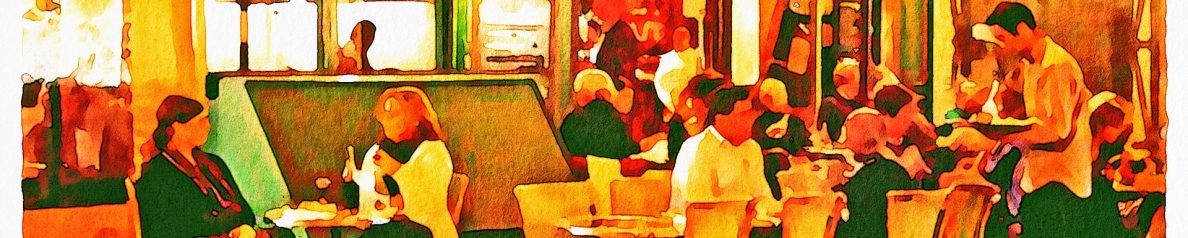
Yesterday, while most of the world slept, two ice hockey teams began the final conflict in this year’s NHL playoffs.  They’ve already been playing for a month and a half — every second night — back and forth across the continent with one objective in mind: Lord Stanley’s Cup.  This is the most grueling tournament in professional sports.  Yes, I know: World Cup is the Big Kahuna; more people (around the world) watch baseball; rugby is strength and stamina; and Aussie Rules Football  is nothing short of legalized assault and battery.  But, big wow!   Kilo for kilo, the National Hockey League’s Stanley Cup is the hardest trophy on Earth to play for and the most difficult to win. The Cup is reserved for the mentally strong and the physically resilient; no others need apply.  If you can’t cut it, go home: this is a game for the brave.

The rules of the Stanley Cup Playoffs are simple: win 16 games – four against each opponent.  If you do that, the Cup is yours, and, unlike most professional trophies, for 24 hours you can do what you want with it.  Most players take it back to their hometowns to show the parents and their friends.  That’s the thing about the Stanley Cup: it has an old-time feel about it.  It’s small town puppies and lemonade, not big city glitz.  The teams might be located in New York and Los Angeles, Toronto and Montreal, but the players come from Pincourt, Grimsby, Livonia and Ornskoldsvik.  They are the boys of winter who learned the game after school.  They played on artificially frozen ponds, just like their grandfathers did on the real thing.  They understand the heritage of the game and the structure.  They know what it takes to win: straight-edged mental toughness that destroys your opponents’ will before he does that to you.  So again and again and again and again — for two months — young men lace up their skates and fly at each other in a series of full-contact ballets, choreographed at 35 MPH!

Directing a 3 inch rubber disc with a curved stick on glare ice takes the hands of a sculptor.  Delivering and absorbing punishing body checks in full battle dress takes the physique of a dancer.  Constantly remembering your place on the ice — at top speed — takes the concentration of a chess champion.  But to do all these things, night after night, can only be learned by the self-discipline of desire.  These boys want the Stanley Cup more than anything else in the world.  As children, they dreamed about it, played and practiced and skated until their stick and that puck became an extension of their body.  As adolescents, they left their families, missed holidays, forgot birthdays and lost the friends and the girlfriends they grew up with.  Now, as men, they are willing to tape up their injuries, stitch up the gashes, patch over the bruises and ignore the pain and nagging fatigue to take just one skated circle with the Cup in their hands.  Superstition has it that no hockey player may even touch the Cup until he wins it.

To the hockey tribes of North America, the game is more than bone-jarring collisions on YouTube, bare knuckle brawls and concussions.  It is chivalry on ice, played by contemporary cavaliers, with no quarter asked or given.  It is brutal finesse; the meeting of Hermes the Swift and Thor, the Thunder God.  But the Stanley Cup Playoffs are not just a war of attrition, nor is the Stanley Cup a trophy given only to the strong.  In the end, when one team steps forward to touch the Cup for the first time, it will be their mental tenacity that prevails; the strength of mind that has always carried the warrior spirit forward.  It is that indomitable voice that says to each player, night after arduous night — “Once more into the breach  … once more.”

Me?  I’ve never wanted anything that badly.
100 Influential Stories?

bbc books

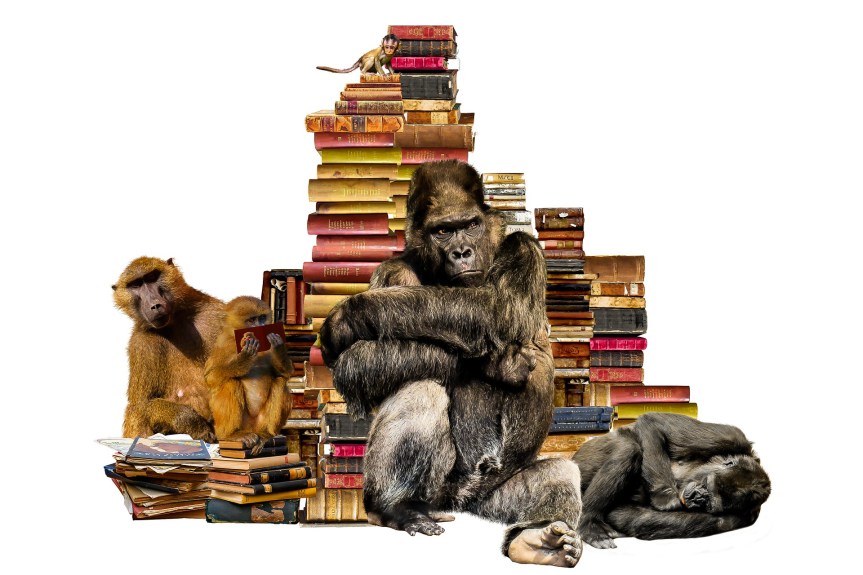
The folks at the Beeb (BBC) have come out with the Top 100 Stories that have influenced the world.  “Good on ya!”  I love lists: by definition, they’re always controversial.  It’s true that scholars very seldom throw punches (I’d pay money to see that!) but normally a list such as this would generate more than a few white wine arguments over which book is where and why.  Unfortunately, this particular list does not fulfill that basic requirement because, at first glance, it’s obviously total bullshit.

Yeah, yeah, yeah! All lists are subjective; however, there are some things in this world that are just dead wrong.  Let’s take an objective look at what the Beeb is trying to pawn off on us.

The Odyssey (#1) — No problem.  (You’ll probably get a fight from the Shakespearians, but they’re always pissed off about something.)
Uncle Tom’s Cabin (#2) — We can all agree on Simon Legree.  This book may very well have caused the American Civil War, which not only changed the social structure of Western civilization but also gave us the first glimpse of the military-industrial complex.
Frankenstein (#3) — This is where things start to get a little weird.  It’s true everybody knows who Frankenstein is — although most people get him confused with the monster.  But I’m pretty sure Frankenstein is not as big an influence on young lovers (anybody who ever lived) as Romeo and Juliet which doesn’t show up ’til #13.  And from there, everything just goes sideways.  According to the list, Beloved (#11) is a bigger influence on the world than Animal Farm (#18); Ulysses (#17) — which no living person actually understands — is ahead of To Kill A Mocking Bird (#27) and On The Road is nowhere to be found!

And what about the other sins of omission? — OMG!  There’s no The Great Gatsby, no Grapes of Wrath, no Fahrenheit 451, no Brave New World, nothing by Hemingway, nothing by Hardy and nothing by Kipling who sent two generations of imperial Brits out to change the world.  Paradise Lost and Le Morte D’Arthur are conspicuous by their absence, and where the hell is Dr. Seuss?

However, it’s not what’s missing from the list that’s burning my bacon: it’s a couple of titles that the Beeb included.

JK Rowlings’ Harry Potter series (#15) — Yes, we all read these books (or saw the movies.) Yes, we all thought Harry (and eventually Hermione) were hot; and yes, Quidditch is now the national sport of Nerdovia — but #15?  That’s ahead of Aesop’s Fables (#29) and Cinderella (#52.)  I don’t think so!  If nothing else, Aesop and Cindy have about a 1,000 year head start on that little wizard.  They were bedtime stories for millions and millions of children, long before Millennials decided that they were the only generation that mattered.  And besides, everybody knows Rowlings didn’t write seven Harry Potter books; she wrote two Harry Potter books — three and a half times.

But, my biggest bitch is The Handmaid’s Tale (#16)  WTF?  This little ditty is ahead of King Lear (#33), The Canterbury Tales (#58) and A Christmas Carol (#73)?  Basically, the BBC is telling us Margaret Atwood has a bigger influence on the world than William Shakespeare, Geoffrey Chaucer and Christmas!  Not bad for a book one reviewer called “paranoid poppycock.”  You want some serious grins?  Walk down any street in the English-speaking world and ask people if they’ve read the book — the book!  Chances are good you’ll get an overwhelming NO.  Why?  ‘Cause the vast majority of people who have even heard of The Handmaid’s Tale have only seen the TV series.  For the first 30 years of its existence (before Hulu pick up the option) The Handmaid’s Tale was about as influential as Pinocchio — probably less.  And here’s the kicker: the TV series isn’t even written by Margaret Atwood!  It’s written by Bruce Miller, whose last outing was The 100; Leila Gerstein, who wrote for Gossip Girl and a bunch of other people who don’t even have Wikipedia entries.  So much for spreading Margaret Atwood’s influence around like marmalade on cold toast!

The bottom line is this list does serve one purpose, and one purpose only: it clearly confirms we’re living in the shallow end of intellectual history, dominated by cultural illiteracy.  Harry Potter, my ass!

When Harry Met Meghan (FINAL)

harry

The Royal Wedding is over, but there’s still time to indulge in that fine old international tradition: Making Fun of the Royals.  This has been going on for centuries.  In Colonial America, the newspapers were full of cartoons about George III, and I can’t even print what the French had to say about Henry V!  So, since I’m beginning to think my invitation to the wedding didn’t get lost in the mail, and since this is going to be the last biggie royal wedding for a while (Prince George is only 4) here are a few catty remarks about the Royal Nuptials.  If you watched the solid walls of media coverage, you’ll recognize the participants; but if you didn’t, don’t worry: they’re all the usual suspects.

It was a beautiful spring day in Windsor, and most of the hats looked as if their sole purpose was to confuse the pigeon population.  Meanwhile, many of fascinators had obviously been designed to pick up Wi-Fi so that the various plus-ones could watch the FA Cup final during the ceremony. (FYI: Chelsea-1 — Man U-0)

Oprah Winfrey’s sack was a last-minute design by Stella McCartney and was securely cinched in the middle to prevent the heavy bits from shifting.

Sir Elton continued to break gay stereotypes by showing up in his one good outfit — again.

Whichever Williams sister it was, walked in as if she was looking for a fight.

Patrick J. Adams, Meghan Markle’s former co-star on Suits appropriately wore — a suit.

Thoughtfully, Princess Michael of Kent didn’t wear any jewelry.  (Google it!)

Victoria (Posh Spice) Beckham got confused and thought she was going to a funeral.

It’s a pretty safe bet that Pippa (Middleton) Matthews, was told to keep her scene-stealing ass in line this time.  So, rather than risk Royal censure, she came dressed as a can of Arizona Ice Tea. (You can Google this one, too.)

George and Amal Clooney spent most of the day looking utterly bewildered that nobody gave a damn whether they were there or not.

Ben Mulroney did a wonderful impression of a discount Justin Trudeau.

Harry’s ex, Cressida Bonas and Abigail Spencer (no relation to the real ones) clearly shop at the same store: Tesco.

Princess Anne went for either cultural diversity or cultural appropriation by wearing a kimono, but nobody was brave enough to call her on it.

Surprise!  Surprise!  Surprise!  Sarah Ferguson (Fergie) Duchess of York was invited, but Prince Philip made her sit in the corner.

And speaking of Prince Philip, this guy is officially the toughest old bugger in the Commonwealth!  He’s 96 years old, fresh off  hip surgery, and yet he got out of the car and marched into Windsor Chapel as if his wife owned the place.  The man is made entirely of gristle.

And finally:

That low-level whirring sound everybody heard throughout the ceremony was Edward VIII, spinning in his grave, muttering, “American divorcee, my ass!”

Disclaimer:  This is satire.  In fact, I’m actually a hopeless monarchist and I love all the trappings that go with it.  It’s the simpy/sappy media coverage I object to.