
Everybody forgets about India. We all know it’s there, looking like Asia’s sticking its tongue into the Indian Ocean, but generally, the world is so firmly focussed in on China that India gets a miss.
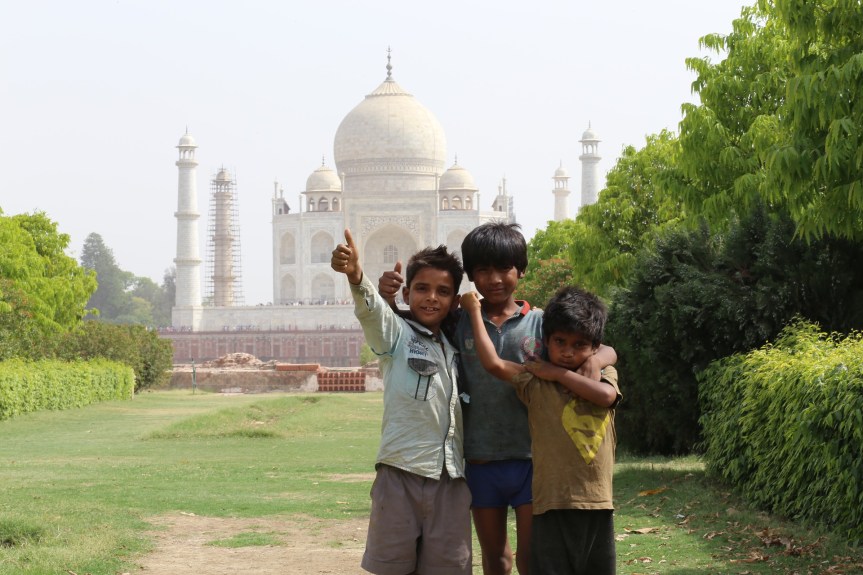
So why do people forget about India?
Perception. When most Westerners think of India, they think of yoga, curry and Mohandas Gandhi. They think of bearded mystics, bony cattle and television train journeys on the Beeb or PBS. They think of tigers and tea, spices and flowers, and probably that chirpy voice at the other end of the tech support telephone. While all of these things are true, none of them are 21st century India. And boring old facts might not be as sexy as jeweled elephants and maharajahs, but they tell a better story about what’s going on in contemporary India.
It’s generally accepted that by 2025, India will surpass China and become the most populous nation in the world. However, many experts believe that the Chinese have been fudging the numbers for years and India already has more people than the Middle Kingdom. That’s one helluva work force!
More importantly, 50% of India’s population is under 25; 65% is under 35 and the average age on the subcontinent is somewhere around 29. In comparison, the average age in all of China, the European Union and the USA is approximately 37. (Japan’s is a whopping 48.) Do the math! While the developed world is getting older and closer to retirement, India is getting younger.
India has the largest middle-class in the world — over 250 million people — and it’s growing. Economists say that it will double in the next ten years. So, even though, in 2017, its economic, cultural and political power is nowhere near that of China, the European Union or the USA, with numbers this large, it soon will be. That’s a lot of rupees, folks!
Oddly enough, even though India is not a member of the G8, it has the 7th largest Gross Domestic Product (GDP) in the world — with an average annual growth rate of 6.6%. What does that mean? India’s economy is actually growing as fast as China’s and more than twice as fast as the USA’s.
In all the traditional industries like metals, mining, agriculture and manufacturing, India’s production generally ranks in the top ten globally. But, more importantly for the future, India has the second largest cultural industry in the world. Nobody packs a bigger cultural punch that the Anglo-Americans do — but India is getting close. Everybody knows that Bollywood has more studios, makes more movies and puts more bums in seats than Hollywood does. However, India also ranks 2nd (behind China) in Internet use, 4th in YouTube accounts, 6th in online news views and last year (2016) passed the USA in Facebook profiles. And the list goes on. There are also over one billion mobile phones in India, and last year (2016) Google Play alone recorded 6.2 billion App downloads. This is the Digital Age; information is power.
Unfortunately, despite its economic prowess, India still has some problems.
The fact is India is not a homogenous monolith. It is the sum of some very different parts, and it’s strange to consider, but one of India’s greatest strengths is also one of its biggest problems — diversity. It’s very difficult to get the entire subcontinent moving in the same direction at the same time — for several reasons.
There are over two thousand self-identified ethnic groups in India, and — although it’s officially frowned upon — a well-defined and seriously observed Caste system. This makes social interaction and mobility difficult at best and, in some rural areas, practically impossible. India is the world largest democracy, but it’s not a very dynamic one.
There might be only two official languages, Hindi and English, but (depending on who you talk to) there are at least 20 other semi-official ones. Just to put things into perspective, there are more Bengali speakers in India than German speakers in Germany; more Telugu speakers than French speakers in France; and more Urdu speakers than Polish speakers worldwide. Plus there are thousands of different dialects, so that, in some cases, villages 30 kilometres apart can’t understand each other. Ideas don’t flow very freely when millions of people don’t know what millions of other people are talking about!
Furthermore, even though, India is mainly Hindu, the country has huge numbers of Muslims, Sikhs, Christians and every other religion on the planet — including Jews, Baha’is and Zoroastrians. Plus there are so many religious sects, cults and factions that experts have never even been able to agree on how many gods there are in India. Some say (preposterous as it sounds) they could number in the hundreds of thousands. It’s very hard for a central government to effect social change with that many deities looking over your shoulder. Chances are good any law you want to enact is going to piss somebody off!
And all this contributes to India’s most serious problem — grinding poverty. The average income in India is still only $1,570.00 US, and nearly 200 million people are living on less than $4.00 US a day. And although this is changing, it’s a very slow process.
Today, is modern India’s Independence Day. Seventy years ago, the Raj ended when Great Britain hauled down the Union Jack and went home. In three generations, India has gone from a colony, to a developing nation, to a country on the verge of becoming a great economic power. Not bad!
And trust me, in ten years, nobody is going to forget about India!
 We live in a time when anybody with the slightest complaint about our society (or life in general) plays the discrimination card. The fact is there are so many groups claiming they’re oppressed these days that there’s hardly anyone left to do the oppressing. The problem is, of course, in an ocean of phantom injury, the true tears of injustice frequently go unnoticed. Which brings us to the one group who have endured and battled prejudice for centuries — stepmothers.
 I love the 21st century. I love it that I can talk to people all over the world. I love that my Japanese car was built in France — from Polish parts. I love Google and Wikipedia. I love the one-click universe. I love it that, when I order a pizza, it gets to my house faster than the police would. Well, maybe not that so much … but … I do think it’s cool that the person at the other end of the telephone is thousands of kilometres away, but he instantly knows my name and remembers I want extra garlic. The point is I love all the bells and whistles this century has to offer … but … there is one serious drawback. You can’t get regular stuff anymore. Ordinary is just not available. Here are a few examples:
 WD Fyfe