Fashion: Listening to Your Inner Child

slope3There’s a slippery slope that happens in this life, and it doesn’t end unless you find yourself chasing the garbage man down the alley in nothing but your Buzz Lightyear boxers and a beltless bathrobe.  You might do this ‘cause it’s important; that trash is going to smell like dead hobbits the day after tomorrow.  And you may even rationalize it by saying, “That trash is going to smell like dead hobbits the day after tomorrow.”  But, you still know you’ve just stepped through the looking glass.  What was once an intimate detail, known only to your mother and a few significant others, is now available to the general viewing public.  More importantly, you hope none of your neighbours caught your Batman imitation on their cell phones.

We don’t all end up on Pinterest as “Meanwhile at WalMart” memes — but we could.  There’s a charming little voice in everybody’s inner adult that whispers “What the hell?  It’s only the Drive-thru.  This shirt’s good enough.”  So we grab the keys instead of listening to our inner child, who would scold us into, at the very least, changing our underwear.  (I was nearly 10 before I realized clean underwear didn’t actually prevent traffic accidents.)  It’s that same voice that urges us to wear pink with plaid and refuses to part with the UCLA T-shirt that was printed when Zorro was a boy.  We all have it.  Our parents warned us about it, but all of us still listen.  Bad mistake!

Back in the day, mostly mom (and sometimes dad) taught us that going out in public was a sacred trust.  People were looking at us, and we needed to show some respect.  Neat was important, but clean was essential.  As we got older, that sage bit of advice translated into sex, straight up and down.  You need to look your best because nobody is going to sleep with a slob.  Unfortunately, adulthood and cohabitation dulls the echoes of our parents, and more and more we end up relying on our own resources.

At first, it’s okay.  We dress for work, go out with our friends, flirt with the cashiers at the grocery store and leave our private face at home where it belongs.  However, eventually, those sweatpants are just too damn comfy not to get trotted out to mow the lawn.  But that’s okay too: we’re in our own yard, they’re clean, and they still kinda fit in the crotch.  Besides, they cover up that extra 10 lbs that’s been hanging around all summer.  Oops!  This is where it gets problematical.

As we get older, we tend to spread in all directions.  Clothes just aren’t as friendly as they were back when we were slopetwenty.  And this is when our inner adult comes calling.  “Hey, buddy!  You’re a grown man.  You pay taxes.  You have a mortgage and a Mercedes.  You haven’t eaten liver or lima beans in 12 years!  If you want to wear socks with sandals, screw the hippie who says you can’t!”  And we listen.  But the socks with sandals (or your personal equivalent) are just the thin edge of the wedge.  Pretty soon, it’s only work, weddings and funerals that get a tie.  Family functions are all informal, and those sweatpants that kinda fit – question mark — have migrated from the back yard to the shopping mall.  It’s unavoidable.

The thing to remember, if you don’t want to end up dressing like Robin Williams in The Fisher King, is that your inner adult is a spoiled brat.  He thinks that whatever he says goes, and he pouts if he doesn’t get his own way.  You’re far better off to listen to your common-sense child, who’s very aware of what not to wear.  The parents explained it to him.

My point is that, as we get older, we all dress for comfort, not for speed, but you don’t get any points for running amok.  Therefore, it’s best to cool your jets or you’ll end up as the Flying Dutchman of the Internet, repinned and reposted as The Old Man in the Leopard-skin Leotard.

A Dedicated Follower of Fashion

Paris fashion updateFor a man (moi) writing about women is never a good idea; invariably, he’s going to piss somebody off.  The problem is, despite what every amateur sociologist with a pen will tell you, women do not speak with one voice.  Therefore, regardless of what you say, somebody is going to get mad at you and point out what an incredible handicap that Y chromosome really is.  However, since women are half the population of this planet, and I’d rather not publically admit my cowardice (again) I’m going to write about women and, more courageously, one of the strangest things they do.

Just as the worm follows the plow, here on earth summer is followed by Fashion Month.  All over the world supermodels are being dressed up like anorexic Barbie dolls in a hip-swinging, heel-to-toe, catwalkathon that dictates what women will be wearing when the snow melts again next year.  These masquerade balls might be centred in New York, London, Paris and Milano, but there isn’t a person alive, male or female, who will not feel their effects.  This kind of power is worthy of comment.

FYI:  Just so you know, I’m a big fan of the fashion industry.  I believe the way we adorn ourselves is central to our species and, more immediately, fashion, like trash, is virtually recession proof.  A good thing in these troubled times.  But I also have to admit I have absolutely no creds when it comes to fashion itself; I’m still wearing the Levis and sweatshirt uniform I wore when I was 20, allbeit in the new roomier, rumpstrung size.  Don’t get me wrong: I’d wear Armani if I could afford it, but the lapels would probably be circa 1975.

However, to continue, one doesn’t have to wear this year’s fashions to notice that they’re godawful hideous — the fashion3culmination of the four decades of godawful hideous that came before it.  In fact, women’s fashions have been off-and-on godawful hideous since Mrs. Grog the cave woman accidently tore her leopard skin and invented décolletage.  Historically speaking, women have dressed in some of the weirdest contraptions imaginable.  You don’t have to go much past panniers and bustles to figure that one out.  Nor have things changed that much.  After all, skinny jeans, a direct assault on the circulatory system, can’t be comfortable, and they must take upwards of an hour to get into.  This kind of time and trouble certainly explains why, centuries ago, fashionable women were sown into their clothes every morning and stitch-picked out of them every night.

It strikes me that, given the evidence, fashion designers may have seen women, even examined them closely, but they have no idea what women are about.  Otherwise, they wouldn’t harness them up like this.  However, the more important question is why do women put up with it?  Obviously, back in the day, they had to, but here we are in the oh-so-enlightened 21st century and the fashion industry still generates billions of dollars telling women what to wear, and most of it looks like crap.

Here’s the deal!  Women don’t dress for men, anymore.  They don’t have to.  If they did, the only retail outlet in the mall besides Starbucks would be Victoria’s Secret.  These days, women dress for other women.  Why else would somebody willingly pay money for a shapeless, strapless gown that straps her in like an L’Oreal cosmetic test bunny?  Respiratory problems?  It’s the female equivalent of the macho man, zero-to-sixty bum-numbing sports car or the bone-shattering mega-bass. I-can’t-hear-you stereo.  Women style and profile for other women mainly because other women style and profile for them.  And it all starts on the runways of Paris et al

Gucci Milan Fashion WeekTake a look at any Give-Me-An-Award Red Carpet TV program.  Who’s watching the show?  It ain’t Ben and Gary from lamps and lighting at Home Depot, even though Selma Hayek’s going to be there, falling out of most of her dress.  Nope, it’s Sara from plumbing who wants to know what dress Selma’s wearing, what Joan Rivers and her band of witchy critics are saying about it and where she, Sara, can get the knockoff so the girls back at HD will be green with… you get the idea.

Of course, there are some who would say this has always been the case, but I don’t think so.  In the old days, attracting a man was a necessity for women, and marrying well was an art.  Fashion played a huge part in this game of reveal and conceal.  These days, while sexual attraction is still part of our makeup, nobody really cares what we cover it with.  Witness Miley Cyrus’ recent VMA performance.  Would she have done better in Yves St. Laurent?  I doubt it.

I’m sure that the last thing any woman wants to hear is she’s a slave to the fashion industry.  Or that in the caring, sharing 21st century, she’s in direct competition with every other woman on the planet.  However, as the man said, “It is what it is.”

And let the emails begin.

Fashion: A history of the 20th Century

Believe it or not, it’s finally Spring, and to prove it, people all over the country are taking off their clothes.  Suddenly necklines and hemlines are jockeying each other for position, waistbands are so low as to violate the natural laws of decency anywhere north of the equator, and, to coin an old joke, the girls are just as bad.  Personally, I’m no follower of fashion; I have my time and I’m never going to leave it.  Nor am I old enough to berate young people for wearing the same things I wore at their age.  I really don’t care much about fashions, where they came from, where they’ve been or how they got here.  Besides, I know enough about history to understand this too shall pass, and if you keep your clothes long enough, eventually they won’t fit.

However, I’ve noticed a distinct pattern in women’s clothing over the last 100 years.  I’m not sure whether history follows fashion or vice versa, but in general, turbulent, troubled times favour the neckline, whereas affluent, settled times favour the hemline.  I’m not going to speculate on the pop psychology of all this, but here’s a brief history.  You can make up your own mind.

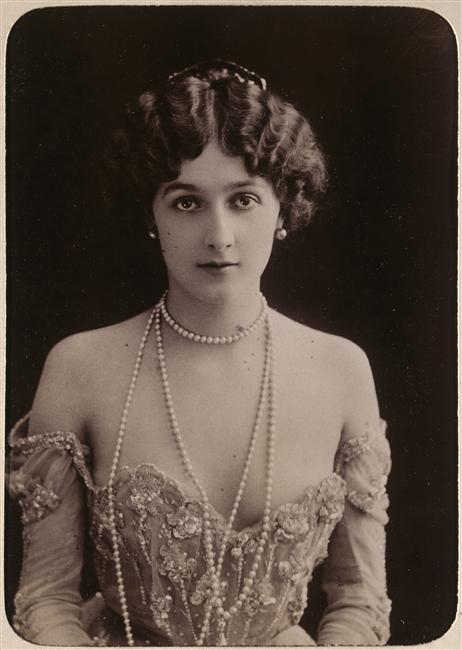
In the days just before World War I, most of Europe simply couldn’t wait to start shooting at each other.  The world was in a mess.  From Morocco to the Balkans, every second Tuesday brought another world crisis. There were petty wars everywhere and everyone with a trigger finger was itching to use it.  Female fashions were dictated by the Gibson Girl, an hourglass figure with a bust size big enough to topple over on an incline.  From the French salon to the Russian Imperial court, bare shoulders and décolletage were de rigueur for aristocratic women.  And as the world trudged irrevocably towards all-consuming war, the plunging necklines got so extreme various churches spoke out against the style.  Luckily, World War I broke out in 1914 or modesty would have been lost forever.

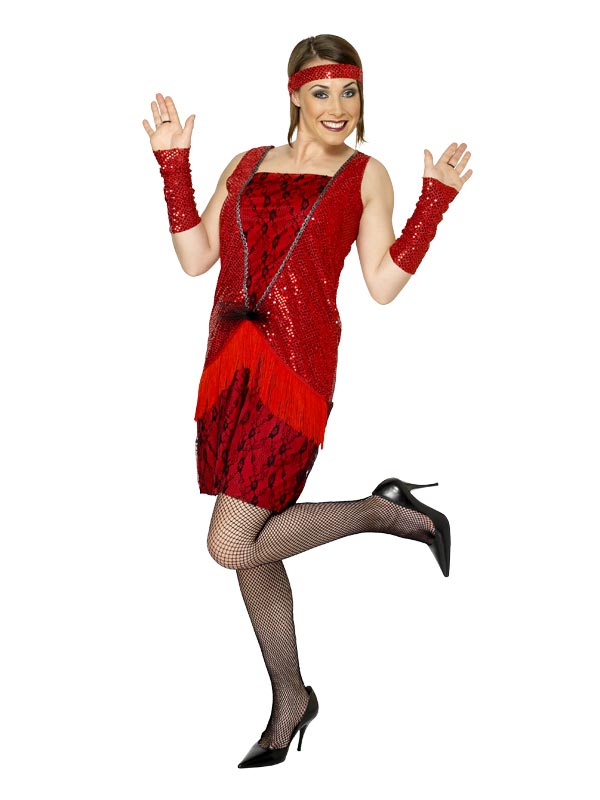
The minute the war was over and Johnny came marching home again, he discovered that the world was his oyster.  The Roaring 20s were one big drunken bash.  People everywhere were partying on the imaginary cash they were making on the stock market.  Even Prohibition couldn’t slow down the dance.  Meanwhile women’s fashion now favoured the flapper.  She was a straight up and down girl with bobbed (short) hair, a receding bustline and no hips.  She wore the shortest skirts since Ramses the Half Naked built the Sphinx and the only cleavage available was the one visible from her backless gown.  This fashion disappeared almost instantaneously on October 24th, 1929 when the New York Stock Market crashed and everybody had to get serious again.

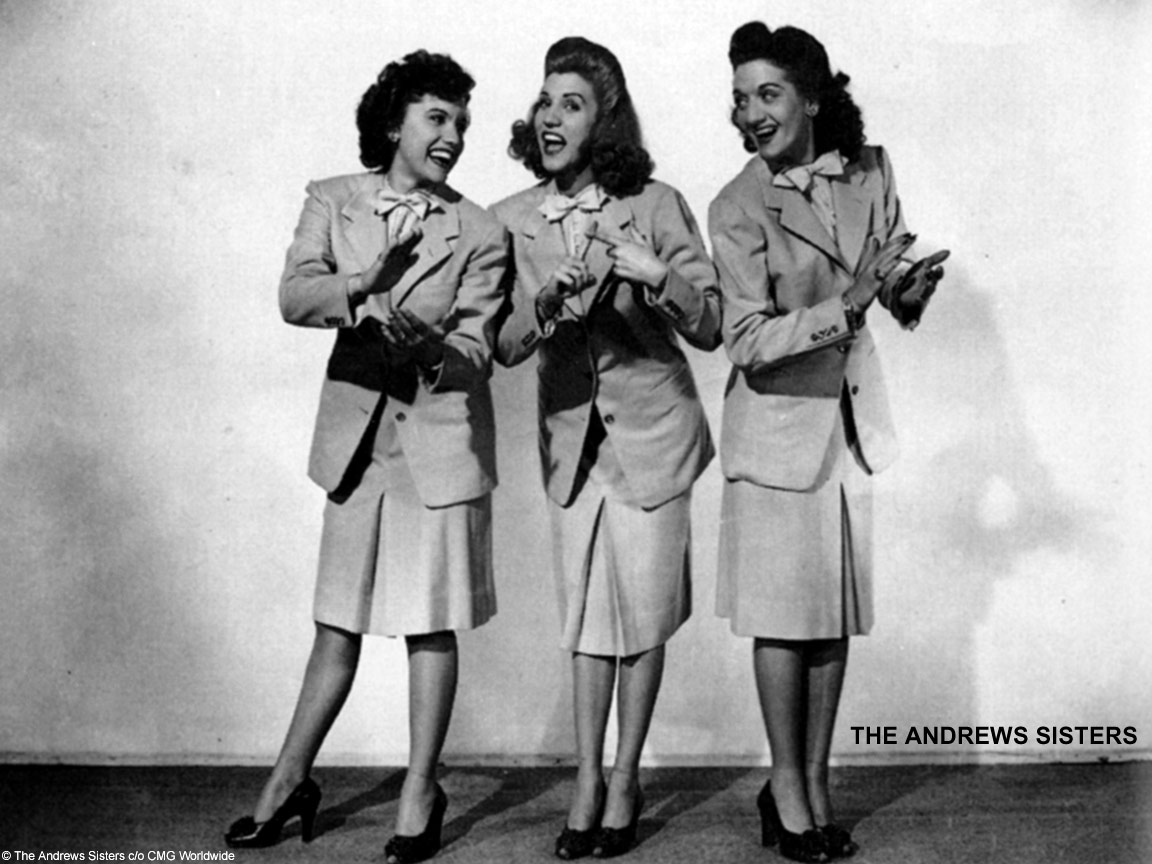
In the 30s, women buttoned up and the hemlines dropped to the ankles.  As the Depression deepened and the bad guys, Hitler and Mussolini, started marching, females took on a distinctly military look.  They wore jackets that covered their hips and artificially squared their shoulders.  Unlike the last time the world tried to kill itself, this time fashion was going to war.  Throughout the 40s, women remained broad shouldered; the hourglass was out, and the linebacker was in.  Just take a look at the Andrews Sisters to get a feel for it.

As the 40s slowly gave way to the 50s, and nuclear weapons brought a clear and present danger that humans could extinguish all life on the planet, women stacked on the petticoats again.  They wore a starched apparatus called the crinoline which flared at the hips so abruptly it completely disguised the female figure.  They also wore pullover sweaters, lightweight and tight, which combined with the sturdy bras of the time made the protruding parts look like they’d been put in a pencil sharpener.  This was the Sweater Girl Look that lasted well into the 60s.  It was the time of Jayne Mansfield, Marilyn Monroe and ever threatening nuclear holocaust.

But there was also a fashion schizophrenia going on in the 50s.  Employment was high, money was plentiful and the suburbs were solid and sturdy.  Everybody and her boyfriend had a car.  These conditions gave us a few fashion anomalies.  There were the B-grade science fiction movies for example, where the sweaters were tight and the skirts were flared and short.  Most notably, the bikini was a half naked salute to the sun and the Pacific islands of the Bikini Atoll, where, in 1946, the United States military detonated nuclear hell and wiped out paradise in six and a half seconds.

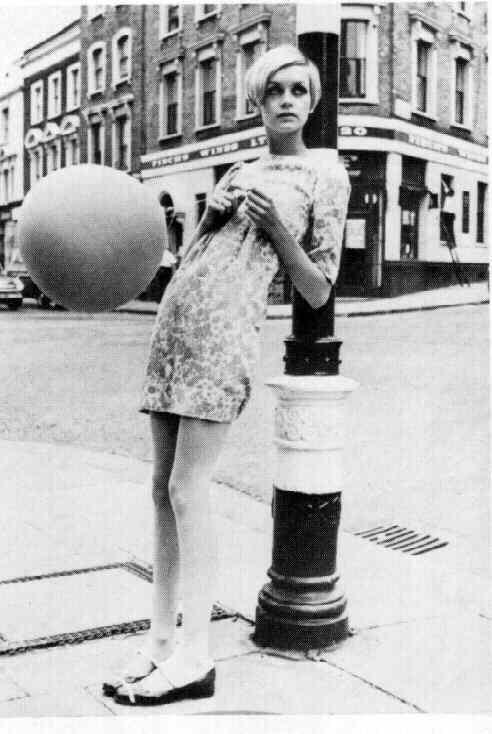
The 60s going on 70s was the last time female fashions were a single mass market.  Despite what historians tell us about protest and discord, the 60s were a drug-induced fiesta.  Young people might have protested during the day, but at night, pot and peyote ruled, music and dance were primitive, birth control was quick and easy and so was sex.  The party didn’t stop until Nixon’s National Guard took matters into their own hands at Kent State in 1970.   In 1965, Mary Quant introduced the miniskirt; $6.95 worth of fabric that covered the bare necessities.  Later she would go even further with the micro-mini and hemlines disappeared entirely.  The first supermodel, appropriately named Twiggy, drove the female form to the very edge of annihilation.  Thin was in so completely that the old-fashioned flapper looked positively voluptuous.  The little black dress became essential day, evening and professional wear, and women everywhere learned to bend at the knees.  The fashion 60s culminated when Ms. Quant premiered hot pants, an ill-conceived gesture to modesty that was snatched up by strippers and prostitutes around the world and has since been in continuous use.

The last days of dictated fashion came with disco.  In reaction to the Women’s Movement and the rise of feminism, fashion designers took to adorning men: the polyester leisure suit is the symbol of the age.  When disco died, prominent male fashion died with it.

For the last two decades of the 20th century, fashion was not so much about style as trend.  There were no overwhelmingly accepted forms of dress; however, both men and women did follow a number of trends religiously.  Hemlines and necklines made minor seasonal adjustments up and down, in quick reaction to the state of the world, but most fashion remained in flux.  There was, however, one female feature that did distinguish itself – the bum.

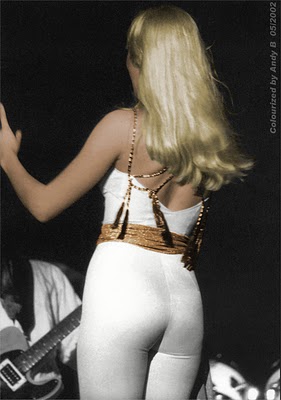
Introduced in Australia, in 1977, by Abba singer Agnetha Faltskog, the bum has dominated fashion ever since.  It shows up everywhere and has become the single fashion constant in a world that gyrates wildly between feast and famine.  Clothes have tightened up proportionately to display the bum prominently, and in some cases, silicon has been added to enhance its features.  Even today, in the 21st century, the bum remains front and centre on the fashion scene; Jennifer Lopez and the Kardashian sister are perfect examples.

Personally, I think the bum is a passing fancy and the fashion world is just catching its breath and waiting for another party or crisis to right itself.  In my mind, history will win out, but you can make up your own mind.